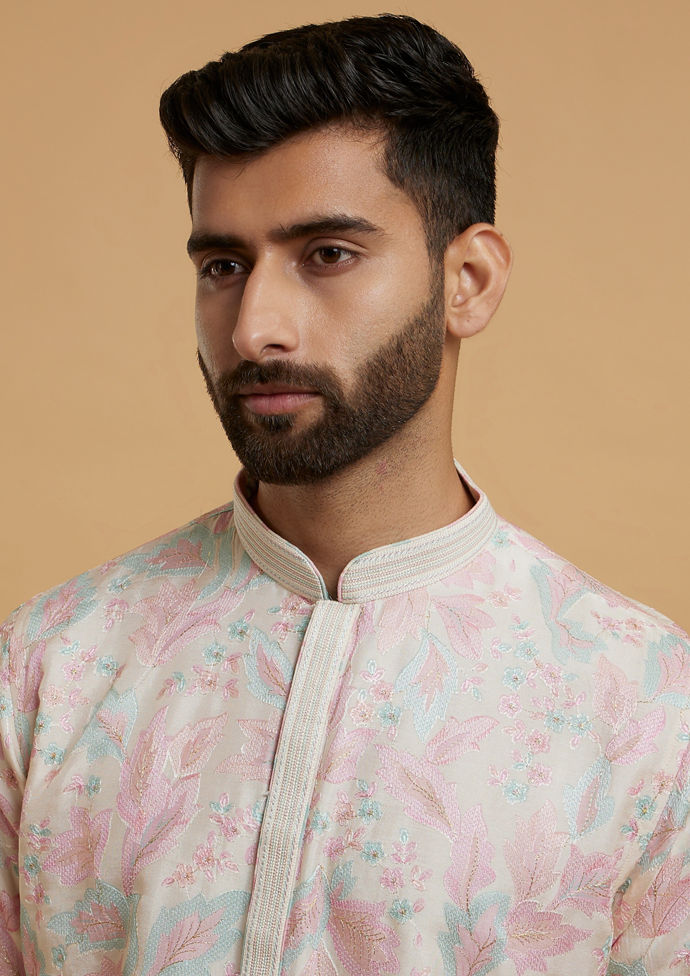
Pink Printed Kurta
4 PRODUCTS
Filter

Five pink printed kurta sets make up our collection for Indian weddings and luxury occasions in 2026. The fabrics are Chanderi, viscose, georgette and Ikat silk. Each set matches a printed or embroidered pink kurta with a coordinating pant, and all five are dry clean only.
Buy Now: Yellow Printed Kurta
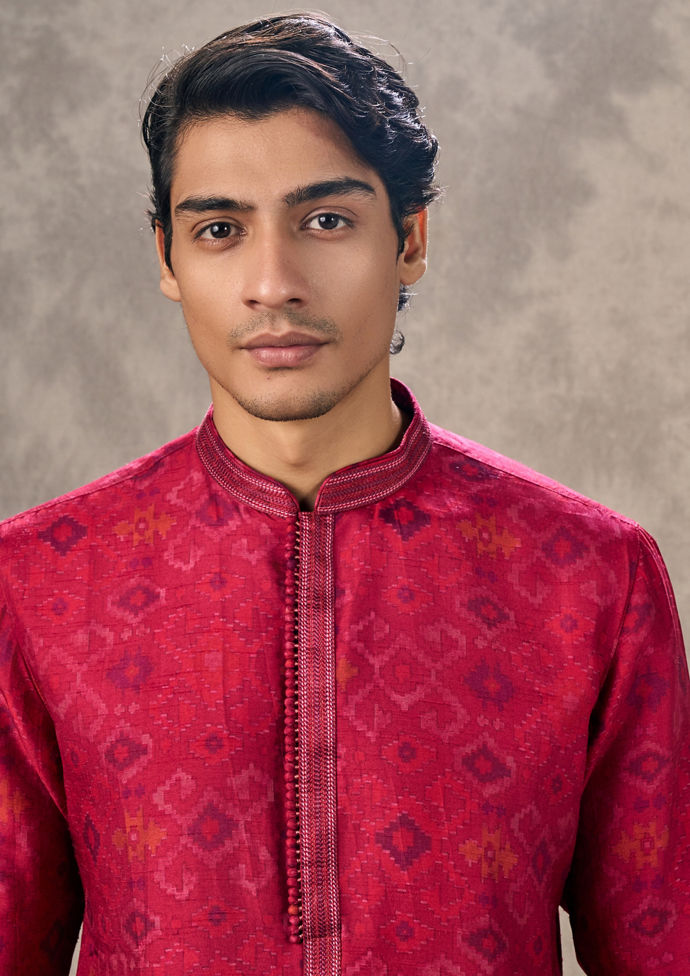
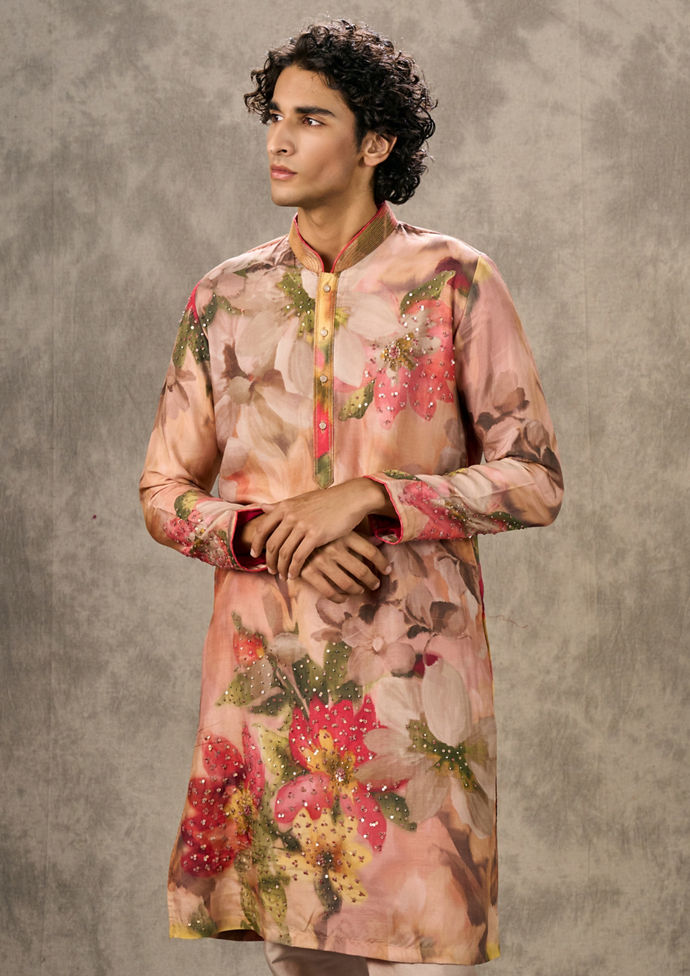
Dusty pink sequin embroidery suits reception wear, lighter georgette works for sangeet and mehndi functions, and rani pink Ikat prints give you a bolder option. Pink floral kurta and pink flared kurta shapes are both in the range, so you can line up print scale and silhouette with the event.
Work through the five sets below by fabric, print and occasion, then use the buying guide that follows to settle the fit.
Five pieces sit in this collection: three sets are embroidered, one is a printed Ikat silk, and one combines both. The printed piece is Ikat, where the yarn is dyed before weaving, so the edges of each motif stay slightly soft instead of sharp the way a screen print looks. The pink itself changes across the range. Blush and rose read quieter in daylight, while fuchsia and rani pink hold their colour under stage lights and camera flash.
Take three measurements in centimetres before you order: shoulder to hem, chest at the fullest point, and sleeve length. Measure over the blouse or fitted top you plan to wear underneath, and keep the tape level across the back instead of letting it dip. Hem length should follow the occasion. A sangeet outfit sits shorter than a reception piece, and a printed Ikat panel drape falls differently from an embroidered one, so check the hem on the style you are buying.
Guests and close family both fit this range. The three embroidered sets suit a bride's side, a sibling, or anyone dressing for the main ceremony, while the printed Ikat works for guests who want something less formal. If your invitation lists a colour theme, compare the pink against it before you order. Matching the shade to jewellery you already own helps too, since oxidised silver and rose gold pull different tones out of the same fabric.
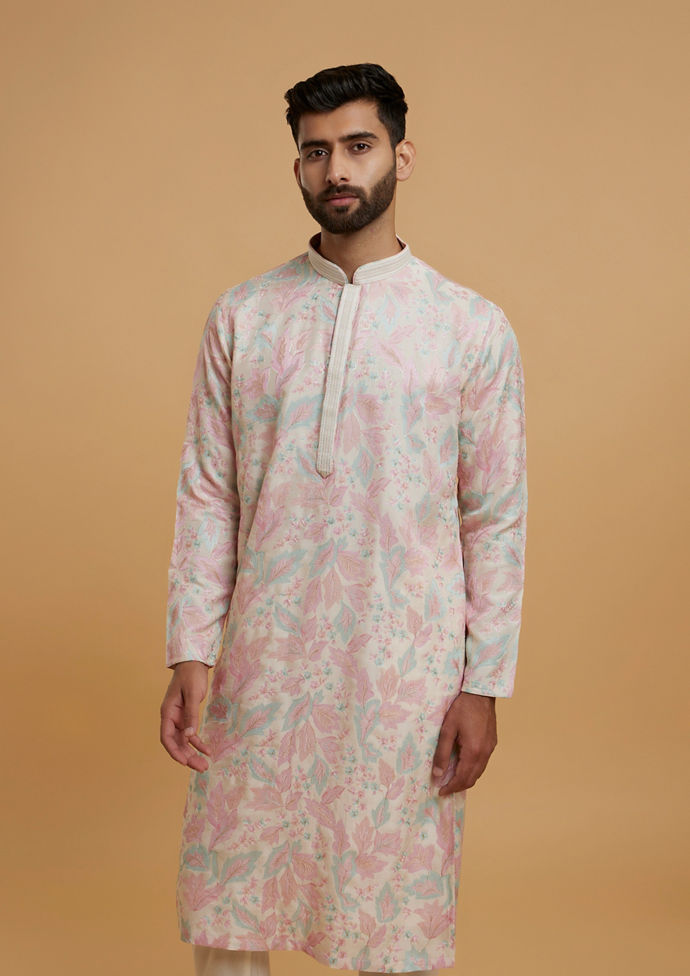
Chanderi has a matte surface, so the pink and cream embroidery stays readable instead of catching glare when the sangeet lights move across it. The fabric is a silk and cotton blend, which is why the kurta holds a soft drape without the sheen you get on satin or tissue. Embroidery sits along the yoke and sleeve openings, leaving the lower panel plain enough to move easily when you sit or dance.
Viscose sits close to the body and keeps its shape over a long evening. The sequin embroidery is the reason to pick this dusty pink set for a reception rather than for daytime events. Sequin work adds weight to the front panel, so the kurta hangs straighter than a georgette piece and reads better under indoor lighting after dark.
Georgette weighs less than viscose and has a slight grain to the surface, which keeps this dusty pink kurta comfortable across a full day of wedding functions. The lighter panel also means a fuller flare through the hem, so a pink flared kurta shape works well here if you prefer movement over a straight cut. Embroidery is concentrated at the neckline and cuffs, keeping the rest of the body easy to style with a dupatta.
The table runs left to right: product name, key features, best for. If you want a pink floral kurta instead of an embroidered one, start with the printed Ikat row. Fabric weight matters most when you compare rows, since the lighter georgette pieces suit daytime functions and the viscose sets carry better into an evening reception.
|
|
|
|
|
|
|
|
|
|
|
|
|
|
|
|
|
|
|
|
|
|
|
|
Small floral repeats suit a daytime mehndi, where guests stand close and photos are taken in daylight. Large Ikat motifs hold their own at an evening reception, where distance and low light flatten fine detail. As a rough guide, a repeat under about 3 cm blurs into a single tone across a flared hem, while a motif wider than 15 cm overwhelms a fitted bodice.
Georgette and Ikat silk sit lighter than sequin-worked viscose, which matters for a summer sangeet that runs late. Ask the seller for fabric weight in gsm: georgette runs 60 to 80 gsm, while sequinned viscose is heavier because of the embroidery and needs a breathable lining for daytime functions.
Have the sleeves end at the wrist bone and the hem land between mid-calf and ankle. Raise both arms in front of a mirror: if the hem rides above mid-calf, the bodice is cut too close and the kurta will bunch when you sit. Check the armhole the same way, since a tight armhole pulls the print out of line across the chest.
Keep jewellery to one statement piece, such as a jhumka or a maang tikka, and leave the neck and wrists comparatively bare. A pink flared kurta already carries volume, so a choker layered with long chains muddles the neckline. Pin the dupatta inside the shoulder line, and choose a border width close to the print repeat so the two scales agree. A heavy dupatta drapes best over one shoulder, which keeps the flare visible from the side.
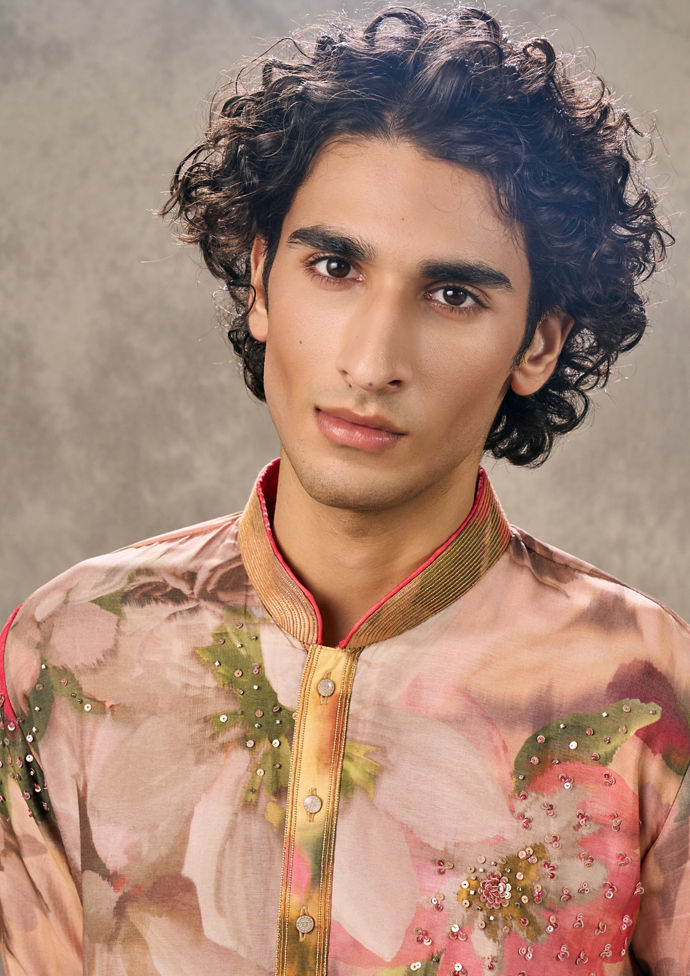
Small floral repeats, about 1 to 3 cm across, hold their shape when guests stand close, which is why they work at daytime functions. Once a motif grows past roughly 8 cm it starts to read as evening wear, and two large flowers in the same colour compete with the dupatta. Check the print scale on the fabric photo before you buy.
Flared and A-line cuts widen from the waist or hip down, so the hem clears your legs when you walk or dance at a sangeet. A flare of about 20 cm or more at the hem gives room to move, and anything tighter behaves like a straight cut. Measure the hem sweep against the bust size you normally wear, and choose the wider option if you plan to sit on the floor during the event.
A straight-cut pink printed kurta drops vertically from the armhole to the hem with no waist darts, so the fit stays even through the bodice. That shape layers over a slip or palazzo without pulling. Straight cuts need about 5 cm of ease at the bust, so measure against the size chart rather than guessing from your usual top size. If you want shaping instead, pick an A-line.
Sequin and embroidered panels are dry clean only. Machine washing pulls the sequins loose, snags the embroidery thread and leaves a dull finish on metallic work. Store the kurta folded rather than on a hanger so the weight of the embellishment does not stretch the shoulders, and iron on the reverse at a low setting.
Store them folded flat instead of on hangers, because hanging pulls at damp seams and distorts the print along the shoulders. Fold along a different line each time you put the piece away, and keep embellished kurtas in a cotton bag so metallic thread does not catch on anything else in the wardrobe.
For a daytime mehndi, keep the palette light: ivory and pale gold sit well against pink floral prints and hold up in daylight photographs. Evening functions take wine and deep rose, which read darker once the lighting warms up.
A sheer organza dupatta suits daytime layering because it adds coverage without weighing down the kurta. For receptions, switch to a bordered silk dupatta, which holds its shape when draped over the shoulder. Whichever you choose, match the border width to the print repeat so the two scales sit in agreement.
Turn the kurta inside out, wash it in cold water on a gentle cycle, and dry it in the shade. Sunlight breaks down magenta and rose dyes faster than it does most other colours. Skip chlorine bleach, and press on the reverse side so the iron never touches the print.
Yes. Pale florals in blush or powder pink suit a daytime mehndi, where the outfit is usually photographed in natural light. For a sangeet, a flared pink kurta with sequin work holds up under stage lighting. Keep the jewellery light so the print reads clearly.
Take your bust measurement and check it against the seller's size chart, since sizing shifts between labels and cuts. Most side seams carry 2 to 4 cm of allowance, so a tailor can take in or let out the bust and waist. Between two sizes, choose the larger one. Taking a kurta in is straightforward, adding fabric is not.
Cool pinks such as fuchsia and rose sit well with silver or rose gold. Warm coral and peach pinks look better with antique or dull gold. The undertone in the print decides the metal more than the base colour of the fabric does.
Explore and Buy Now: Maroon Kurta , White Kurta For Men
Pink Printed Kurta Price List
Pink Printed Kurta
Price (₹)
Rani Pink Ikat Silk Printed Kurta Pant Set
₹ 9,999
Pink Georgette Embroideredand Printed Kurta Pant Set
₹ 14,999
Pink & Cream Chanderi Embroidered Kurta Set
₹ 12,999
Dusty Pink Viscose Sequin Embroidered Kurta Set
₹ 8,999




Login to access Twamev Member Exclusive Features like Video Commerce

Enter the mobile number or email address associated with your Manyavar account
We’ll ask for this password whenever you sign in