Pink Sherwani
2 PRODUCTS
Filter

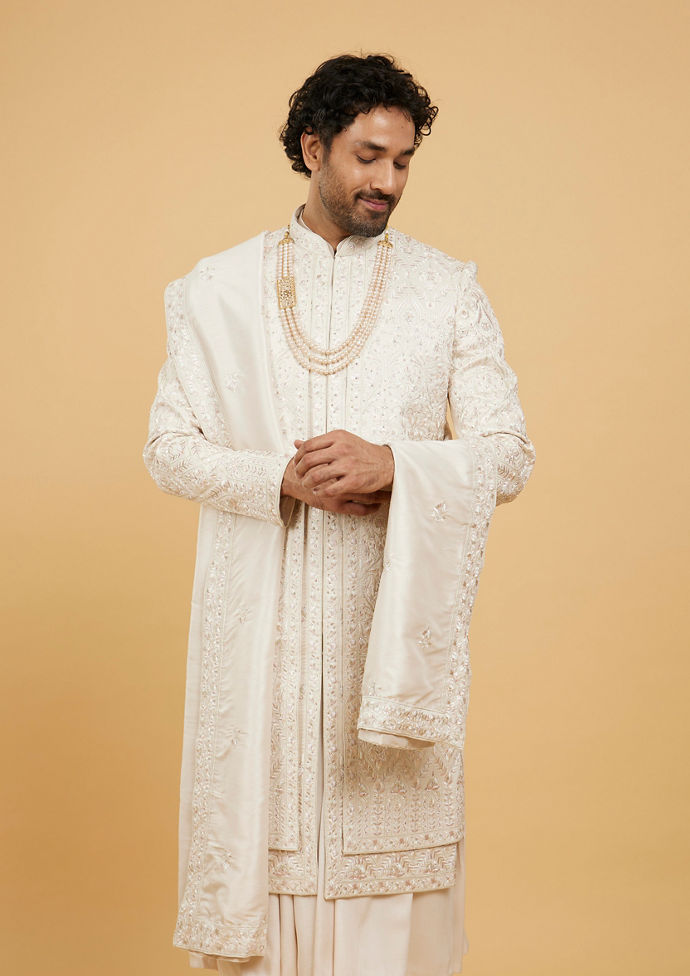
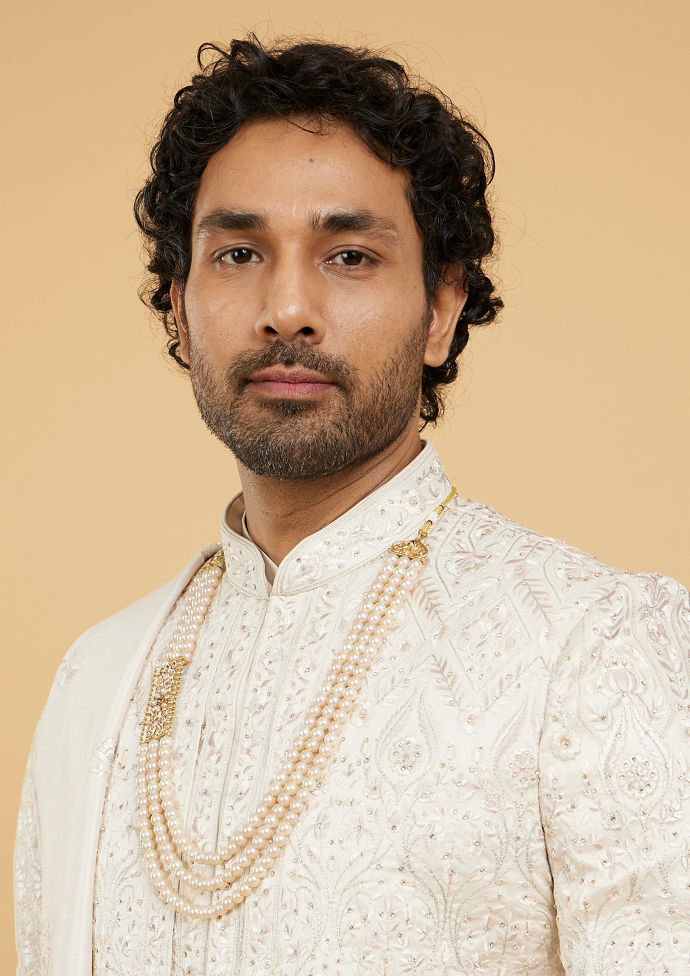
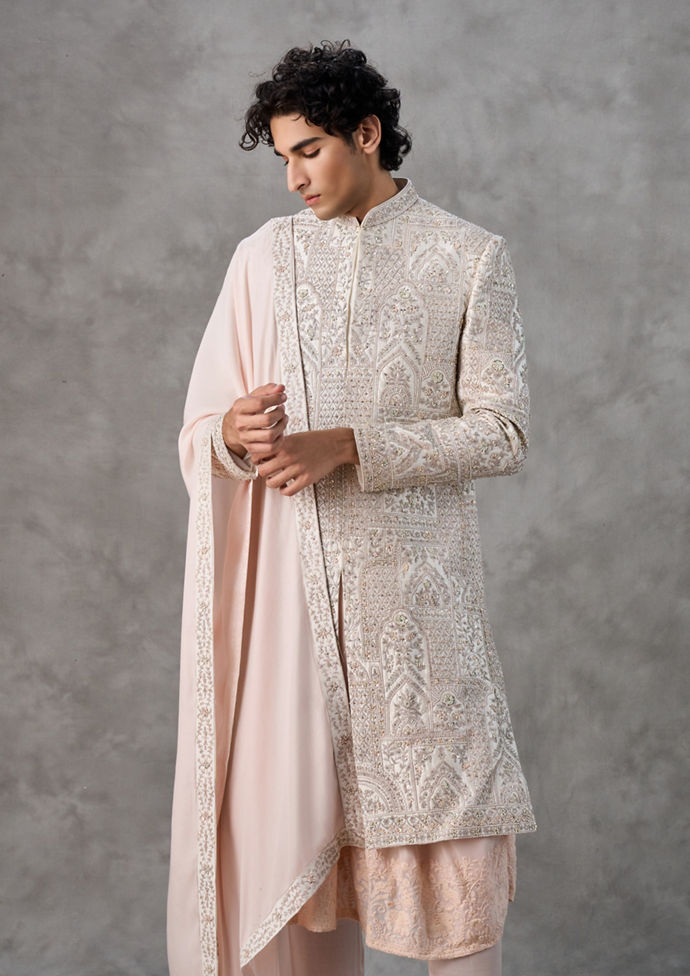
The 2026 pink sherwani range has two silk pieces: the beige pink resham hand-embroidered sherwani and the ivory pink Silk Zardozi embroidered sherwani. Both are men's wedding sherwanis. The choice comes down to shade and how dense the embroidery is.
Resham thread work sits flat against the silk, so the beige pink sherwani reads quiet in daylight. Zardozi is denser and raised, which is why the ivory pink one holds its detail under evening light, whether that is a reception or a groom's entry.
Both are full-length sherwanis from our wedding range, cut to be worn with a churidar and mojaris. Sizes and measurements sit in the table below. Reserve your size early, since alterations during wedding season take time.
Every piece here is cut for men and full-length, so pink kurtas, bandhgalas, and boys' sizing sit outside this edit. If you are shopping for a shorter jacket-style layer, look elsewhere; what you see below is the long sherwani silhouette, worn with or without a dupatta.
Blush, light pink, dusty pink, and deeper rose are the tones you will see most, and the same dye reads differently depending on the light. Ask for a photo taken in daylight rather than under shop tube lights before you commit, because dusty pink in particular turns greyer indoors and warmer in the sun. Deeper rose holds its colour better in evening photographs, while blush tends to wash out under flash.
Take your own numbers in centimetres first: chest at the fullest point, shoulder seam to shoulder seam across the back, sleeve length from shoulder point to wrist, and total length from the shoulder down to where you want the hem to fall. Measure over the kurta or shirt you plan to wear underneath, not against bare skin, and keep the tape level. Compare those figures against the seller's size chart, and ask how much seam allowance is built in for a tailor to take in or let out. A sherwani that fits at the chest but pulls across the shoulders will not be fixed by a size up; the shoulder measurement matters more than the chest on a structured piece.
Grooms, groomsmen, and wedding guests are the three groups this edit is built for, across sangeet, haldi, and reception functions. Grooms usually take the deeper rose or dusty pink end, since it photographs well against a white or ivory backdrop. Groomsmen work best in one shared shade so the group reads as a set, and a lighter blush or light pink is easier for guests to wear without competing with the couple. A deeper pink also carries through to an evening reception if you swap the dupatta and add a brooch. If your function is a daytime haldi, blush and light pink stay cool in the sun; for a night reception, dusty pink with gold embroidery holds up better under warm lighting.
Resham is silk thread worked by hand, and on beige pink it keeps the colour quiet instead of bright. The surface stays matte, so the embroidery reads clearly in daylight. That is why haldi, mehendi, and other daytime functions suit this piece so well.
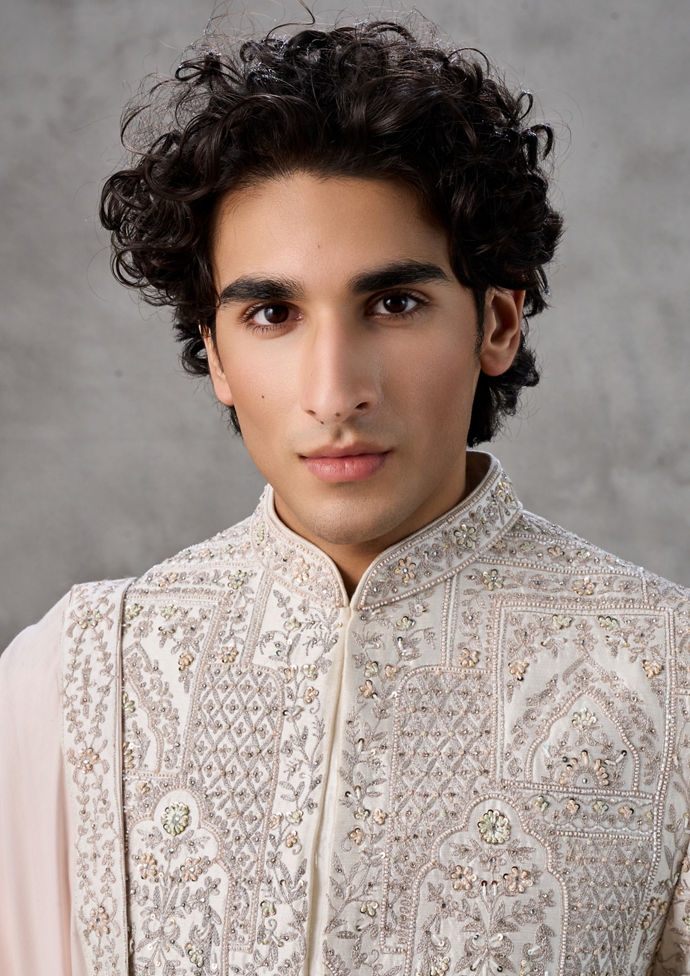
Zardosi uses metallic thread, so the embroidery picks up light from lamps and stage lighting. On ivory pink silk the shine stays soft against the paler base. Reception and sangeet both run after dark, and those are the occasions where this one reads best.
The two sherwanis below differ mainly in embroidery technique, and that detail decides when each one works. Both are cut in pink silk, so the choice comes down to thread type and lighting.
|
|
|
|
|
|
|
|
|
|
|
|
Haldi and mehendi run in natural light, so the beige pink resham sherwani suits them. Reception and sangeet run under artificial light, where the ivory pink zardosi piece looks best. For accessories, cream or gold mojaris and a dupatta in the same tone keep the pink as the main colour. A dupatta in a strong contrasting shade pulls attention away from the embroidery, so keep the accessories neutral.
Warm reception bulbs sit near 2700K, and that colour cast drags pink toward coral once a camera sensor reads it. Test a light pink sherwani for men under those bulbs, then step outside and check it again under 5500K daylight. If both readings stay pink, the shade holds up from the ceremony through the photos.
Silk at roughly 150 to 200 gsm carries you through a three-hour daytime ceremony without turning clammy. Winter receptions are a different job. Velvet near 300 gsm holds shape and warmth when the event runs past midnight and the hall cools down.
Hand the tailor three numbers and check them at the first fitting. The shoulder seam sits on the acromion with about 1 in of ease. The chest runs 2 in wider than your body measurement. The hem falls 1 to 2 in below the knee, which keeps the drape clean when you walk and sit.
Heavy embroidery makes a panel stiff, and a stiff panel stands away from your chest instead of moving with it. Keep the densest work on the front, where the fabric stays fairly flat, and leave the sleeves lighter at the elbow so your arms bend without pulling.
Light pink reads soft in direct sun, so it works for morning ceremonies, haldi, and daytime weddings. Dusty pink sits a shade deeper and holds its tone under warm evening lamps, which makes it the better pick for receptions and sangeet. If your event runs from afternoon into night, dusty pink will not wash out in photos taken after sunset.
Resham is untwisted silk floss, so the stitching sits flat on the fabric and reads as texture instead of shine. Zardozi wraps metallic wire around a core thread and stitches it over a padded base, which is why it lifts under stage lighting and adds weight to the front placket. Choose resham for daylight events and soft-light photography; choose zardozi for evening venues and darker rooms.
A complete set includes the sherwani, churidar, dupatta, and stole, so you are not hunting for matching pieces later. Check that the churidar has enough gather at the ankle to sit in folds, and that the dupatta is long enough for a shoulder drape rather than a full wrap.
Pair the sherwani with mojaris in a tone pulled from the embroidery, such as antique gold or ivory, rather than another pink, which keeps the outfit from looking flat head to toe. One brooch on the left placket is enough. If the front already carries zardozi, leave off the pocket square and let the threadwork speak for itself.
Hold the steamer roughly 10 cm from the dusty pink silk and work in slow passes so the fabric relaxes without soaking through. Let the sherwani dry fully in open air, then hang it inside a muslin cover, which keeps dust off the surface while the silk still breathes. Between two functions, keep it on a broad wooden hanger rather than a wire one so the shoulders hold their shape.
Blot a fresh spill with a dry cloth instead of rubbing it, because friction flattens zari thread and drags at hand embroidery. Press the embroidery face-down over a soft towel, and treat the sherwani as dry clean only for anything beyond a light surface mark. If the mark sits on the collar or cuffs, leave it for the professionals rather than working at it yourself.
Pin the dupatta at the left shoulder so the zari sits where the light falls rather than in shadow. Keep the layers underneath smooth and flat, which holds the dupatta line straight in close-up shots. A light press on the kurta beneath the sherwani makes more difference to the final photograph than any styling trick.
Roll the sherwani in tissue paper and set it in a rigid case so the embroidery does not take a hard crease in transit. Steam it about two hours before the function, then leave it hanging until you dress. Once you reach your room, unpack it straight away so the fabric has time to settle.
Yes. Dusty pink carries more grey than blush does, and that grey keeps it looking formal in the flat light of a midday ceremony. Wear it over an ivory or cream Silk kurta, and choose a stole or dupatta a shade deeper than the sherwani so the two pieces read separately in daylight.
It can, though the colour is rarely the problem. Pale pink goes flat on camera when the embroidery thread sits almost the same tone as the fabric, because flash and hard daylight compress those close shades into one. Pick a sherwani where the thread runs at least two shades deeper than the base, and stand against a backdrop darker than your outfit.
Waist and side seams are the parts a tailor can move. The front panel with its zari or dabka work should stay untouched, so any change to chest width has to come through the side and back seams instead. Shoulder width and sleeve length are the hardest areas to correct, which is why it pays to get the shoulders right at the first fitting rather than planning a rebuild. Book the tailor about ten days before the wedding and allow for two fittings.
Match the shoe to the depth of the pink. Sandalwood, tan, or cream juttis and mojaris suit dusty pink; burgundy, deep maroon, or black sit better under a magenta sherwani. Keep the finish matte, because patent leather next to pink fabric looks off in daylight photographs.
Shop Now: Kurta Pajama For Men , Indo Western Dresses For Men , Footwear
Pink Sherwani Price List
Pink Sherwani
Price (₹)
Beige Pink Silk Resham Hand Embroidered Sherwani
₹ 44,999
Ivory Pink Silk Zardosi Embroidered Sherwani
₹ 89,999




Login to access Twamev Member Exclusive Features like Video Commerce

Enter the mobile number or email address associated with your Manyavar account
We’ll ask for this password whenever you sign in