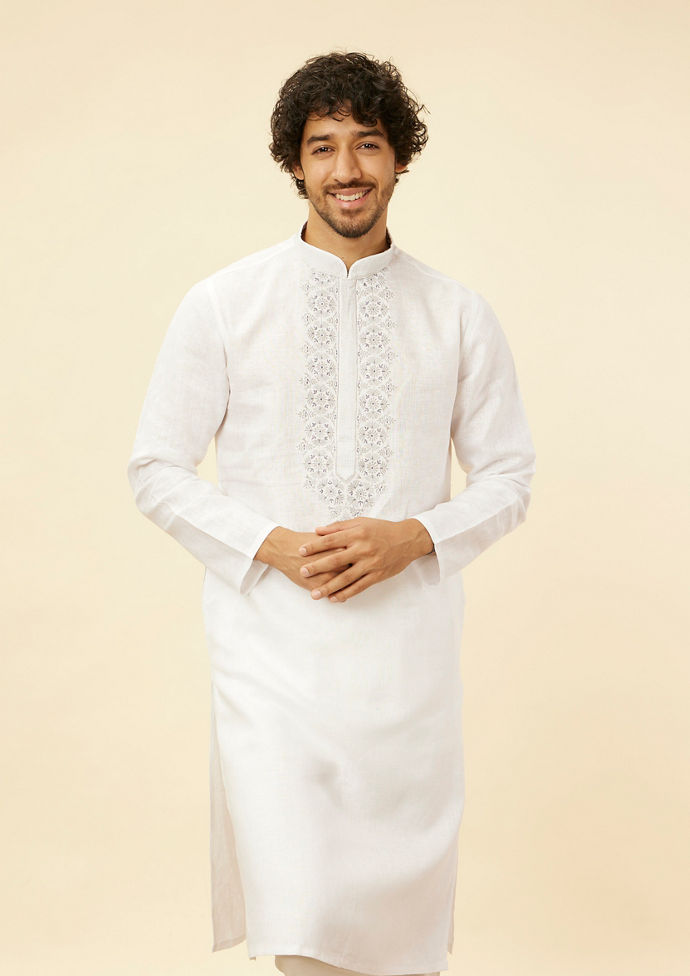
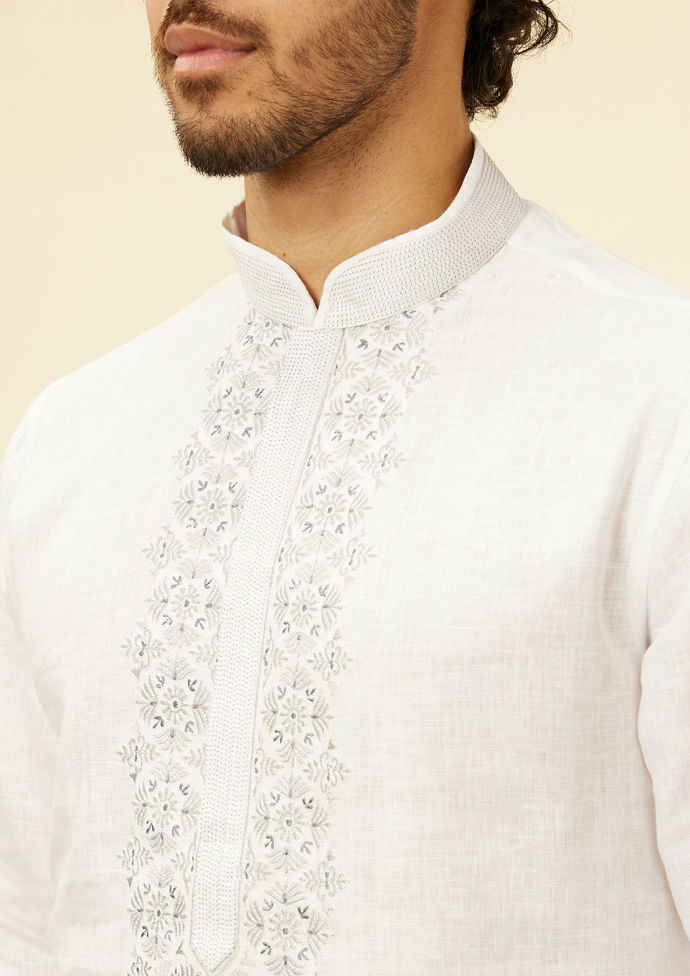
Looking for a white linen kurta to wear to a wedding or a summer occasion? Our edit keeps the focus on white linen occasion wear, led by the White Linen Zari Embroidered Kurta Set, made in white linen with metallic zari embroidery worked across the body, alongside plain white linen kurtas for daytime functions.
Zari thread gives the set its dressier look, while linen keeps it light enough for daytime ceremonies and sangeet functions. Everything in this edit is white and cut for occasion wear, so you will not find a casual kurta mixed in.
Use the table below to compare features and the occasions each piece suits best, then read the buying guide for fit, styling, and care notes.
Linen moves moisture away from the skin faster than tightly woven cotton. A white linen kurta in the 150 to 200 gsm range stays wearable through a daytime ceremony at 35°C.
Look for a chest measurement about 2 in (5 cm) wider than your own, and a hem that falls 2 to 3 in below the knee. Standard sizes typically run from 38 to 46 in chest.
White linen suits daytime haldi and mehndi functions, summer sangeet evenings, and pre-wedding brunches. Zari or thread embroidery gives the white enough weight for reception wear.
The table below lists the white linen kurtas in this collection by fabric, features, and the occasion each one fits. Compare the rows before you buy.
|
|
|
|
|
|
|
|
The zari work sits on the surface of the linen, so the set reads as formal without a heavy layer underneath. Wear it to a wedding or reception where the dress code runs traditional.
Plain white linen kurtas carry no embroidery, so air moves freely through the fabric and the garment stays light on the shoulders. That makes them practical for a haldi or mehndi that stretches into the afternoon heat.
Take the embroidered set to a sangeet, where the detail holds up in photographs and through dancing. For the ceremony, pair a plain kurta with a light jacket and keep the look simple.
Measure shoulder seam to shoulder seam for width, across the chest at its widest point under the arms, and nape to hem for length. Match those three numbers against the size chart rather than the size printed on your shirt.
Hold the cloth up to daylight. If your hand shows through, choose a white linen kurta for men with cotton lining in the 150 to 200 gsm range; if the weave stays opaque, an unlined kurta is enough.
Zari work with a mandarin collar fits a wedding. A plain placket neckline is the better call for haldi and mehndi, where the kurta gets worn through long hours outdoors.
Wrist-length sleeves hold their line at evening functions and in air-conditioned halls. For daytime outdoor events, choose a sleeve that rolls cleanly to the elbow so air moves at the forearm.
White linen works as hard at a haldi as it does at a reception, provided the fit is right. Get your measurements first, settle the lining and embroidery next, and check the care label so the kurta keeps its colour and its crispness for the seasons ahead.
Aim for 150 to 200 gsm linen with a tight, even weave. Below 150 gsm, a white kurta turns see-through the moment daylight hits it. Above 200 gsm, the cloth stops moving the way linen should. Hold the fabric up to a window before you commit. If you can read text through it, that piece is too thin for a single-layer white kurta. A tighter weave inside this range also holds a pressed collar and placket line much better over a long day.
A mandarin collar keeps its stand when the fabric is crisp and the interlining is firm. Press the collar edge between your fingers and see whether it springs back. If it folds flat, it will droop by midday. A concealed placket hides the buttons and gives a clean front line, while a visible placket reads more casual and is easier to open when it is hot. Pick the one that matches how you plan to wear the kurta, since the placket sets the tone long before anyone notices the embroidery.
Run a thumb across the zari. Evenly spaced, dense stitches sit flat against the cloth. Loose or crowded stitching pulls the linen out of shape and snags on rings and seatbelts. Then turn the kurta inside out and check the inner seams. A bound finish encloses the raw edge so linen does not fray after a few washes. An overlocked edge leaves the raw thread exposed and will shed within a handful of laundry cycles.
White linen in the 150 to 200 gsm range still shows what sits underneath, especially across the chest and shoulders. A cotton lining on the front panel fixes that without trapping heat the way a synthetic lining does, and it stops the placket from curling at the buttons. If the kurta is unlined, wear a cotton vest in a tone close to your own skin. A white vest under white linen still reads as a grey patch in daylight.
Wash at 30°C or lower on a gentle cycle with a mild liquid detergent, and do not wring the cloth. Dry it flat in shade. Direct sun yellows white linen over repeated exposure, so keep the kurta out of strong afternoon light. A short spin cycle helps shed the heaviest water, but skip the tumble dryer where you can, since it sets creases that are difficult to press out later.
Press the fabric while it is still damp, with steam, at 150°C to 200°C, and move the iron along the grain. Store it folded, with acid-free tissue layered into the fold lines. Hanging a linen kurta stretches the shoulder seams out of shape. Rotate the fold lines every few months so the same crease does not set in permanently.
A structured Nehru jacket works for evening functions; leave the collar stand visible above it. Matte handloom stoles worn with tan leather loafers sit on the festive side, while metallic straps pull the same outfit towards casual. Keep the rest of the look quiet, since two textures are usually enough against a white base.
Blot turmeric or oil straight away, then lift what remains with an oxygen-based bleach. Chlorine is not an option here, because it yellows linen permanently. Embroidered sets marked dry-clean only should reach the cleaner within 24 hours.
If you are building an occasion wardrobe, our Kurta Pajama Sets are cut with the same attention to collar structure, seam finishing, and opacity that a white base demands.
Linen woven at 150 to 200 gsm holds its coverage and stays opaque in daylight. Thinner plain weaves, usually below that range, turn semi-sheer when the sun is behind you. If you pick one of those, wear a cotton vest underneath and the fabric reads solid again. Holding the cloth up to a window before you buy is the quickest test you can run.
A daytime mehndi works well. The light is even and soft, and a white kurta looks crisp next to henna. For an evening function under lamps or camera flash, wear a lined set so the weave does not show through. A lined kurta also keeps its shape through a long function, which matters if you are sitting on the floor for the henna itself.
Lift the paste off with a spoon, then blot the mark with a dry cloth rather than rubbing it in, since rubbing only pushes the colour deeper into the weave. Soak the stained area in oxygen bleach mixed to the package ratio for 15 to 30 minutes, then wash the kurta as usual. Check the spot before it goes near a dryer, because heat locks in whatever is left.
Unworn kurtas with tags still attached and in the original packaging are eligible for a return. Pieces that have been dry-cleaned or altered are not, since they cannot go back into stock.
Yes, provided the cut leaves room across the chest. Measure your own chest, then add at least 4 in or 10 cm of ease to find the garment measurement you need. A straight-cut kurta with side slits sits better than a slim fit through the waist, which matters in a fabric that has no stretch to it.
Roll it in tissue paper and place it on top of everything else in the bag. Rolling avoids the hard fold lines that creasing linen keeps for hours, and tissue stops the white from picking up dye from whatever is packed beside it.
Explore More Collections: Kurta Pajama With Jacket , Beige Kurta
White Linen Kurta Price List
White Linen Kurta
Price (₹)
White Linen Zari Embroidered Kurta Set
₹ 8,999





Login to access Twamev Member Exclusive Features like Video Commerce

Enter the mobile number or email address associated with your Manyavar account
We’ll ask for this password whenever you sign in