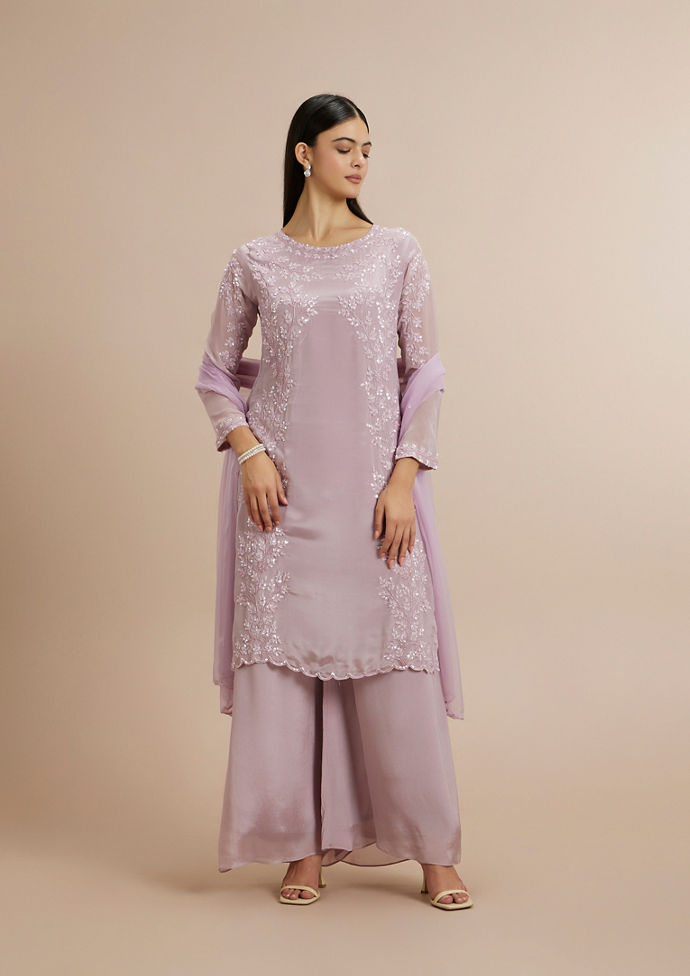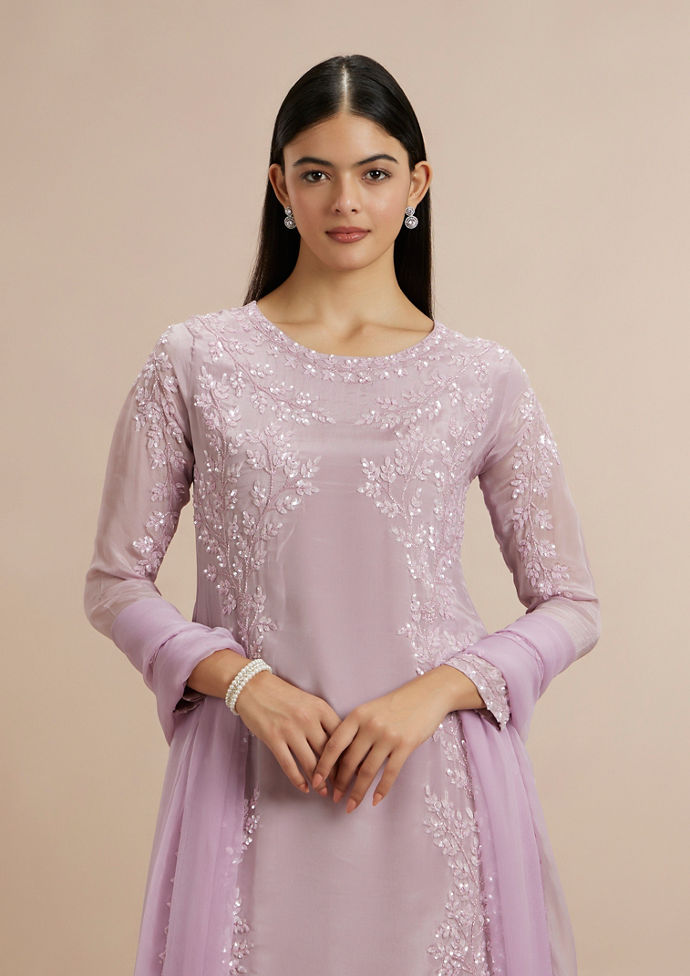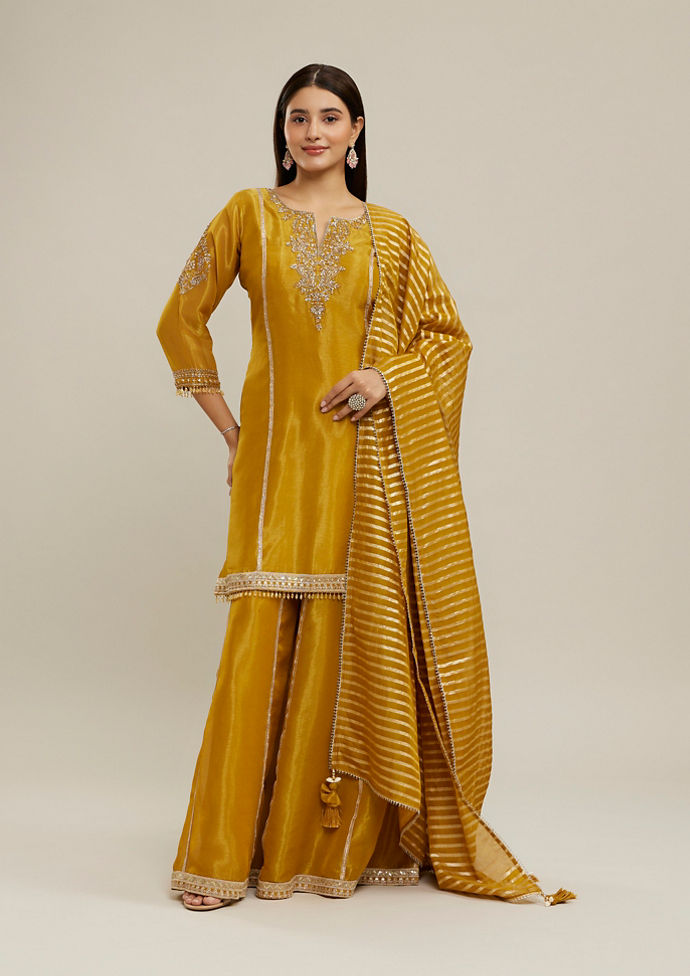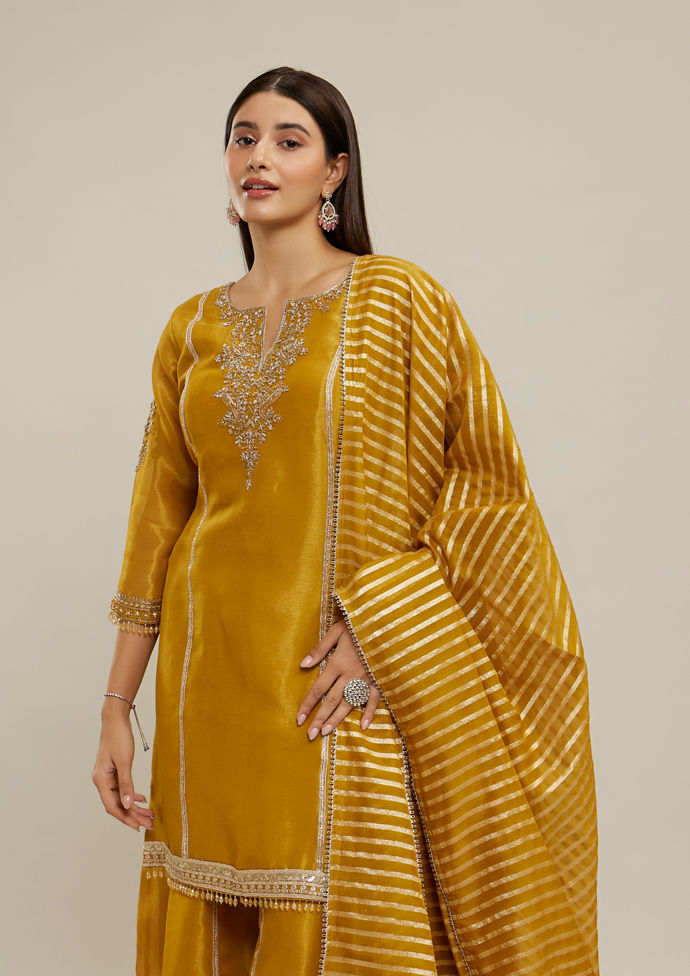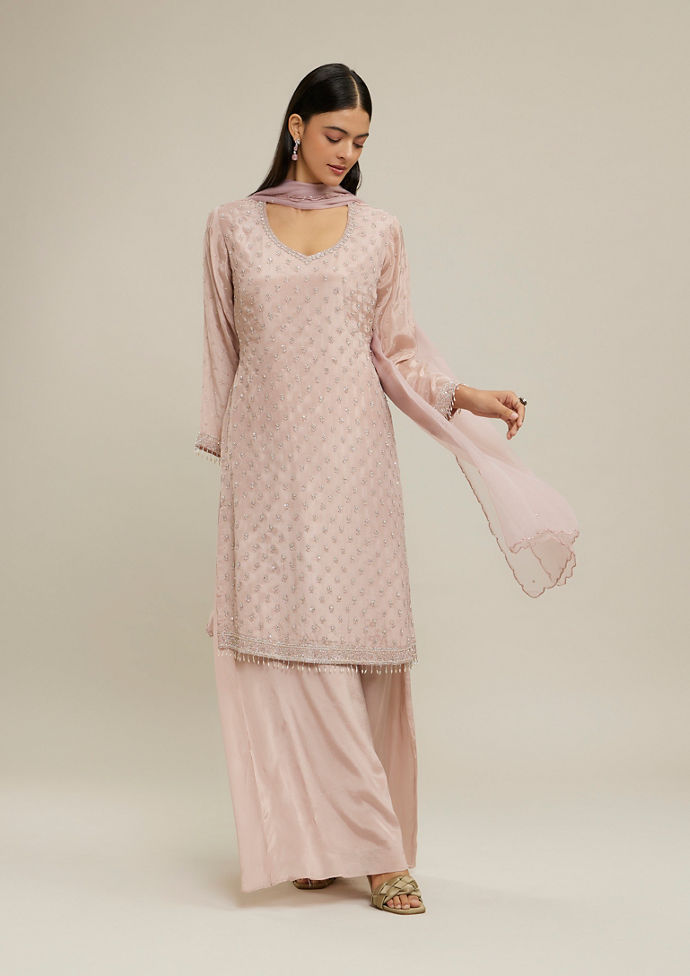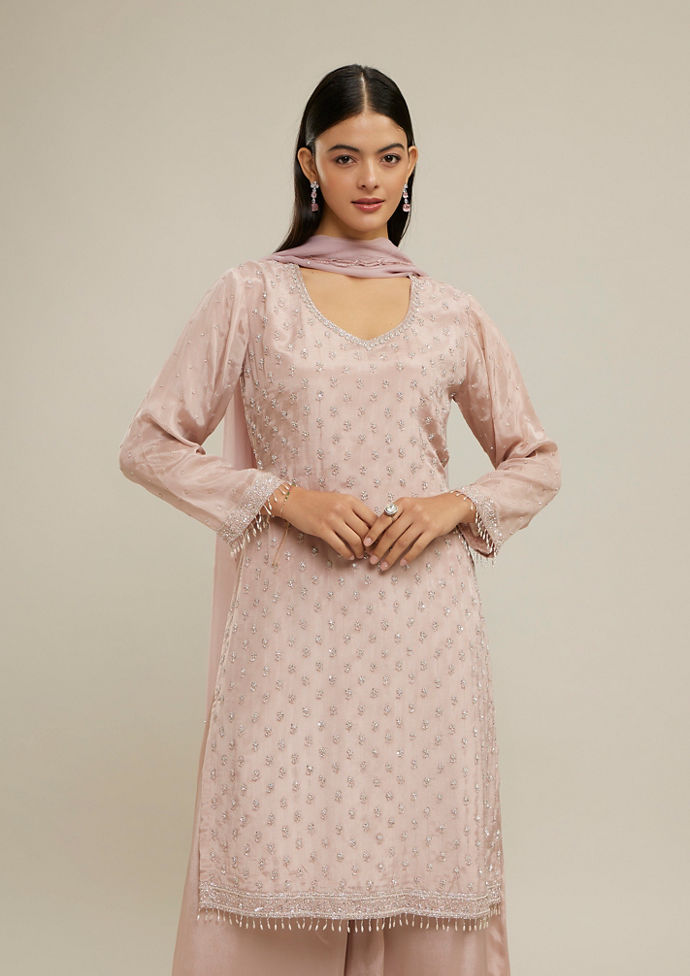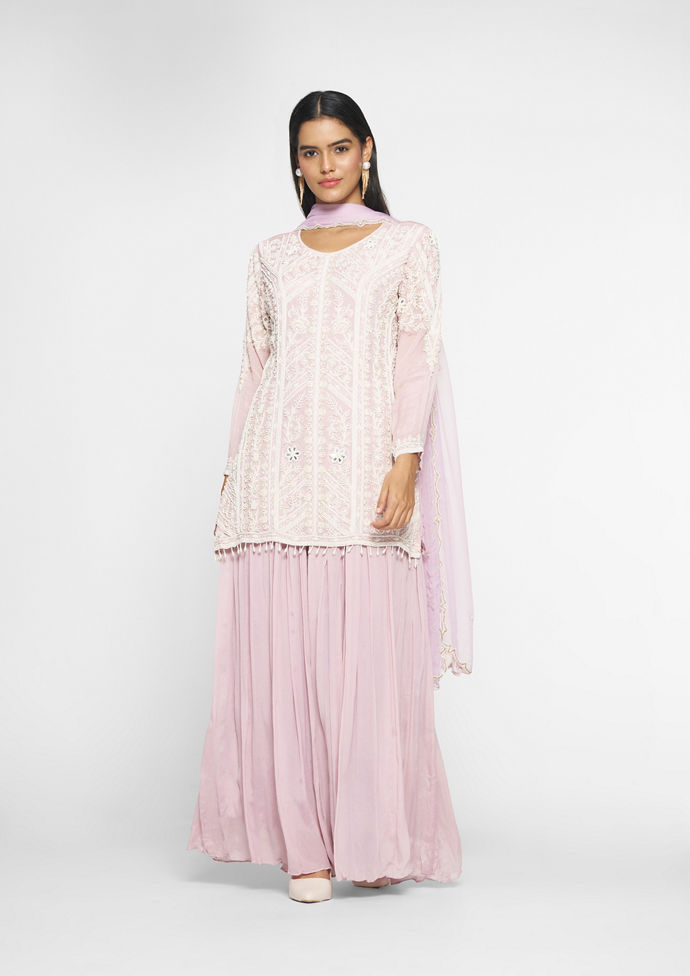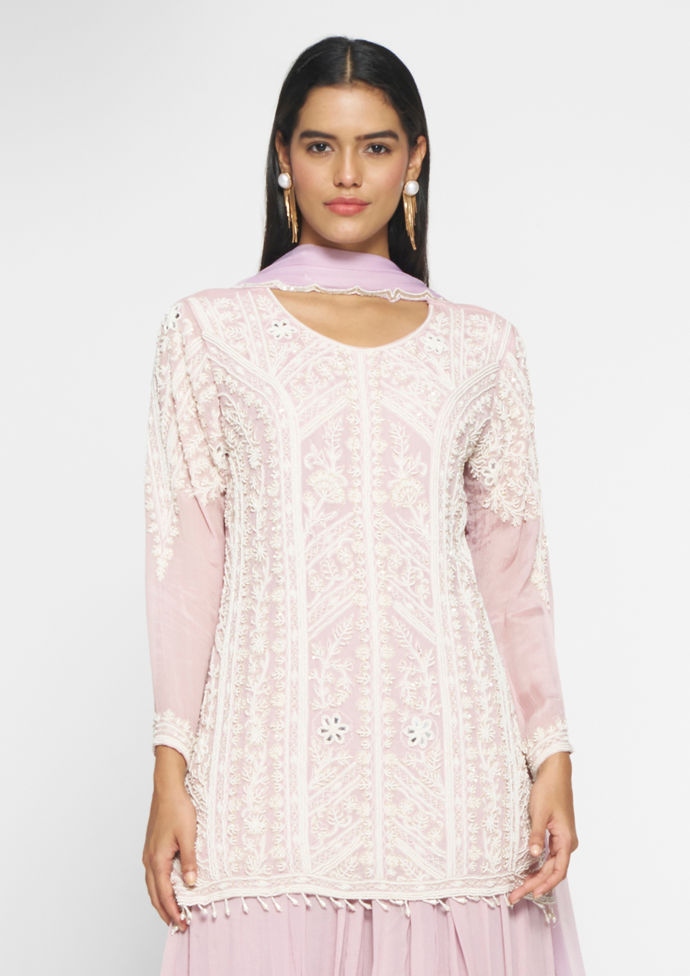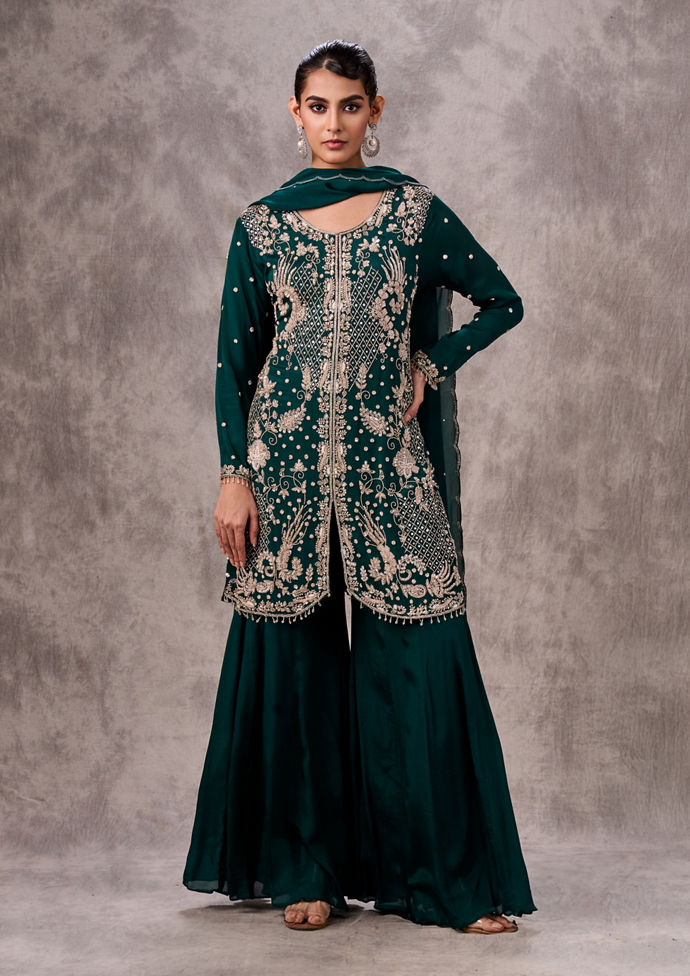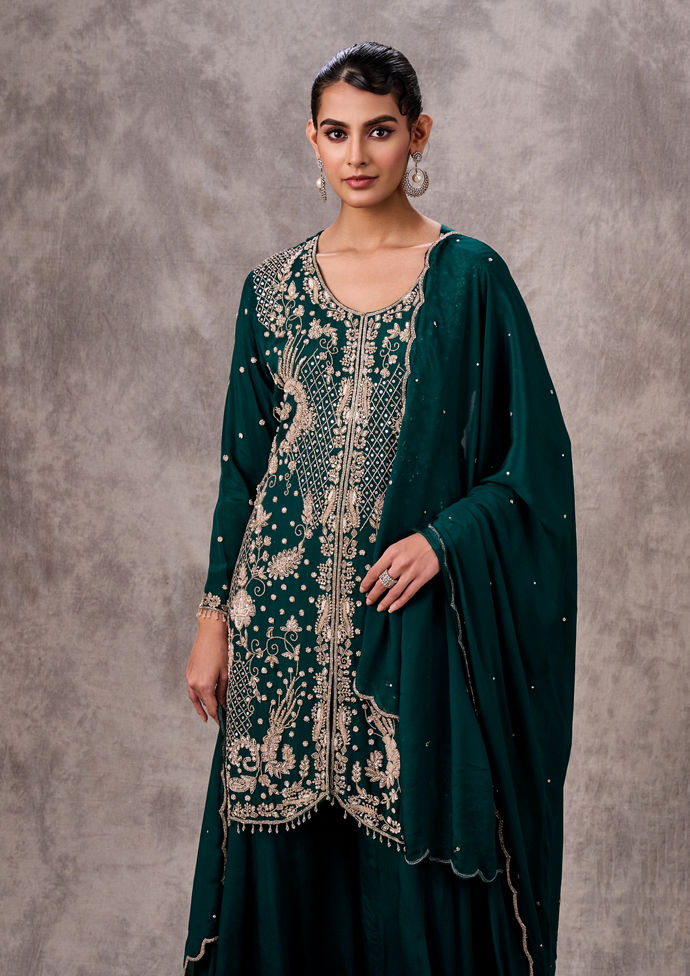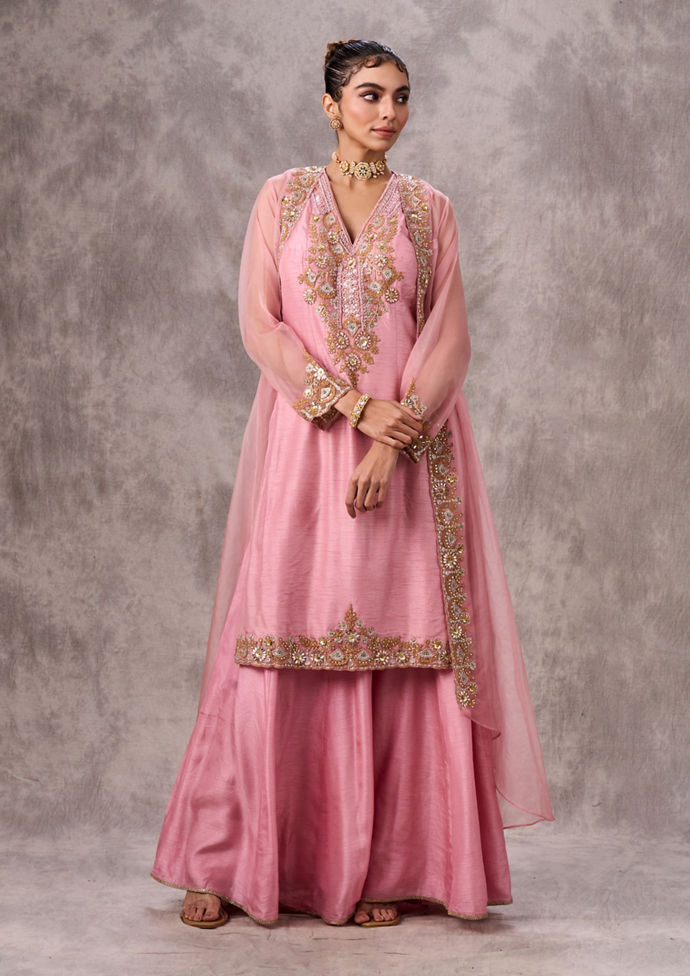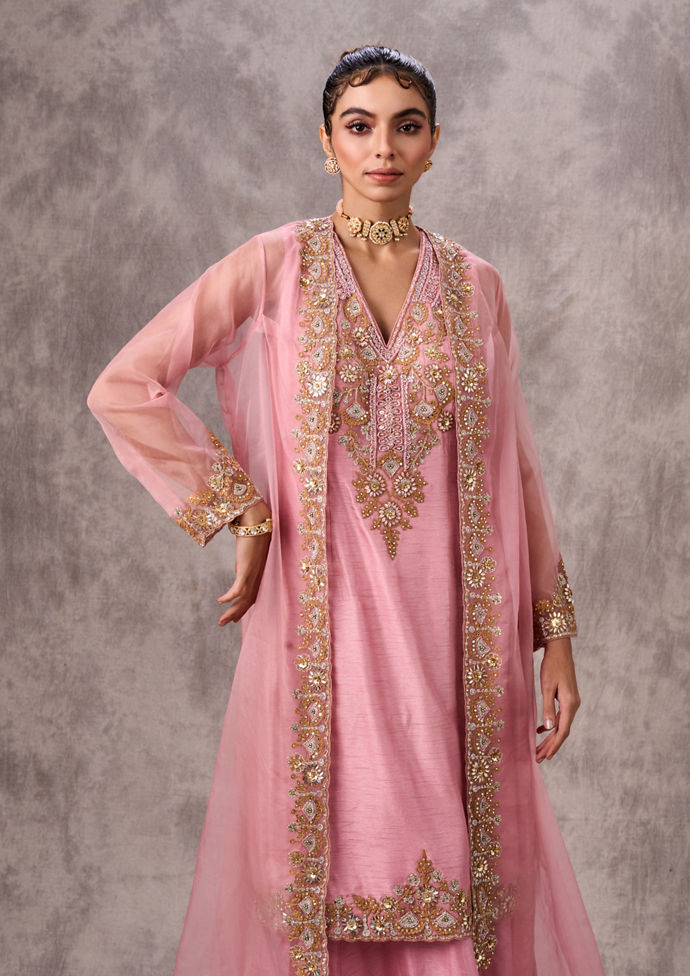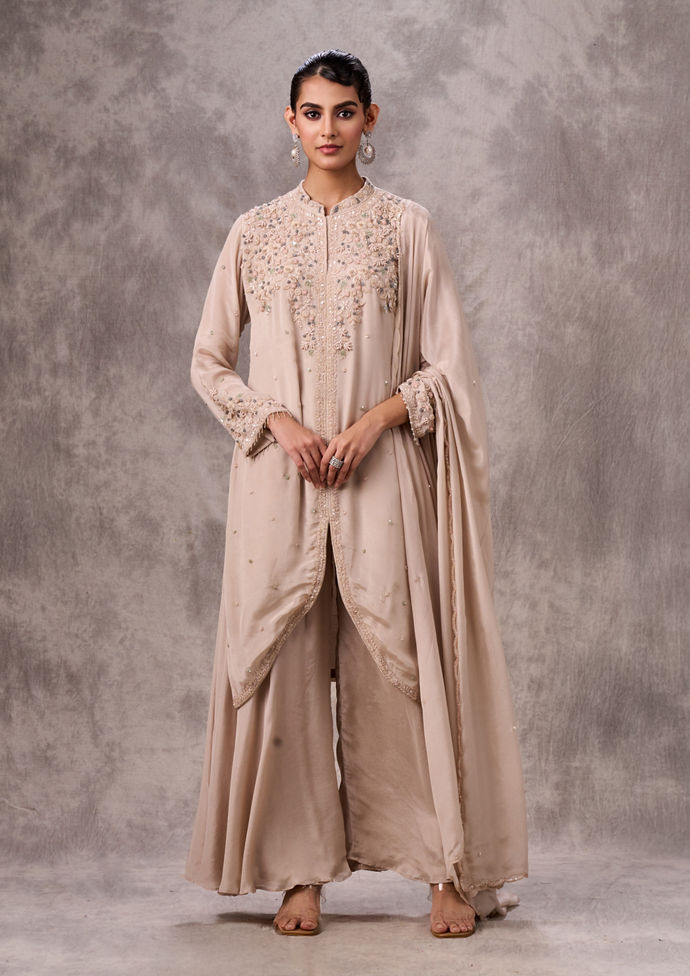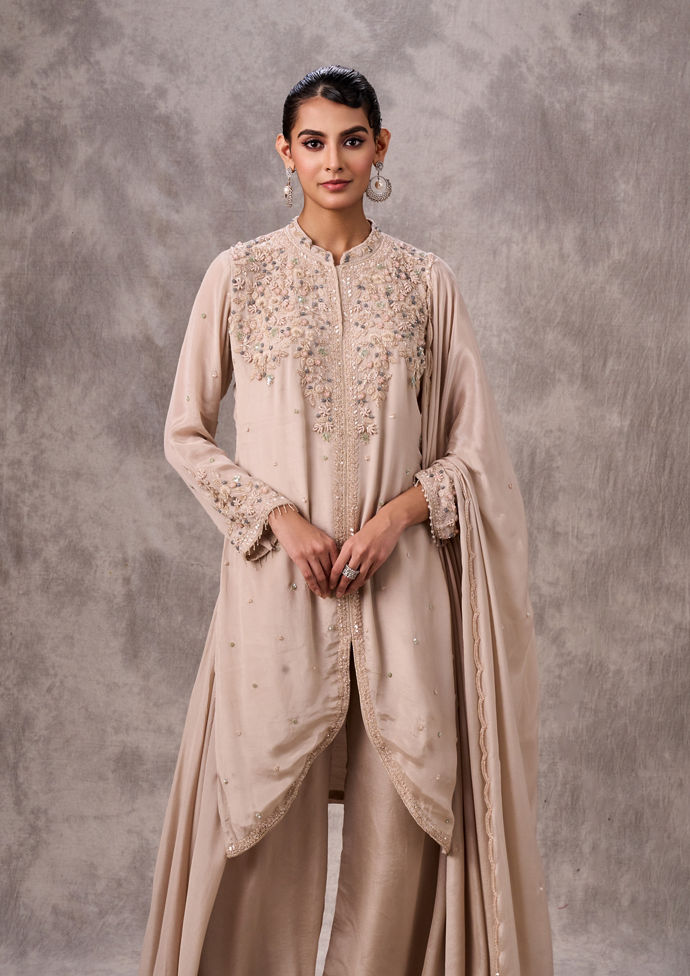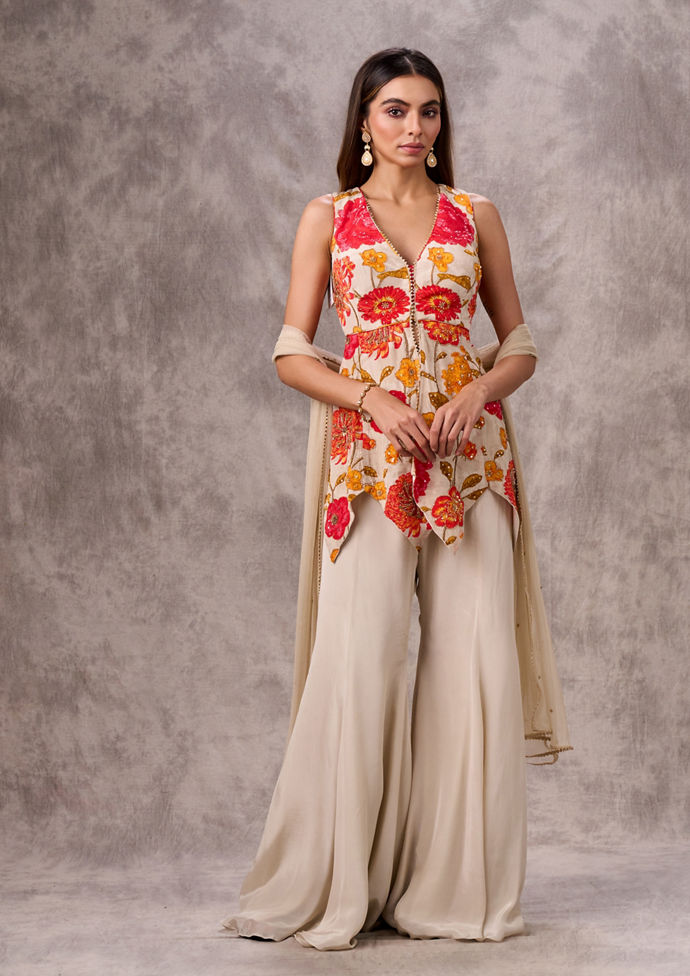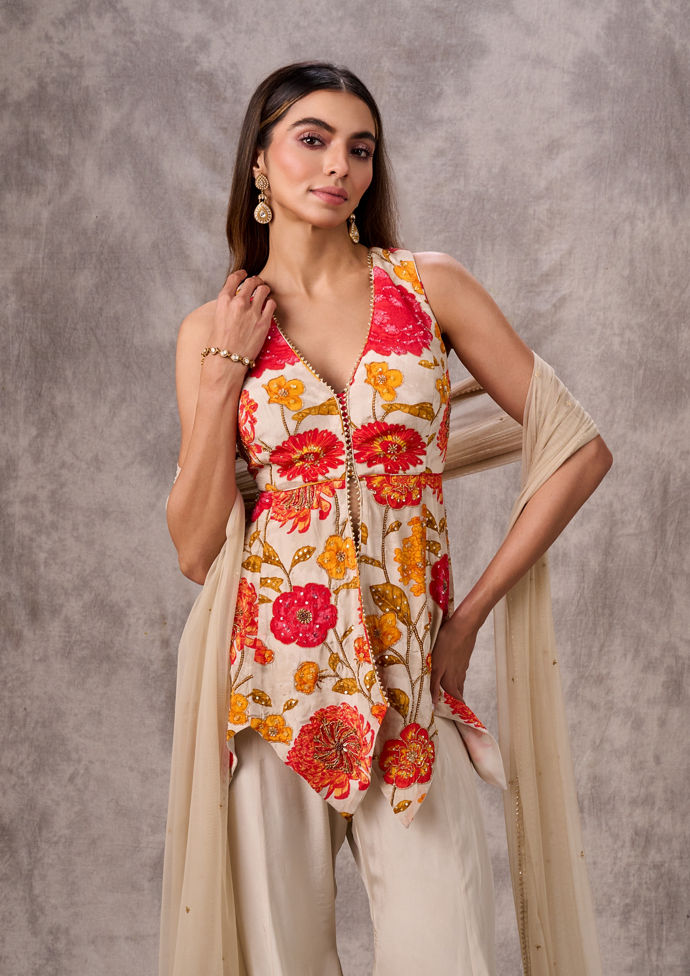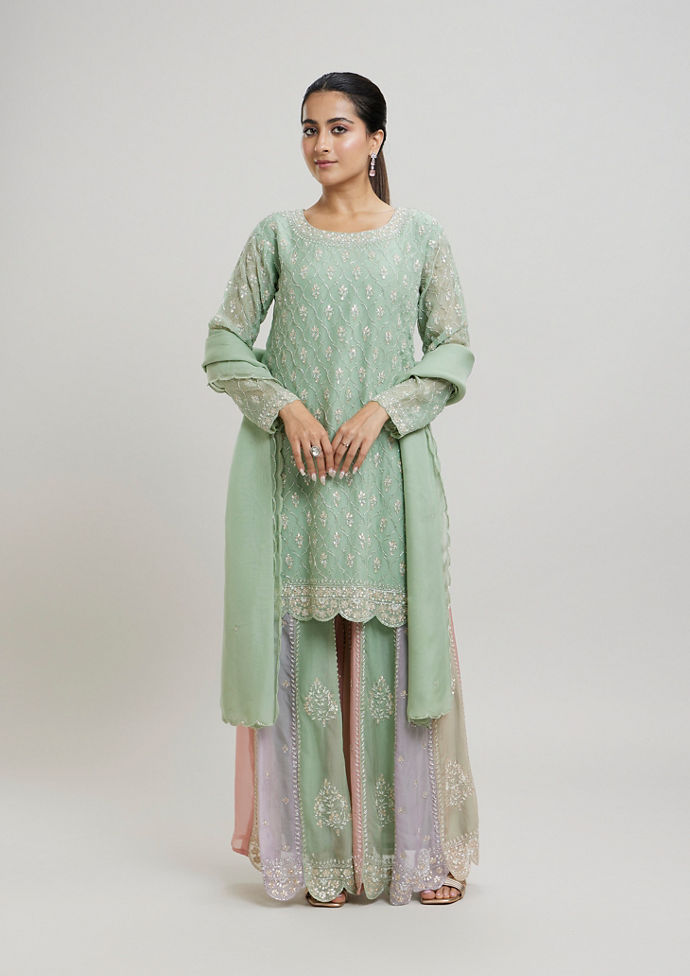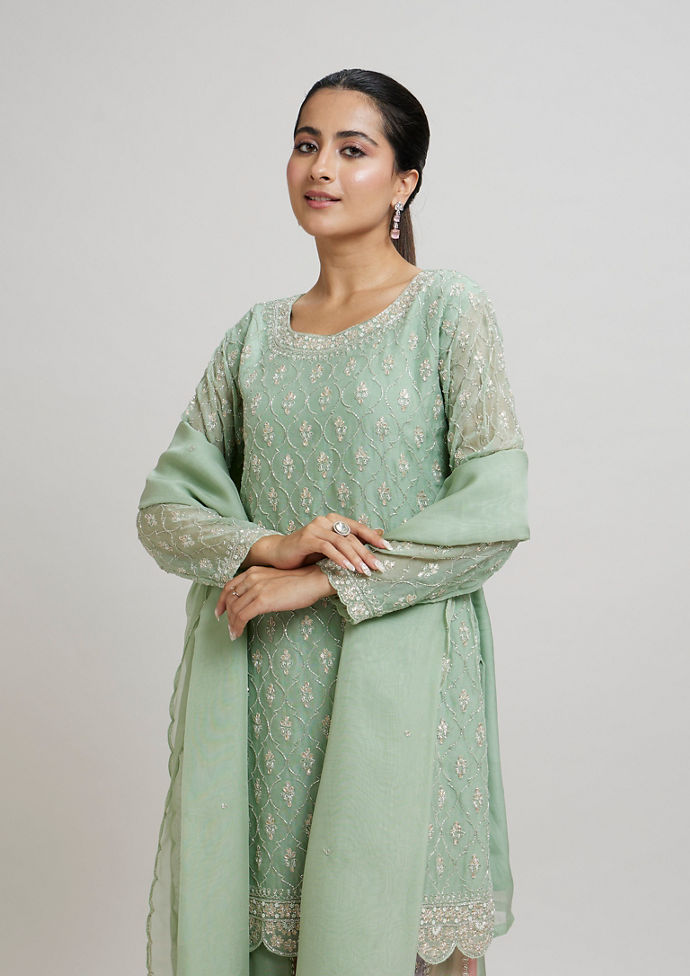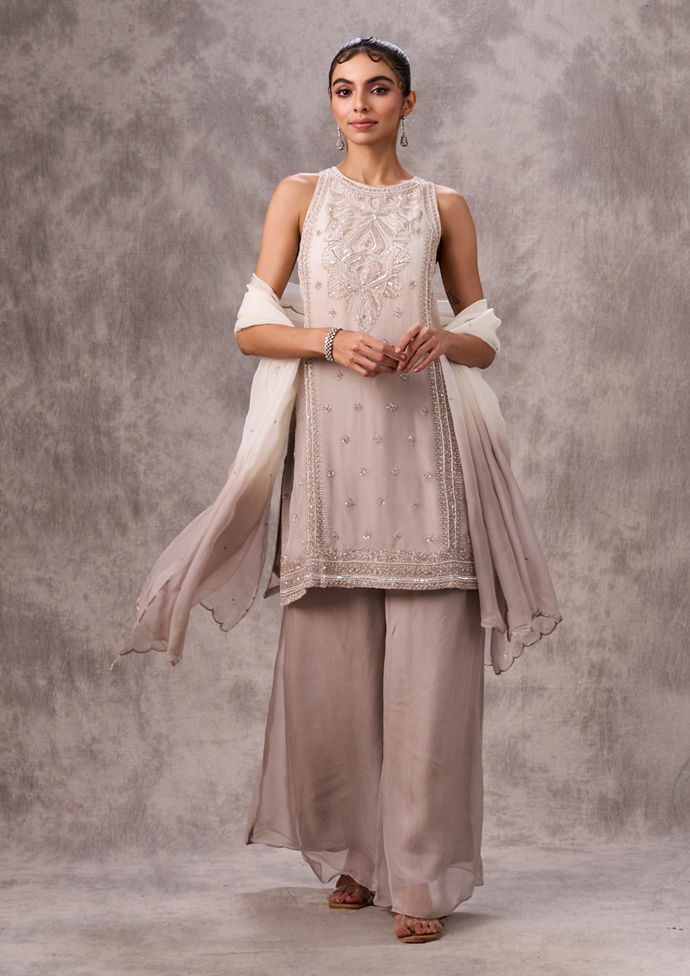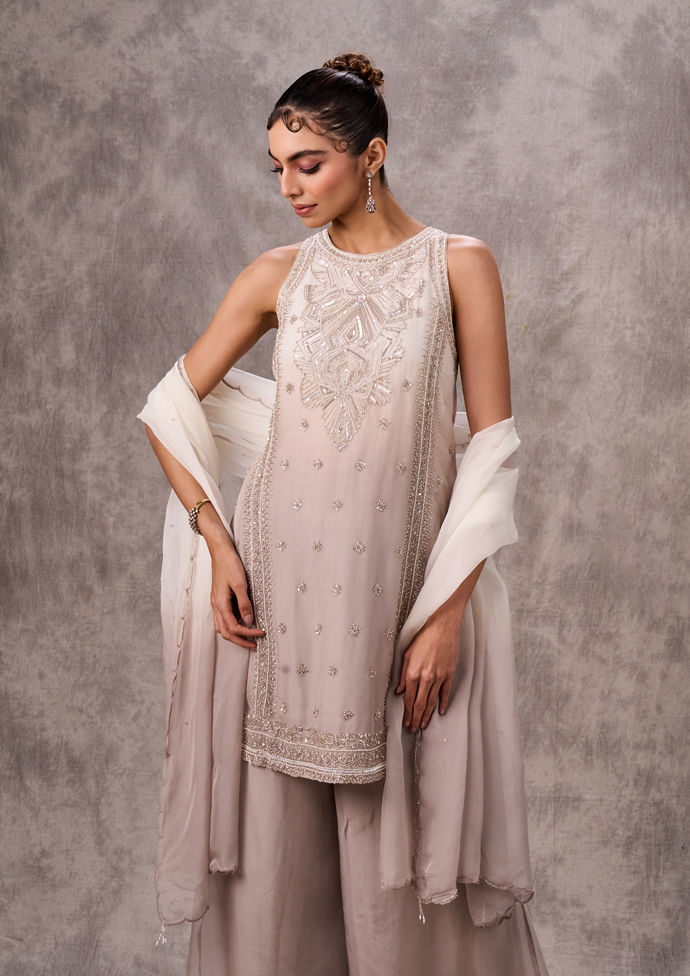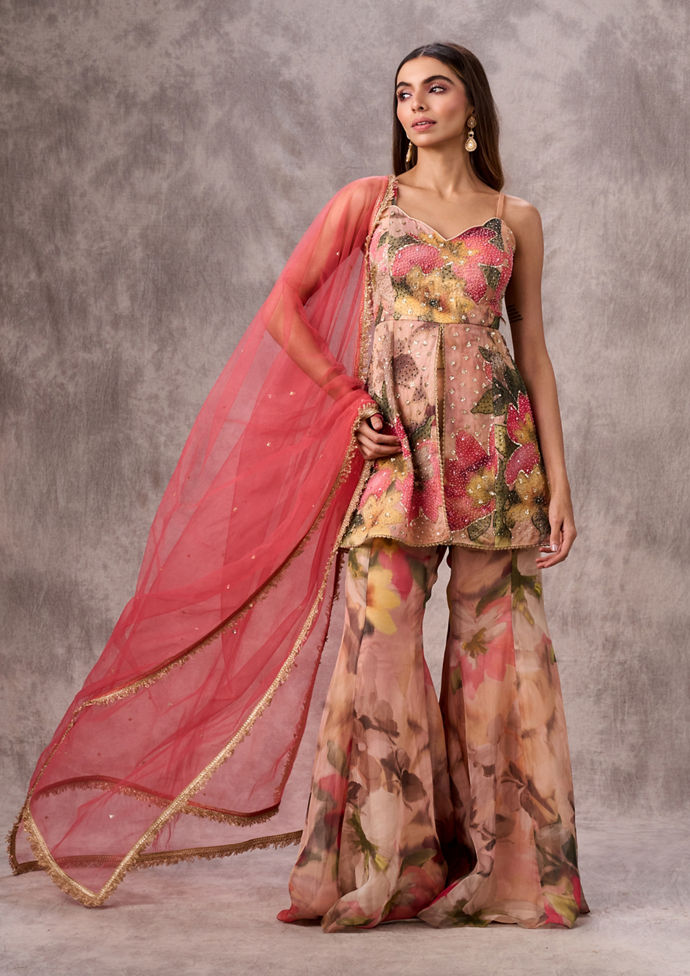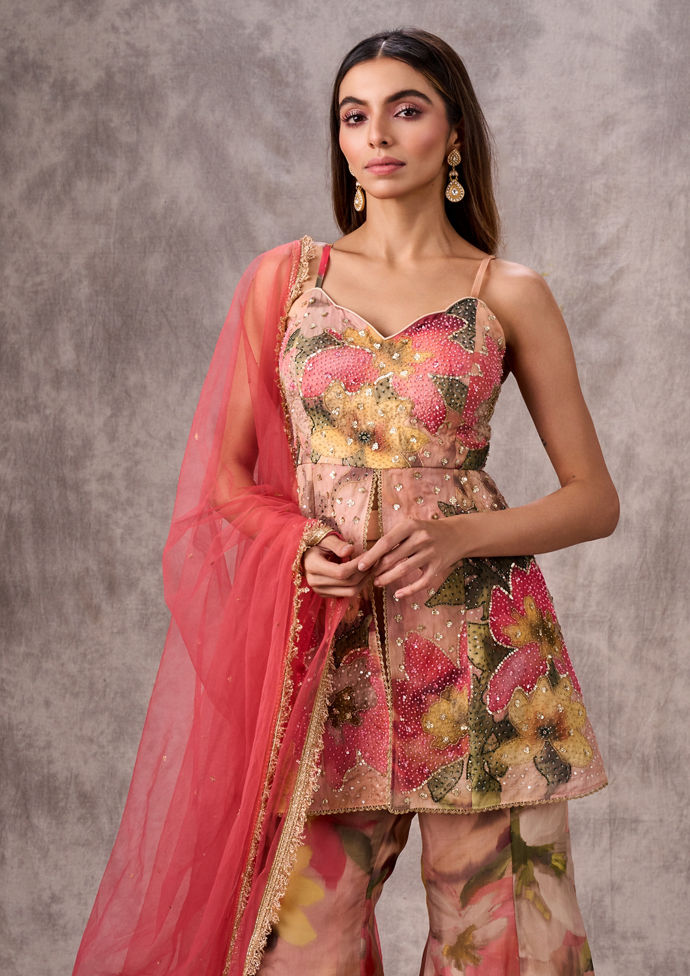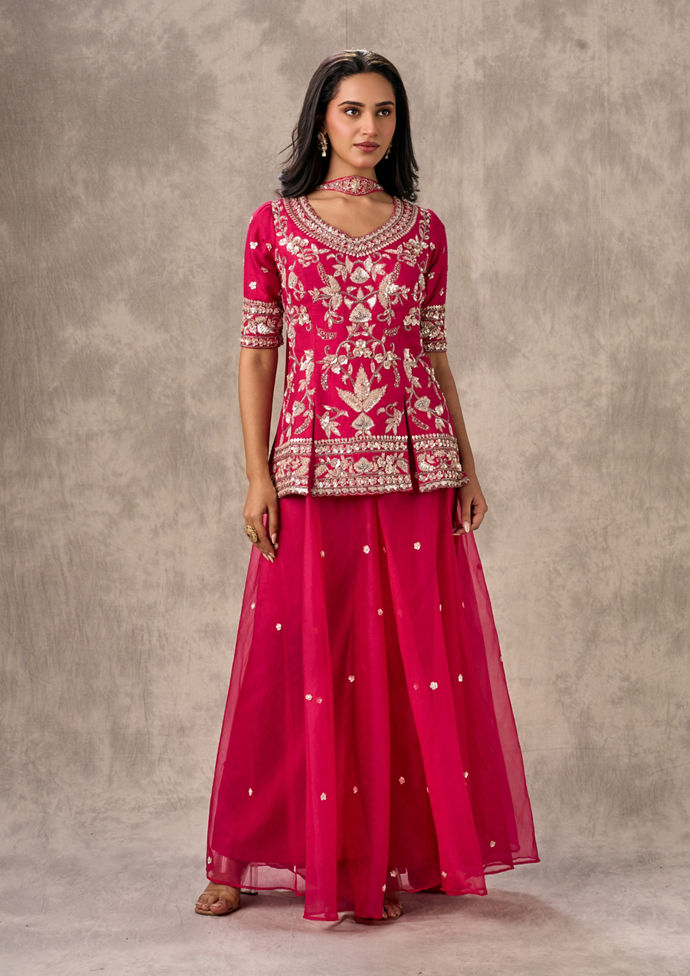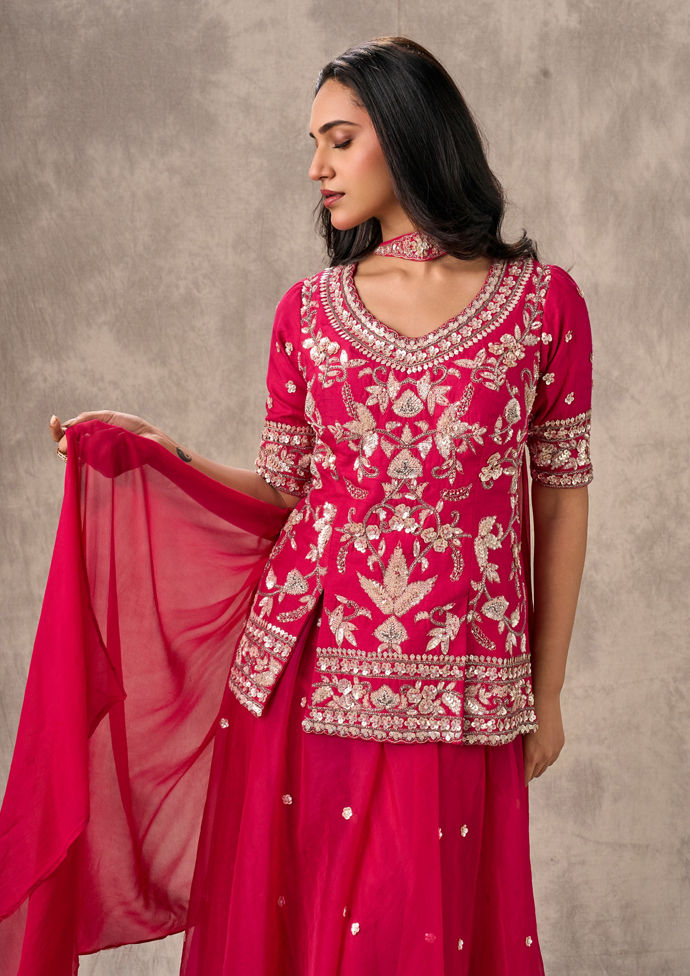
The palazzo suit has undergone a renaissance, shedding its reputation as merely comfortable and claiming its rightful place as a legitimate fashion statement. This shift stems from a fundamental change in how women approach ethnic wear: the refusal to sacrifice mobility for elegance. It delivers what traditional salwar-kameez or Lehenga cannot—the ability to dance, walk, sit, and move throughout a 12-hour wedding celebration without experiencing restriction, back pain, or the constant need for adjustment.
Beyond comfort, it photographs exceptionally well. The flowing silhouette creates visual drama in still images while remaining unfussy in person. The wide-legged pants elongate the frame, making them flattering for petite women when styled with high-waisted tops, and equally sophisticated on tall frames. The versatility of design options—from minimal solid pieces to heavily embroidered statement looks—means a single suit can be restyled across multiple occasions with nothing more than a change of dupatta, footwear, and jewellery.
It consists of three components: the kurti (top), the palazzo pants (bottoms), and the dupatta (scarf). What distinguishes palazzo design from traditional salwar-kameez is the pant construction: palazzo pants feature a straight, wide-legged cut that typically runs from hip to ankle without the gathered ankle closure found in churidars or salwars. This architectural difference is crucial—it defines the outfit's entire aesthetic and functionality.
The kurti can range from knee-length, structured pieces to floor-length, flowing designs, from crop-top, contemporary styles to traditional ankle-length cuts. The beauty lies in this flexibility: you can choose the kurti length and style based on the occasion and personal preference, pairing any kurti with any palazzo pant for infinite combinations.
The dupatta completes the ensemble, serving both aesthetic and traditional purposes. A silk dupatta draped across the chest with palazzos reads contemporary; the same dupatta draped in traditional style instantly elevates the look to formal festive wear.
Fabric Choices
Twamev's palazzo suit collection spans three primary fabric options, each suited to different seasons and occasions.
Design and Embellishment Options
For Weddings and Receptions
A palazzo suit is the ultimate wedding guest outfit—comfortable enough for lengthy ceremonies yet elegant enough for formal receptions. Opt for jewel tones (emerald, ruby, sapphire) in silk or tissue with zardozi or zari embellishment. Pair with a matching zari dupatta, gold juttis, and traditional jewellery (chandbalis, choker, bangles). The result is a look that photographs beautifully and allows you to move freely through multiple wedding events without changing clothes.
For groom's family members, a suit in wine, navy, or maroon signals respect and celebration while maintaining your personal style and comfort.
For Festive Celebrations (Diwali, Eid, Christmas)
Festive occasions call for colour and celebration. Bright jewel tones, metallic accents, and bold prints are your friends. A zari-embellished suit in ruby or emerald paired with a chiffon dupatta, statement earrings, and embellished heels creates a festive moment.
For Daytime Events and Casual Festivities
Pastel suits in georgette or cotton with minimal embroidery work beautifully for garden parties, engagement ceremonies, and daytime celebrations. Pair with floral or printed dupattas, juttis, and delicate jewellery. The lightness of the fabric and minimalist embellishment keep the look breezy and contemporary.
For Office Events and Formal Dinners
A solid-colour suit in neutral tones (beige, grey, olive, navy) with minimal embroidery reads as sophisticated office wear. Pair with block heels, a structured dupatta and simple jewellery.
High-Waisted vs. Natural Waist
High-waisted palazzo pants elongate shorter frames and define the waist beautifully. If you're petite, prioritise high-waisted designs paired with knee-length or cropped kurtis. For taller frames, natural-waist palazzos pair beautifully with floor-length kurtis for a dramatic effect.
Kurti Length Decisions
Knee-length kurtis create a contemporary silhouette that works for casual and semi-formal occasions. Midi-length (mid-calf) kurtis offer a traditional-modern hybrid that suits most body types. Floor-length kurtis maximize drama and formality, ideal for weddings and evening events. Cropped kurtis (above the hip bone) are trending for fusion looks and contemporary occasions.
Dupatta Draping
The way you drape your dupatta fundamentally changes the outfit's vibe. A dupatta draped over the chest, with the ends loose, reads modern and casual. A traditional front drape (over one shoulder, across the back) is more formal. A dupatta tied as a sash at the waist creates Indo-Western fusion—an experiment based on occasion and personal comfort.
Footwear Coordination
Gold- or cream-embellished juttis are traditional choices that ground the look. Block heels or wedges in metallic finishes work for semi-formal occasions. Embellished flats or kolhapuris are perfect for casual celebrations.
Jewellery Strategy
Heavy jewellery (chokers, chandbalis, statement bangles) pairs with heavily embellished zardozi suits. Lightweight pieces (delicate necklaces, simple earrings) coordinate with minimalist weave or solid suits.
Yes, absolutely. The loose fit and flowing silhouette of palazzo pants are inherently flattering across all body types. High-waisted designs accentuate curves beautifully without clinging.
Yes. In jewel tones with zardozi or zari embellishment, it reads as formal and celebratory. It's equally appropriate as a lehenga for most wedding events.
The primary difference is pant construction. Palazzo pants are straight and wide-legged; salwar pants are gathered at the ankle. This significantly changes the visual silhouette and comfort level.
Yes. In neutral colours with minimal embroidery, a suit is contemporary professional wear. It's more comfortable than traditional sarees while remaining appropriately formal.
Opt for pastels or prints in georgette or cotton—pair with juttis, a simple dupatta, and delicate jewellery. Keep embellishment minimal for a breezy, approachable look.
All body shapes. Palazzo pants work beautifully for petite frames (pair with knee-length kurtis), tall frames (floor-length kurtis maximize elegance), athletic builds (the loose fit adds dimension), and curves (the relaxed silhouette is inherently flattering).
Black Silk Saree | Pink Satin Saree | Purple Satin Saree | Purple Net Saree | Pink Organza Saree | Cream Net Saree