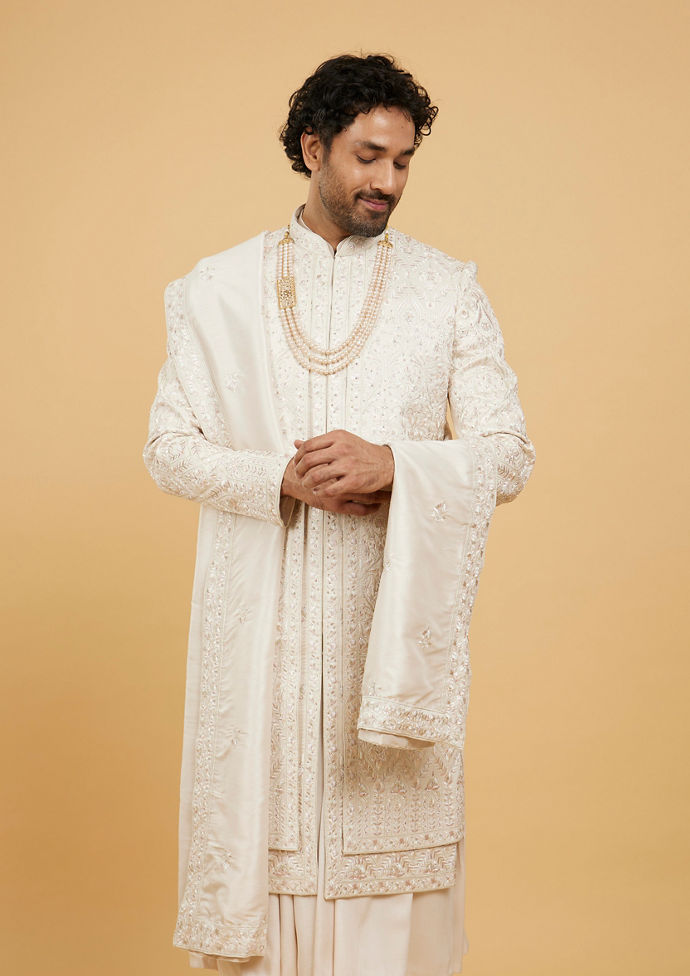
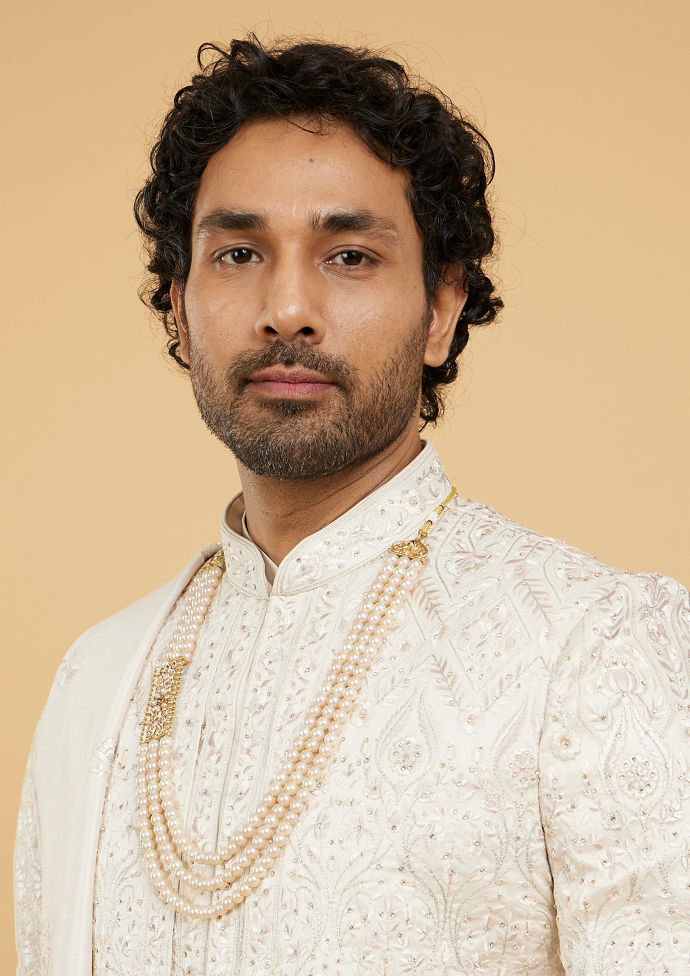
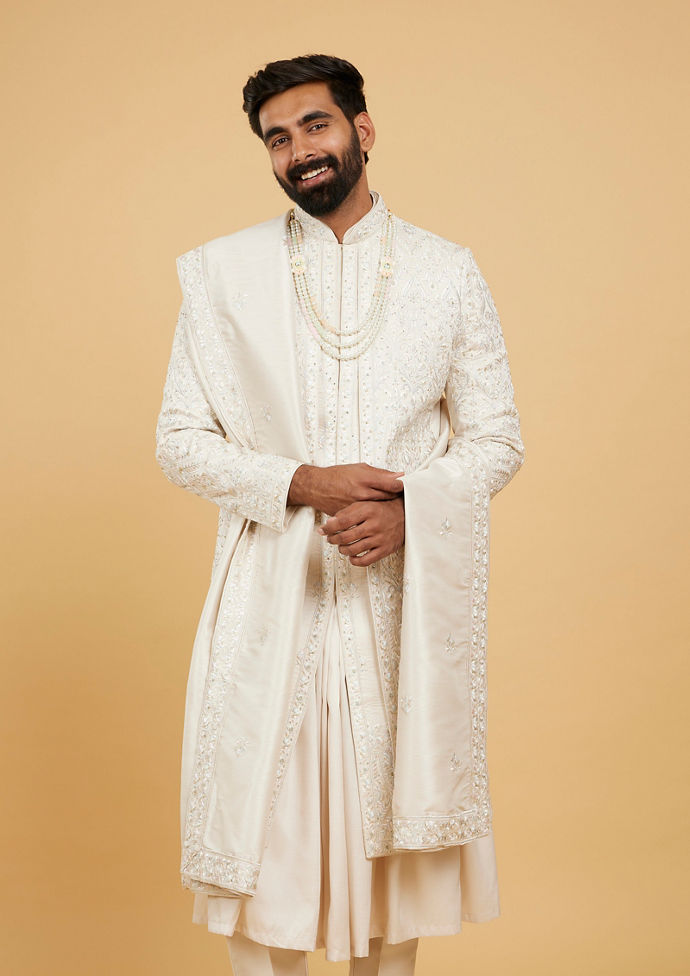
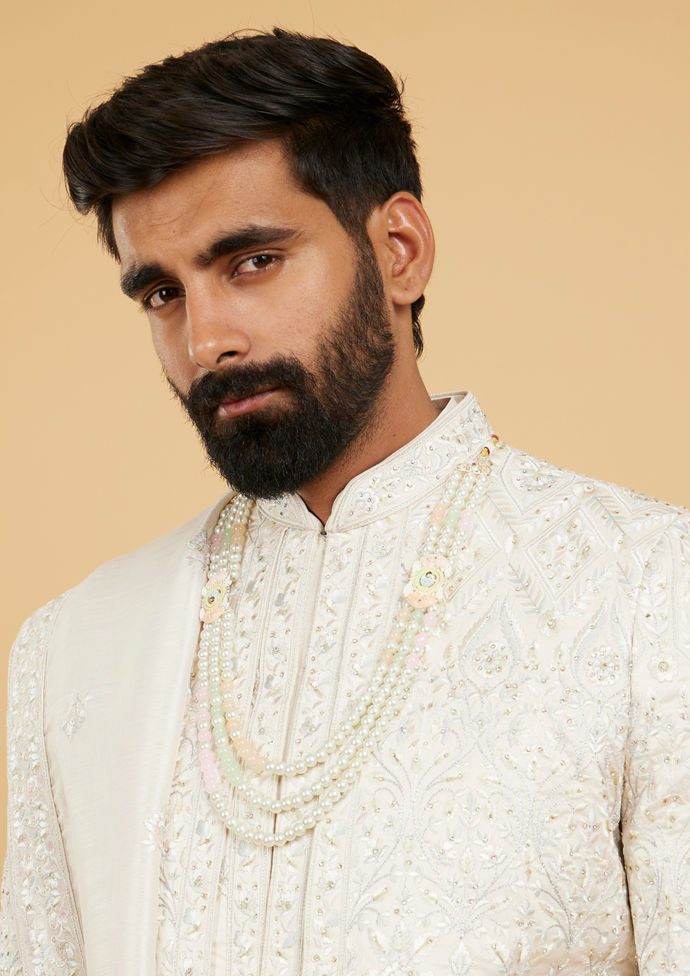
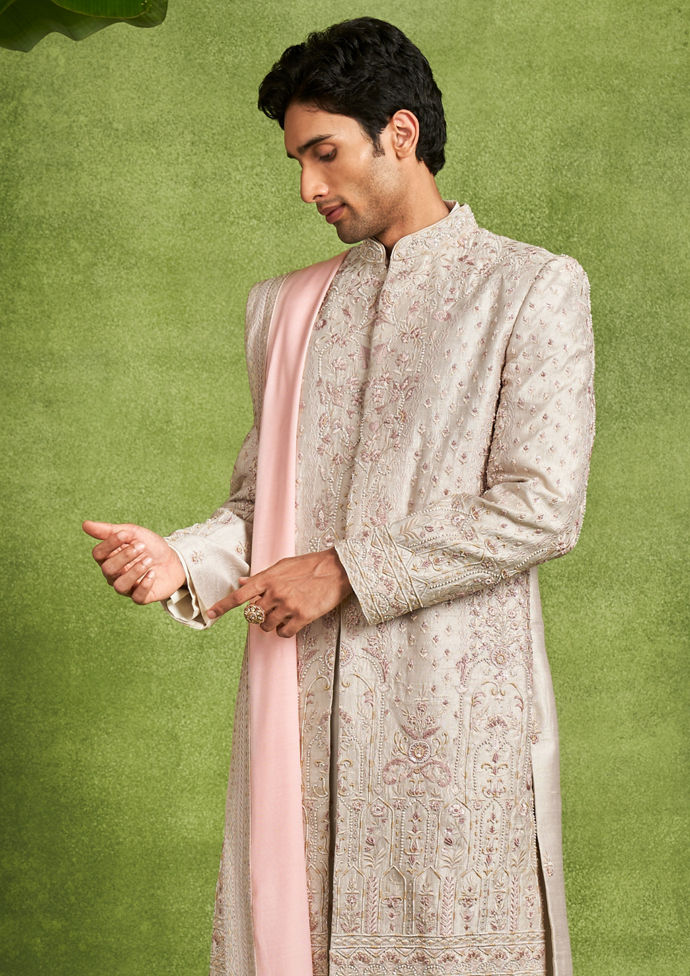
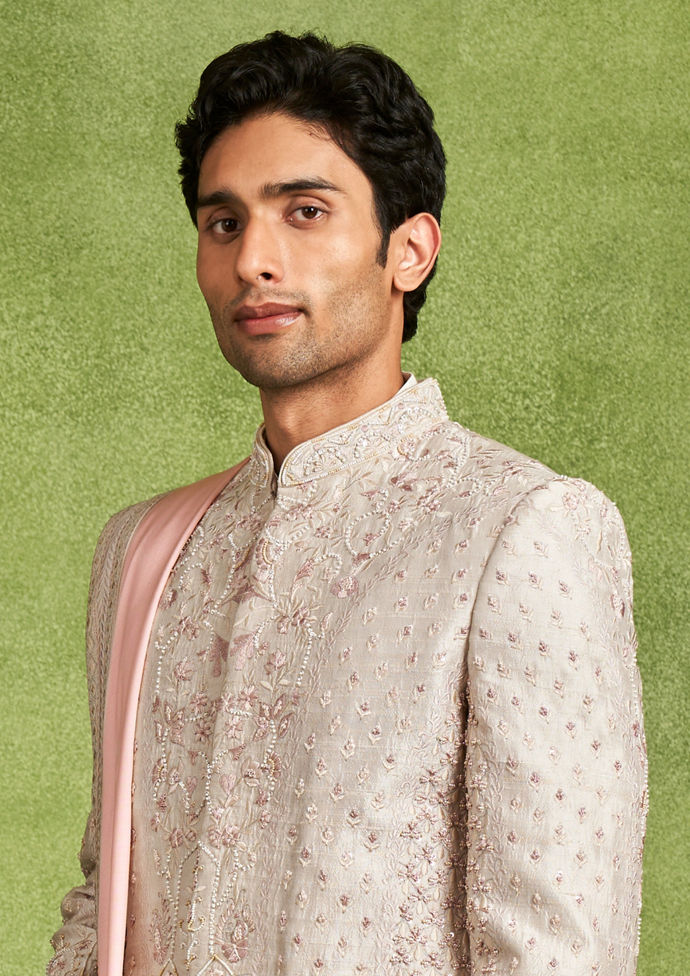
Men's beige sherwani collection
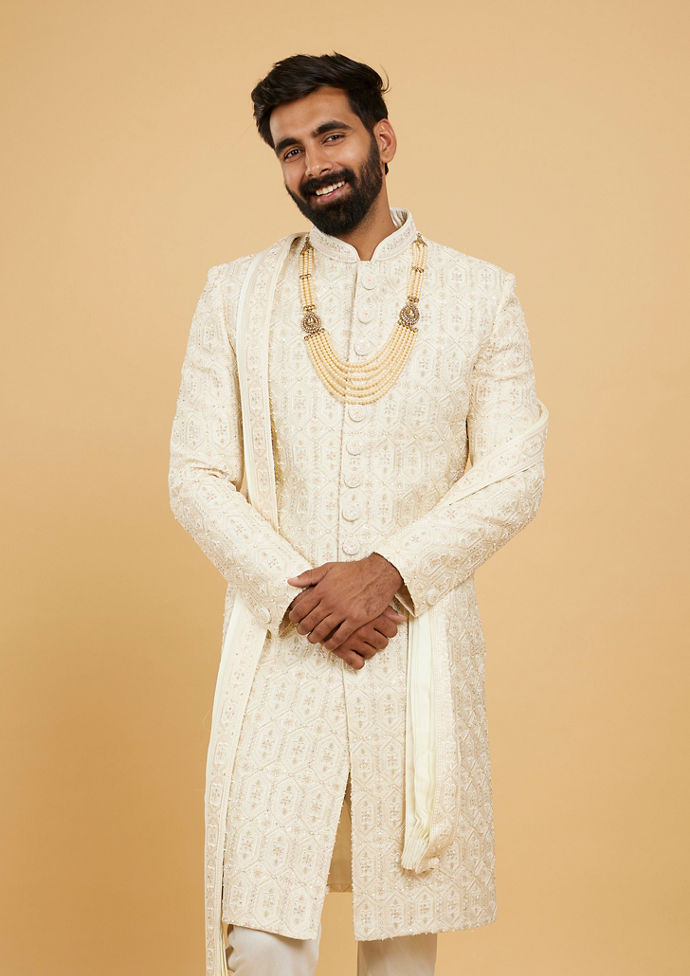
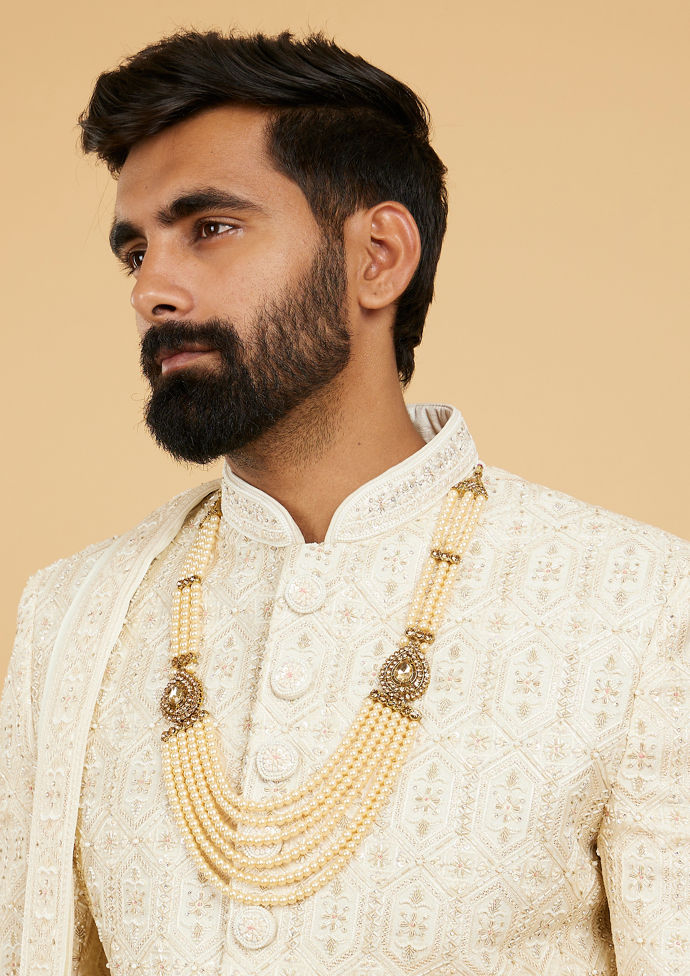
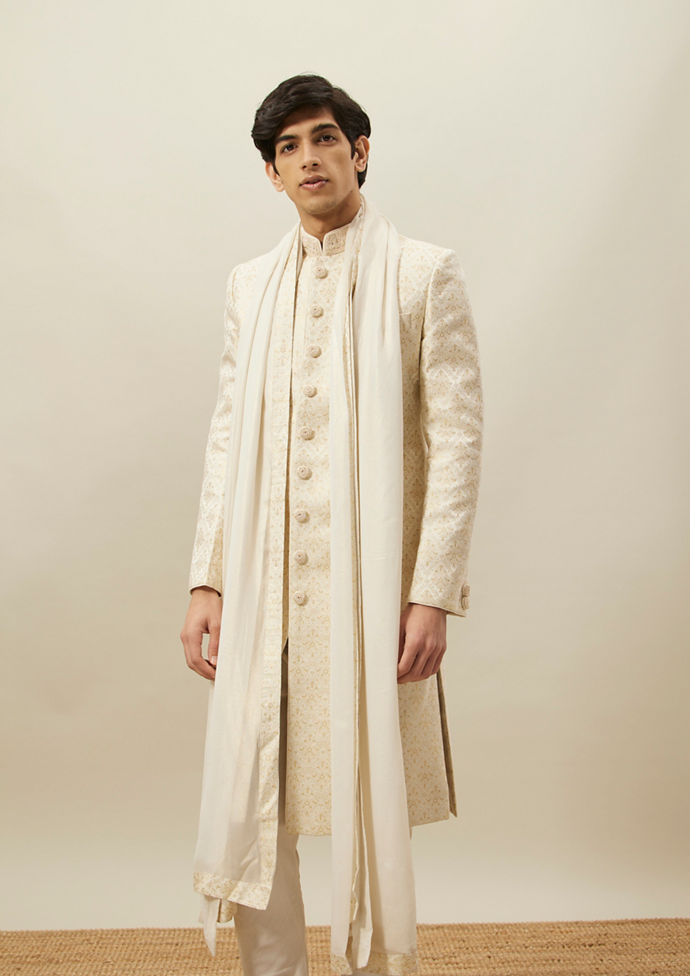
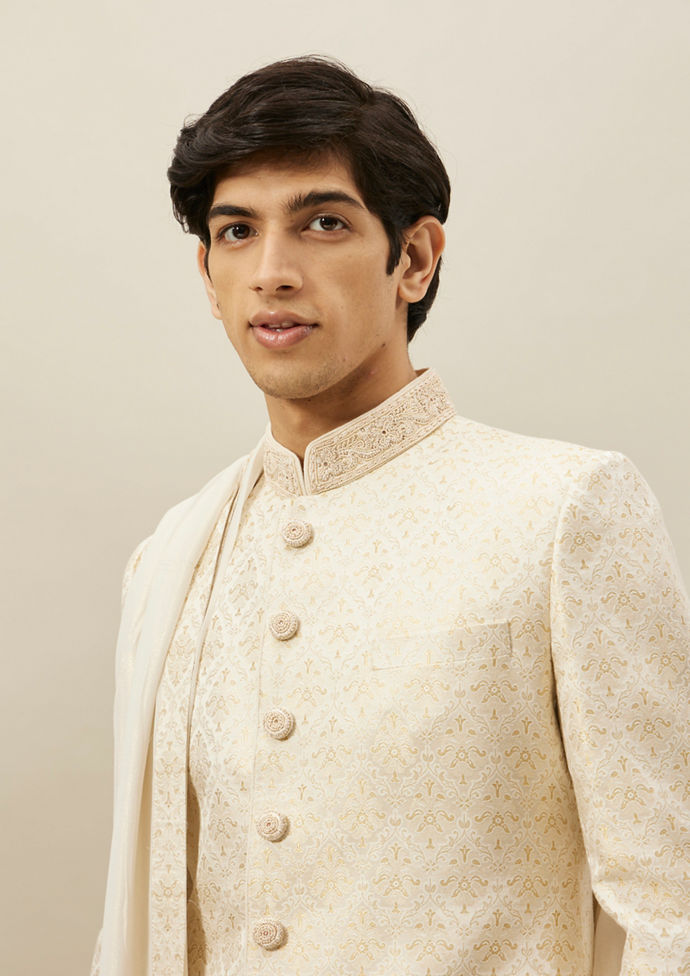
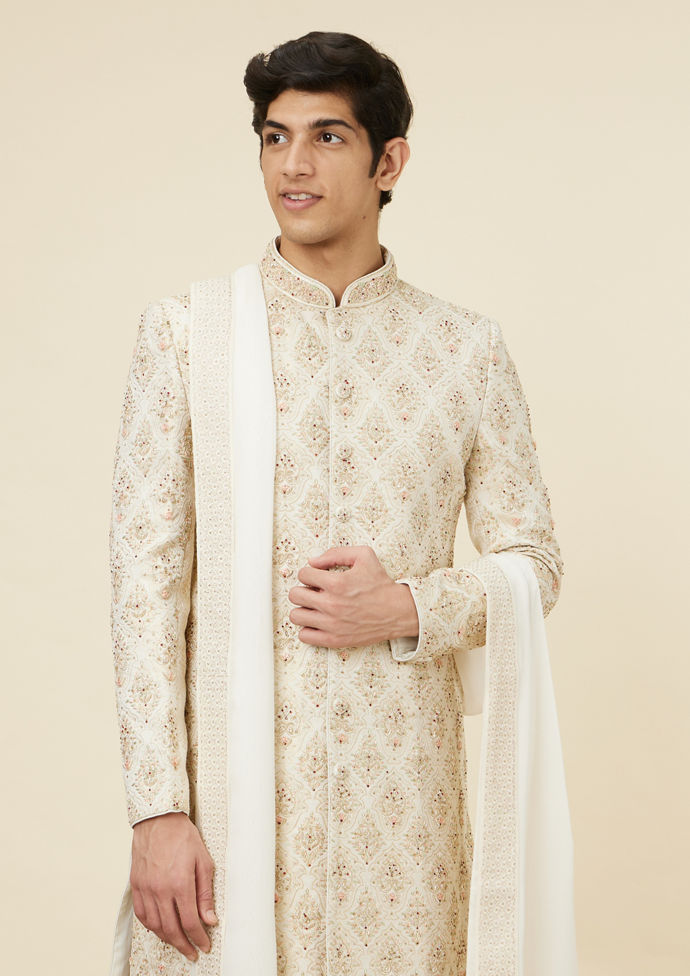
Shopping for a men's beige sherwani for a 2026 wedding? Three things decide it: fabric, embroidery, and fit. Our beige sherwani collection has eight pieces, cut in silk, art silk, raw silk, jacquard, pashmina, and blended rayon, with resham and zardozi embroidery across the range.
Beige takes heavy zari, resham, and zardozi work without the base colour competing with the embroidery, so grooms, groomsmen, and wedding guests can all wear it. The table below lists each piece with its key features and the wedding role it suits best. If you are dressing a groom and his party at the same time, order early so there is room for alterations before the first function.
What makes a men's beige sherwani a smart choice for Indian weddings?
Beige sherwani for men definition and wedding use cases
A men's beige sherwani is a knee-length coat cut from silk, jacquard, or pashmina, and it layers over a kurta and churidar. Grooms wear it to daytime events such as the haldi and the baraat, and it fits a sangeet or a reception where the dress code is Indian formal. The shade sits between ivory and tan, so it stays light next to maroon, navy, or black outfits in daylight and under stage lighting.
If you are unsure whether beige is the right call for your event, check the timing first. Daylight functions and outdoor baraats flatter lighter shades, and an evening reception under warm bulbs still keeps beige readable rather than washed out against the darker tones around you.
Why beige suits grooms, groomsmen, and wedding guests
Beige stays clear of the bridal palette. Reds, maroons, and deep pinks carry the bride's outfit and most of the decor, and a groom in beige does not fight those colours in photographs. Groomsmen can wear the same shade in a plainer fabric so the groom's embroidery and buttons stay the focus. Guests who want to stay out of the couple's colour scheme get the same benefit, and a group in beige reads as a set in photographs without every man wearing an identical outfit.
How to use this collection fit, fabric, and occasion filters
Filter by fabric first, then by occasion. Silk and jacquard hold a structured shape through a long ceremony; pashmina is warmer and drapes softer. For sizing, measure your chest at the fullest point and add about 2 in of ease so the sherwani sits over a kurta without pulling. If you fall between two sizes, take the larger one and have the sides taken in. Shawl sets are the practical pick for winter weddings, while the plainer silks and the raw silk piece suit guests who would rather not outshine the groom.
Sherwani length from shoulder to hem
Measure from the shoulder seam straight down to where you want the hem to fall. For most Indian grooms, 40 to 44 in lands at or just below the knee, which is the standard sherwani length. Taller builds often need 45 in or more. Take the measurement over the kurta you plan to wear, or the finished hem will sit higher than you expect. Note that number, then compare it with the length listed on each product page, since a longer coat changes how the whole outfit reads.
Which men's beige sherwanis are in this collection?
Beige sherwani comparison table: product, features, best for
All eight pieces are listed below with their fabric, embroidery and the wedding event each one suits.
|
Product name
|
Key features
|
Best for
|
|
Beige Pink Silk Resham Hand Embroidered Sherwani
|
Pink-toned silk, resham hand embroidery
|
Sangeet
|
|
Beige Silk Resham Hand Embroidered Sherwani
|
Silk, resham hand embroidery
|
Groomsman
|
|
Beige Silk Geometric Zardosi Embroidered Sherwani
|
Silk, geometric zardosi
|
Reception
|
|
Beige Silk Jacquard Zari Embroidered Sherwani Set
|
Silk jacquard, zari work
|
Groom
|
|
Beige Silk Zardosi Hand Embroidered Sherwani
|
Silk, zardosi hand embroidery
|
Wedding
|
|
Beige Textured Zardosi Brooch Embroidered Sherwani With Pashmina Shawl
|
Textured zardosi, pashmina shawl
|
Winter wedding
|
|
Beige Pashmina Silk Zari Embroidered Sherwani with Shawl
|
Pashmina silk, zari work, shawl
|
Reception
|
|
Beige Raw Silk Aari Jaal Embroidered Sherwani
|
Raw silk, aari jaal embroidery
|
Guest
|
Embroidered beige sherwanis for grooms
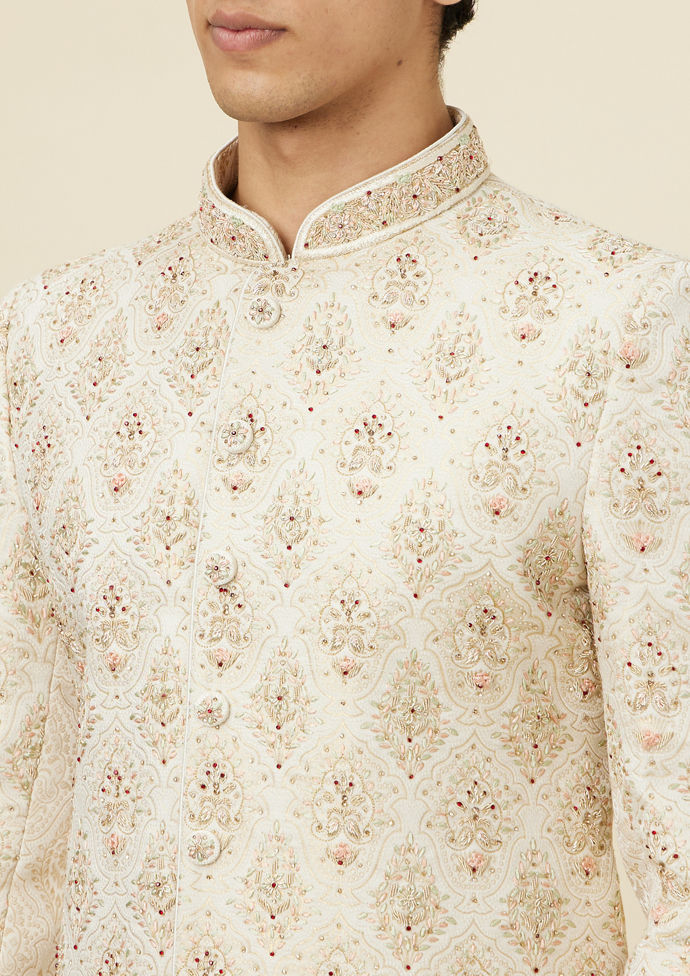
The groom-facing pieces carry the densest hand work: zardozi, geometric zardozi, and resham. Zardozi is metallic wire stitched by hand, so the surface sits raised and catches light, while resham uses silk thread and stays flatter against the cloth. The silk jacquard set with zari work is the most formal of the group, and the geometric zardozi cut works well at a reception where the lighting is dim.
Plain and textured beige sherwanis for wedding guests
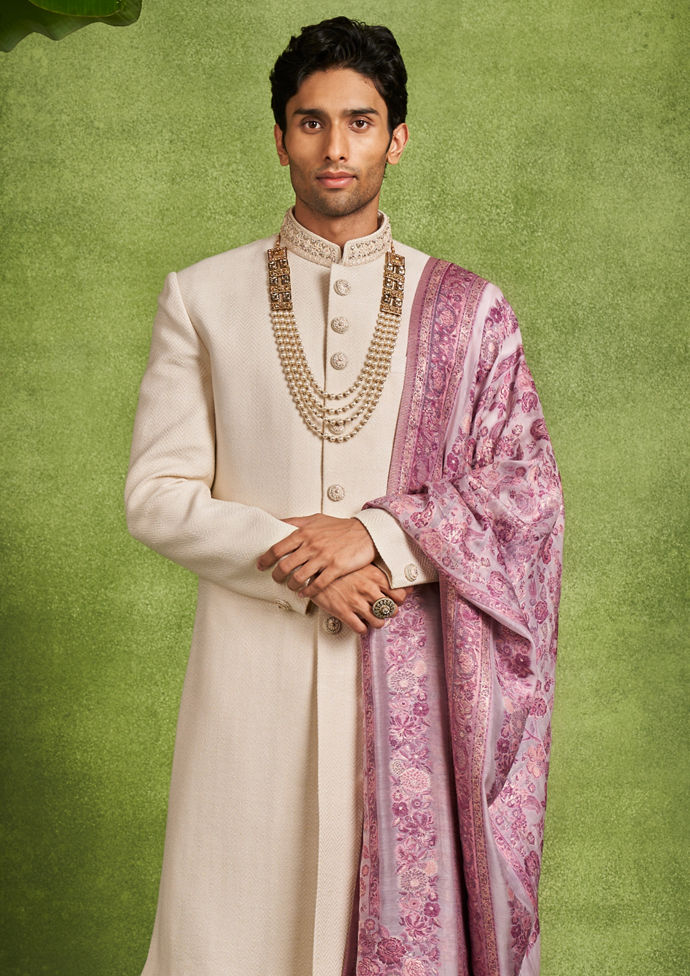
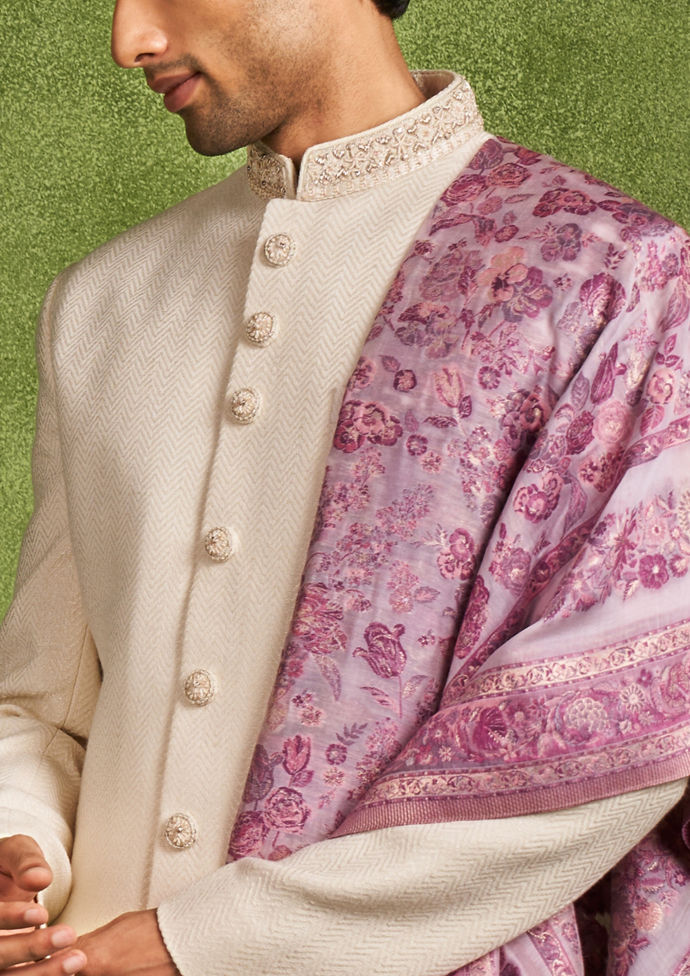
The raw silk aari jaal piece is the quietest of the eight. Aari embroidery is worked with a hooked needle, so the jaal pattern reads as fine chain-stitched loops instead of heavy metal work, which suits a guest who wants embroidery without the weight of a groom's outfit. For winter functions, the two shawl sets add a pashmina or pashmina silk layer over the sherwani; a textured zardozi brooch sits on the chest as the single focal point.
Beige sherwani online what the product table shows
Use the table to narrow eight options down to two or three, then open each product page for the size chart. Compare chest, shoulder and length in inches rather than letter sizes, since lining and shawl weight change how a sherwani hangs. If you plan to wear it through a full function, ask how heavy the embroidery panel is before you order, and check the care notes on the product page so the piece is ready well before the wedding.
Explore More Collection: Dupatta , Mala
How do you choose the right men's beige sherwani for a wedding?
Step 1 match fabric weight to wedding season and venue
Start with the weave, not the shade. A brocade or jacquard in roughly the 150 to 250 gsm range holds its cut through a humid outdoor baraat, while a lighter crepe or raw silk drapes more softly and suits an air-conditioned winter hall. Beige shows creases and shadow lines more than darker shades do, so a firmer fabric keeps the front panel looking sharp through a long ceremony.
Step 2 choose light, medium, or heavy embroidery
How heavy an embroidered front panel feels depends on how much of it is covered and which thread is used. Light resham thread work on the collar and placket suits guests and stays comfortable over several hours of standing, greeting, and photographs. Medium work with scattered sequins or dabka is the usual pick for evening functions. Dense zardosi in metallic wire sits mostly on the chest panel and shoulders, and grooms wear it most often. The heavier the work, the more the shoulder line stiffens, so try the piece on before you decide.
Step 3 confirm fit with chest, shoulder, and length measurements
Measure your chest at its fullest point, shoulder seam to shoulder seam across the back, and shoulder to hem down the front, then compare each number against the seller's size chart in inches. Add about 1 inch of room for the lining and a buttoned front, and check that the sleeve ends just past the wrist bone so your kurta cuff stays visible. If your chest and shoulder land in different sizes, follow the chest measurement and have the shoulders taken in.
Step 4 align occasion and budget tier
Grooms usually wear the heaviest fabric and embroidery because the ceremony and the photographs center on them. Guests can stay with mid-weight art silk blends and lighter thread work and still look right standing next to the wedding party. Prices vary by seller and by how much hand work goes into the piece, so compare a few options before you settle on a tier, and match that tier to how often you expect to wear the sherwani again.
Shop men's beige sherwanis by style and key feature
Shop by fabric silk, raw silk, and brocade
Silk drapes easily and holds a light sheen, which suits a beige sherwani for men who want the colour to stay soft rather than flat. Raw silk has a matte, slightly textured surface that photographs well under indoor light. Brocade carries more weight, so it sits heavier on the shoulders and holds a pressed shape through a long function.
Shop by embroidery resham, zari, and sequin work
Resham thread is matte and blends into beige, so the pattern reads as texture more than shine. Zari brings a metallic thread that catches light along the collar, placket and cuffs. Sequin work adds the most sparkle and is usually kept to smaller panels rather than the full garment.
Shop by occasion haldi, sangeet, pheras, and reception
Haldi and sangeet are daytime or early-evening events with a lot of movement, so lighter embroidery in resham works better there. Pheras and reception run longer and are photographed more, which is where denser zari or sequin work on a beige base holds up best.
Shop by fit tailored, regular, and relaxed
Tailored sits close to the body with almost no spare room through the chest and waist. Regular allows roughly 3 in of ease, and relaxed allows 5 to 6 in for a looser drape. If you plan to layer a dupatta or a heavy stole, the extra room in regular or relaxed keeps the shoulders from pulling.
At Twamev, groom sherwanis sit within our wider occasion wear collection for men and women, so you can compare fabric weight, embroidery, and fit across pieces and settle on the one that matches your event.
Beige Sherwani Styling, Care, and Buyer Questions
How do you style and care for a beige sherwani?
Coordinate accessories in gold, maroon, or pastel tones
Gold sits closest to beige because both fall in the same warm range. A gold-plated brooch or gold buttons repeat that warmth without pulling attention. Maroon works as contrast: a maroon pocket square, mojari, or safa picks up the embroidery thread when your sherwani already uses it. Powder blue or sage keeps the look quiet and suits daytime functions. Hold yourself to two accent colours at most, and let the sherwani stay the boldest thing you wear.
Match bottom wear and dupatta to your beige sherwani
A cream churidar in silk or cotton-silk keeps the lower half lighter than the sherwani, so the drape still reads. For the dupatta, tonal cream or ivory tissue matches the base colour; take one accent from your accessories into the border. If the sherwani has zari work, repeat that same zari on the dupatta border instead of mixing gold and silver. Fit matters more than the exact shade here: churidar gathers should sit close to the ankle, and the dupatta should fall to about wrist level once draped.
Care and storage for embroidered beige sherwanis
Dry clean embroidered beige sherwanis. Water and detergent can dull zari thread and leave rings on light fabric. Store them folded in unbleached muslin, away from direct light, and refold along different lines every few months so creases do not set. Skip plastic covers for long storage, since they trap moisture. Before you buy a beige sherwani online, read the care label and check whether the embroidery is hand-stitched or machine-stitched, because the two need different handling.
What do buyers ask about men's beige sherwanis?
Can a beige sherwani be worn for a night wedding?
Yes, and evening light works in its favour. Gold zari and metal buttons pick up lamp and chandelier light, so the outfit keeps depth after dark. If your sherwani is plain beige with no embroidery, add a darker stole or a waistcoat to break up the tone.
How do I keep a beige sherwani from washing out in photos?
Put something darker close to your face. A dupatta with a deeper border, a maroon pocket square, or a darker collar gives the camera a contrast edge, so flash does not flatten the beige into one pale tone.
Is a beige sherwani acceptable for wedding guests?
Yes. Guests and groomsmen wear beige often because it sits quieter than the bridal palette without disappearing beside it. Check what the couple has asked the wedding party to wear first, so you do not end up matching the groom's side by accident.
How long does alteration take for a beige sherwani?
Ask the seller for their alteration window before you buy, since it varies by tailor and by season. A plain hem or a shortened sleeve is quick work. Anything involving embroidered panels, a lined front, or a rebuilt collar takes longer, because the embroidery has to be opened and re-stitched.
Can I wear a beige sherwani without a dupatta or stole?
Yes. Nothing requires a dupatta. Plenty of men wear a beige sherwani on its own for a sangeet or reception, then add a tonal stole for the pheras, when you are moving around the fire and want the extra layer.
Whichever route you take, settle three things before you order: the fabric of the outer layer and lining, whether the embroidery is hand or machine stitched, and the seller's care and alteration terms. That way the sherwani fits on the day and still looks right at the next wedding you wear it to.
designer wedding wear for men and indo western for men