Cream Sherwani
35 PRODUCTS
Filter
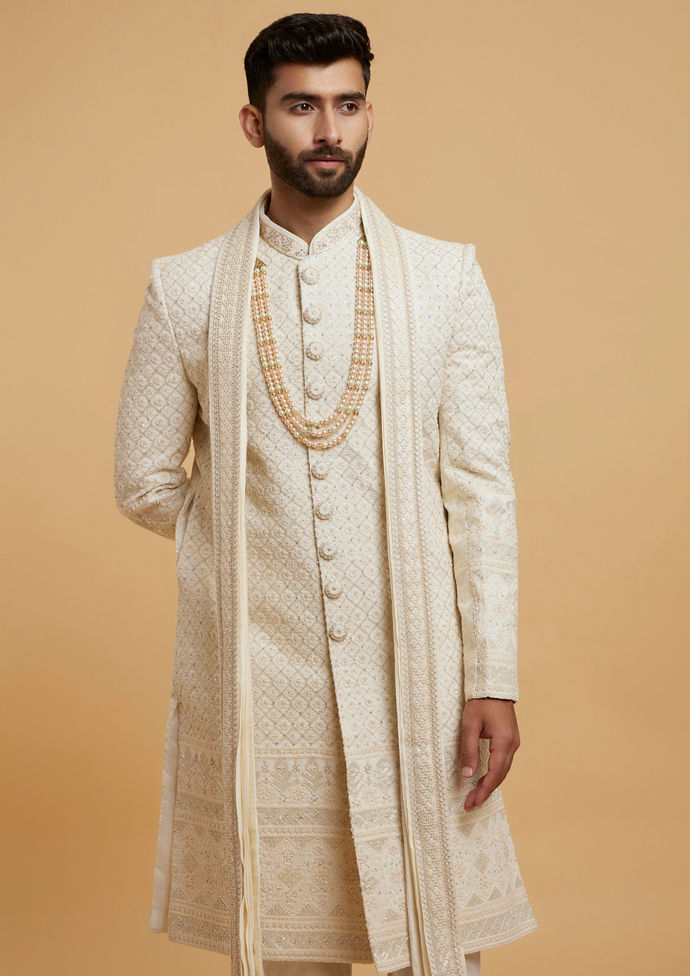
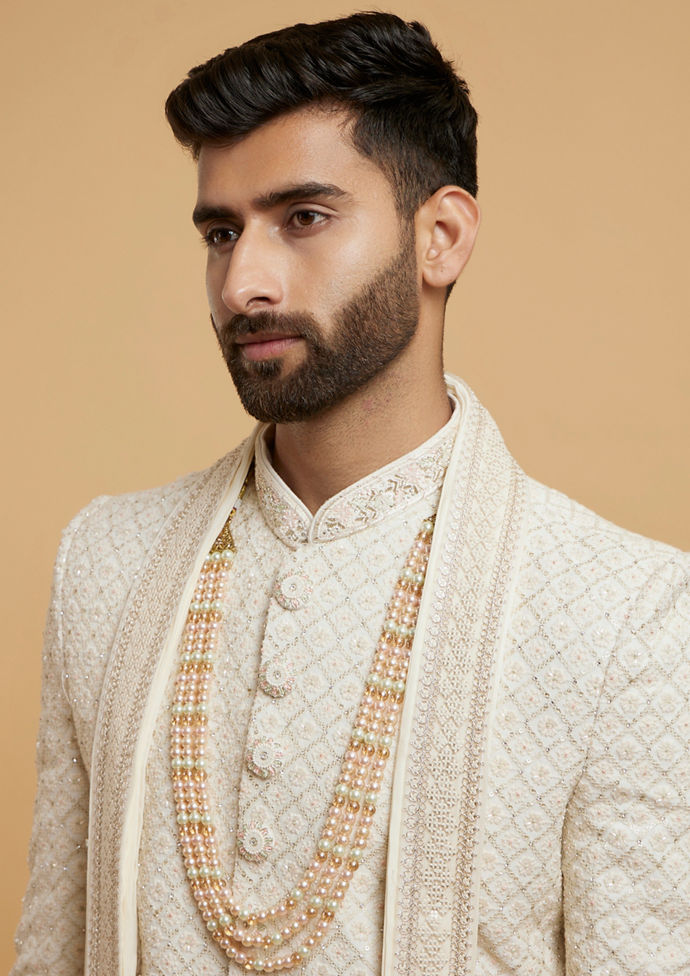
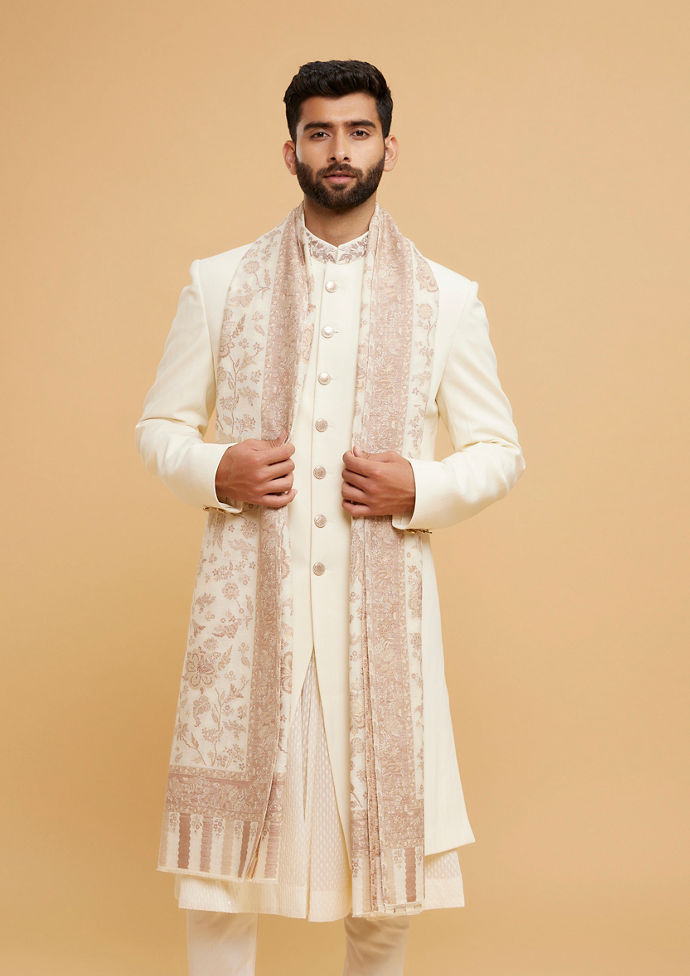
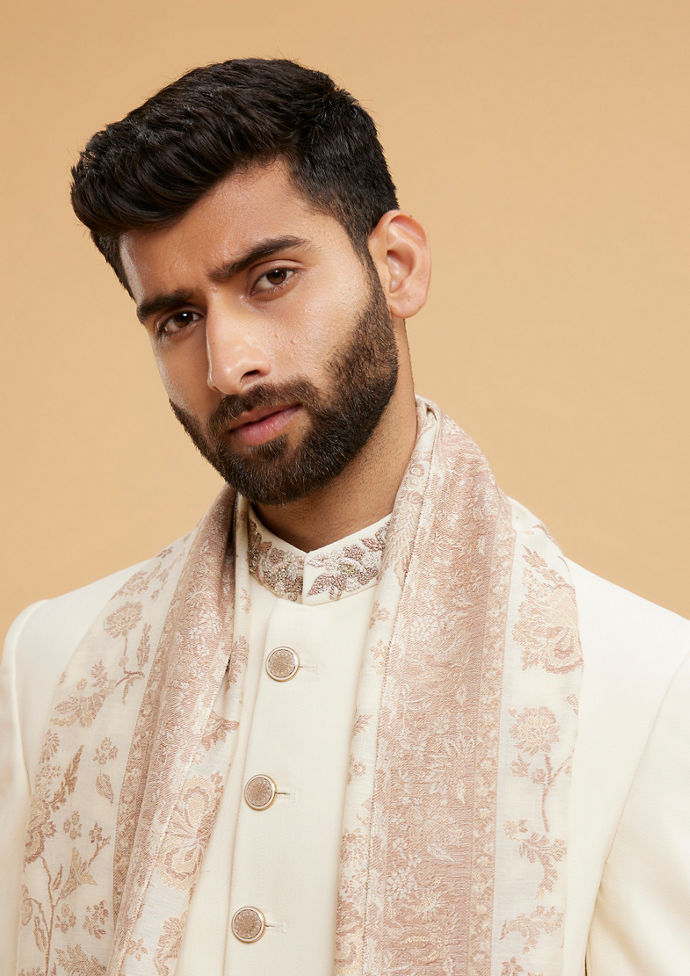
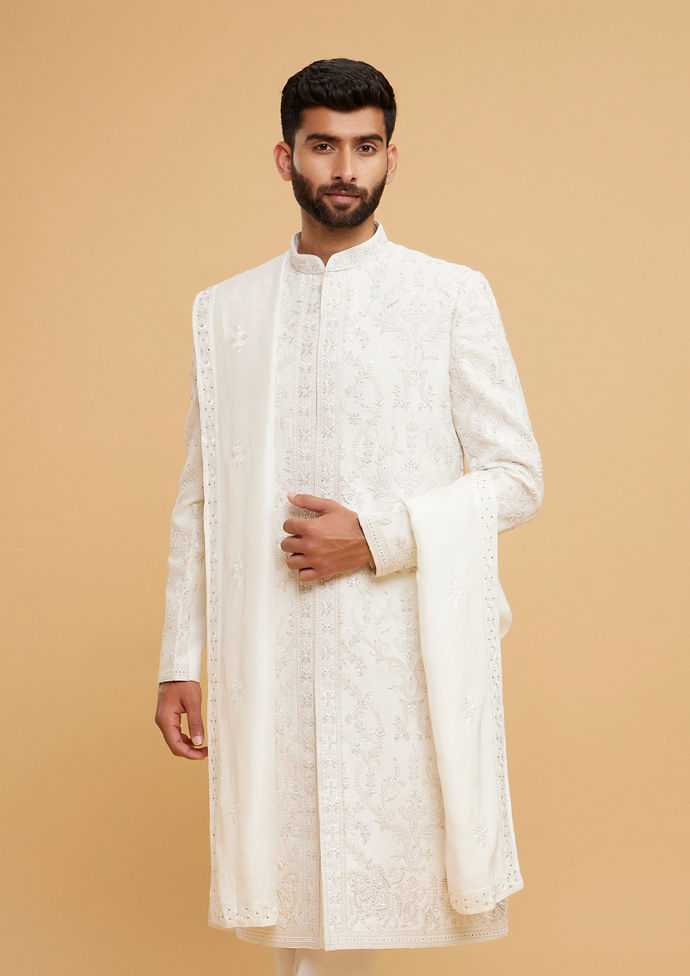
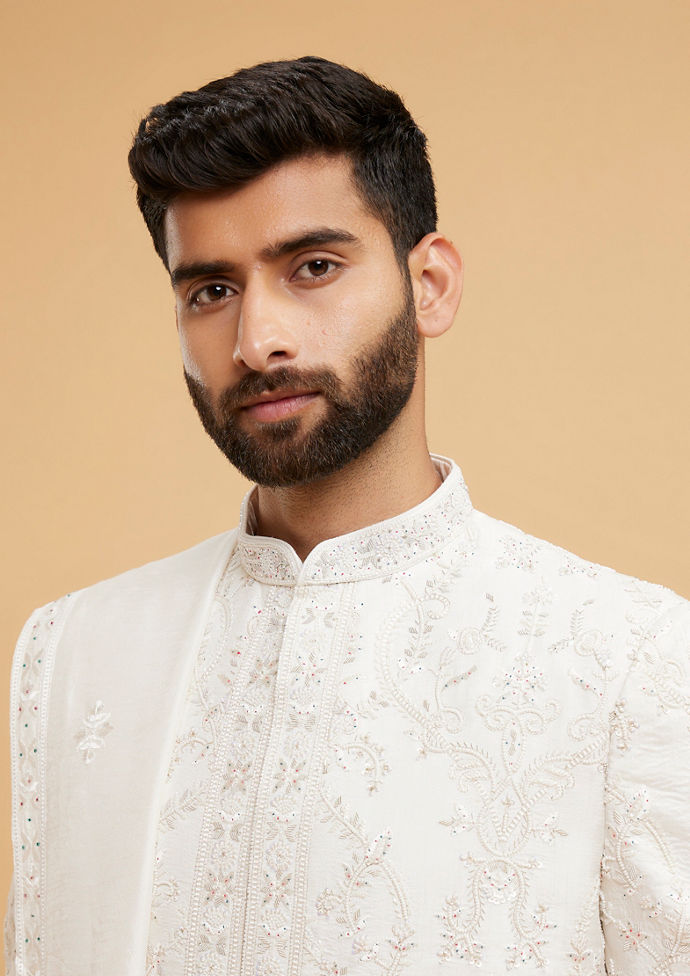
₹ 89,999
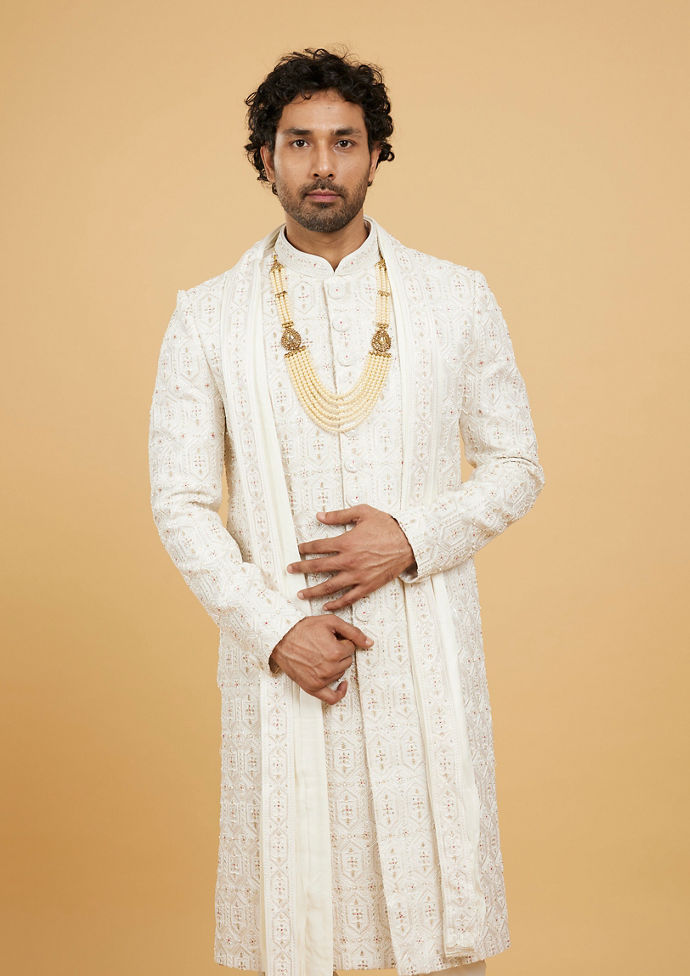
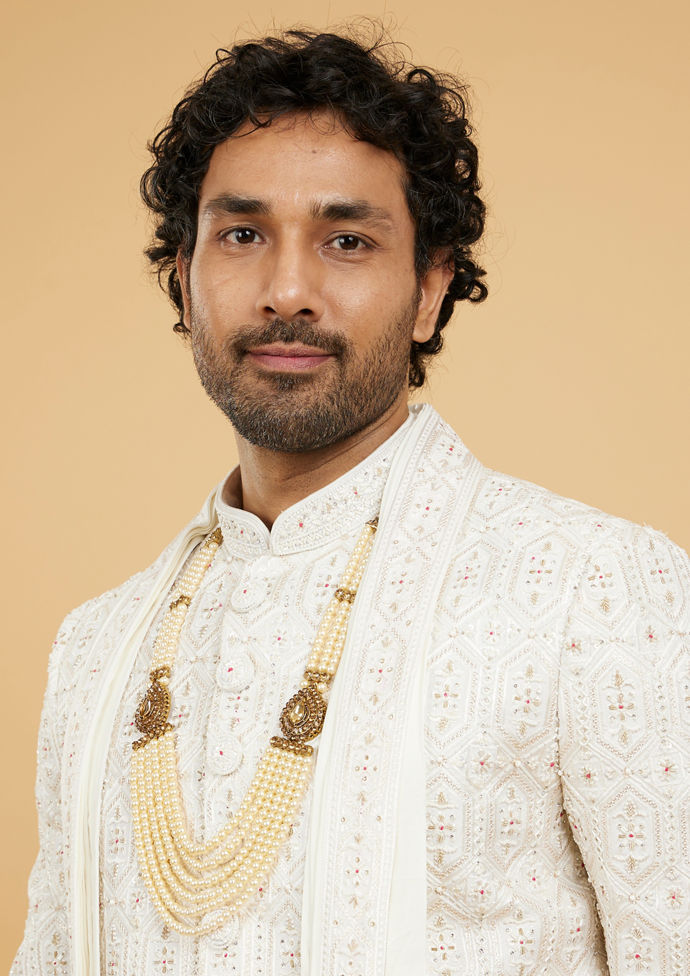
₹ 54,999
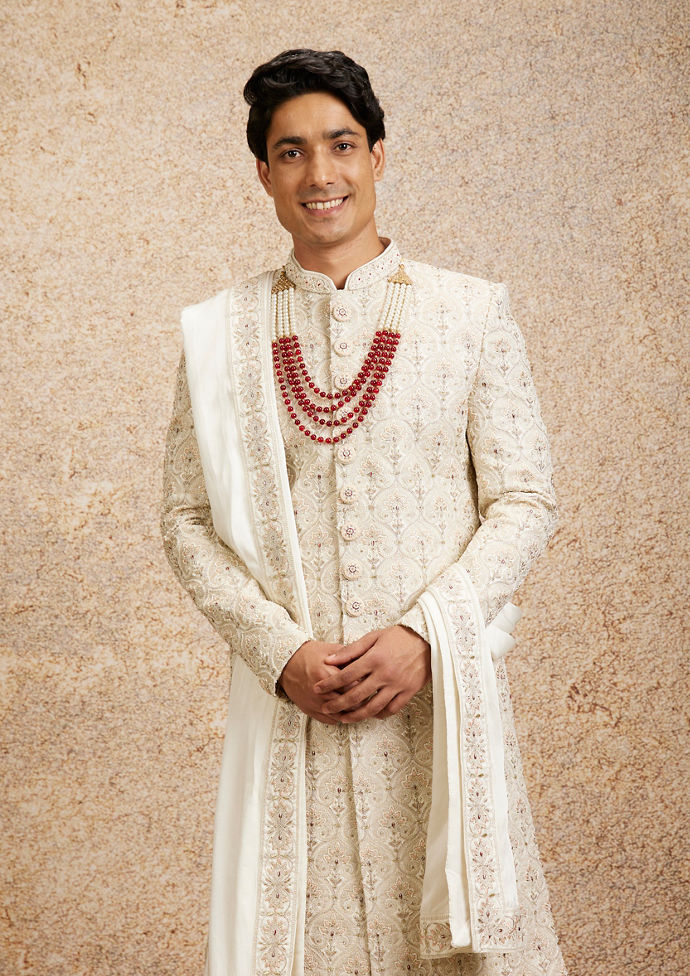
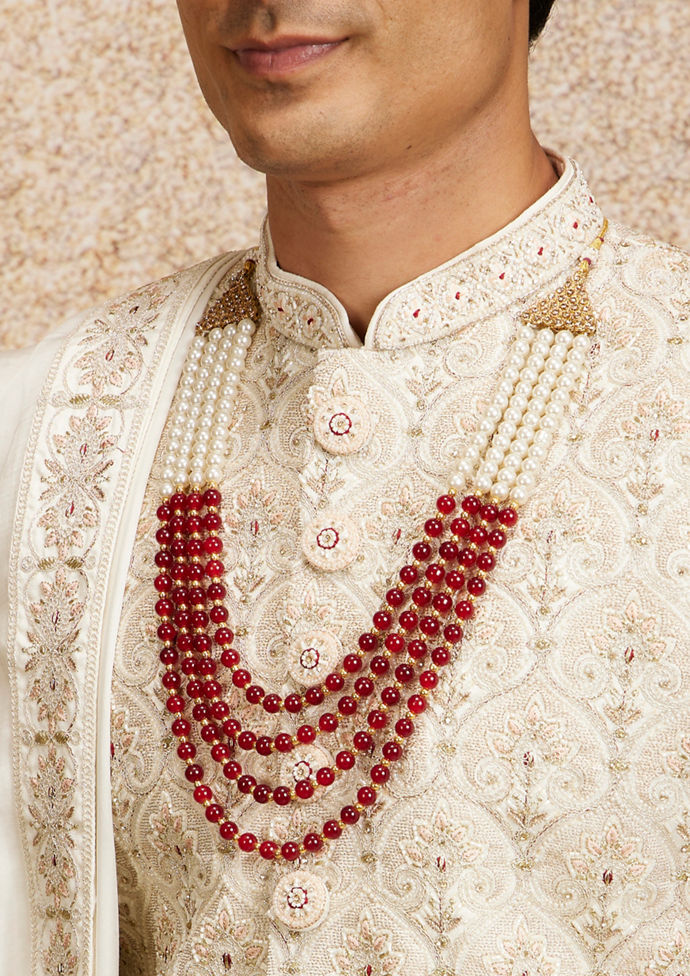
₹ 44,999
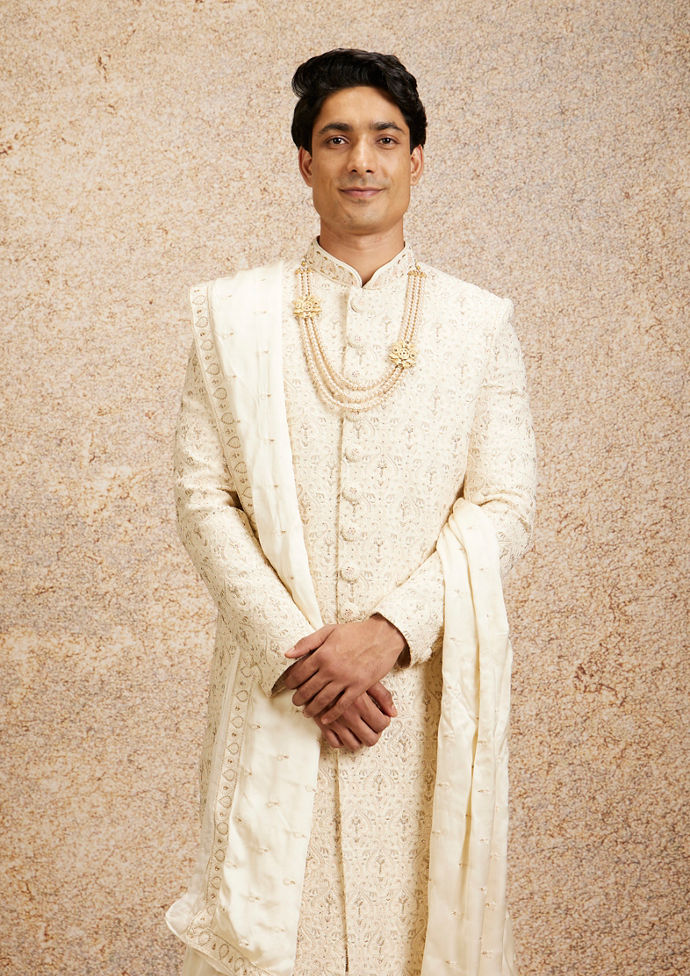
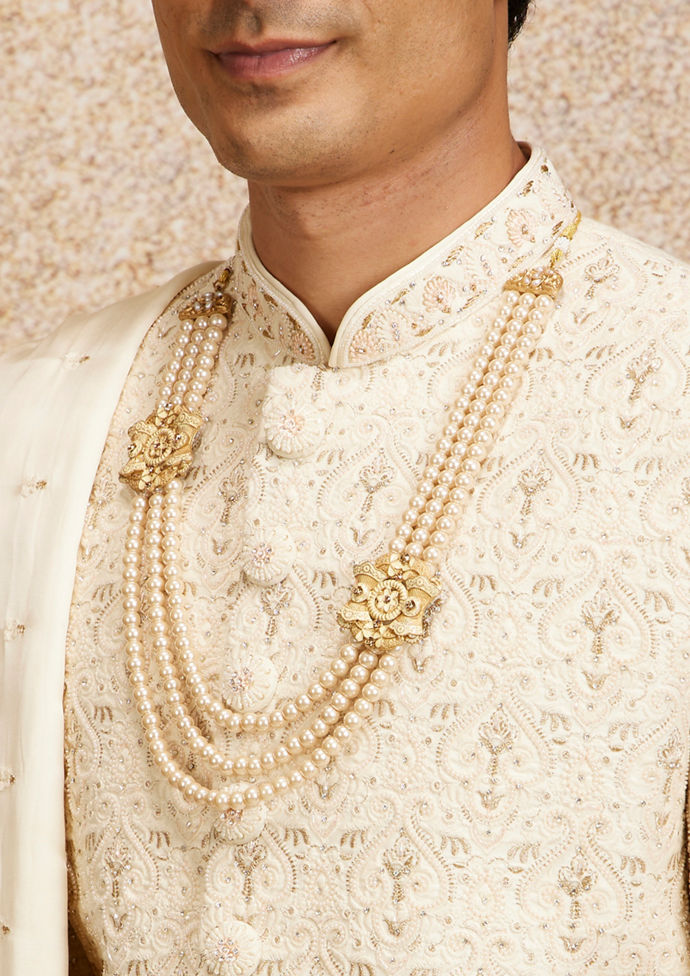
₹ 49,999

₹ 89,999
₹ 54,999
₹ 44,999
₹ 49,999
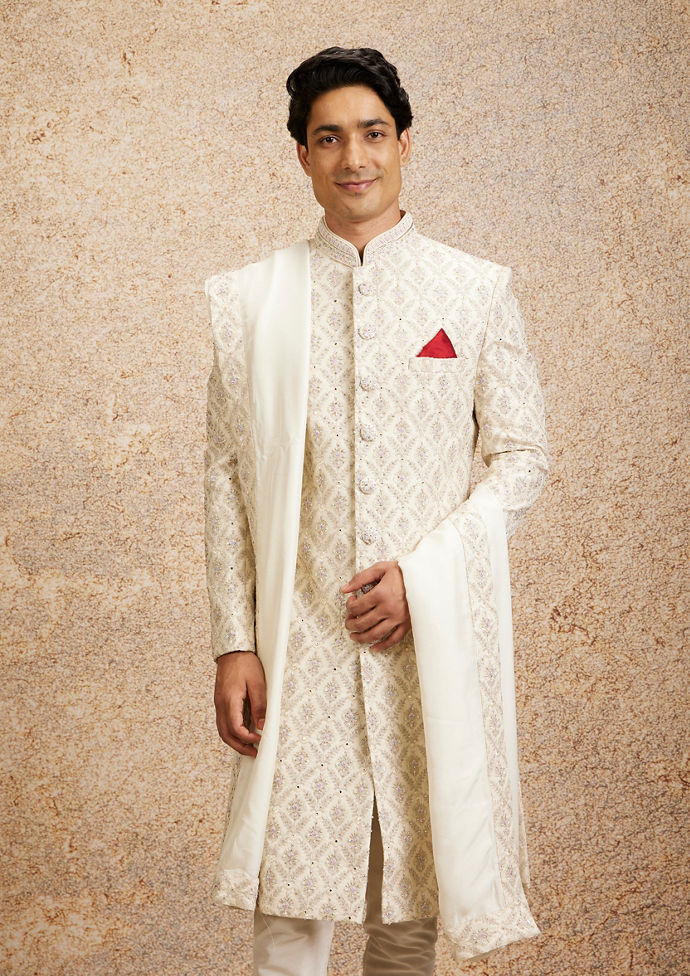
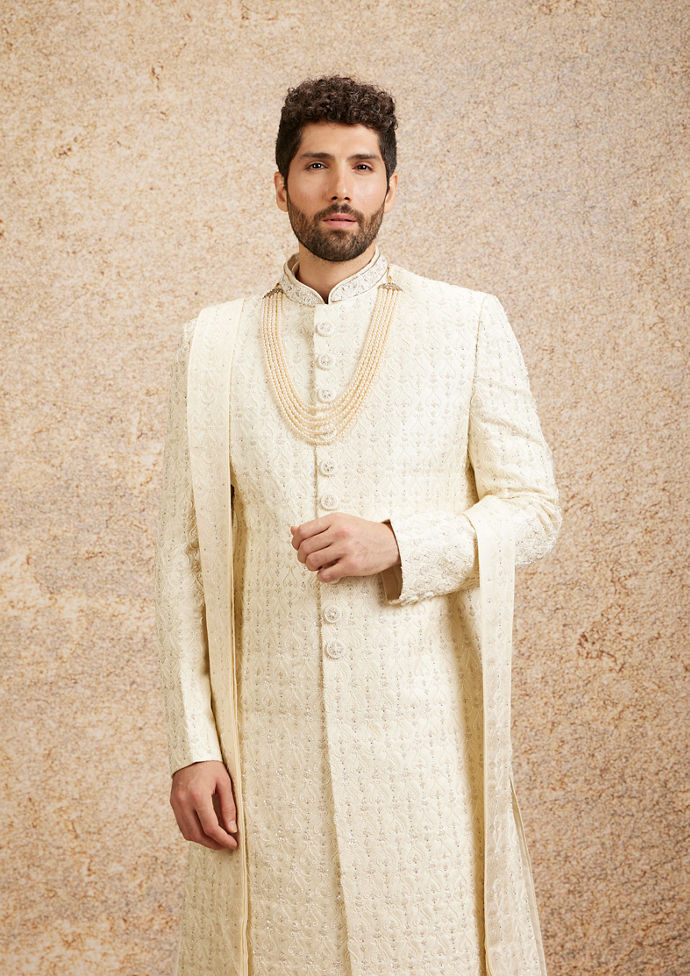
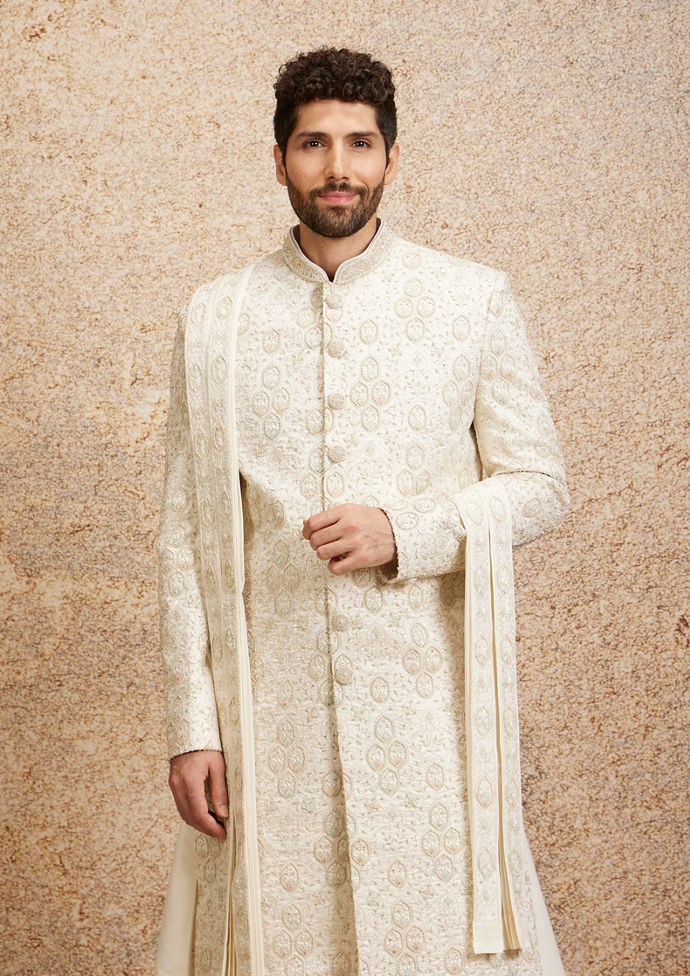
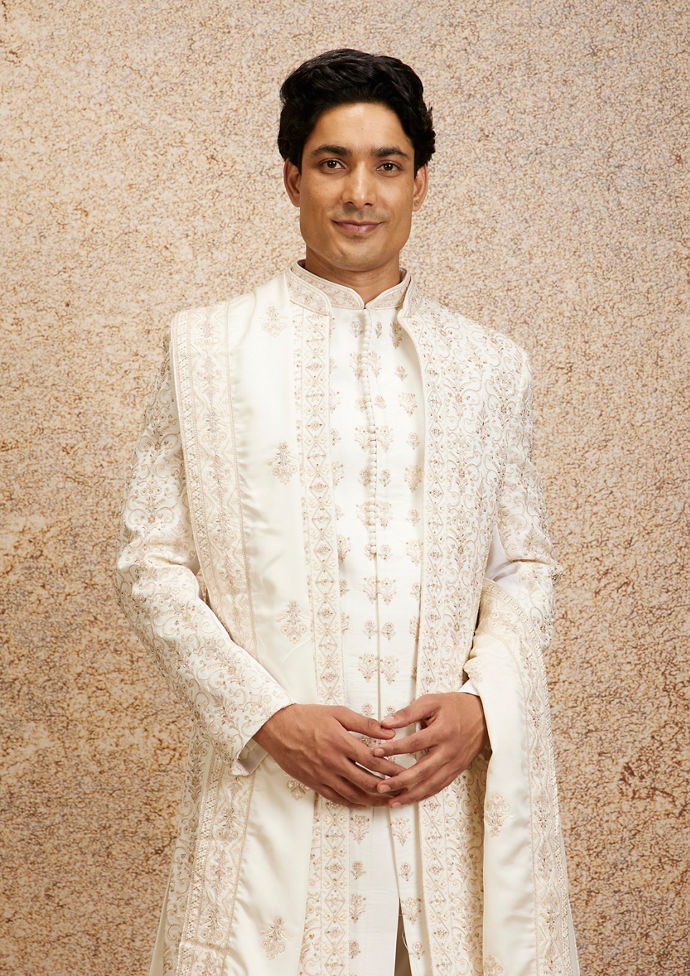
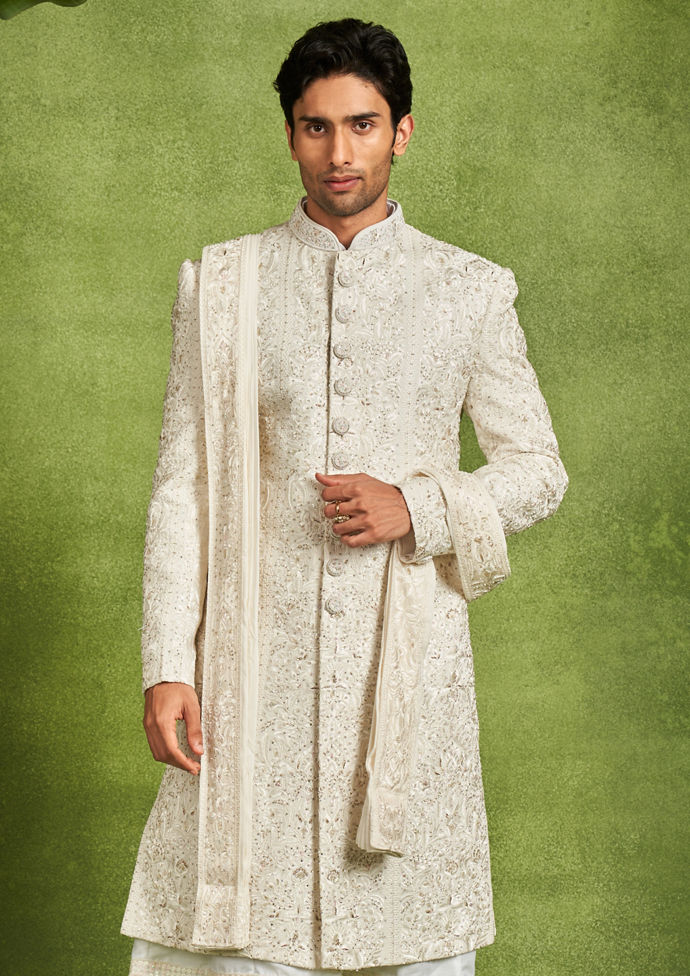
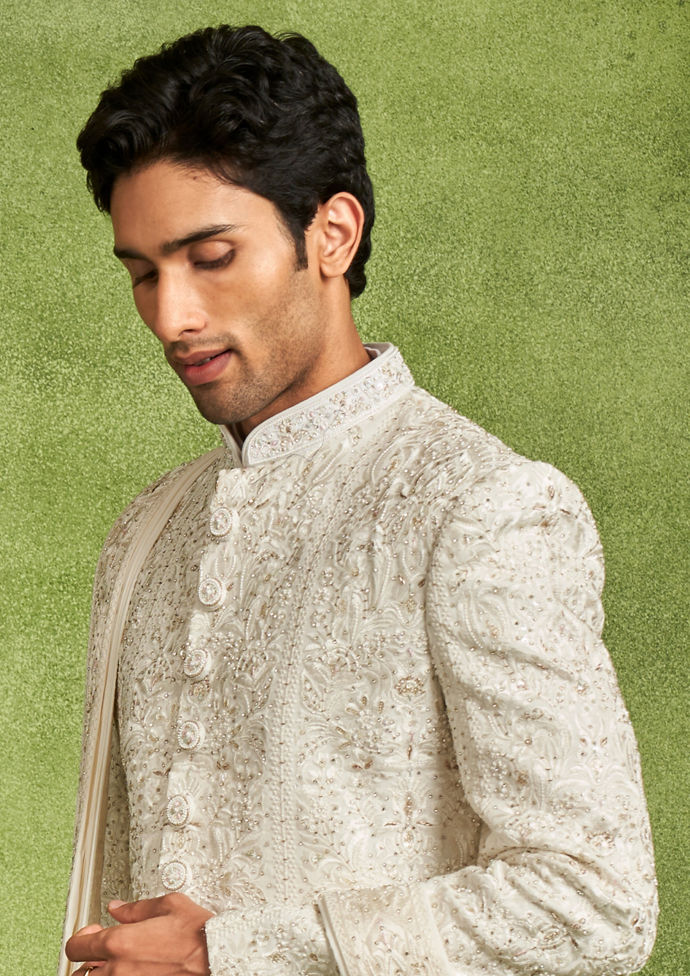
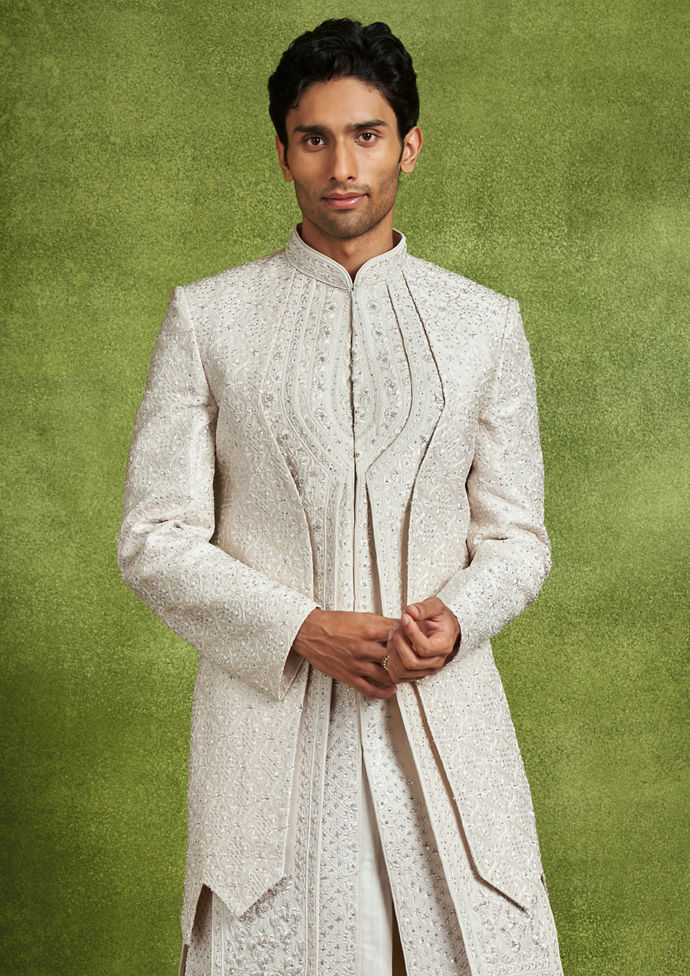
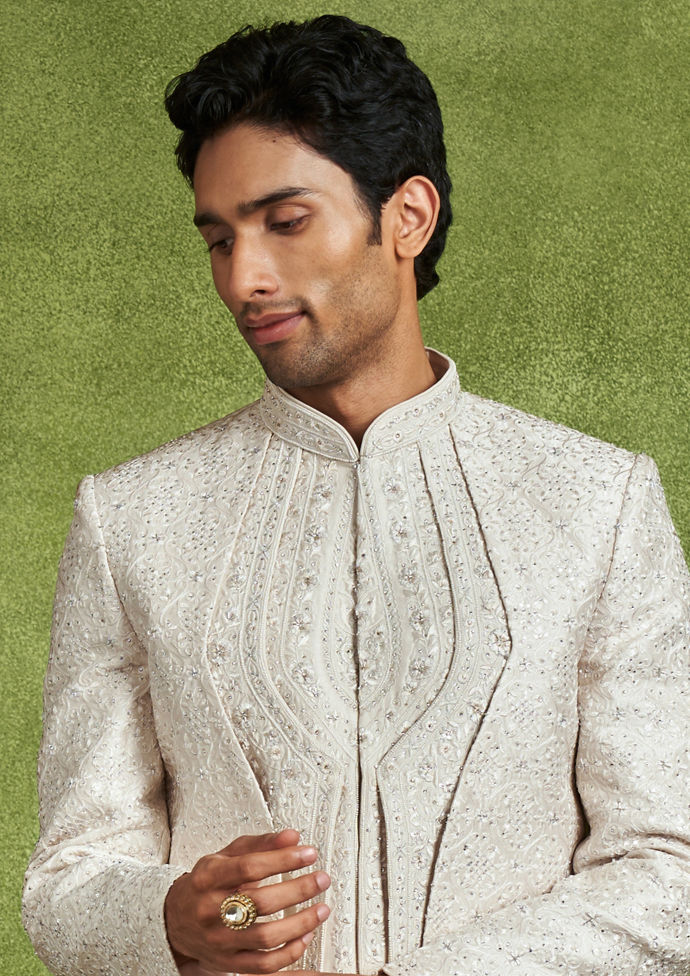
Shopping for a men's cream sherwani in India? This collection brings together cream and ivory silk sherwanis, embroidered in zari, zardozi, resham, sequin, dori jaal, and jacquard moti work.
Each one falls below the knee and has a mandarin collar, and each is worn over a churidar or pyjama. Cream holds up in daylight and under banquet lighting, so a cream sherwani carries a men's wedding look from sangeet through the reception. Grooms can add a tonal dupatta; groomsmen and guests are better off keeping the styling simple.
Every piece is dry clean only, and prices vary by style, so compare a few before you buy. Twamev finishes the embroidery by hand, and the table below lists what is in this collection and who each piece suits.
Shop Now: Footwear
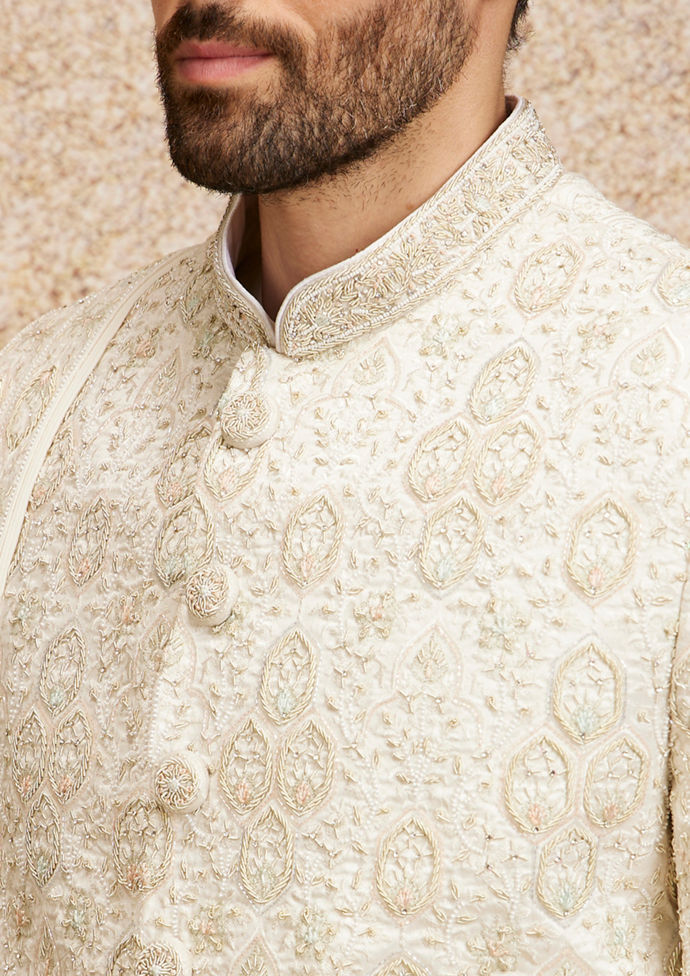
Cream sherwanis here sit between ivory and pale beige, with the hem falling below the knee and a mandarin collar that stands about 1.5 to 2 inches at the back of the neck. Buttons run down a centered front placket, and sleeves finish at the wrist bone so cuff embroidery stays visible.
Cream works for grooms, groomsmen, and guests because it holds up under both daylight and banquet lighting. Outdoors it reads lighter than beige without the glare of pure white, and under warm indoor light it keeps its tone instead of going grey the way stark whites can. It also sits well next to gold, maroon, or emerald accessories, so a group can dress around one base colour.
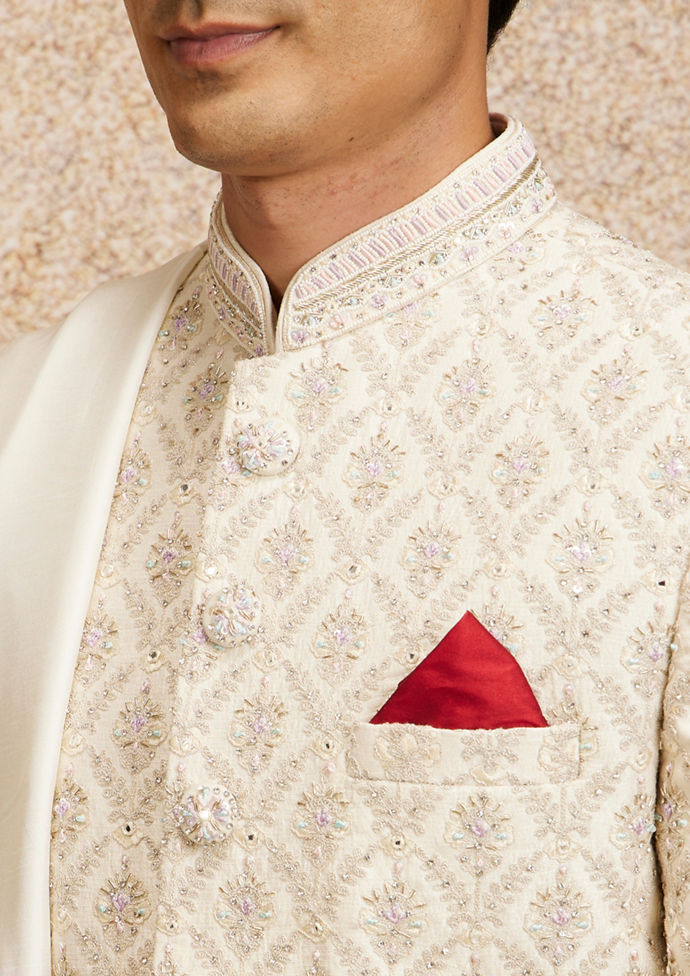
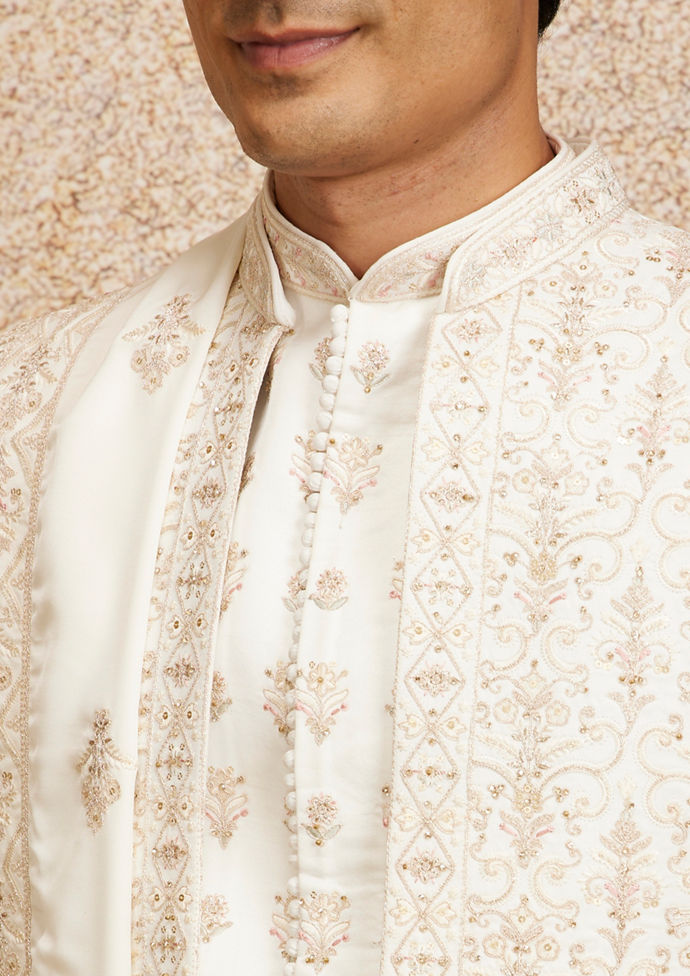
Expect silk or jacquard for the body, generally in the 150 to 250 gsm range, with hand zari embroidery at the collar, placket, and cuffs. Front buttons run 7 to 9 on standard cuts, and the placket is reinforced so the button line stays flat after pressing.
Measure your chest at its fullest point with the tape level under the arms, then match that number to the size column in the comparison table on this page. If you land between two sizes, size up, since sherwanis are cut close through the chest and shoulders.
Each row reads left to right. The product name gives the tone and the embroidery type, key features list the confirmed fabric and work, and best for states the occasion it fits.
Hand embroidery sits on the front panel in this group. The brooch styled option pairs a zardozi brooch with a pashmina shawl, and that is the pairing we recommend in the sherwani for men range for cold-weather functions.
Ivory looks cooler next to gold and suits daytime pheras. Cream is warmer, so we use it on evening reception pieces, where banquet lighting stays on the fabric for hours.
Start with the time of day. Pheras held before 5 pm are daytime events, so lighter tiers hold up better. Receptions run later and call for heavier work, and a cream sherwani for a men's wedding reception reads better when the collar and placket carry denser embroidery than the sleeves.
Silk in the 150 to 250 gsm range holds its shape in an air-conditioned hall and keeps a clean line at the shoulder. For open lawns in humid months, go lighter so the fabric breathes and does not cling across the back.
Measure over the kurta you plan to wear underneath, not over a shirt. Chest commonly runs 38 to 46 in and shoulders 17 to 20 in; 2 in of ease across the chest keeps the placket flat once it is buttoned.
Resham thread work sits flat and keeps the look lighter, which is why groomsmen and guests usually wear it. Zardozi uses metallic wire and denser stitching, so it reads more formal next to plain resham and suits the groom's main ceremony.
Zari, resham, and dori jaal differ by stitch density and sheen. Zari is a metallic-wrapped thread, so the motifs throw back light in sharp points. Resham is silk thread and looks flatter and softer up close. Dori jaal uses a thicker cord, which leaves raised lines standing above the cloth. Dense work adds weight and stiffness across the chest, while open spacing keeps the sherwani easier to move in.
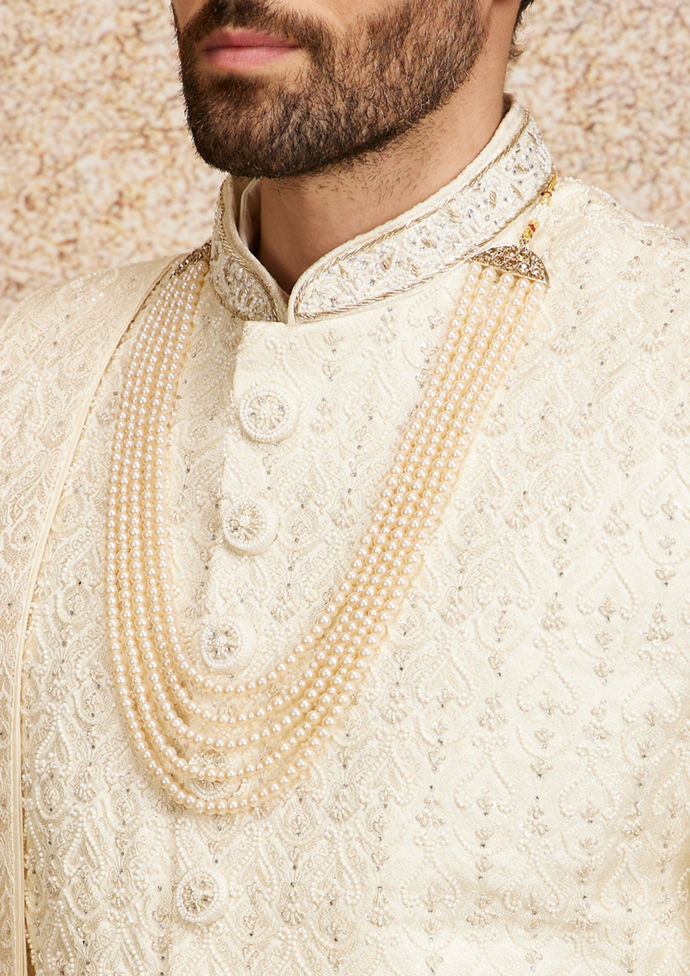
Mandarin collars button through a placket that runs 1 to 2 inches deep. The narrow end of that range sits close to the throat, while the wider end leaves more room for the buttons and a little breathing space. Covered buttons sit flush with the cloth; metal or stone buttons stand out against cream. Button the collar fully and check that it lies flat with no gap under the chin before you commit.
Jacquard, sequin, and plain silk surfaces catch light differently. Jacquard has the pattern woven into the cloth, so it stays visible at close range and shifts only slightly as you move. Sequins reflect in hard points and flash when you turn. Plain silk gives an even, broad sheen across the panel. Sequin work snags on rough fabric and jewellery, so a lined interior and careful handling matter more on those pieces.
A pashmina shawl and brooch complete the outfit without changing the sherwani itself. Drape the shawl over one shoulder for a wedding, or over both when the venue runs cold, and pin it at the left chest so the fabric holds its place. Keep to one focal point, since the embroidery already carries the eye. Cream marks easily, so clean the shawl and the sherwani separately.
Mehndi usually runs in daylight, so a plain stole in a matte weave works better than anything with sheen. Sangeet allows heavier buttons and a draped dupatta. For a reception, a cream sherwani holds up best with deeper-toned accessories and closed shoes, because the warmer evening lighting dulls pale accessories and open footwear reads as underdressed.
Every sherwani we stock is dry clean only. Blot a spill straight away with a dry cloth. Do not rub the spot and do not add water; moisture carries dye deeper into the fibre and leaves a ring once it dries. If the stain is oil based, hand the piece to a specialist dry cleaner rather than a general laundry.
Hang the sherwani on a padded hanger inside a breathable muslin cover so the shoulders hold their line and dust stays off the embroidery. When you pack it, roll the garment around tissue paper instead of folding it along embroidered panels, since those creases are the hardest to lift later.
Yes. A cream sherwani with light zari reads formal enough for a sangeet or reception once you change the stole, buttons, and shoes. If the embroidery is heavy and full-sleeve, it stays a wedding-only piece.
A tailor can take in the shoulder seam and back yoke by 0.5 to 1 inch. Anything beyond that usually requires resetting the sleeve head, which shifts the armhole and costs more to fix.
Yes. An unlined cream silk breathes better through an outdoor mehndi than a lined one, because the lining traps heat against the torso. If the cut needs body, ask for a half lining across the chest and shoulders only.
Store it in a breathable cotton or muslin cover, out of direct sunlight, and never in sealed plastic. Trapped moisture and residual starch are what turn silk and silk-blend cream fabrics yellow.
Yes, and the tone difference is small enough that you need a second cue. Give the groom heavier zari, a contrast dupatta, or a deeper button set so he reads distinctly in photographs.
Explore More Collections: Jodhpuri Suit For Men , Kurta Pajama For Men
Cream Sherwani Price List
Cream Sherwani
Price (₹)
Cream Silk Sequin Hand Embroidered Sherwani
₹ 44,999
Cream Silk Zardosi Brooch Embroidered Sherwani With Pashmina Shawl
₹ 44,999
Ivory Silk Resham Stone Embroidered Sherwani
₹ 54,999
Ivory Silk Resham Embroidered Layered Sherwani
₹ 89,999
Ivory Silk Hand Embroidered Sherwani
₹ 89,999
Cream Silk Zari Embroidered Sherwani
₹ 54,999
Cream Silk Zari Embroidered Sherwani
₹ 44,999
Ivory Silk Zari Embroidered Sherwani
₹ 49,999
Cream Silk Dori Jaal Embroidered Sherwani
₹ 29,999
Cream Silk Jacquard Moti Embroidered Sherwani
₹ 39,999





Login to access Twamev Member Exclusive Features like Video Commerce

Enter the mobile number or email address associated with your Manyavar account
We’ll ask for this password whenever you sign in