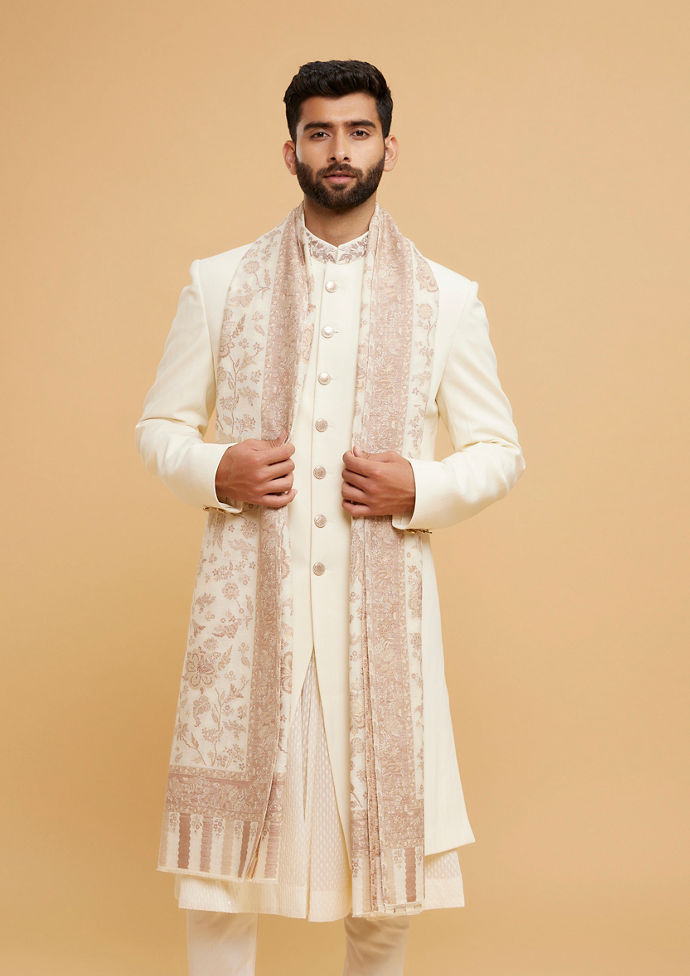
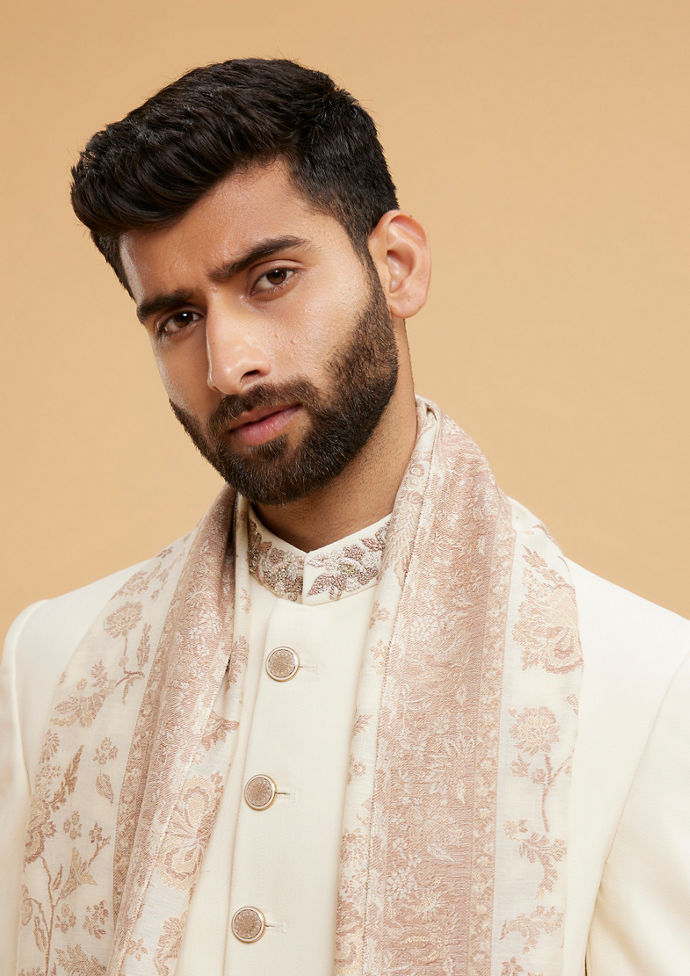
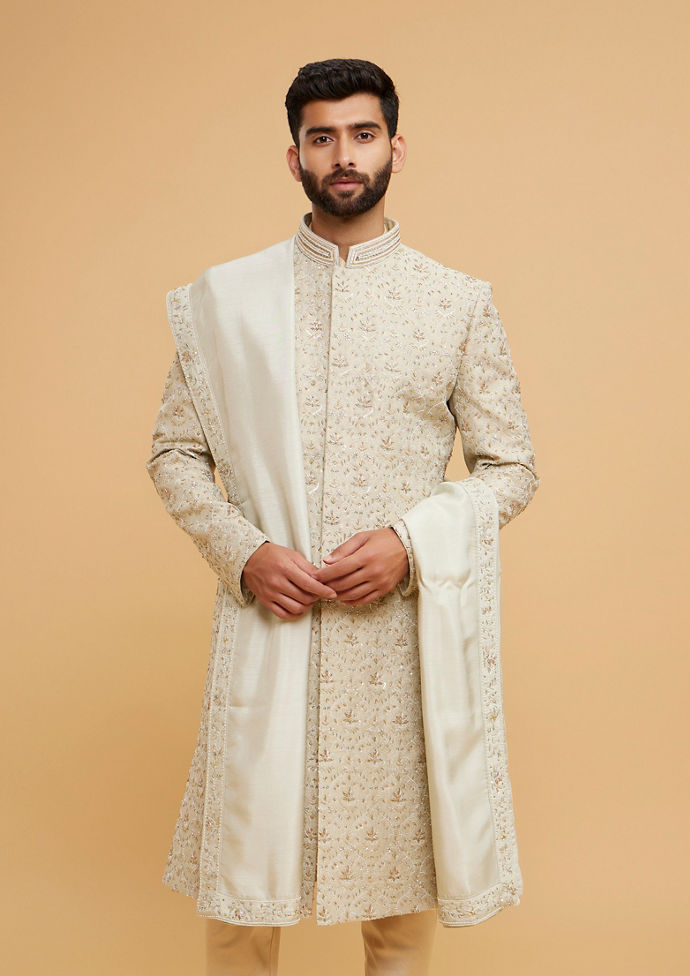
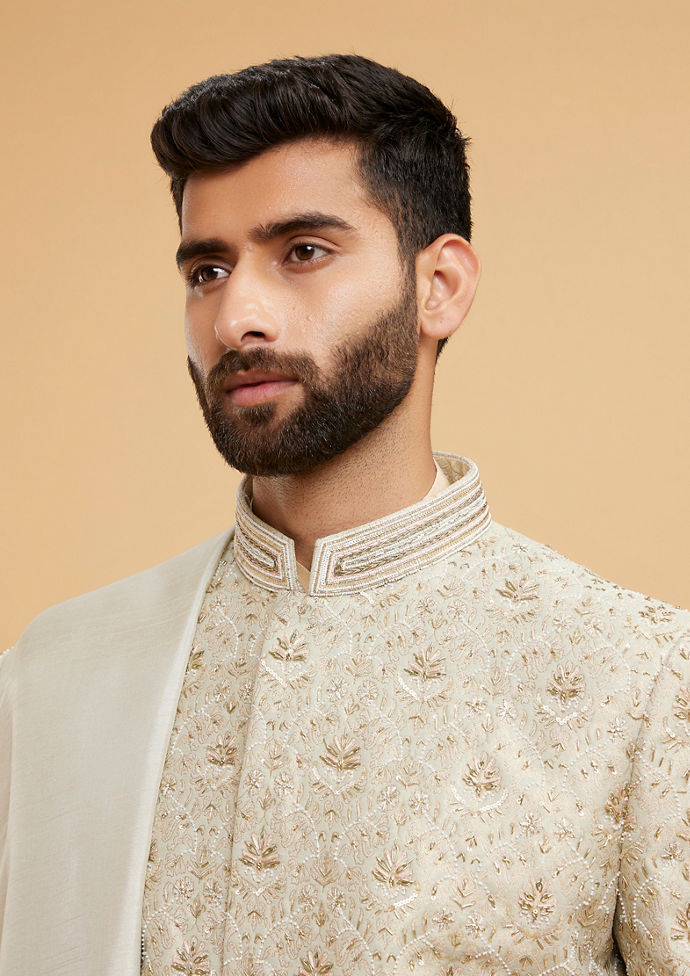
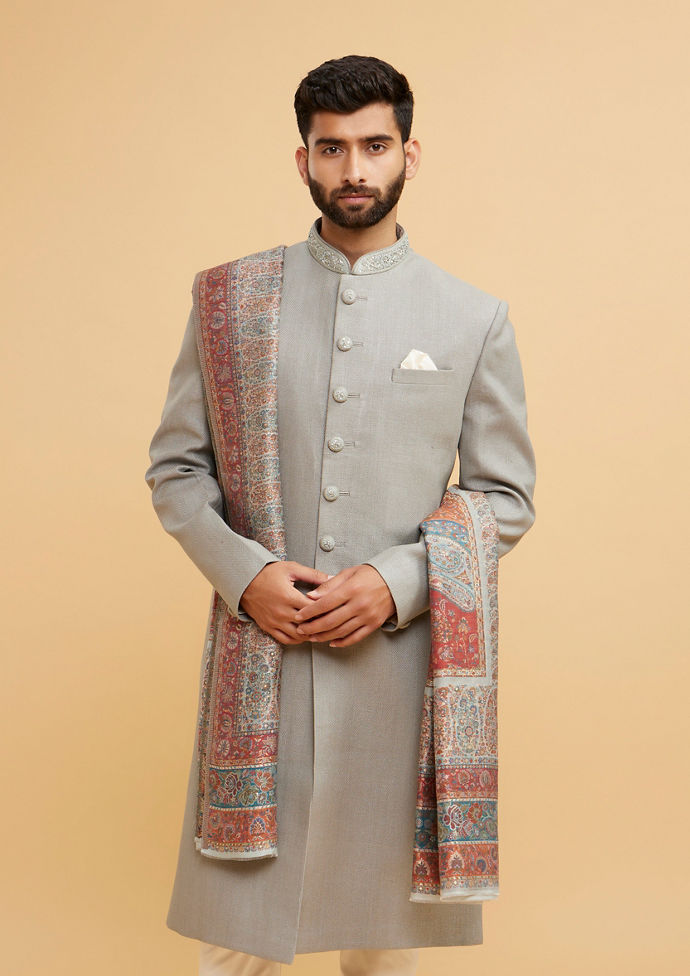
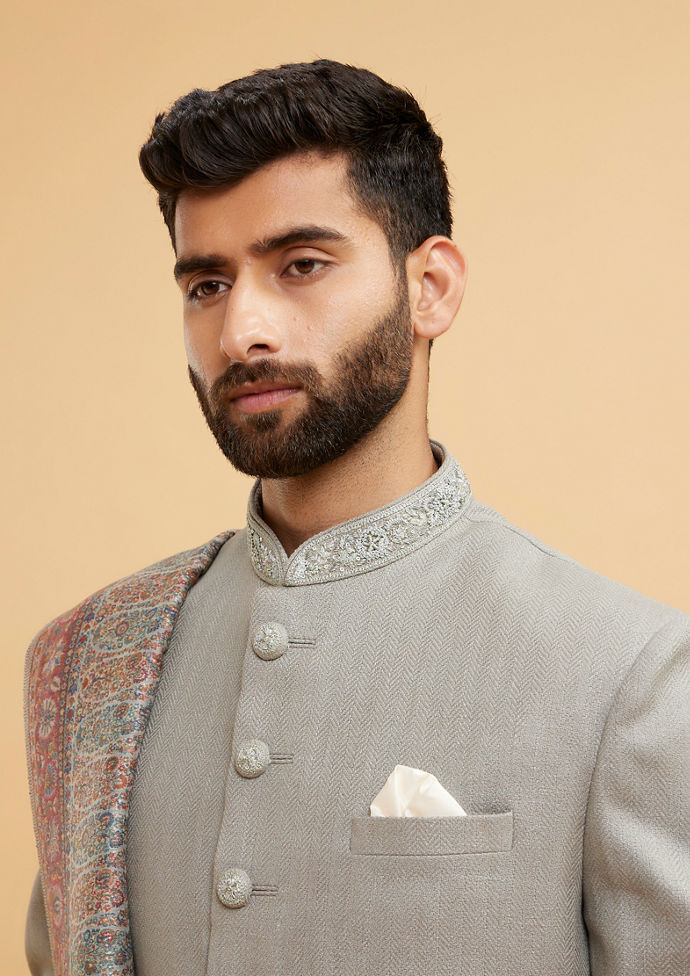
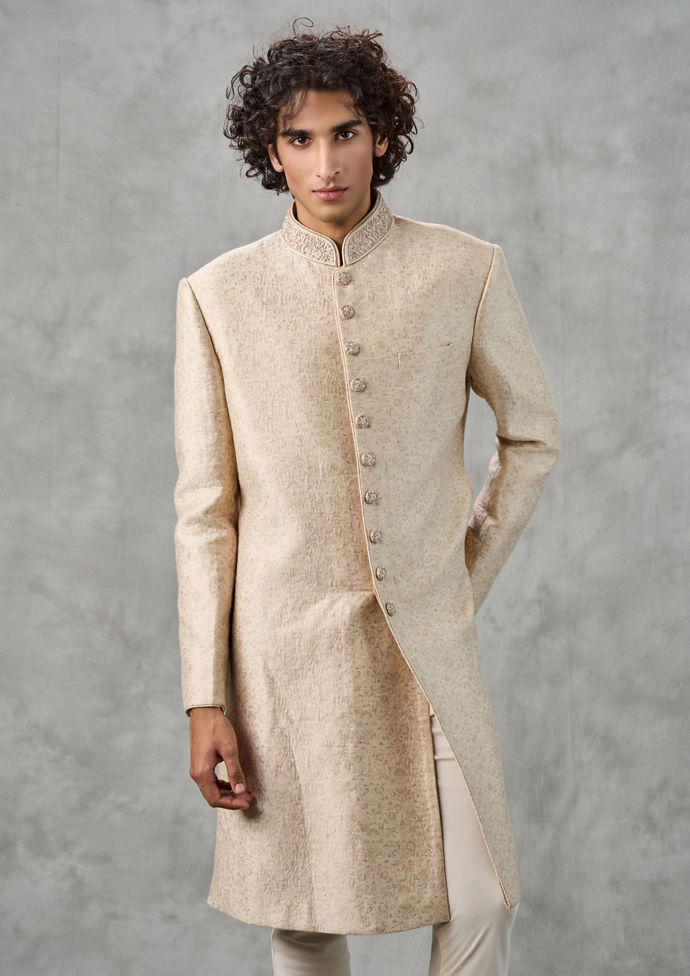
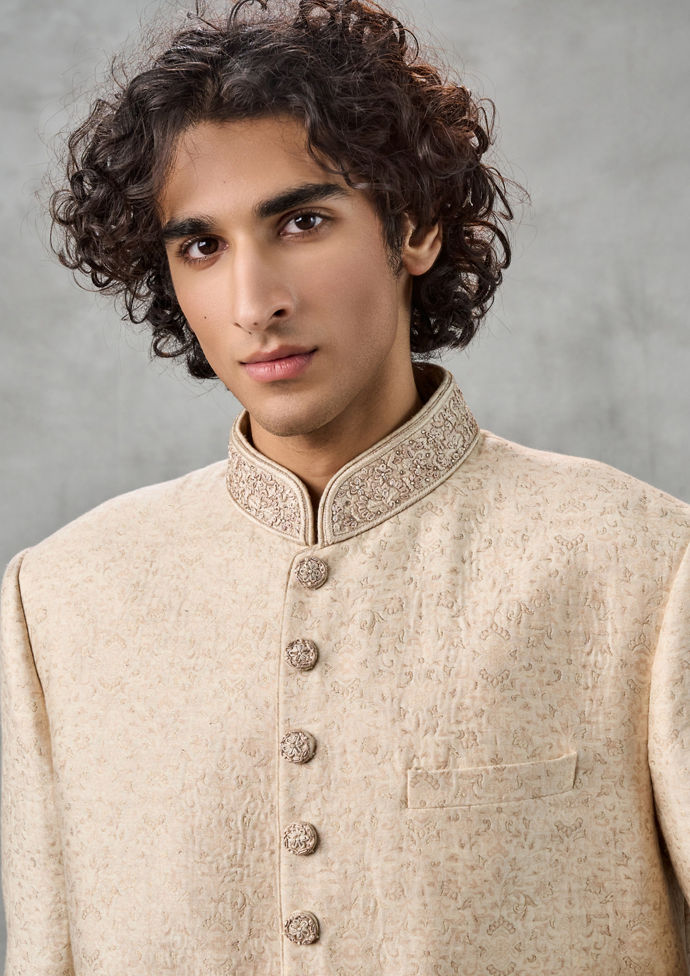
Sherwani for men wedding luxury groom collection
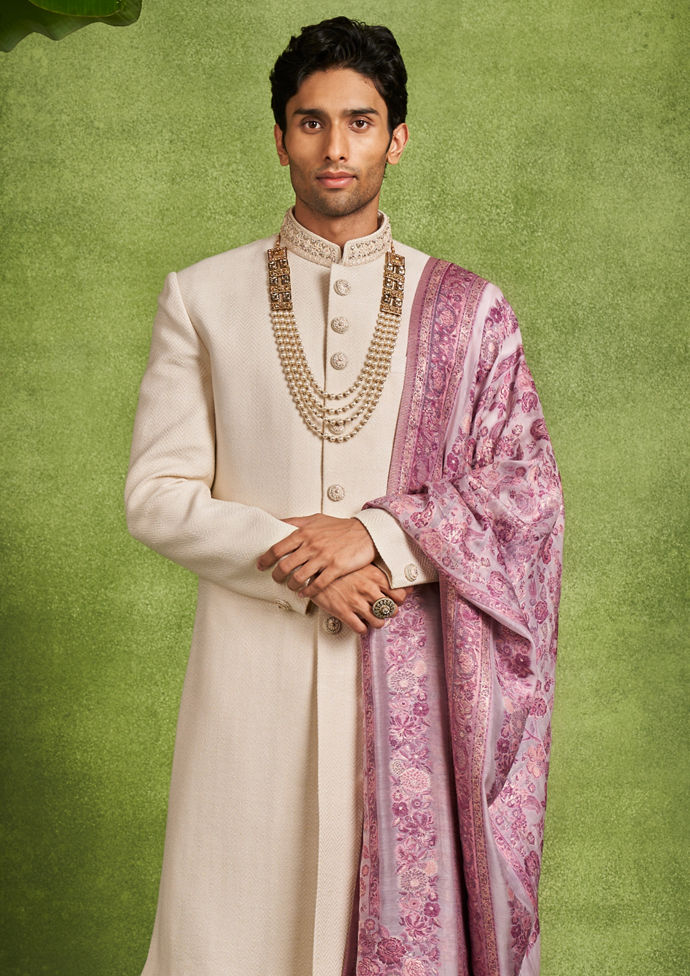
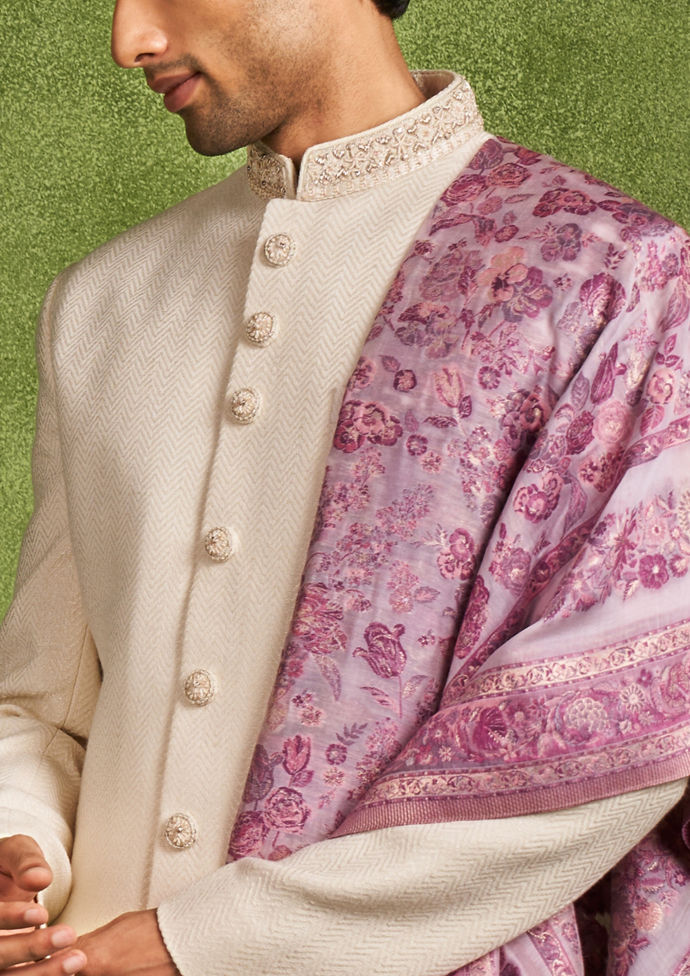
Twamev's occasion wear spans kurta pajama sets, sherwani for the groom, indo western attire, sarees, lehengas and skirt tops. This edit narrows to one groom style: the Noor wine velvet zardozi sherwani. The outer is velvet, the lining is silk, and the zardozi embroidery is worked in off-white and gold thread on a wine base. Care is dry clean only.
Start with the ceremony you are dressing for, then check the fabric and embroidery details in the table below before you shortlist.
Sherwani for men wedding essential criteria for Indian grooms
What makes a sherwani wedding-ready
A sherwani holds up through a full wedding day when the outer shell is velvet, the lining is silk, and the embroidery is zardozi worked in metal thread. Printed or glued motifs lift and crack after a few hours of wear, and they cannot be repaired the way stitched thread can. Care is dry clean only: water dulls zardozi and shrinks a silk lining.
Key measurements for a groom's sherwani
Take chest, waist, and sleeve measurements in inches over the kurta you plan to wear underneath. Leave 2 in of ease at the chest so the sherwani closes without pulling across the buttons, and set the sleeve to finish at the wrist bone so the cuff stays visible.
How occasion shapes your sherwani choice
Baraat and sangeet run through crowds and daylight, so lighter weaves such as raw silk and brocade stay cooler and move better. A reception is usually indoors and later in the evening, which suits velvet with metallic zardozi.
What sherwani styles are in this wedding collection?
Wedding sherwani product table
This edit carries a single style. The table below sets out what it is made of and which events it fits.
|
Product name
|
Key details
|
Best for
|
|
Noor wine velvet zardozi groom sherwani
|
Velvet outer, silk lining, off-white and gold zardozi
|
Wedding and reception
|
Fabric and embroidery highlights
The sherwani has a velvet outer and a silk lining. Its zardozi embroidery is worked in off-white and gold, and both tones read clearly against the wine velvet.
Best wedding occasions by style
The Noor wine velvet zardozi groom sherwani fits the wedding ceremony and the reception. Both events usually sit in the evening or in a covered hall, and the gold thread on the wine base catches light as the photographer moves around, while paler fabrics can flatten out under flash.
Velvet is a dense, piled weave, so it holds warmth. For a baraat that runs through the afternoon, a lighter silk sherwani is easier to wear across several hours outdoors, with a shawl over the shoulders if the evening turns cool. If your day holds more than one function, keep the velvet piece for the ceremony and change into something lighter after the photographs.
This edit carries the velvet style on its own. If the schedule includes a daytime mehndi or a sangeet, treat those as separate looks and pick a silk option for the afternoon heat. The velvet Noor does its best work once the light drops.
How should you choose a wedding sherwani for men?
Step 1 measure chest, shoulder, and sleeve length
Measure the chest at its fullest point, the shoulder from seam to seam, and the sleeve from shoulder point to wrist. Keep the tape level and parallel to the floor, and write the numbers down before you compare them with any size chart. A difference of 2 cm or more between your chest and shoulder measurements usually means you need a tailor rather than an off-the-rack size. Take the measurements over a light shirt rather than a bulky one, and run them a second time so you are not building the whole outfit on a single reading.
Step 2 match fabric to wedding season and venue
Velvet holds its shape in air-conditioned evening halls and on winter dates. Lighter silk moves better at outdoor daytime ceremonies, where heat is the real constraint rather than formality. Weight matters more than the label name: brocade and raw silk run 150 to 250 gsm; velvet, 250 to 350 gsm, draping stiffly in direct sun. If your function runs from a daytime ceremony into an evening reception, silk for the day and velvet for the night is a practical split, and both sit within our groom sherwani range.
Step 3 choose embroidery density for your budget
Decide the embellishment level first, then build the rest of the outfit around it. If zardozi is the priority, cap the dense work to the front panel and leave the sleeves plain, so the detail lands where photographs and handshakes happen. Embroidered collars and cuffs add another layer of thread work without changing the overall silhouette, and they are the first thing to cut if you want to hold the outlay down. When two pieces are side by side, turn them over and look at the inside of the placket: the neatness of the finishing there is what keeps the sherwani sitting properly after several hours of wear.
Step 4 confirm fit with a tailor or size chart
Confirm shoulder and sleeve fit with a tailor or our size chart before ordering. The shoulder seam should sit at the outer edge of your shoulder, and with the arm relaxed the sleeve should end at the wrist bone. If a readymade size falls between two options, take the larger one and have the sides adjusted. Button the sherwani fully when you try it on, because a closed front pulls the shoulders in and is the quickest way to spot tightness across the chest.
Shop wedding sherwanis by fabric and style
Shop by fabric silk, velvet, and pashmi
Silk keeps a crisp shoulder line and holds a stiff stand collar through a long ceremony. Velvet has a heavier pile, so it sits warmer and works better for winter dates, though it shows creases if it is folded in a bag for hours. Pashmi is the lightest of the three: it falls closer to the body, wrinkles less under a stole, and suits indoor halls where the groom walks between rooms. Match the weight to the season and the number of hours you will stay dressed. Noor, our wine groom sherwani, shows how the heavier end works: a velvet body over a silk lining, with off-white and gold metallic thread through the zardozi, finished for a long reception and dry clean only.
Shop by color ivory, cream, and gold
Ivory reads brightest in daylight and is the usual pick for daytime and outdoor ceremonies. Cream is warmer by a shade and hides small differences in tone between the kurta and the sherwani, which matters when the two are stitched separately. Gold shows up best under tungsten light at a night reception, especially against deep maroon, bottle green, or navy grounds, and it photographs flatter in direct sun. Ivory also sits well beside bridal ivory: Zariya, our ivory bridal lehenga, is pure organza over a raw silk lining with gold and ivory zardozi, so a groom in ivory or cream stands alongside that palette instead of competing with it.
Shop by embroidery zardosi, thread, and sequin
Zardosi is metal-wrapped thread laid over a traced outline, and it adds real weight to a yoke, so check that the shoulders still sit level when the piece is on. Cotton thread work lies flatter against the fabric, survives folding in a suitcase, and keeps the sherwani wearable for a second function. Sequins catch light from across a hall, but the edges can snag on net or tulle dupattas, so check the sleeve hems before you pair the two. Thread work does not have to look plain: Elegance, our ivory anarkali suit, uses resham thread work in ivory and pale gold across a Chanderi silk body, the same restrained approach that works well on a guest or groomsman sherwani.
Shop by wedding function groom, groomsmen, and guest
The groom usually wears the heaviest embroidery in the group, often with a matching stole, and that weight is what separates him in photographs. Groomsmen are easier to dress when they match each other in tone, with thread work kept to the collar and placket so no one looks plainer than the rest. Guests are safest in a self-textured fabric with a plain collar, a cut that does not compete with the wedding party, and a colour that stays clear of the bridal palette. Our range covers all three roles: Sherwani for Groom, Indo Western Attire and Kurta Pajama Sets for the wider party, and Lehengas and Sarees on the bridal side.
If your wedding date is still a few months out, settle the fit and the fabric first and leave the embroidery choices for last, since they are the simplest to adjust and the hardest to change once the order is placed. Explore the full Twamev wedding collection to compare fabrics, thread work, and colours before you commit to a style.
Styling and care tips for men in sherwani
Layer a sherwani with dupatta and stole
Pin the dupatta at the collarbone, over your left shoulder. That single pin holds the drape steady through a long baraat, when you have no chance to readjust. If you want warmth without bulk across the chest, add a stole woven at 150 to 250 gsm.
Fit tips for grooms and groomsmen
For a groom, the sleeve should end at the wrist bone and the hem should sit 1 to 2 cm above the shoe. When you are dressing a group of groomsmen, keep shoulder widths within 1 cm of one another so everyone reads the same in photographs.
Care and storage for embroidered sherwanis
Embroidered sherwanis are dry clean only. Once cleaned, hang yours on a padded hanger and slip a breathable muslin cover over it. Fold zardozi panels inward so the metallic thread does not snag on the next garment in the wardrobe.
What do grooms ask about wedding sherwanis?
Can a sherwani be altered after delivery?
Usually, yes. A tailor can take in 2 to 4 cm at the side seams and shorten the sleeves. Heavy zardozi embroidery limits how much the chest can be reshaped.
How do I choose between a sherwani and an Indo-Western set?
Wear the sherwani for the ceremony and reception. Go with an indo western dress for men if you want a shorter jacket you can dance in.
What accessories complete a groom's sherwani look?
A safa, kalgi and mojari finish the outfit. Keep the metal hardware on the sherwani to a single tone.
How far in advance should I order a wedding sherwani?
Six to eight weeks before the first function leaves time for a fitting, alterations, and a buffer when the season is busy.