

Pink Silk Kurta
7 PRODUCTS
Filter

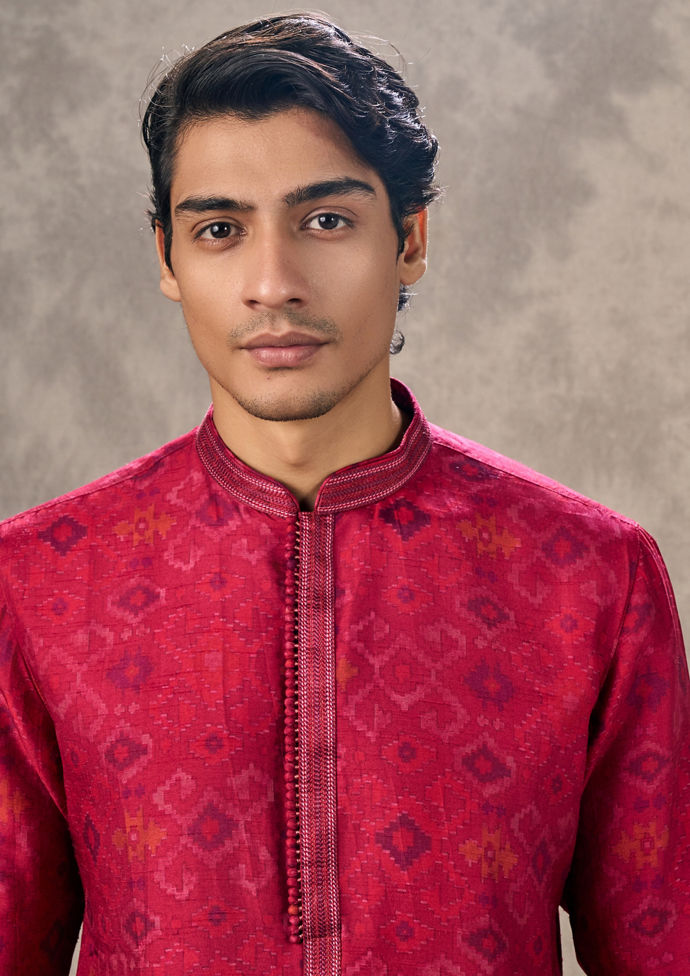
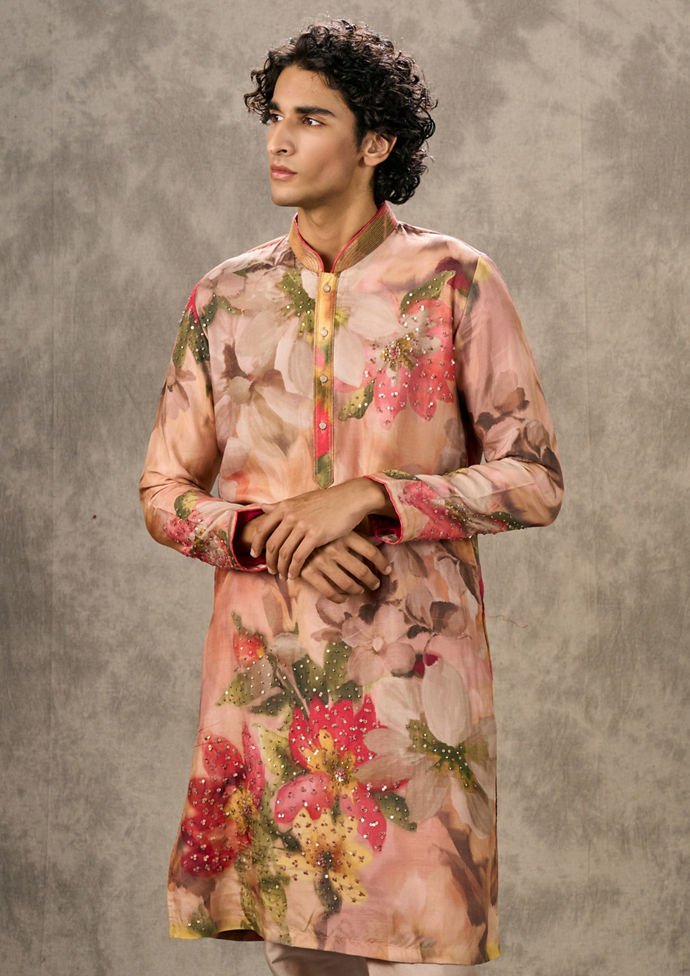
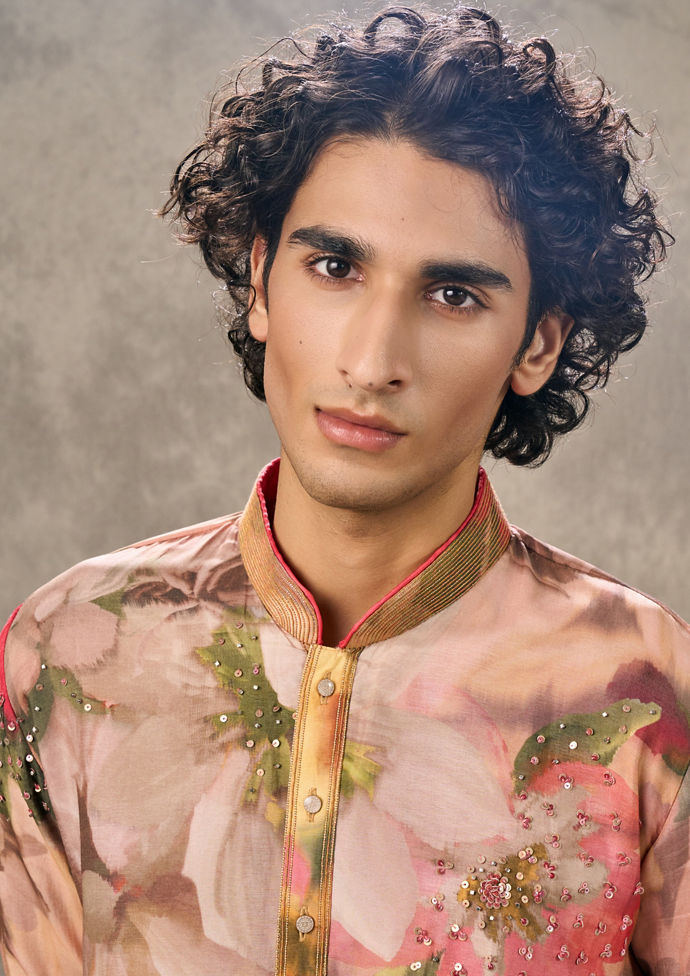
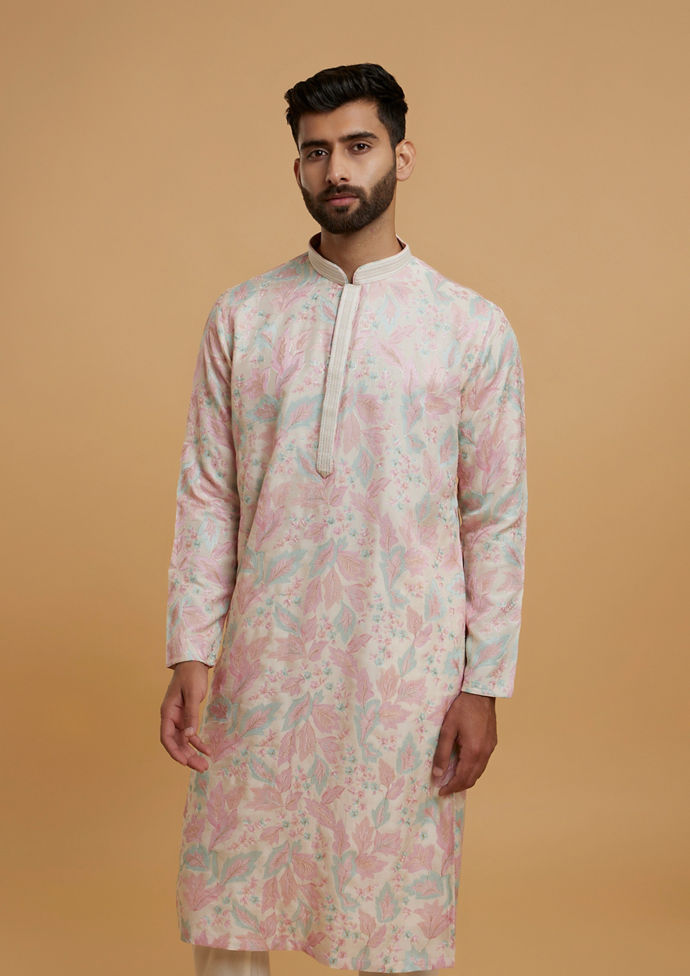
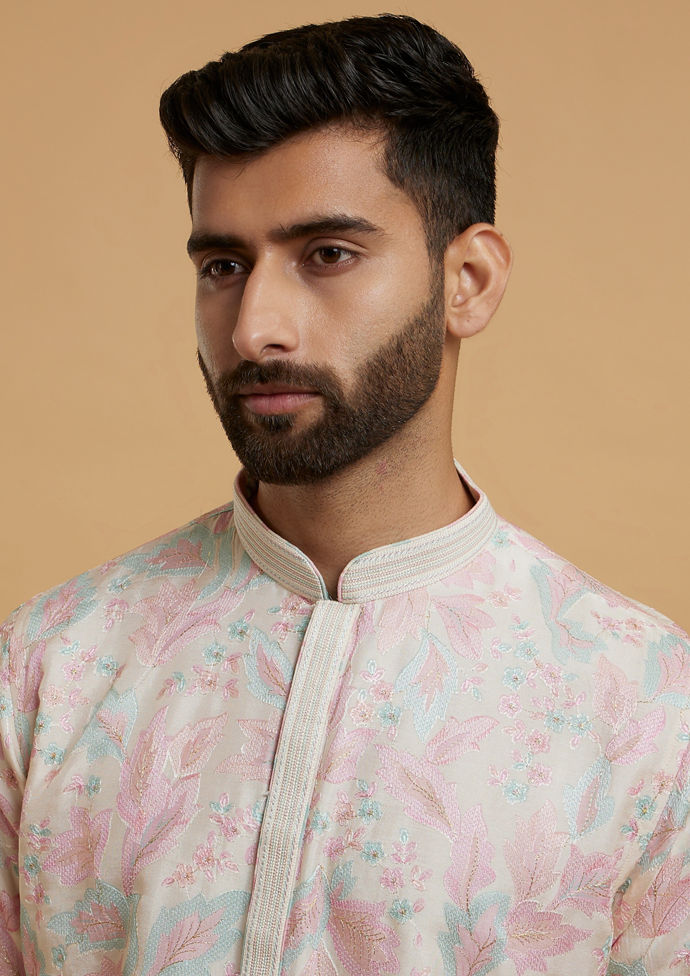
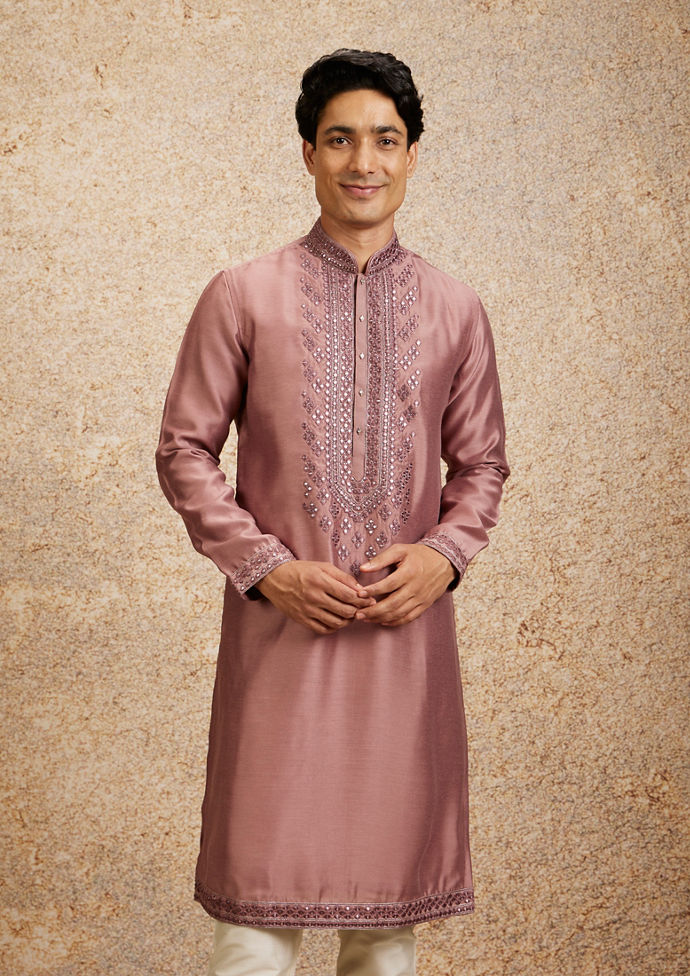
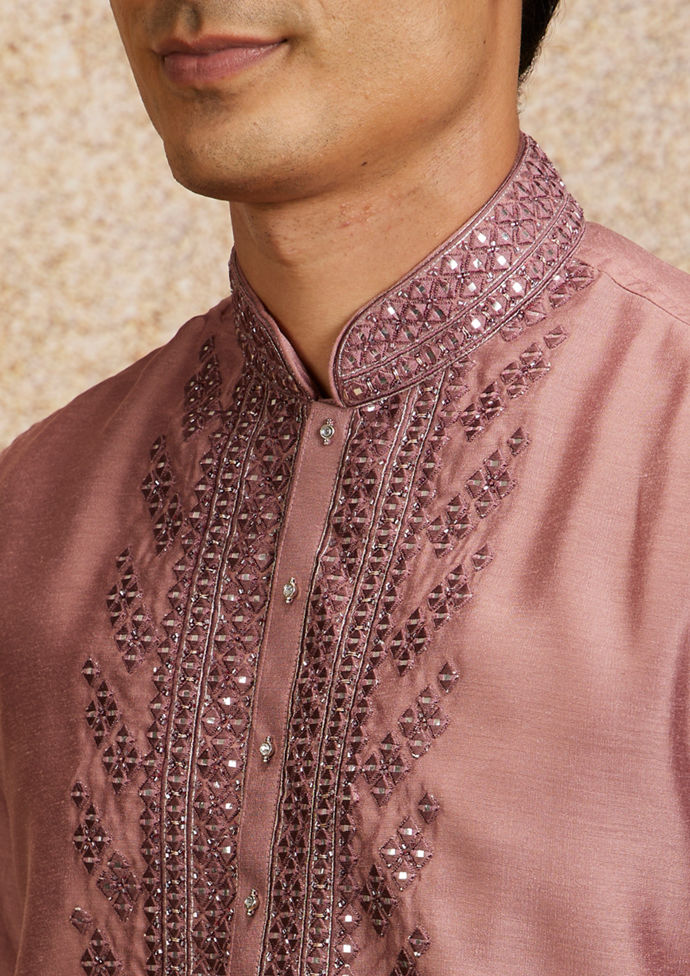
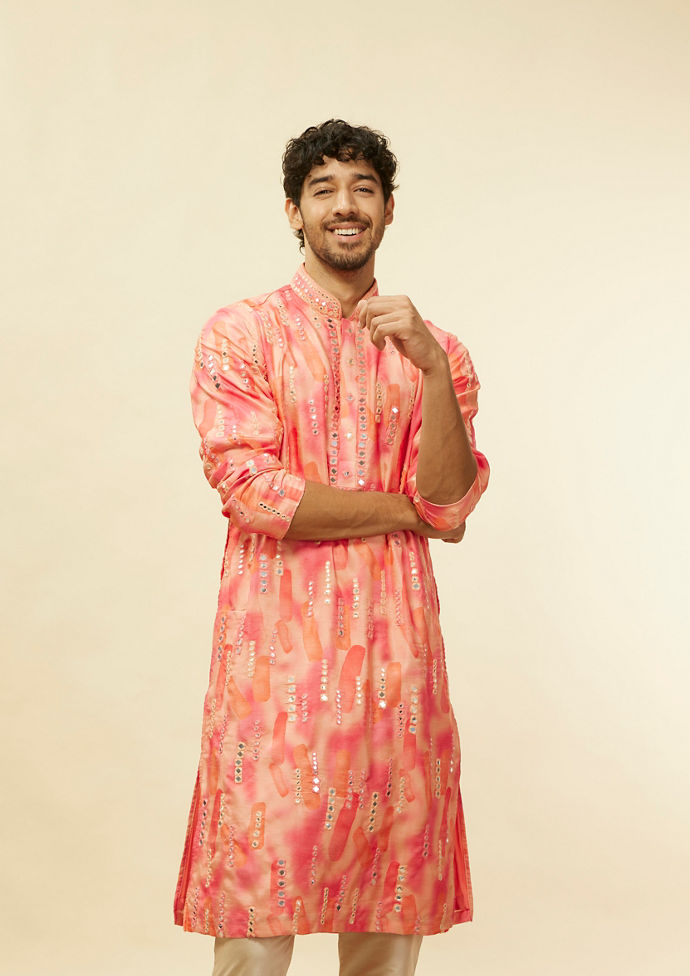
1,285 د.إ

1,285 د.إ
A pink silk kurta works at a wedding or festive event when the fabric, the work, and the cut match what the function asks for. Colour on its own decides very little. This collection has seven sets in Chanderi, silk, viscose, georgette, and ikat silk, with embroidery, sequins, and mirror work across cream, dusty pink, and rani pink shades.
Visit Now: Embroidery Kurta for Men
Each set is cut for a different kind of gathering. Georgette and viscose are the lighter options for mehendi and daytime functions, while Chanderi, silk, and ikat silk carry sangeet, reception, and wedding-guest looks. All seven pieces are dry clean only.
Compare all seven sets by fabric, work, and occasion in the table below, then use the buying guide for fit and care.
Read the label before you look at the colour or the cut. A kurta sold as pure silk should carry the Silk Mark tag, and the composition line should state 100% mulberry silk rather than a blend with viscose or polyester. Ask the seller for the weave name and the fabric weight in gsm, because both change how the kurta behaves after a few hours of wear. Dupion and Raw Silk hold a crisp, structured shape that suits a reception; tussar and lighter weaves fall closer to the body and stay cooler through a long ceremony. Blends cost less, but they wrinkle faster at the elbows and hem, and they lose the soft sheen that makes pink read as luxury rather than synthetic.
Measure your bust over whatever you plan to wear underneath, then add 2 to 3 inches of ease. That is the working range that lets you lift both arms during a sangeet without the armhole pulling or the side seams straining. Check three points on the finished garment: the shoulder seam should sit at your shoulder point, the sleeve should end at the wrist bone, and the side seam should hang straight rather than bowing outward. For length, a hem at mid-thigh gives a contemporary line, while a hem at or just below the knee sits closer to traditional styling with a churidar or dhoti. If you order online, compare the seller's chest and length measurements against a kurta you already own rather than trusting a generic size chart.
The shade should follow the event and the hour. Blush, rose, and powder pink work for daytime functions and mehendi, while fuchsia, magenta, and rani pink carry better under evening lights at a reception. As a guest, leave bridal reds and deep maroons to the bride and pick a pink that sits clearly apart from her palette. For sangeet, where you will be dancing, choose a lighter weave with less zari on the sleeves and hem so the fabric moves with you instead of catching. Festive wear at home is more forgiving: a mid-weight silk with a simple gota border holds up to repeated wear and dry cleaning far better than heavy embroidery.
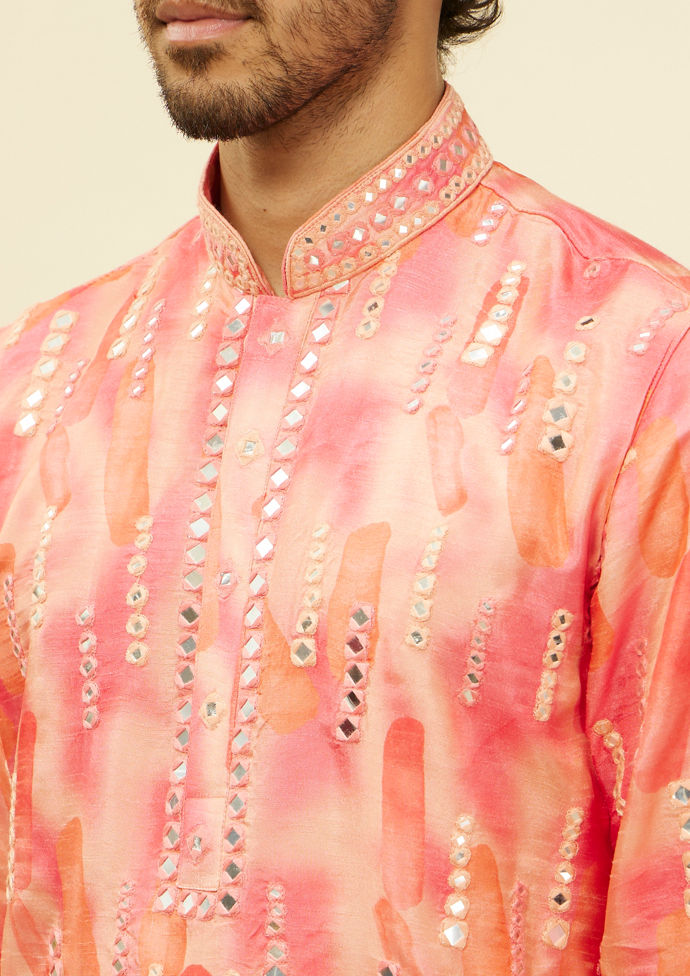
Mirror work and zari thread run across the yoke, sleeves, and hem on these sets, so they hold their shine under stage lighting at a sangeet or reception. The sequin versions add a second layer of sparkle over the same pink silk base, and the work is dense enough that the kurta needs a lining at the bodice.
Chanderi is a light cotton-silk blend, so this kurta hangs sheer and stays cool through a long day. Raw Silk is denser and keeps a firmer A-line from morning to the last function. Both fabrics take dye differently, which is why the Chanderi reads softer pink and the Raw Silk reads deeper.
A straight kurta sits close at the waist and falls straight to the hem. A-line cuts flare 2 to 3 inches past the hip. Anarkali panels open from the bust into a full skirt. The cut affects fit more than the fabric does, so try the silhouette first. A straight cut reads formal with a churidar, while an anarkali carries a festive evening on its own.
Wedding functions take the heaviest embroidery and the Raw Silk weights. Sangeet calls for lighter pink silk, since you are dancing and moving in it. Festive wear at home takes a printed set with little thread work. If one kurta has to cover all three, pick a mid-weight A-line with embroidery on the yoke only.
Measure the bust at the fullest point with the tape parallel to the floor, snug but not tight. Take the waist at its narrowest point, which usually sits just above the navel, then record the length from the shoulder seam to where you want the hem to fall, mid-calf for most festive and wedding wear. Wear the bra you plan to pair with the kurta while you measure, and write both readings down. Keep them handy: silk has little give, so the finished kurta needs enough room to move over these numbers rather than relying on stretch.
An A-line cut adds width through the hip and works well on pear shapes. A straight cut keeps a narrow line and suits hourglass frames. Anarkali flare carries volume, so it reads best on taller frames where the flare has room to fall. Before you decide, check where the waist seam sits: a raised waist looks more formal, while a natural waist is easier to sit and move in during a long function.
Zari, sequin or bead work adds weight across the yoke, so that bodice needs a cotton lining to stop the front from sagging and to keep the embroidery off your skin. Light thread or resham work on the chest and sleeves holds its shape without lining, which lets air through in warm weather. If the work runs over the shoulders and back, ask for lining to the yoke seam only rather than down the full length of the kurta.
For wedding functions, a churidar or palazzo bottom finishes the look, and a contrasting dupatta that picks up the zari or thread colour ties the set together. Match the dupatta to the bottom when you want a longer, quieter line, or hold the contrast at the dupatta when the pink should stay the focus. Check the fall of the bottom fabric as well. A light crepe or georgette drape sits better next to silk than a stiff cotton, which can pull at the kurta hem.
A pink silk kurta carries a dry clean only label, and that instruction matters most over the first few wears. Store yours on a padded hanger under a cotton cover, and keep the rack away from direct sun, which is what fades pink dye over time.
Dusty pink sits close to ivory and cream in tone, so the kurta reads as the dominant piece when you pair it with either. Choose a dupatta one or two shades deeper than the kurta to give the shoulder line a defined edge.
Warm, humid venues are the real test of a silk kurta. Leave 2 to 3 inches of ease at the waist so you can sit through a long ceremony without the fabric pulling, and keep the lining light so the sleeves hang loose and let air move through.
Before the first wear, dab the inner seam of a new pink silk kurta with a damp white cloth to check whether the dye bleeds. Fasten your bangles and settle your clutch in place after the kurta is on, so zari and sequin work does not catch on them.
Yes. For a morning ceremony, choose light thread work rather than dense zari. Heavy zari catches harsh midday sun and can look washed out in photographs.
Dusty pink looks softer in daylight and suits daytime functions. Rani pink, the bright shade, holds its colour better under evening light and photographs more clearly.
Raw silk can tighten slightly after dry cleaning. Ask the cleaner to use a gentle solvent process, and mention the fabric before they start.
Wear a smooth slip in a tone close to your skin. Also look for kurtas with a lined bodice, since the lining covers the chest area where silk is thinnest.
Shop Now: Peach Kurta For Men , Peach Silk Embroidered Kurta Set
Pink Silk Kurta Price List
Pink Silk Kurta
Price (₹)
Rani Pink Ikat Silk Printed Kurta Pant Set
855 د.إ
Pink Georgette Embroideredand Printed Kurta Pant Set
1,285 د.إ
Pink & Cream Chanderi Embroidered Kurta Set
1,115 د.إ
Dusty Pink Silk Embroidered Kurta Set
685 د.إ
Pink Silk Mirror Work Printed Kurta Set
1,285 د.إ
Dusty Pink Viscose Sequin Embroidered Kurta Set
770 د.إ
Dusty Pink Georgette Embroidered Kurta Set
945 د.إ





Login to access Twamev Member Exclusive Features like Video Commerce
Enter the email address associated with your Manyavar account
We’ll ask for this password whenever you sign in
_19-09-2024-16-20:345x488?&dpr=on,2)
_19-09-2024-16-20:345x488?&dpr=on,2)
_19-09-2024-16-12:345x488?&dpr=on,2)
_19-09-2024-16-12:345x488?&dpr=on,2)