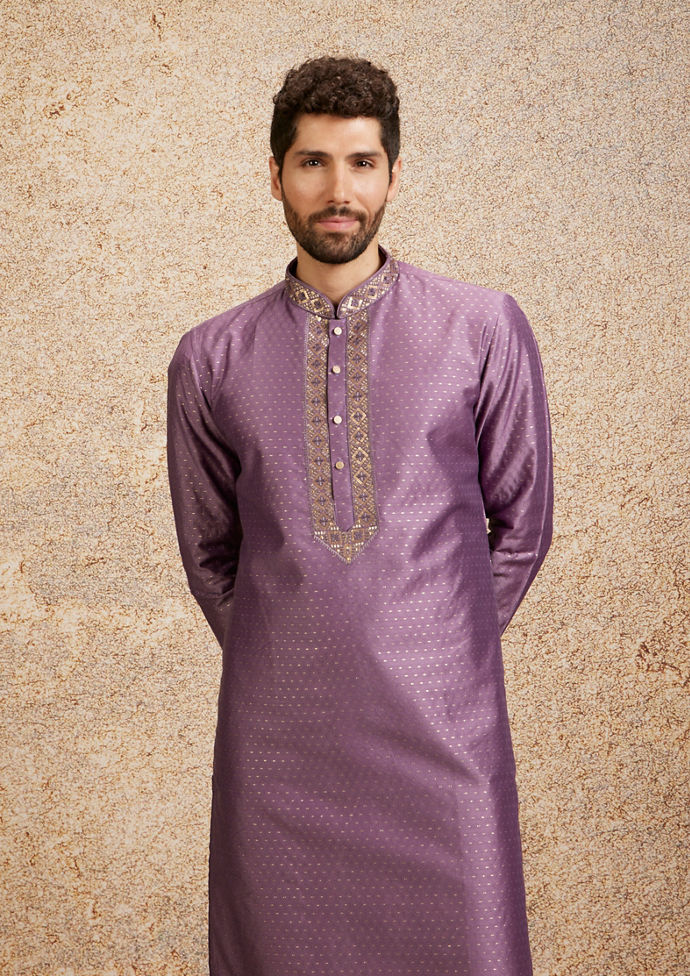
Purple Silk Kurta
3 PRODUCTS
Filter


1,030 د.إ

1,030 د.إ
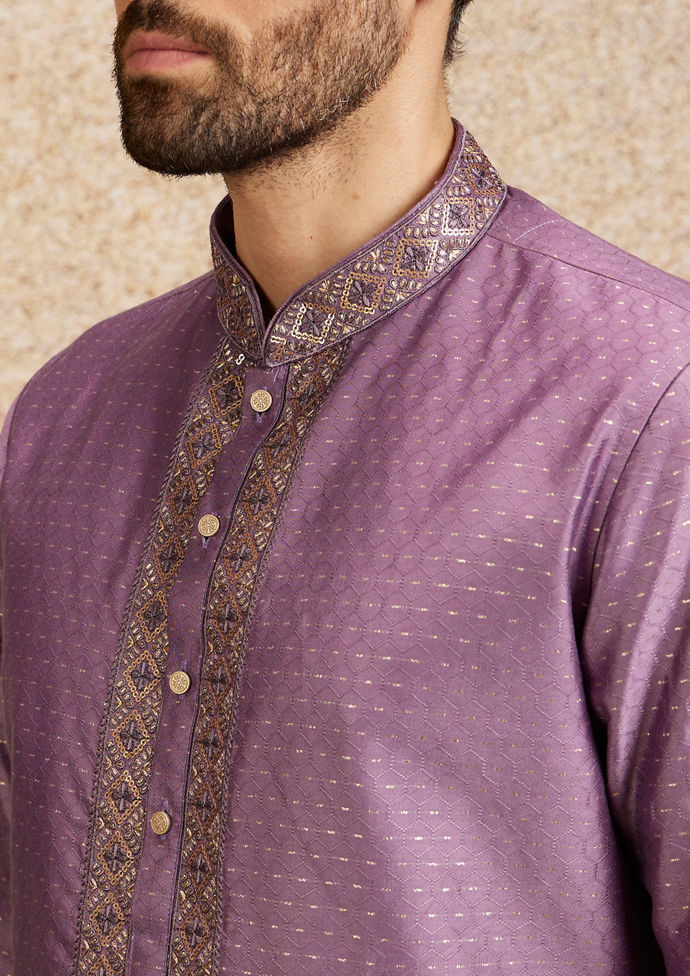
A purple silk kurta suits weddings, sangeet and festive evenings because silk holds a clean shoulder line and keeps a pressed edge through a long function. Choose by occasion first, then by embroidery weight: heavier zari on the placket and collar fits the main ceremony, lighter thread work fits a sangeet or a reception.
Two measurements decide fit when you buy a purple silk kurta online: chest at the fullest point, and shoulder seam to seam. Take both with a soft tape held level under the arms, then compare against the size chart on the product page rather than your usual shirt size. Twamev occasion wear is dry clean only, so build in time for fittings and any alterations before your event date. The table below maps each piece to the occasion it suits.
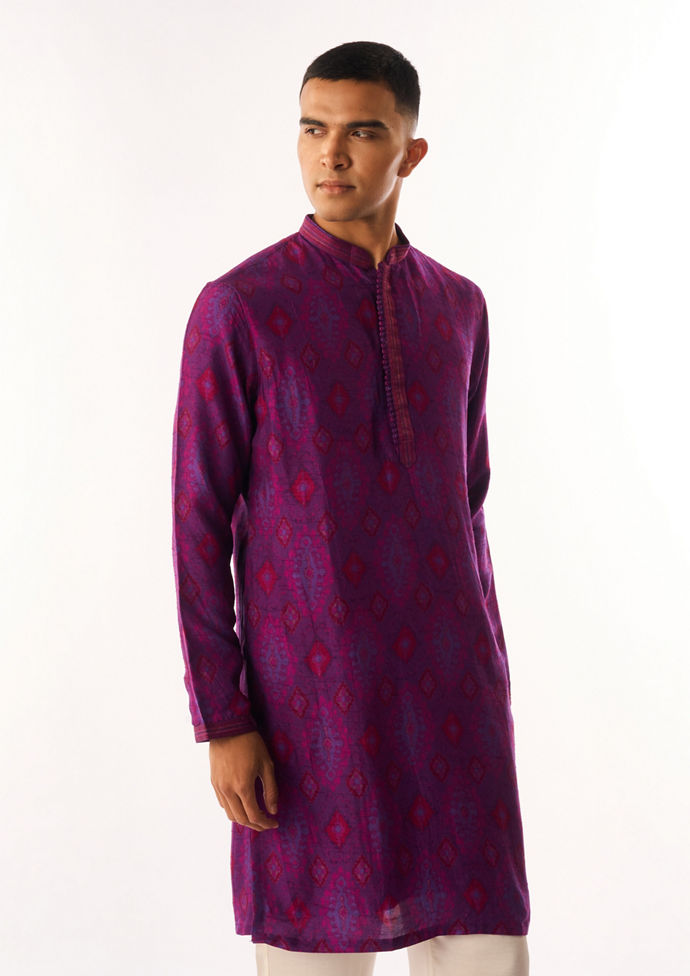
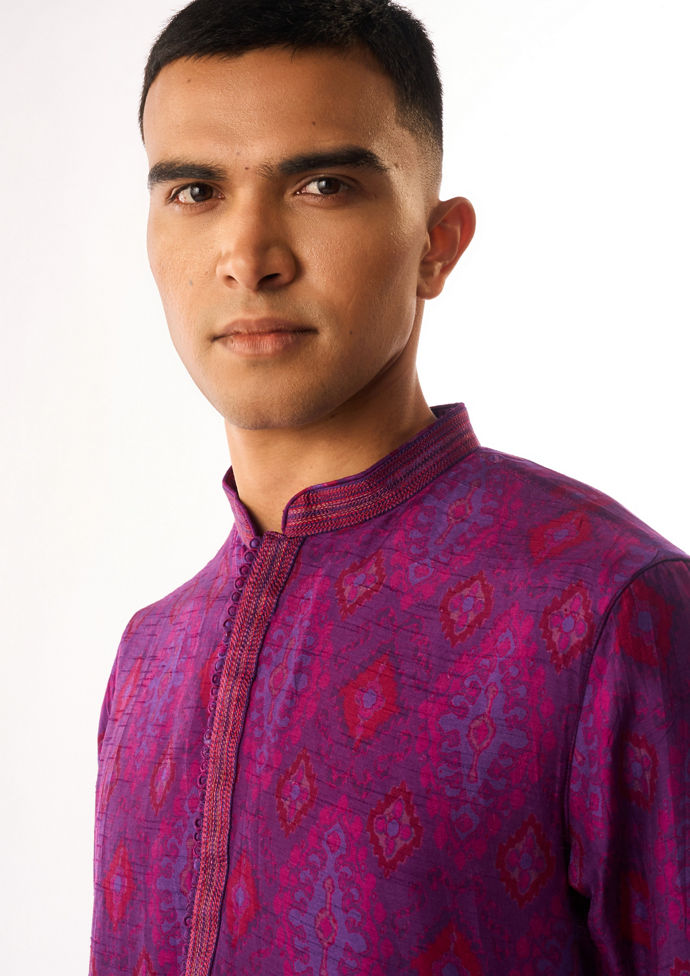
Every piece here has a silk face fabric, and the purple is dyed into that silk rather than printed on top of it. The result is a colour that stays even across the chest, sleeves and hem, and a cloth that holds a crease instead of going limp after a few hours.
Finishes range from matte dupion, which has a crisp surface and a slight slub in the weave, to lustrous mulberry silk, some of it with zari thread work. Matte dupion reads plainer under daylight; the mulberry pieces catch indoor light and photograph brighter at evening functions.
We cut these in 38 to 46 chest, running S through XXL. Silk does not stretch, so compare the chest measurement against a kurta you already wear and pick the larger size if you fall between two.
Heavier embroidery suits weddings, where the kurta is worn under a jacket or bandhgala for most of the day. Lighter thread work fits sangeet and festive evenings better, especially if you will be sitting, standing and moving through a long event.
Start with the fabric weight, because it decides how the kurta hangs and how warm it feels. Silk for kurtas runs from roughly 60 gsm in light mulberry weaves to 130 gsm in heavier tussar and raw silk blends. A winter banquet hall calls for the 100 to 130 gsm range, which holds a crease and falls straight. For a sangeet in humid weather, choose 60 to 80 gsm so the cloth moves with you and does not cling. A lined kurta traps more heat, so skip the lining for summer dates.
Undertone comes first, then the hour of the function. If the veins on your wrist look green and gold jewellery flatters you, deep violet and plum sit well against warm skin. Cool undertones, where veins read blue and silver works better, carry lilac and lavender without washing out. Daylight softens every purple, so lilac photographs pale at an afternoon ceremony. Warm indoor lighting and stage lights push deep violet towards near black, which is why a mid-tone purple often photographs better at an evening reception.
Measure the fullest point of the chest with the tape level and snug, then add 1.5 to 2 inches of ease for a kurta worn over a base layer or tucked with a churidar. Across the back, the shoulder seam should land on the shoulder bone, so order a shoulder width within half an inch of your own. For length, a wedding kurta hem usually falls 2 to 4 inches below the knee; a longer hem of 4 to 6 inches below the knee suits a churidar or dhoti. Check the sleeve as well: a full sleeve ends at the wrist bone.
Match the embroidery to how long you will be in the outfit. Dense zari with metallic thread sits well at a ceremony where you are seated and standing for photographs, but it stiffens the front and adds weight, so allow an extra half inch of chest ease. For mehendi or haldi, a plain front or light thread work in tonal purple keeps the kurta comfortable through dancing and heat. Buttons follow the same logic: covered or potli buttons for a formal ceremony, a concealed placket for a casual function.
Lavender reads best in daylight, so it suits a daytime mehendi. Deep violet holds up under evening reception lighting, and wine purple works for either setting. If your function runs from afternoon into the night, wine purple is the easier choice to carry through both.
Plain silk lets the drape show on its own. Tone-on-tone thread work adds surface texture without extra shine, while zari embroidery is the most formal of the three finishes. Match the finish to the setting: the plainer the front, the more relaxed the occasion it suits.
Mehendi and puja call for lighter weaves. For sangeet and reception, choose a denser silk with an embellished front so the outfit holds its shape through a longer event.
A straight cut falls 2 to 4 inches below the knee. A-line styles add swing at the hem, and short kurtas end near the hip. Pick the silhouette that matches how much you will be moving on the day.
Dry clean your kurta after two or three wears, and sooner if the collar has picked up perfume or sweat. Dyed silk bleeds and water-spots, so skip hand washing even when the care label leaves you guessing. Always point out stains at drop-off, since heat setting a stain during cleaning makes it that much harder to lift later.
Fold the kurta into unbleached muslin rather than a plastic bag, which traps moisture against the weave. Keep the stack out of direct sun, and refold along a new line every few months so the purple does not fade into pale bands along the creases. A cool, dark cupboard shelf holds colour better than a warm loft.
Turn the kurta inside out and press on the reverse at the lowest heat setting, with a plain cotton cloth between the iron and the fabric. Lift and set the iron rather than sliding it, and never press zari directly. Hold a steamer about 15 cm (6 in) from metallic thread so the finish stays intact.
Match your shoulder measurement first, since shoulders are the hardest part of a kurta to alter. Our sizes run from 38 to 46 in chest, and a tailor can take in or let out the side seams for a closer fit. Book alterations before the first wear, while the fabric is still crisp and the hem and sleeve length are easy to mark.
Yes. Deep violet, wine and plum hold their own at Diwali, puja and evening receptions, while lilac and lavender read lighter for daytime functions. Nothing about the colour ties it to one season, so a purple kurta also works for engagement ceremonies, family portraits and festival dinners through the year.
Purple shifts more than most colours on screen, and phone calibration, brightness settings and indoor lighting all push it warmer or cooler than the real fabric. Ask for a video call in daylight, or a fabric swatch if the seller can send one, and you will know the true tone before you order.
Once a tailor has cut or stitched the kurta to your measurements, it usually falls outside standard return terms because the piece can no longer be resold. Measure shoulder width, chest circumference and sleeve length against the size chart first, then confirm those numbers in writing with the seller before any alterations begin.
Both. Grooms often carry deeper tones such as wine, plum and aubergine with zari detailing at the collar and placket, while guests can wear lighter lilac and mauve versions. The same silk base suits either role, so the choice comes down to shade depth and trim rather than the colour itself.
Explore More Collections: Yellow Printed Kurta , Red Kurta , Maroon Kurta
Purple Silk Kurta Price List
Purple Silk Kurta
Price (₹)
Purple Art Silk Kurta Set with Print
855 د.إ
Lilac Viscose Embroidered Kurta Set
1,030 د.إ
Lilac Viscose Embroidered Kurta Set
770 د.إ




Login to access Twamev Member Exclusive Features like Video Commerce
Enter the email address associated with your Manyavar account
We’ll ask for this password whenever you sign in