What makes organza a fabric worth choosing
Organza is a plain-weave, slightly stiff fabric with a fine, open structure and a natural luminosity. It's sheer without being fragile, structured without being stiff, and it holds pleats, prints, and embroidery with a consistency that makes it one of the most reliable fabrics for occasion wear.
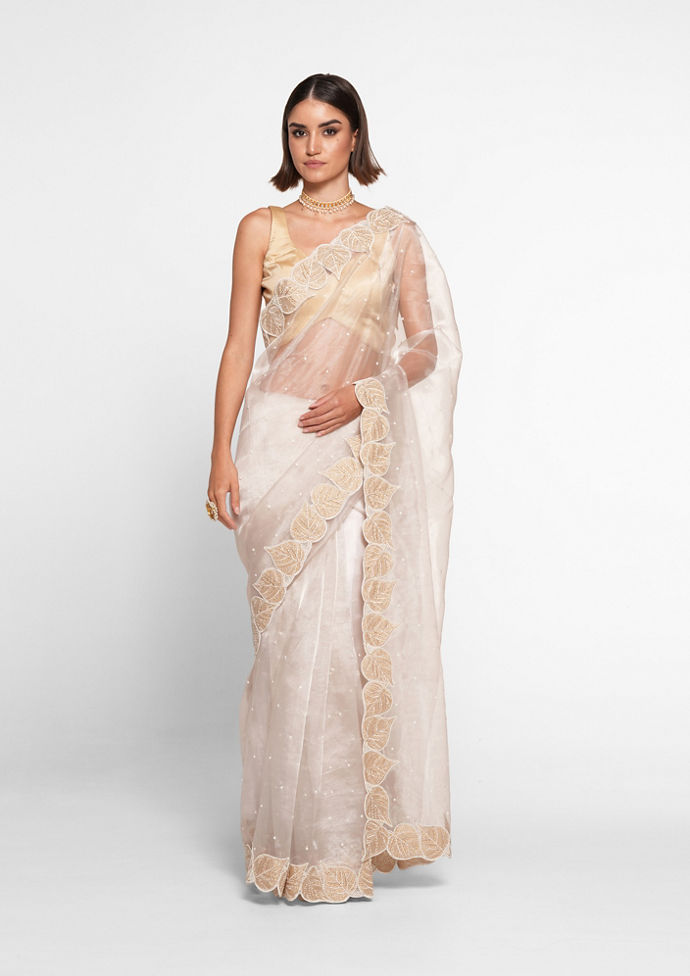
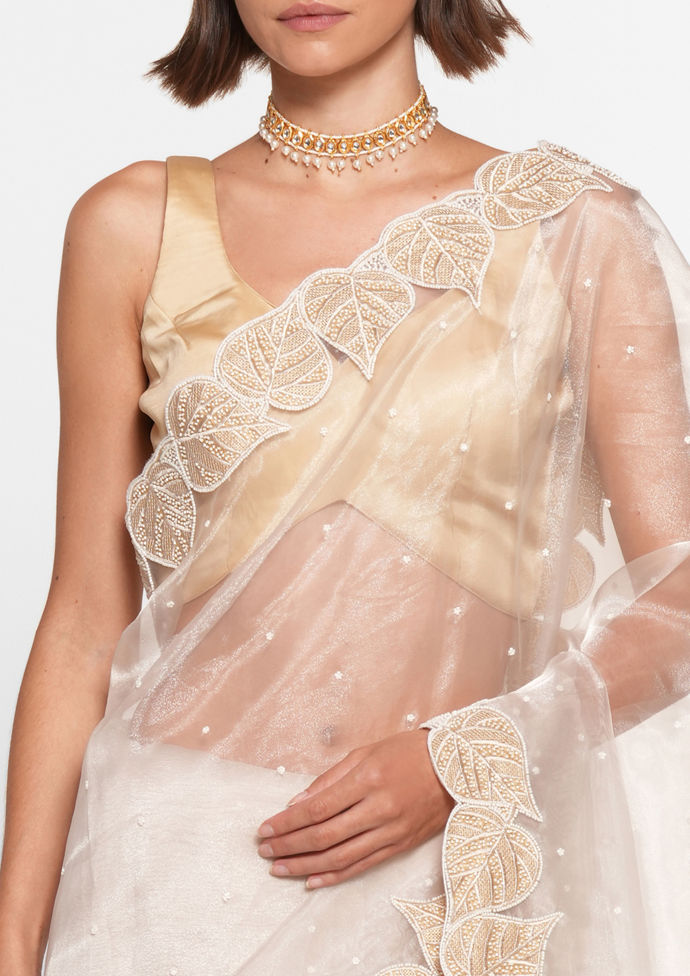
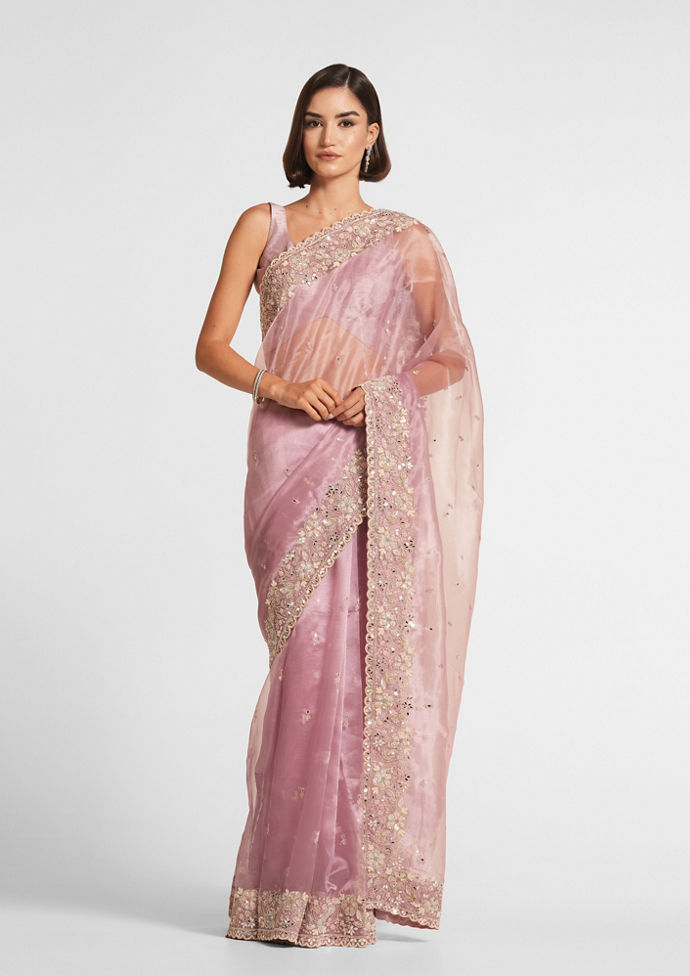
What sets an organza saree apart is how it behaves on the body. The fabric has just enough body to hold the pallu in a clean arc, keep the pleats sharp, and allow embroidery to sit raised and dimensional rather than flat. At the same time, organza is light — far lighter than silk or brocade — which means a heavily worked saree for a wedding can look extremely ornate while feeling entirely manageable across a long ceremony.
Twamev's collection is built on this understanding. These are pieces where the fabric is working as hard as the craft — holding the shape, carrying the color, and amplifying the embellishment.
The collection: what you'll find
Twamev's range spans colors, surface treatments, and occasion-readiness with pieces that are distinct from one another without losing the thread of the brand's overall design philosophy.
Key pieces include:
-
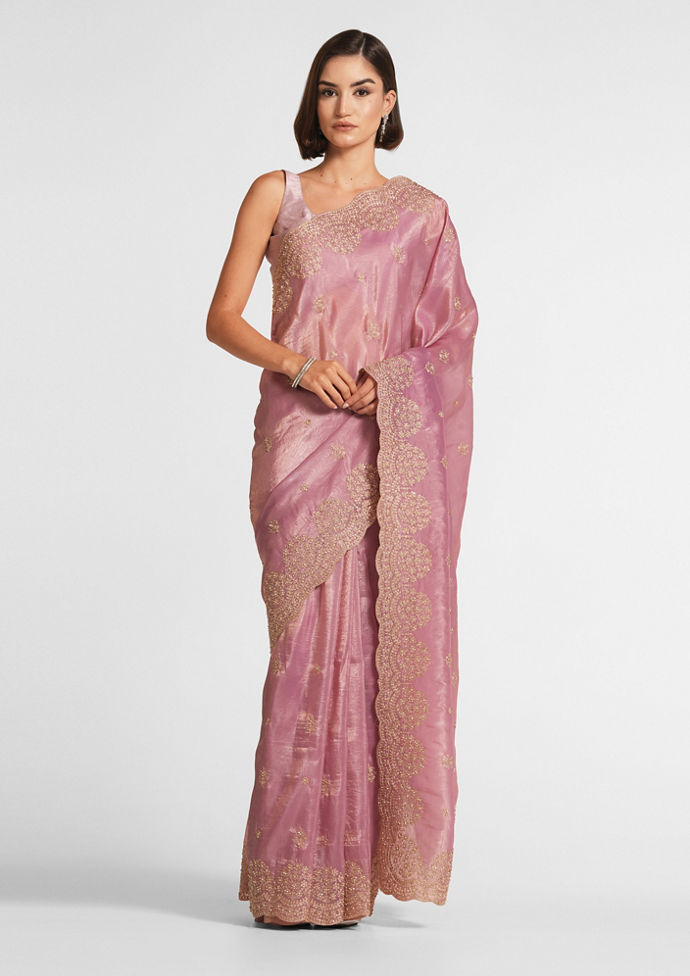
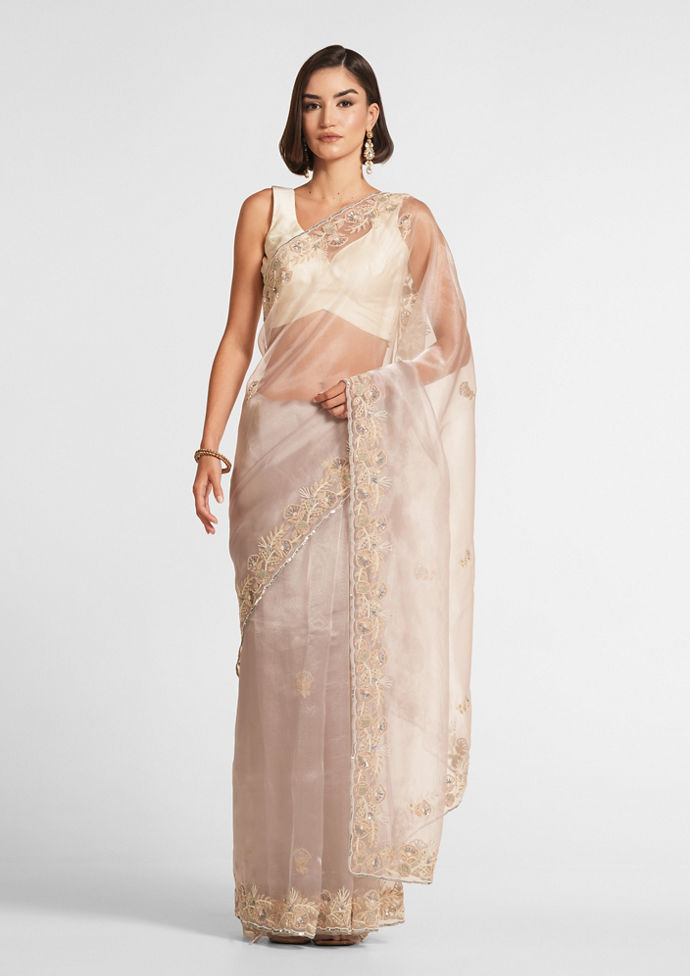
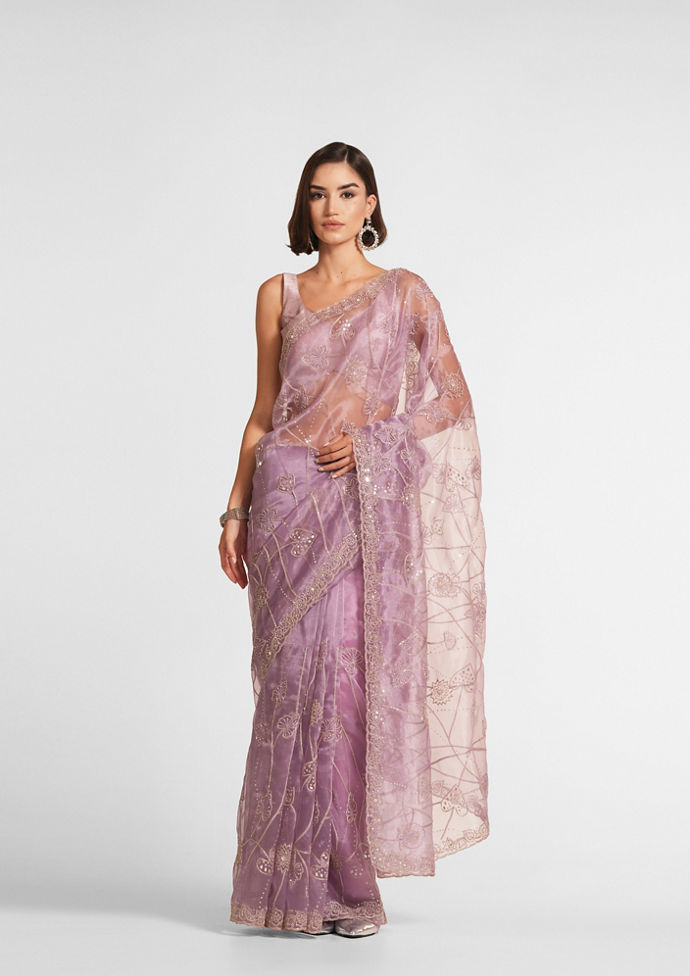
Floral Fawn Pink (₹17,999) — soft, romantic, and suited to daytime weddings and festive functions where you want warmth without heaviness.
-
Whispering Pista Green (₹17,999) — a fresh, garden-toned piece that photographs beautifully in natural light and works well for outdoor or daytime celebrations.
-
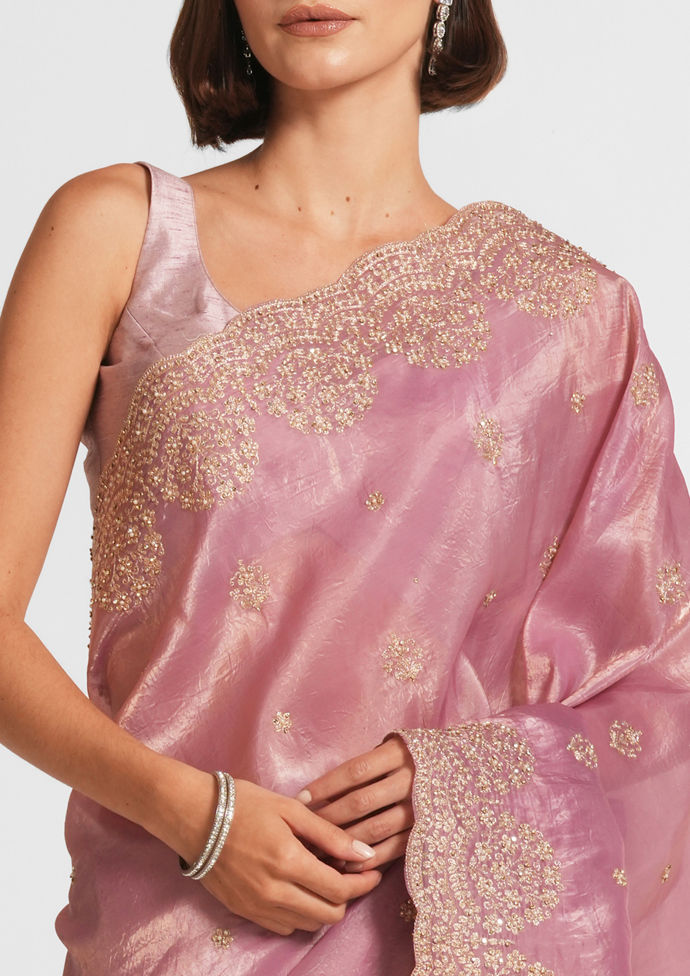
Dusky Pink Organza Enchantment Saree (₹29,999) — a more worked, richer take on the pink organza story, for evenings and more formal functions.
-
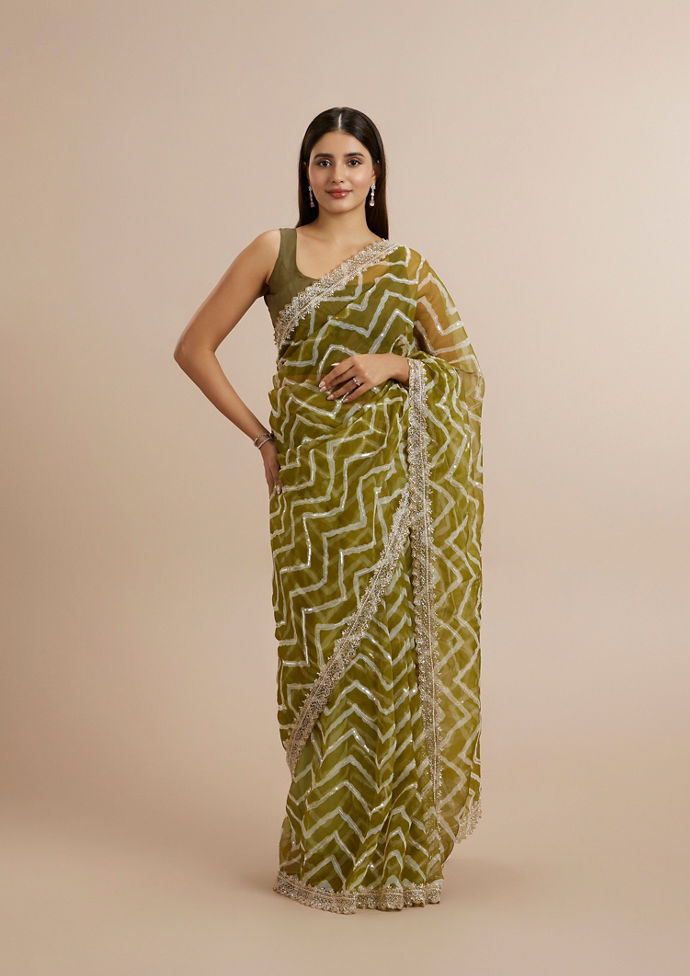
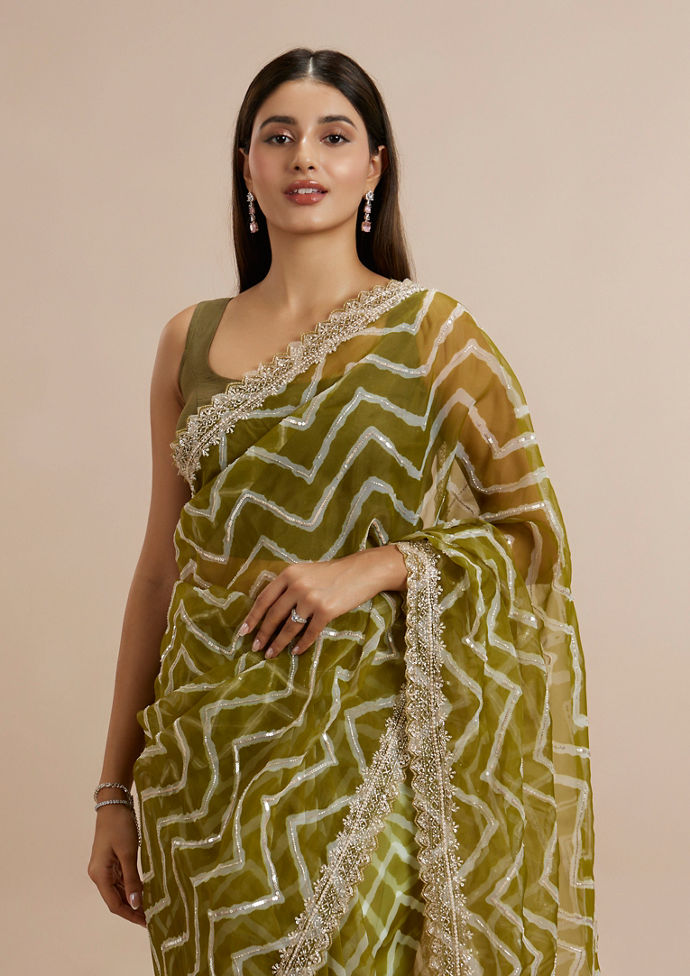
Olive Green Organza Chevron Sequin Zari Embroidered Saree — where structure meets surface complexity, with chevron zari and sequins creating a graphic yet refined pattern.
-
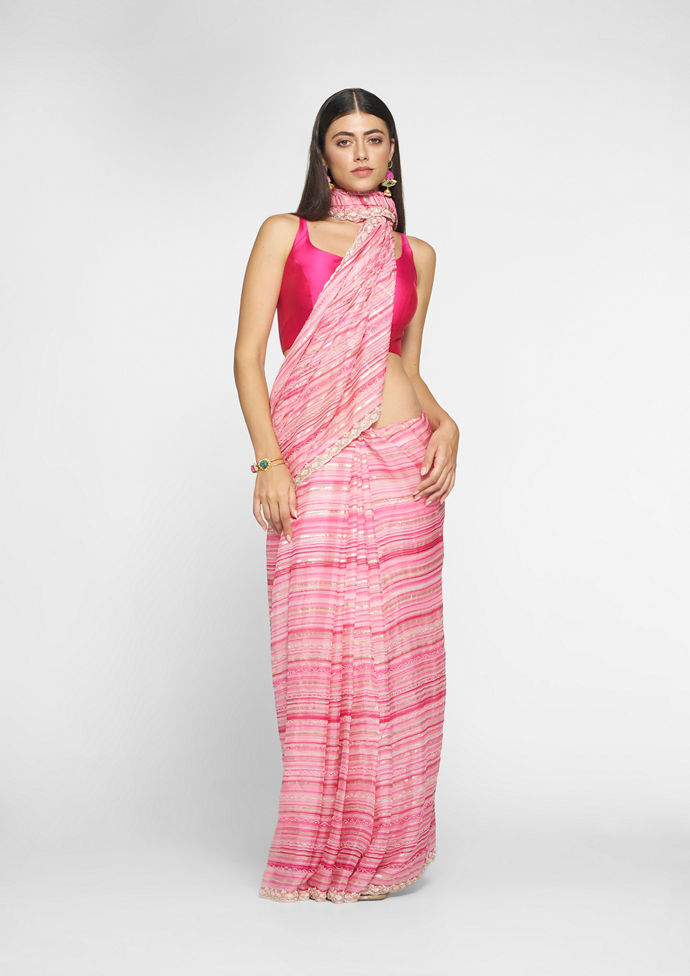
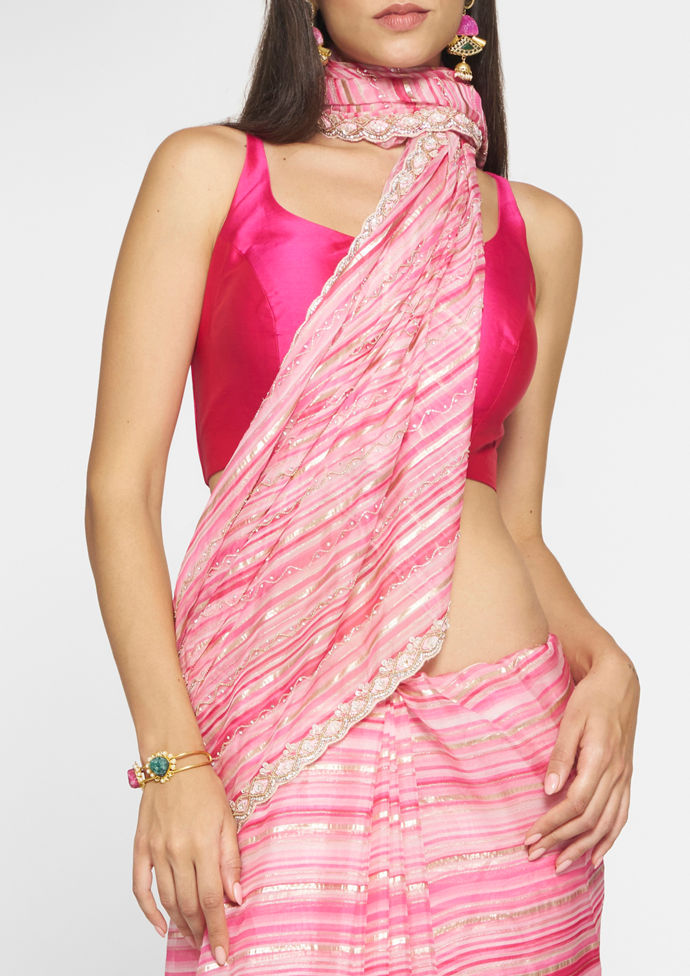
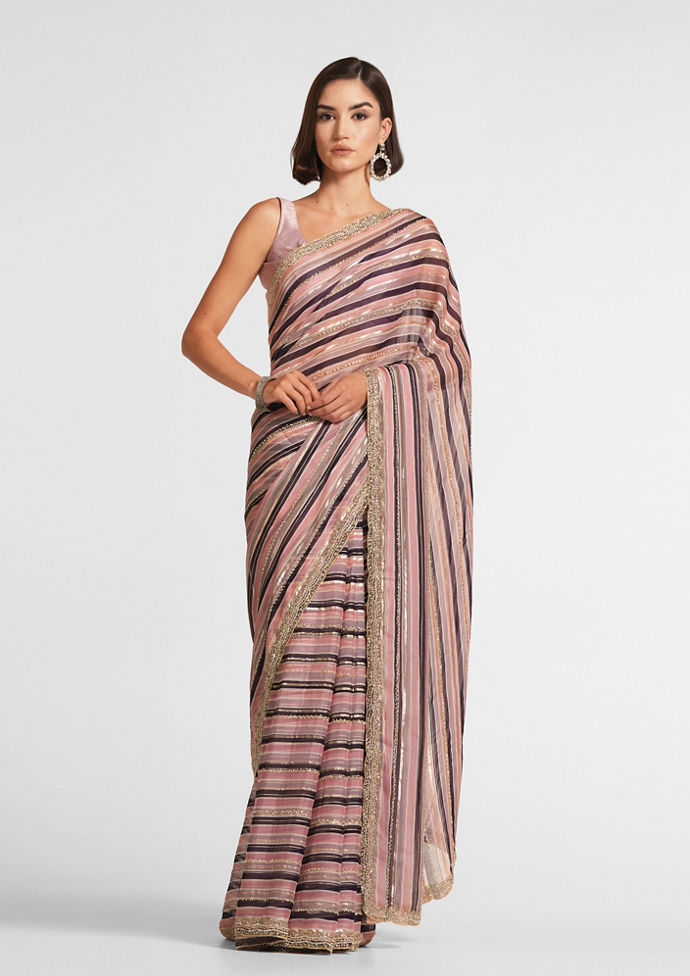
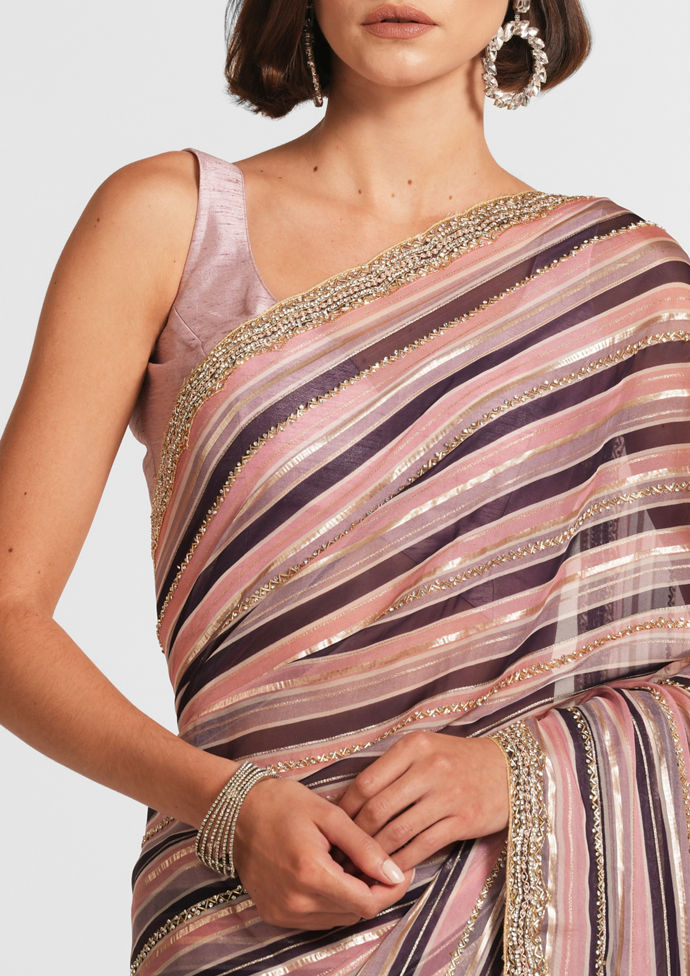
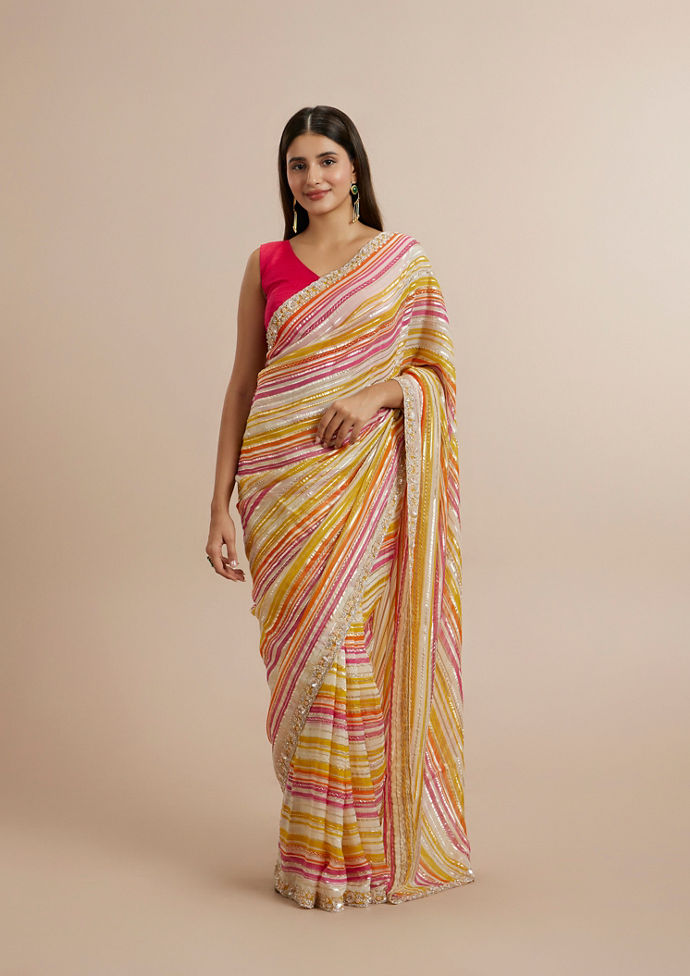
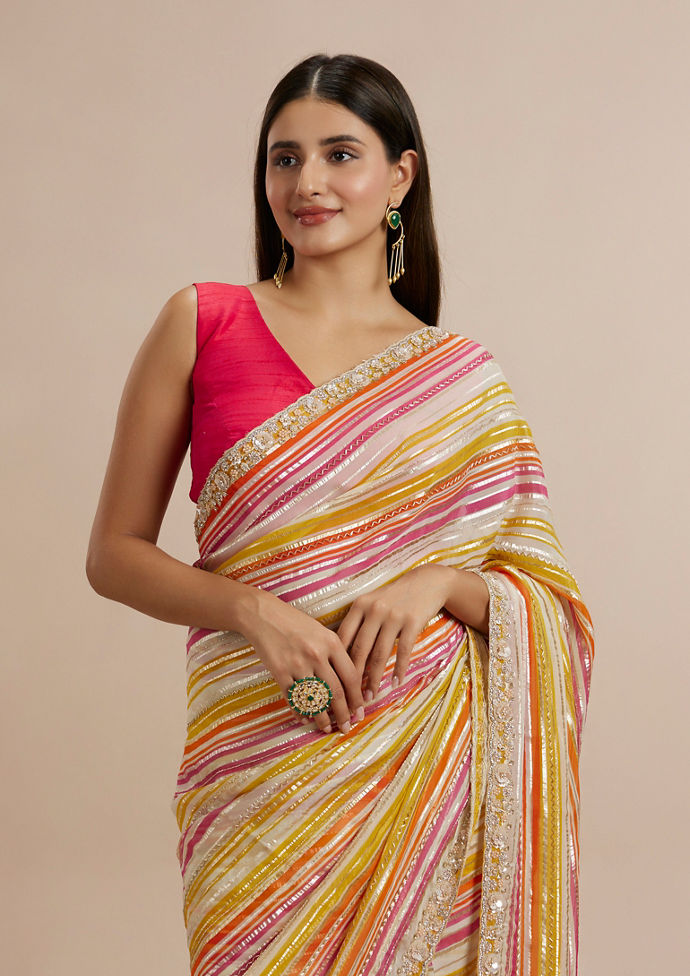
Cream and Pink Organza Multicolor Stripe Printed Embellished Saree (₹24,999) — a printed and embellished piece that plays with color and pattern simultaneously.
-
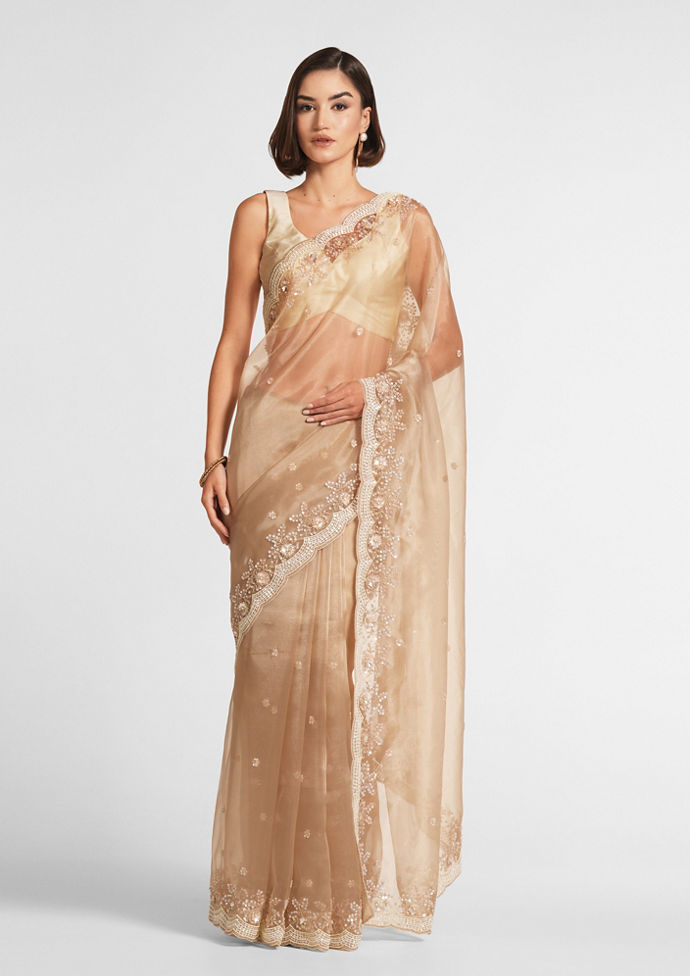
Maroon Organza Sequin Floral Embroidered Saree (₹29,999) and Peach Organza Floral Zardosi Embroidered Saree (₹19,999) — two strongly worked pieces for women who want their saree to carry visible, detailed craftsmanship.
-
Black Night Elegance Saree (₹34,999) — the most formal piece in the collection, in black organza with moti work and print, for evening functions where composure and presence are everything.
Prices in this collection range from ₹11,999 to ₹34,999, reflecting both the fabric quality and the complexity of work in each piece.
Fabric in focus: organza vs other saree materials
Because it is often compared to georgette, net, and silk, it helps to understand how it's different and why those differences matter when choosing for a specific occasion.
-
Organza vs georgette: Georgette is soft and fluid, draping close to the body. Organza is stiffer and more architectural — it holds space away from the body slightly, creating a cleaner, more structured silhouette. For formal events and wedding photography, an organza holds its shape through a full day far better than georgette.
-
Organza vs net: Net is more open and transparent; organza has a tighter weave with a visible sheen. Both are sheer, but organza has more body and reads as more "finished" and formal. Net lends itself to heavy embellishment; organza carries both embroidery and print with equal grace.
-
Organza vs silk: Silk is heavier and more opaque, with a different kind of luxury. An organza silk combines the structure of organza with the richness of silk fibres, giving you a fabric that has both the architectural quality of organza and the warmth and depth of silk — a strong choice for main wedding ceremonies.
Understanding these differences helps you place the saree correctly — it is most at home in structured, formal, photograph-heavy settings rather than relaxed or very warm environments.
Surface work and embellishments
A significant part of what makes a Twamev saree worth its price is the embellishment work. Organza's slight stiffness and sheer surface make it an ideal base for several types of craft:
-
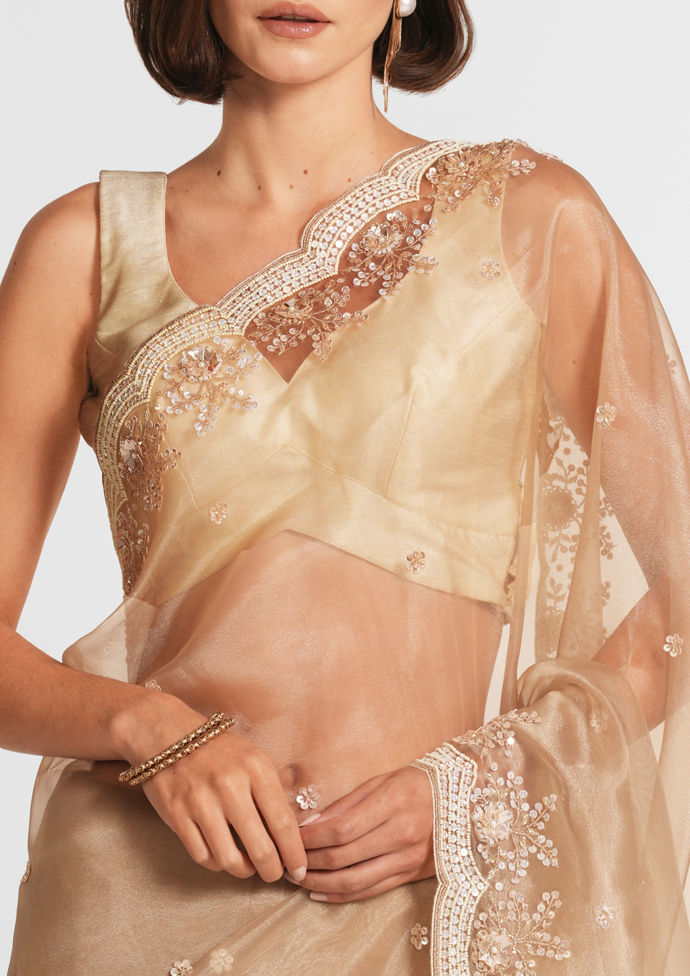
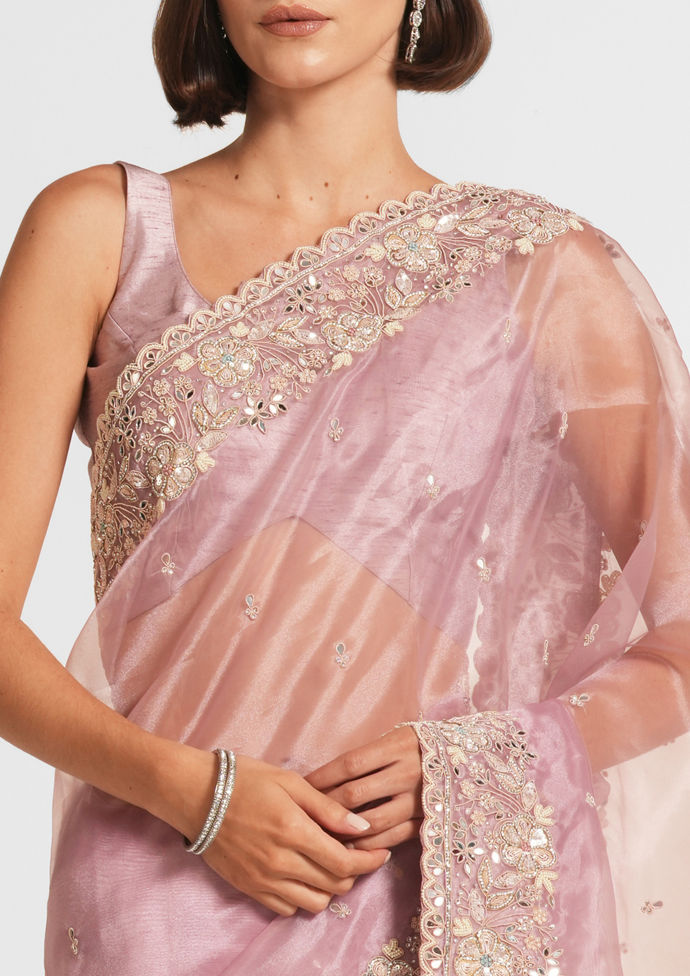
Zardozi — metal thread embroidery that sits raised on the organza surface, particularly striking on peach and warmer tones, where the gold catches both natural and artificial light.
-
Sequin work — as on the olive green chevron piece and the dusky pink design — where individual sequins are placed to create a pattern or all-over shimmer. On organza, sequins appear to float against the fabric rather than sitting flat.
-
Moti and bead work — as on the black organza piece — where small beads and pearls add dimension and texture, especially effective under evening lighting.
-
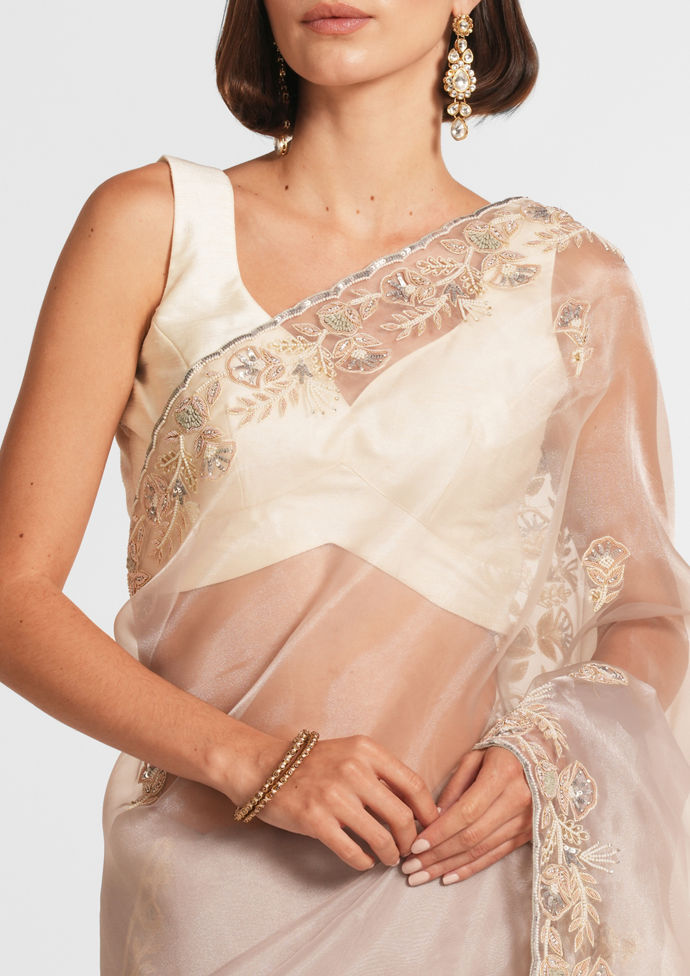
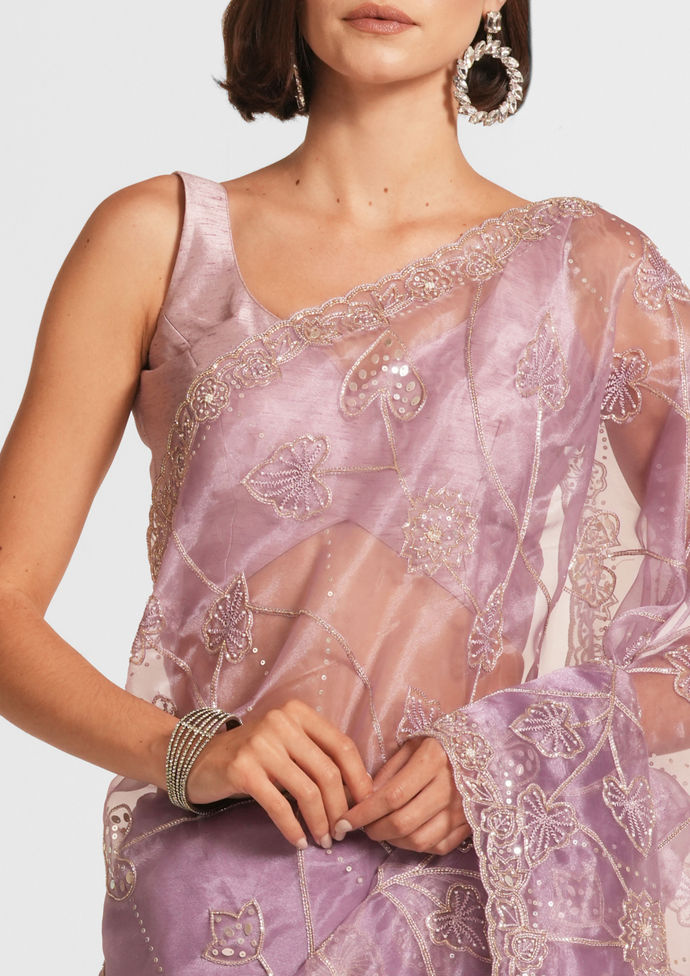
Thread and floral embroidery — on the fawn pink and pista green pieces — where the embroidery is lighter and more painterly, suited to daytime occasions and softer color stories.
-
Print with embellishment — the cream and pink striped piece combines printed pattern with added surface work, a more contemporary direction that sits well with modern occasion wear sensibilities.
Each approach creates a different mood, which is why two sarees at the same price can look entirely different on the body and in a photograph.
Where an organza for wedding belongs
Organza's combination of structure, sheerness, and surface versatility makes it particularly strong for specific moments within a wedding calendar.
-
Main wedding ceremony: An organza in a rich tone — deep maroon, midnight black, jewel-toned purple — with zardozi or moti work reads as genuinely ceremonial. It holds its shape through long rituals, photographs sharply, and feels occasion-appropriate without being ostentatious.
-
Reception: The more embellished pieces in this collection — sequin-worked, heavily embroidered — earn their place most fully here, where evening lighting and formal settings allow the surface work to perform.
-
Daytime functions — mehndi, haldi, engagement: Lighter organza in pista green, fawn pink, or peach with floral or thread embroidery feel appropriately festive for these events without the weight and formality of evening pieces.
-
Festive occasions: Diwali evenings, formal family dinners, milestone celebrations — the mid-range sarees in this collection work well across these settings, offering celebration-ready polish without the full formality of a wedding piece.
Styling
Because organza has architectural quality, styling works best when it supports the structure rather than competing with it.
Blouse:
A fitted blouse — in matching organza, satin, or silk — is the most considered choice. Organza blouses echo the fabric's structure; satin or silk blouses add contrast in texture while keeping the overall tone consistent. For printed sarees, a plain blouse in one of the print's dominant colors keeps the look clean. For heavily embroidered pieces, a minimal blouse with a statement back detail — deep V, halter, or structured sleeves — adds elegance without clutter.
Draping:
Organza's body means the pallu naturally forms a clean arc. A simple, well-pinned Nivi drape lets the fabric do its work. Over-draping or experimental styles can look forced with organza — the fabric's natural structure is already doing something interesting.
Jewellery:
For heavily worked pieces — zardozi, sequin, moti — keep jewelry to one focal point. For lighter embroidered sarees, you have more room to layer, but classic gold or polki sets tend to work more reliably than contemporary minimal choices against an organza base.
Footwear:
Heels extend the line of the saree most elegantly. Block heels work well for day functions; stilettos or kitten heels for evening formality. The height matters — try the saree at heel height to ensure the hem falls at the right point and the pallu length feels balanced.
FAQs:
1. What is an organza saree, and how is it different from other sarees?
This saree is made from a sheer, slightly stiff plain-weave fabric with a natural luminosity. Unlike georgette (which is soft and fluid) or silk (which is heavy and opaque), organza holds its shape structurally while remaining light — making it ideal for formal occasions where a clean, architectural drape is important.
2. Is an organza saree suitable for weddings?
Yes — it is particularly well-suited for ceremonies and receptions. The fabric holds its shape through long rituals, carries embroidery and embellishment with dimension, and photographs cleanly in both natural and artificial lighting.
3. What embellishments are common on Twamev organza sarees?
Twamev's designer collection features zardozi, sequin work, moti and bead embroidery, thread and floral embroidery, and printed designs with added surface embellishment. Each approach creates a different level of formality and visual weight.
4. How comfortable is an organza saree for long events?
Organza is significantly lighter than silk or brocade, so even a heavily embellished saree remains physically manageable for a full day or evening of celebrations. The fabric's stiffness also reduces the need for constant re-pinning and adjustment.
5. What is an organza silk saree?
An organza silk saree is woven with silk fibers in the organza weave, combining the architectural quality and sheerness of organza with the warmth, depth, and richness of silk. These pieces have a more luxurious hand feel and a deeper sheen than standard organza, and are particularly strong for main wedding ceremonies.
6. How do I care for a Twamev organza saree?
All sarees — particularly those with zardozi, moti, sequined, or thread embroidery — should be dry-cleaned only. Store flat or gently rolled in soft muslin to prevent permanent creasing; organza's stiffness means it holds fold lines more readily than softer fabrics.



_31-07-2024-13-46:345x488?&dpr=on,2)
_31-07-2024-14-03:345x488?&dpr=on,2)