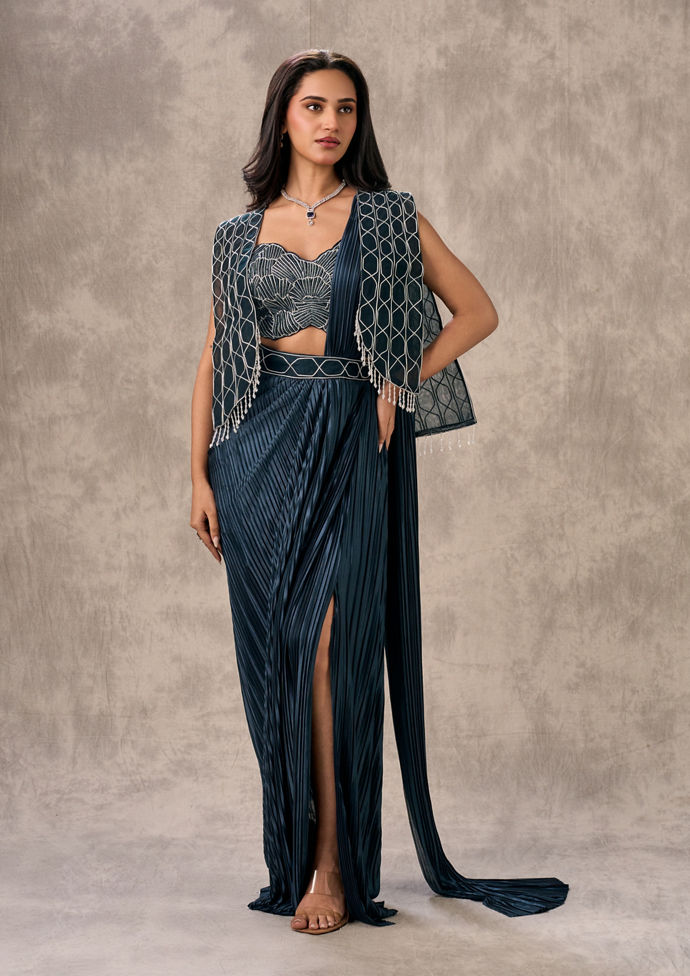
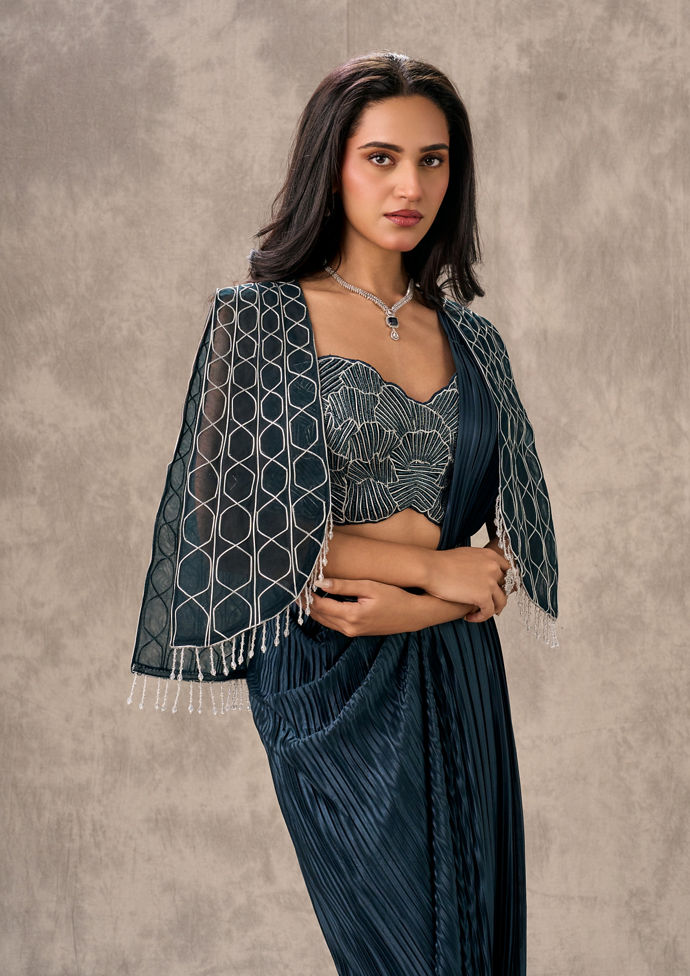
Wedding sarees for women
Wedding sarees combine traditional craftsmanship with designs made for major celebrations, from bridal ceremonies to receptions and guest appearances. We offer luxury occasion wear that blends time-honored Indian silhouettes with modern tailoring, creating pieces that work across multi-day festivities. Each saree is designed to reflect personal prestige and cultural elegance.
Choose based on occasion (bridal wear, reception, or guest), fabric (organza, silk, chanderi, velvet), and embellishment (zardozi or resham thread work). Our collection serves women who see occasion wear as an extension of who they are. Knowing your preferences, ivory and jewel tones, specific embroidery techniques, helps you find a saree that feels authentic and personally meaningful.
Each saree set includes the saree, blouse (choli), and dupatta for complete occasion wear. Our pieces require dry-clean-only care to preserve embroidery and fabric integrity, so they stay beautiful for years. This guide takes you through our collection, buying criteria, styling options, and answers to common questions so you can choose with confidence.
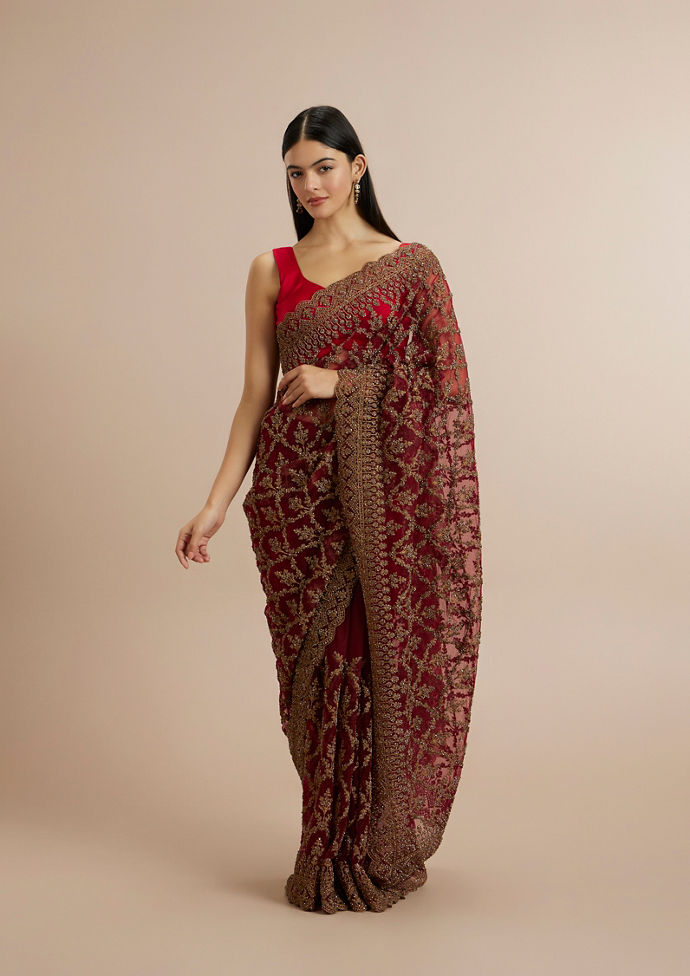
Elegant wedding sarees combine traditional craftsmanship with contemporary style for every bride and guest.
Why wedding sarees matter for your special occasion
A wedding saree is more than fabric and embroidery. The right saree reflects your role, honors the occasion, and lets you feel confident and beautiful, whether you are the bride, a bridesmaid, or a guest. Each piece balances tradition with personal expression, so you can focus on celebrating rather than worrying about your outfit.
Luxury markers that define premium wedding wear
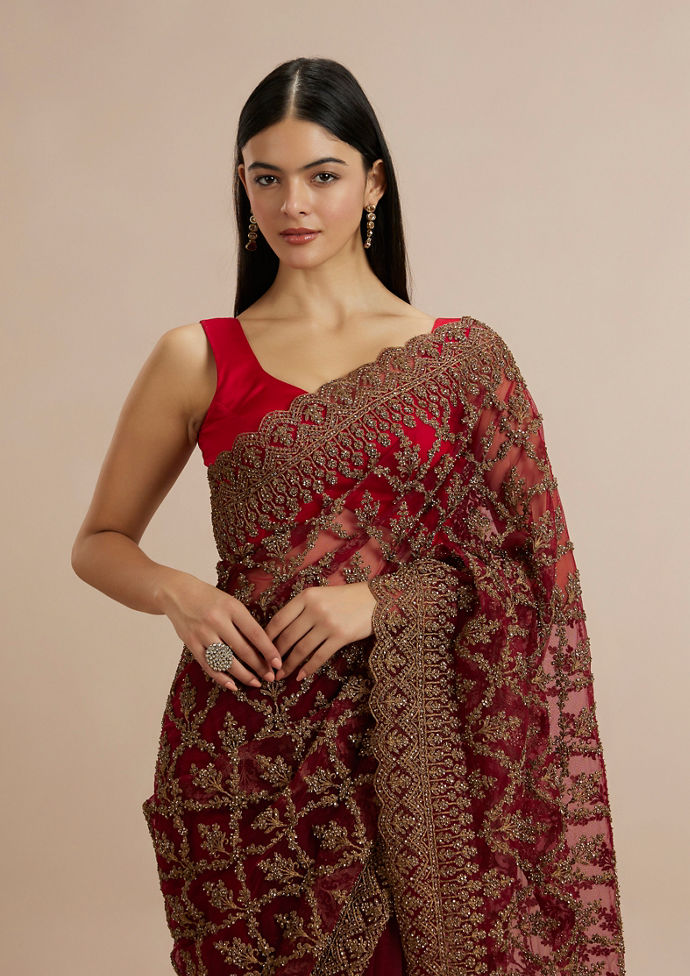
Premium wedding sarees rest on three elements: fabric quality, embellishment technique, and fit. We use organza, silk, chanderi, and velvet as outer fabrics with fine linings for comfort during long celebrations. Zardozi metallic thread work and resham thread work in ivory and gold create the intricate detail that distinguishes luxury pieces. Every saree set includes the saree, blouse, and dupatta. All require dry-clean-only care to preserve the embroidery and fabric.
Who this collection serves brides, bridesmaids, and guests
The collection serves women across all wedding roles. Brides choose ivory and jewel-tone pieces with statement embroidery for ceremonies and receptions. Bridesmaids and guests select from coordinated color palettes and varied embellishment levels suited to their function. Each saree is designed for all-day comfort and the confidence that comes from wearing something made with genuine craftsmanship.
What's in this collection
Product showcase name, key features, and best-for use cases
This collection features a curated range of sarees designed for diverse occasions and preferences. Each piece combines traditional draping elegance with contemporary styling options. The selection includes bandini sarees with intricate tie-dye patterns, classic silk blends, and embroidered varieties suited for weddings, festivals, and formal events. Key features span hand-finished details, breathable fabrics for year-round wear, and versatile color palettes that transition from daytime to evening settings. The collection offers sarees for bridal occasions and casual gatherings across different body types and styling preferences.
Fabric quality and embellishment highlights across price tiers
The collection spans multiple quality tiers to accommodate varying budgets and occasion requirements. Entry-level pieces feature cotton-silk blends with block-printed or woven patterns that deliver traditional aesthetics without premium pricing. Mid-tier sarees introduce hand-embroidered accents, zari borders, and higher silk content for enhanced drape and durability. Premium selections showcase fine silk foundations with intricate beadwork, metallic threadwork, and custom dyeing techniques. Embellishments range from subtle woven motifs to elaborate mirror work and sequin detailing. Each tier maintains consistent color fastness and seam quality, ensuring longevity across repeated wear and professional cleaning cycles.
Occasion-specific styling recommendations for each saree
Bandini sarees with lighter, earthy tones work best for daytime events, casual family gatherings, and summer celebrations where breathability matters. Silk-based pieces in jewel tones or metallics suit formal dinners, evening receptions, and professional settings. For wedding occasions, the collection includes marriage saree options with heavier embellishment and richer fabrics that photograph well and hold their shape throughout multi-hour events. Embroidered sarees on wedding occasions pair effectively with statement jewelry and traditional makeup. Printed cotton-silk blends adapt to festival wear, temple visits, and weekend outings. Styling guides included with premium pieces suggest coordinating blouse cuts, jewelry weights, and draping techniques that complement each saree's weight and pattern density.
How do you choose the right wedding saree for your body type and occasion?
Step 1 Identify your role and wedding occasion type
Your role at the wedding determines which saree works best. Bridal sarees call for richer fabrics like organza or silk with detailed embellishment, while reception wear can be lighter. Guest sarees balance tradition with comfort for extended wear. Start by deciding whether you are the bride, a bridesmaid, or attending as a guest.
Step 2 Match fabric weight and drape to your body type
Fabric choice affects how a saree drapes on your frame. Heavier silks and organza suit structured figures and hold embroidery detail well. Lighter chanderi or viscose blends work better for petite frames or those who prefer fluid movement. Wedding sarees for women use premium fabrics including organza, silk, chanderi, and velvet to suit different body types and comfort needs.
Step 3 Select color and embellishment based on skin tone and personal style
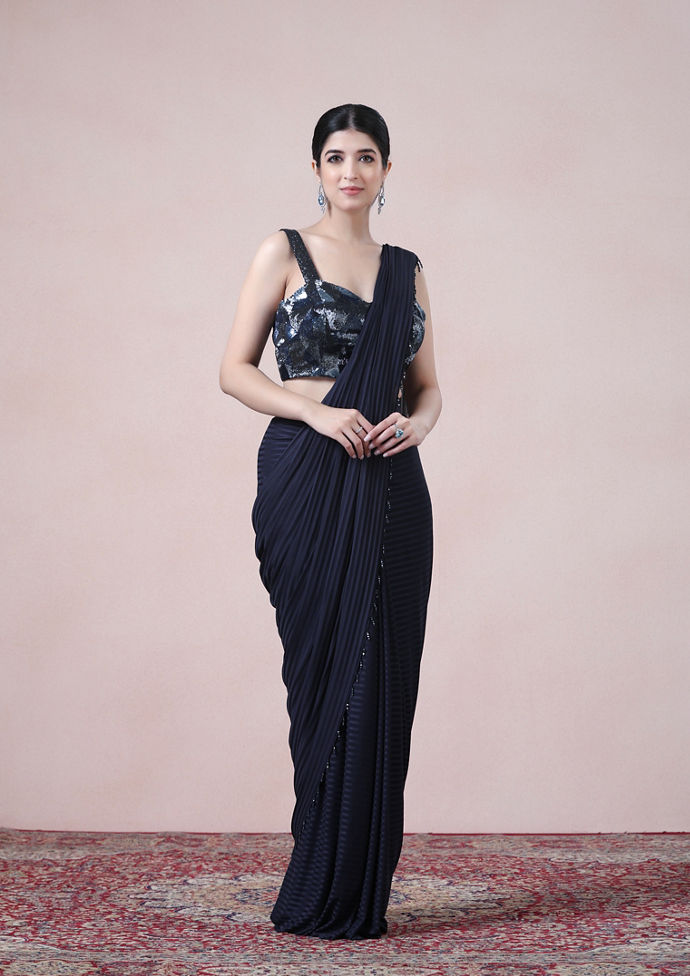
Ivory and jewel tones dominate wedding collections. Ivory flatters most skin tones and photographs well in formal settings. Deep wine, navy, or emerald shades complement warm or olive complexions. Embellishment weight matters too, zardozi metallic thread work adds grandeur for bridal wear, while resham thread work offers refined detail for reception or guest occasions.
Step 4 Confirm fit, length, and comfort for all-day wear
Wedding events span hours, so comfort is essential. Check that the saree length matches your height and footwear. Verify the blouse (choli) fits well around the shoulders and waist. Wedding sarees come as a complete set with the saree, choli, and dupatta, ensuring coordinated fit. Dry-clean-only care preserves embroidery and fabric integrity after your celebration.
Care and styling tips for wedding sarees
Pre-wear prep and fabric conditioning for new sarees
A new wedding saree often benefits from gentle conditioning before its first wear. Hand wash the saree in cool water with a mild detergent designed for delicate fabrics, then lay it flat to dry completely. This initial wash removes any sizing or chemical residue from manufacturing and softens the fabric. For silk sarees, a light steam or iron on low heat can help relax the weave and make draping easier. If the saree has intricate embellishments, avoid direct water contact on embroidered or beaded areas; spot clean those sections with a damp cloth instead.
Draping techniques for comfort and longevity during extended wear
Proper draping reduces stress on the fabric and seams, especially important for a marriage saree worn for several hours. Secure the saree petticoat firmly at the waist with a drawstring to prevent slipping, which can cause repeated tugging and wear. Pleat the pallu with soft folds rather than sharp creases, and pin or stitch pleats loosely to the blouse to keep them in place without fabric strain. Distribute the weight of the saree evenly across your shoulders and hips rather than concentrating it in one spot. Bandini sadi and other tie-dye sarees may release dye in early wears; keep them away from light-colored blouses and jewelry to prevent staining.
Jewelry and accessory pairing for wedding occasions
Wedding jewelry should complement the saree without snagging delicate fabrics or embellishments. Choose smooth, polished pieces over chunky or rough-textured designs that can catch on embroidery or silk threads. Heavy necklaces and shoulder pieces may strain the blouse neckline, so consider lighter options or distribute weight with a well-fitted blouse. Bangles can snag the saree pallu, so slip them on after draping or choose slim designs that sit close to the wrist. For a saree on wedding occasions, metallic or pearl jewelry typically pairs well with traditional styles, while gemstone pieces add richness to heavily embroidered designs. Keep decorative pins and brooches away from fine embellishments to avoid puncturing or loosening threads.
Storage and maintenance to preserve embellishments and color
Store wedding sarees in a cool, dry place away from direct sunlight, which can fade colors over time. Wrap the saree loosely in unbleached muslin or cotton cloth rather than plastic, which can trap moisture and encourage mildew. Fold the saree gently along its length rather than creating sharp creases, and store it flat in a drawer or shelf if space allows. For sarees with beads, sequins, or metallic embroidery, place acid-free tissue paper between folds to prevent the embellishments from pressing into the fabric. Inspect stored sarees every few months for any signs of insects or discoloration. Have tie-dye sarees professionally dry-cleaned by a traditional textile specialist rather than washing at home to preserve the fabric and embellishments.
Frequently asked questions about wedding saree fit, draping, and wear.
How do I know my correct saree length and blouse fit?
Measure from your waist to your ankle to determine the right saree length. Most wedding sarees work well at 5.5 to 6 yards. Your blouse should fit snugly at the shoulders and waist without pulling, and the neckline should sit comfortably at your collarbone.
What is the easiest draping style for first-time wearers?
The Nivi drape, common in South Indian traditions, works well if you're new to wearing a saree. Secure the saree at your waist with a petticoat drawstring, pleat the pallu loosely, and pin it to your blouse shoulder.
How do I care for embellished sarees to prevent damage?
Dry clean sarees with zardozi or resham thread work to keep metallic threads and beads intact. Store them flat in unbleached muslin cloth away from direct sunlight, and check every few months for loose embellishments.
Can I wear the same saree to multiple wedding events?
Yes, you can wear a single luxury wedding saree to both the reception and guest functions if you style it differently with varied jewelry and blouse choices. Save heavily embellished pieces for bridal or main ceremonies where they'll have the most impact.
What undergarments and accessories complement wedding sarees best?
Wear a well-fitted petticoat in a matching color to create the right drape and volume. Choose smooth jewelry pieces that won't snag delicate fabrics, and avoid rough bangles that might catch the saree pallu as you move.
Explore More Collection: Lehenga For Women



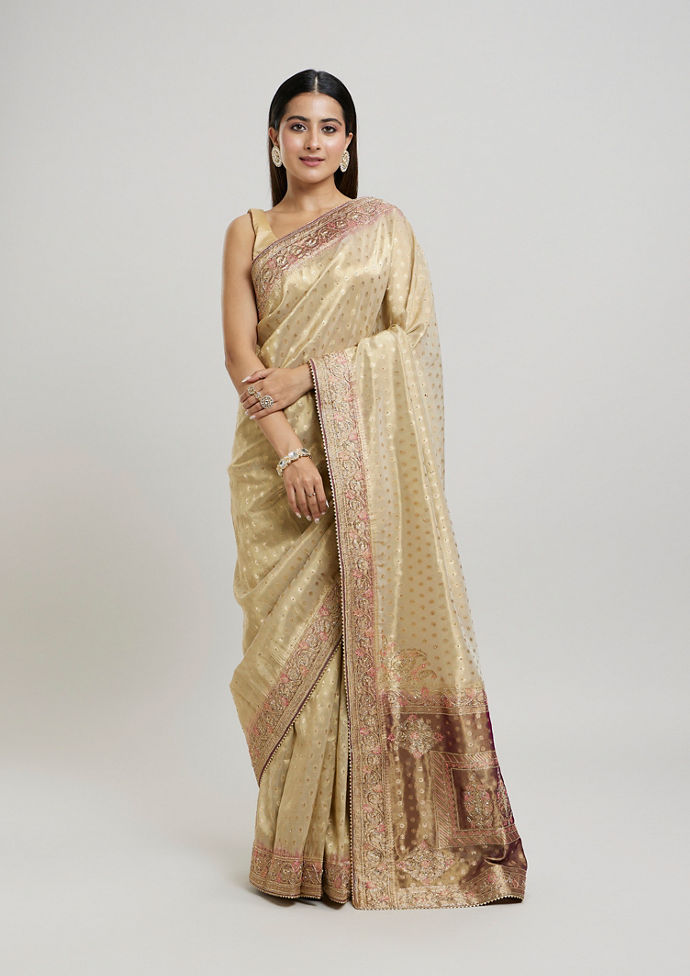
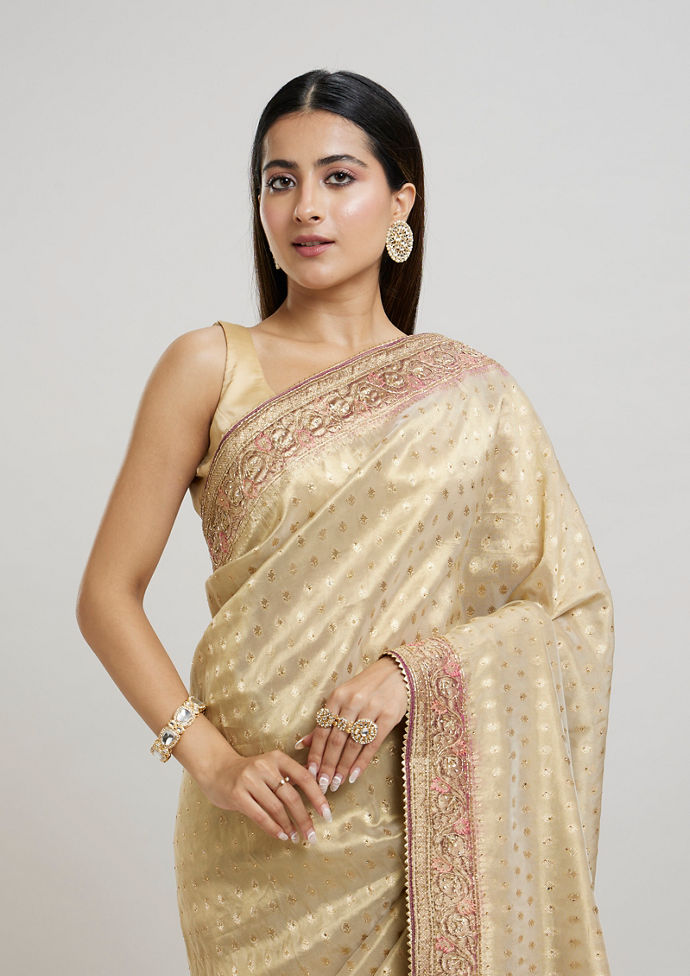
_10-10-2023-23-33:345x488?&dpr=on,2)