Open Sherwani
6 PRODUCTS
Filter

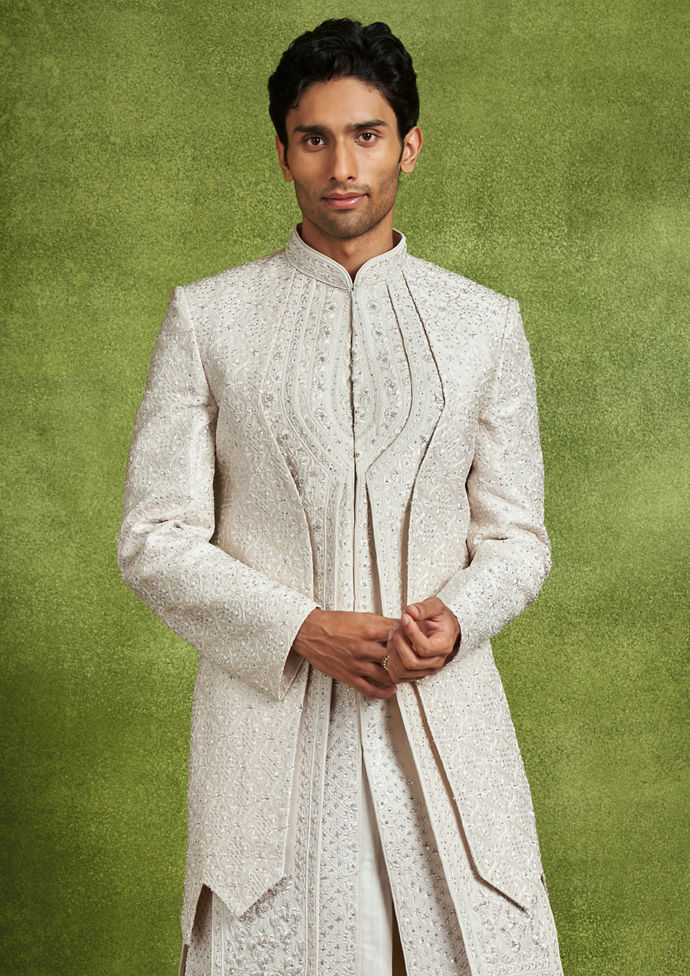
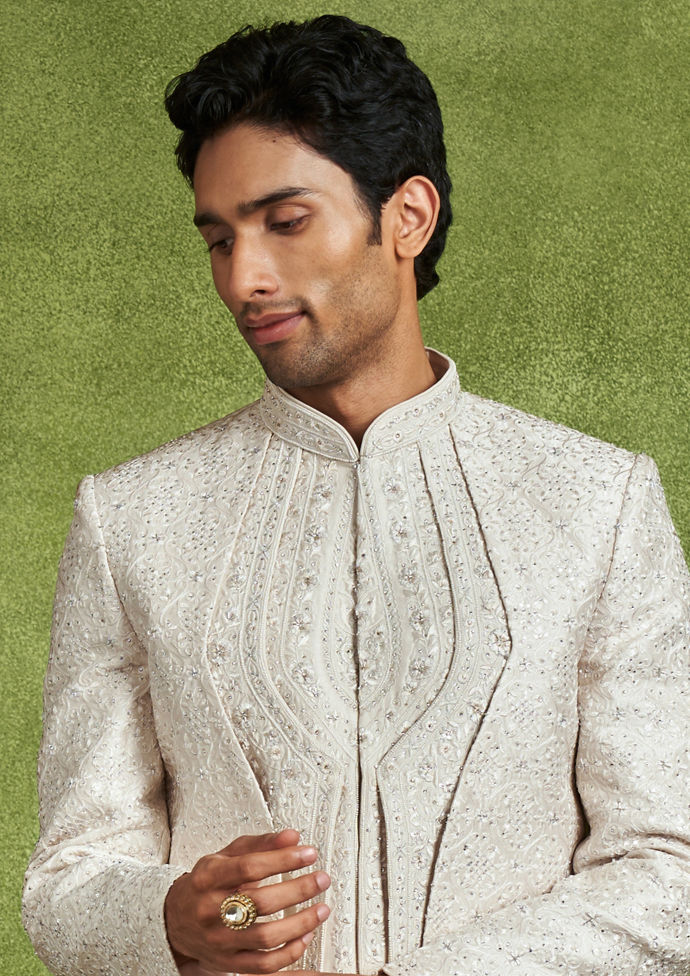
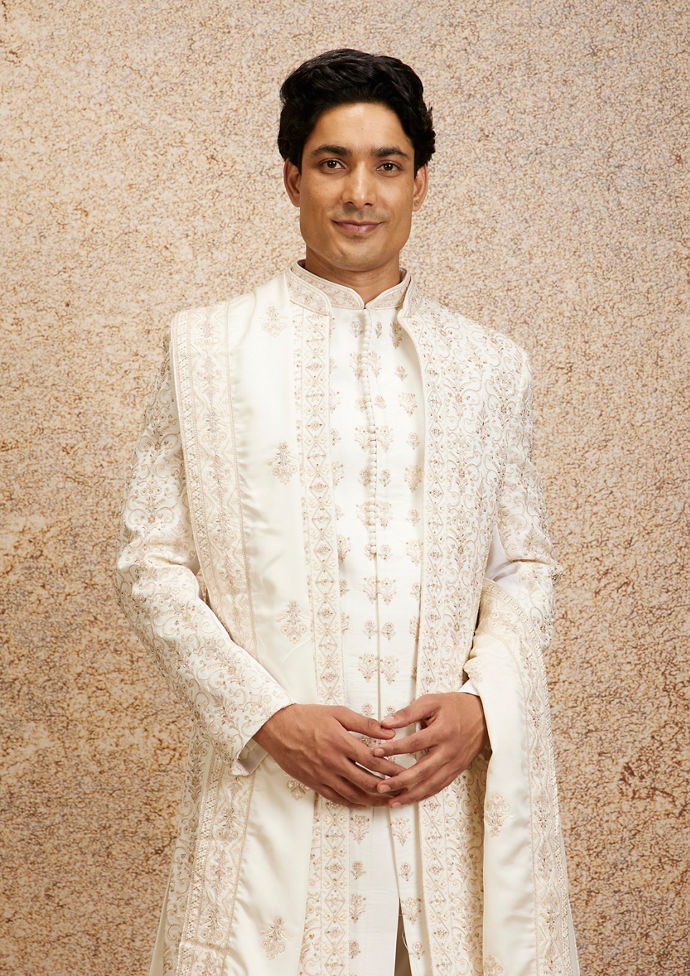
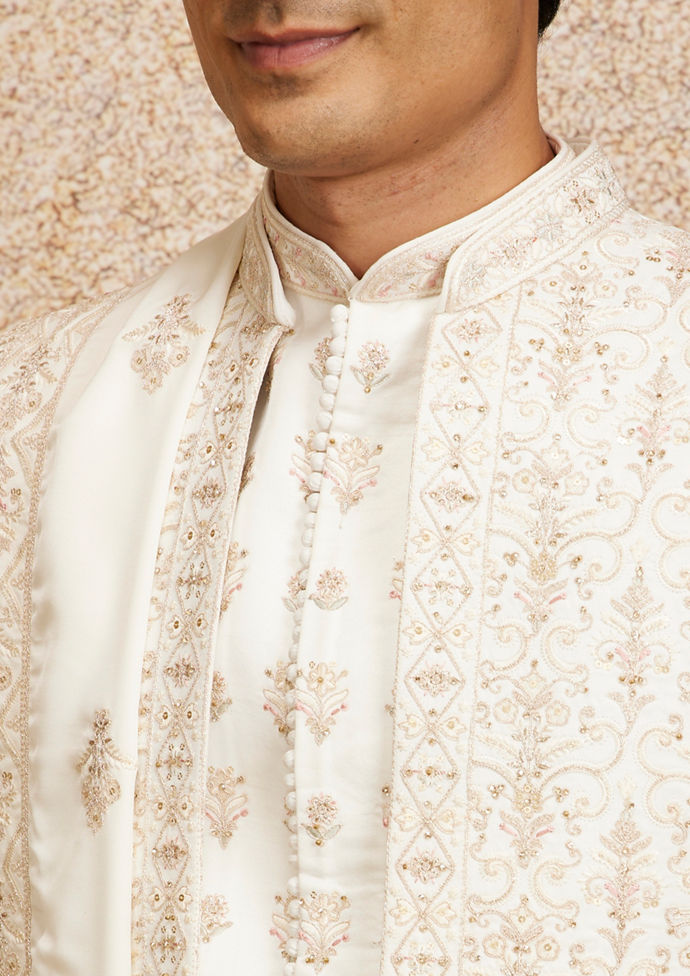
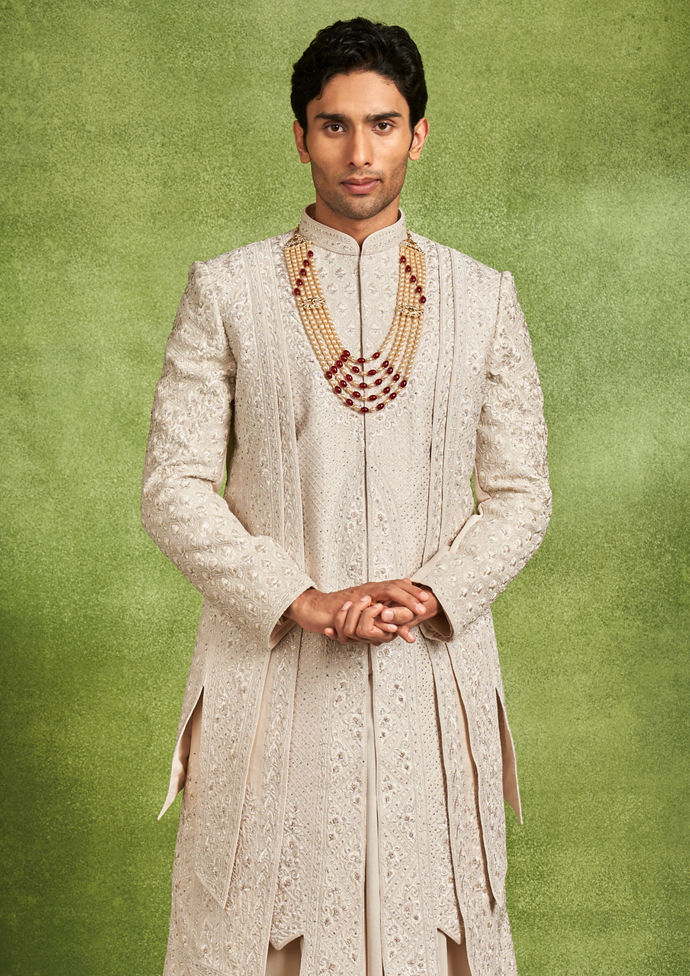
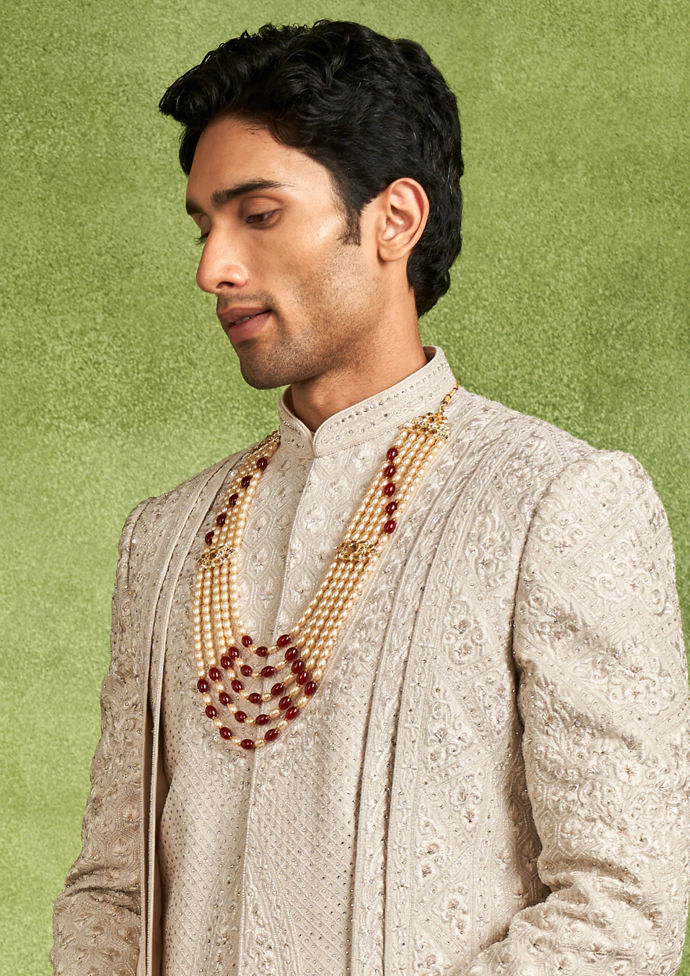
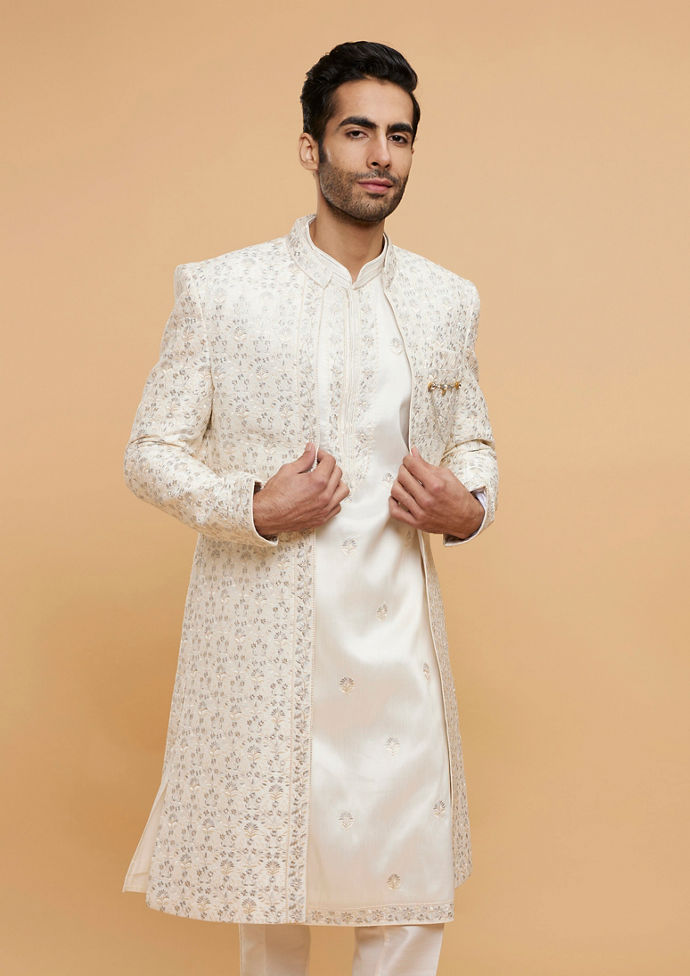
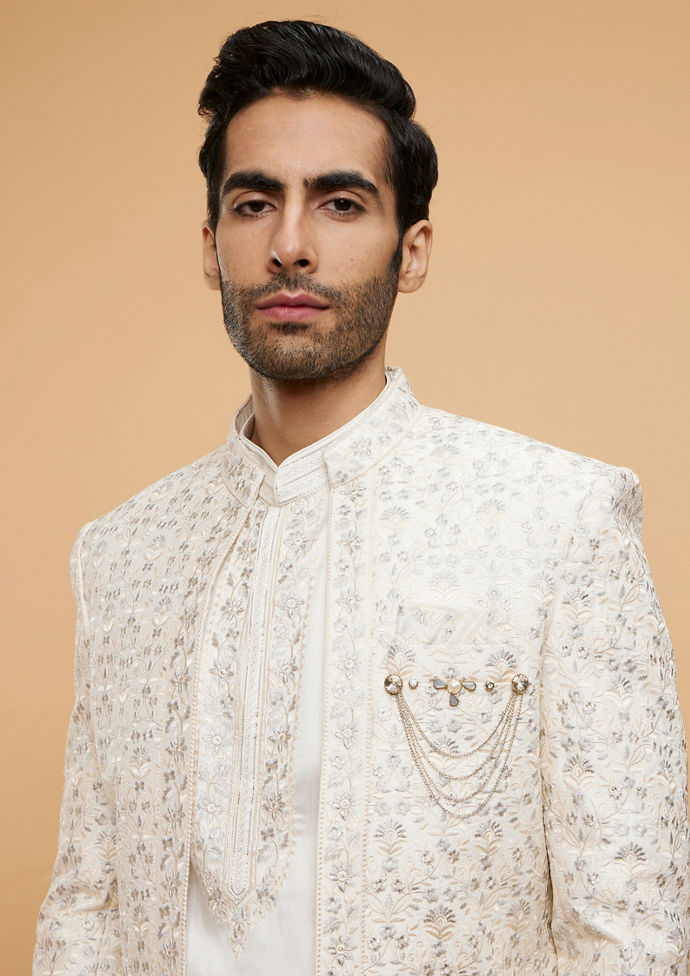
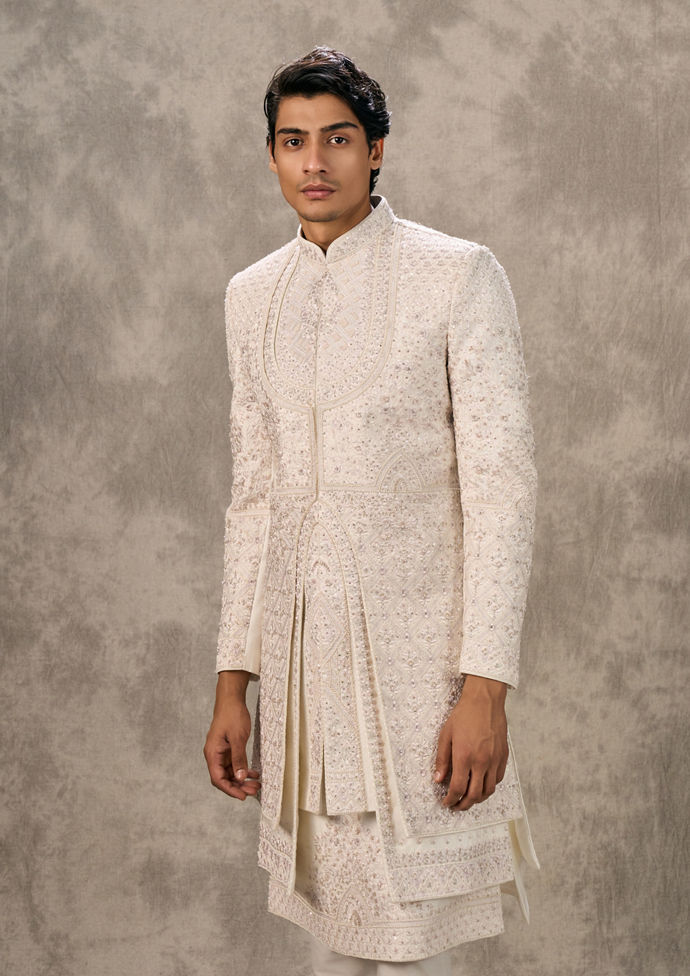
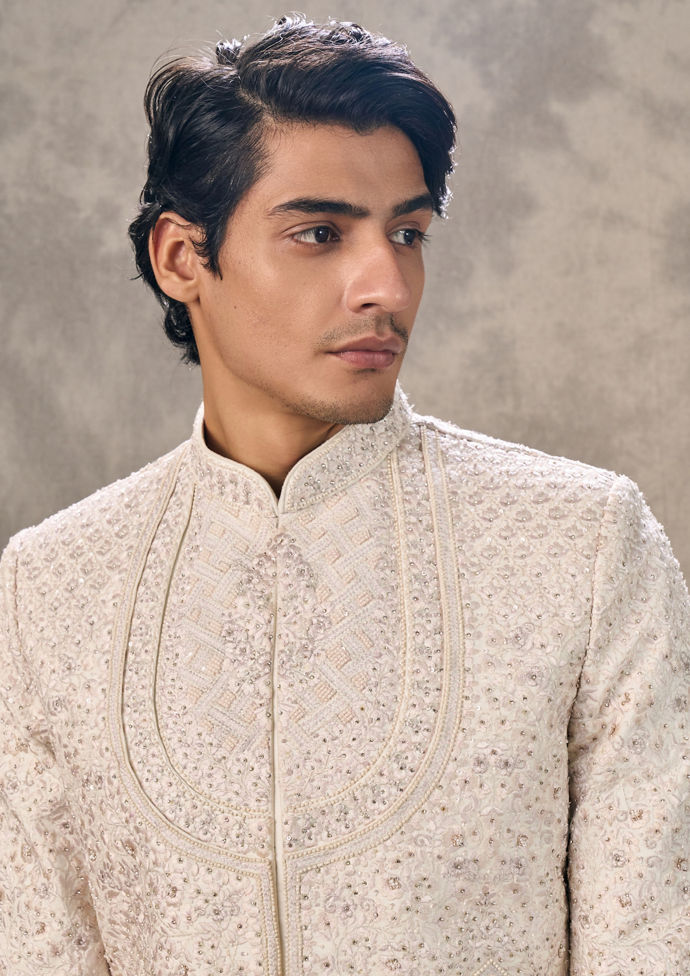
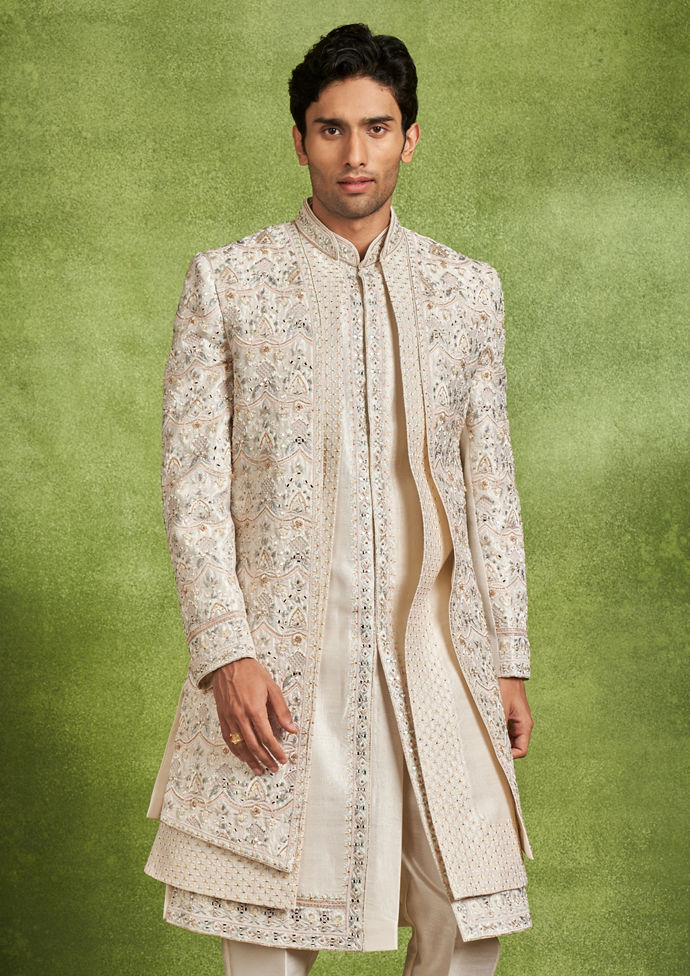
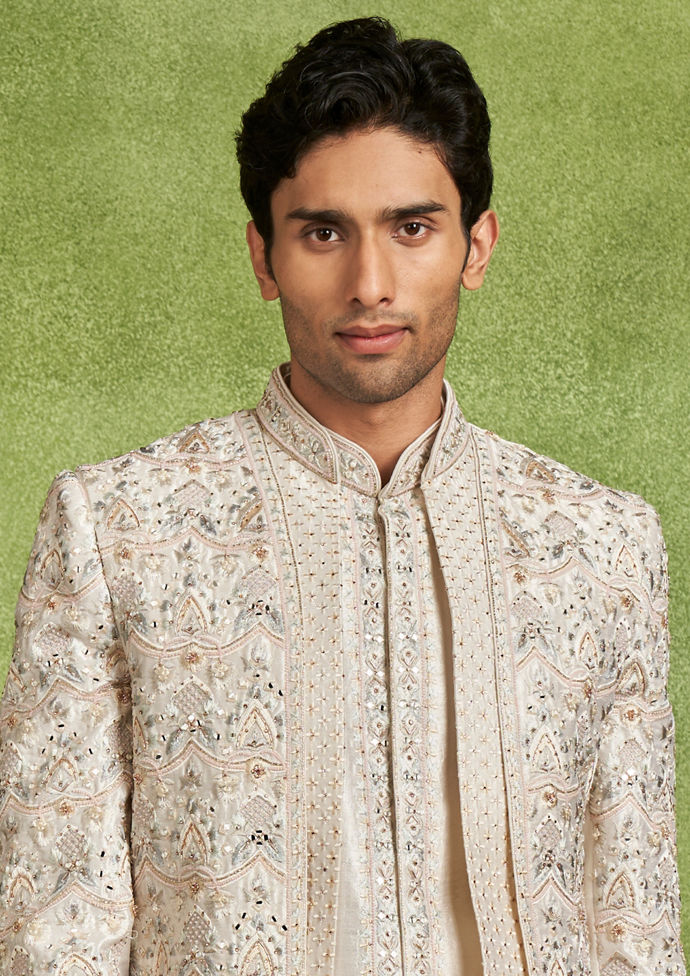
This open sherwani collection for men has six pieces in ivory and cream silk. Layered and single-layer cuts sit side by side, with resham, zari, and aari embroidery across the range. All six work for weddings, receptions, and festive evenings, so you can shortlist by fabric, silhouette, and embroidery.
Shop Now: Black Sherwani , Sherwani for Men Wedding
Three are layered, with a visible second tier across the front, and three are single-layer for a leaner line. Ivory leads the palette, cream sits next to it, and the hand-embroidered pieces are the heavier ones. You can see open and closed styles together on our sherwani for men page.
We hand-embroider several of these pieces at Twamev, so weight and drape change from one to the next. The table below lists all six and the occasion each one suits.
The front panels are cut to hang away from each other instead of meeting at the center, so the kurta beneath stays visible from chest to hem.
You will see them at Indian weddings, receptions, and festival evenings, where the open front lets the sherwani and the kurta read as two separate layers.
Leave 2 to 3 cm of ease across the chest so the sherwani drapes over the kurta without pulling at the shoulders. Sit the shoulder seam about 1 cm past the kurta's shoulder line. Keep the open front about 18 to 22 cm at the chest so the kurta placket stays visible, whether you are standing still or have your arms folded. Check the sleeve ends at the wrist bone with the arm bent; a sleeve that stops short leaves the kurta cuff exposed, which breaks the two-layer look.
|
|
|
|
|
|
|
|
|
|
|
|
This open sherwani for men keeps a light tone for daytime weddings, with resham embroidery worked across the front of a layered cut.
Cream silk reads warmer than ivory, and the hand resham work adds texture across the front. This open sherwani design for men suits reception dinners.
Start at the shoulder seam. It should land on the edge of your shoulder bone, and if it slips past that point the sleeve will pull every time you lift an arm. Give the kurta underneath about 5 cm of chest ease so you can sit, eat, and raise your hands without straining the fabric. The sherwani hem should finish 2 to 4 cm below the knee, long enough to read as formal and short enough that you can walk without gathering it up. Check the sleeve as well: with the cuff buttoned, it should reach the wrist bone, not the knuckles.
Silk holds its shape through a long winter function and keeps a firm shoulder line under embroidery. Crepe and organza are lighter, better for summer weddings and daytime events, but crease more and show pin marks, so hang the sherwani the night before. Buying fabric by the metre? Ask for GSM and width first. A heavier weave folds less across the chest, and a light weave needs more lining structure to sit the same.
Hand embroidery on the collar, placket, and cuffs is enough for a festive evening, an engagement, or a sangeet. Zardozi uses metallic thread and denser stitch coverage, so it carries across a large hall and holds detail in photographs, which is why it fits a grand wedding better than a small gathering. If you want something between the two, a partly embroidered front panel with plain sleeves keeps the look formal without the full weight of all-over work.
An open front puts the inner kurta on show, so that layer has to fit properly: close through the chest and waist, with a hem that stops at mid-thigh or just below. A stole over one shoulder adds colour without covering the embroidery on the front panels, and it gives you something to do with your hands during the ceremony. Keep everything else quiet. One button set, mojaris or plain leather slip-ons, and a pocket square only if the front panel has no work on it.
Resham is silk thread, and it finishes flat and matte. Zari is metallic, so it throws back light and stays readable in a dim reception hall. Pick tone-on-tone resham for a daytime function where the embroidery should sit quietly, and zari when the event runs past sunset.
Silk and velvet both hold dense hand embroidery without pulling at the shoulder seam. Velvet suits winter weddings and receptions. A lighter silk is the better pick for summer mandap hours and sangeet nights, when a heavy pile turns uncomfortable well before the dancing stops. Whichever you choose, look for a smooth inner lining, because it is what keeps a structured outer layer sitting cleanly on the shoulders.
Ivory, cream and pale gold look formal at morning and afternoon ceremonies. Wine, navy and deep green are darker, so they keep their depth in a reception hall lit by artificial light. Wine velvet with zardozi embroidery, the pairing behind our Noor groom sherwani, sits in exactly that evening register.
A layered style arrives as two pieces: a fitted inner kurta and a separate open jacket. You can wear that jacket again over a plain kurta, so the set gets repeat wear after the wedding. The open front also gives you room to adjust the drape at the waist, which is why the silhouette flatters a broader frame as well as a lean one.
A necklace usually competes with the placket, so leave it off. One brooch pinned on the placket, or a single buttonhole stud, does the job. Keep the rest minimal so the embroidery stays the focal point.
Wear a knee-length kurta with slim pyjamas underneath, and keep the kurta hem shorter than the sherwani so the open front falls in a clean line. Choose a lighter pyjama fabric than the sherwani, since heavy layers bunch at the waist and pull the drape out of shape.
Spot-clean the lining and dry clean embroidered silk when it needs more than that. Test spot treatment on an inside seam first, blot instead of rub to avoid pulling threads, and tell the cleaner it is embroidered silk so they choose a gentle solvent.
Roll the sherwani in muslin rather than hanging it on a thin wire hanger, which dents the shoulders over time. Steam the hem before you leave, holding the steamer inside the fabric and keeping the plate away from raised embroidery.
Yes, but wear a fitted crew-neck shirt or a sleeveless vest under it. With an open front, whatever you wear underneath is visible from collar to hem, and bare skin looks informal at a wedding. Match the inner layer to the sherwani in a shade close to the embroidery thread.
Resham is thread work with no metallic content, so it sits quietly on cream and pastel silks and photographs well in daylight. Zari carries a metallic wrap that catches light, which is why it holds up better at an evening reception and can look heavy against a pale base.
Yes. Choose ivory, cream or pale gold silk for a morning or afternoon ceremony; the lighter weave lets air through, while velvet traps heat by early afternoon. Keep the darker velvets for evening functions.
Dry clean only. Tell the counter staff the embroidery is hand-worked, since water can bleed the thread colours and snag the raised stitches. Ask for pressing from the reverse side on low heat so the stitches stay raised instead of flattening into the fabric.
Yes. A tailor can take in the sleeve and side seams and shorten the hem, and those three adjustments usually make an open sherwani for men fit at the wrist and waist. Bring the kurta you plan to wear underneath so the shoulder drop and sleeve opening are measured over that layer.
Explore More Collections: Kurta Pajama For Men , Indo Western Dresses For Men
Open Sherwani Price List
Open Sherwani
Price (₹)
Ivory Silk Resham Embroidered Layered Sherwani
A$ 3,600
Ivory Silk Zari Embroidered Layered Sherwani
A$ 1,600
Cream Silk Resham Hand Embroidered Layered Sherwani
A$ 4,000
Ivory Silk Resham Hand Embroidered Layered Sherwani
A$ 1,200
Ivory Silk Resham Hand Embroidered Sherwani
A$ 4,000
Cream Silk Aari Embroidered Layered Sherwani
A$ 1,200




Login to access Twamev Member Exclusive Features like Video Commerce
Enter the email address associated with your Manyavar account
We’ll ask for this password whenever you sign in