Navy Blue Kurta
2 PRODUCTS
Filter

A navy blue kurta for men works for weddings, sangeet, and festive gatherings because the deep shade sits beside gold embroidery and ivory bottoms without competing with either. Fit matters more than print: allow about 2 in to 3 in ease across the chest, and choose a hem that ends 1 in to 2 in below the knee.
Shop Now: Yellow Printed Kurta
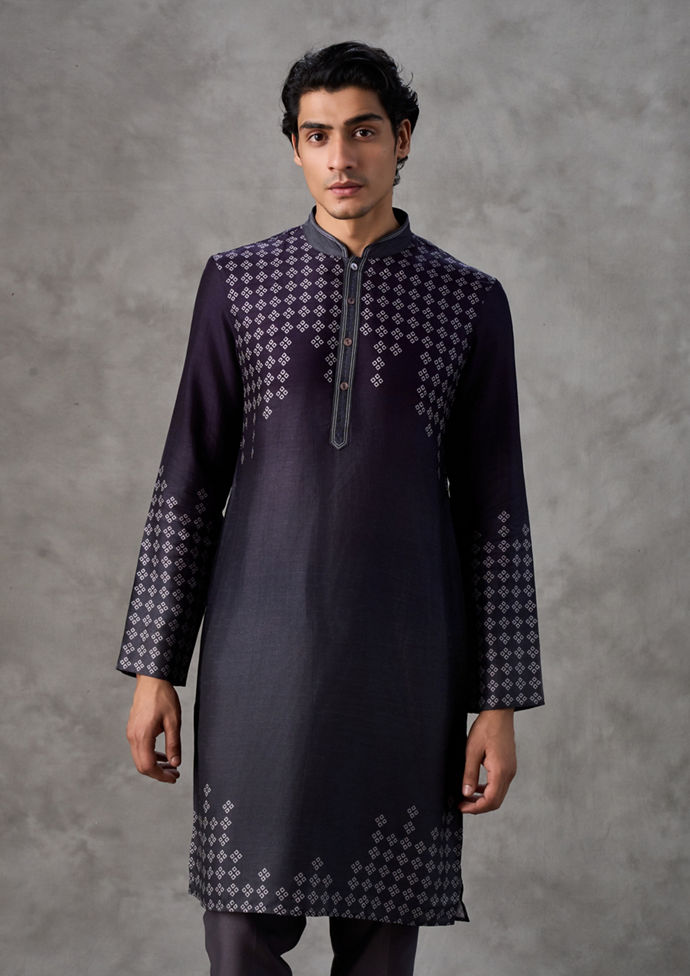
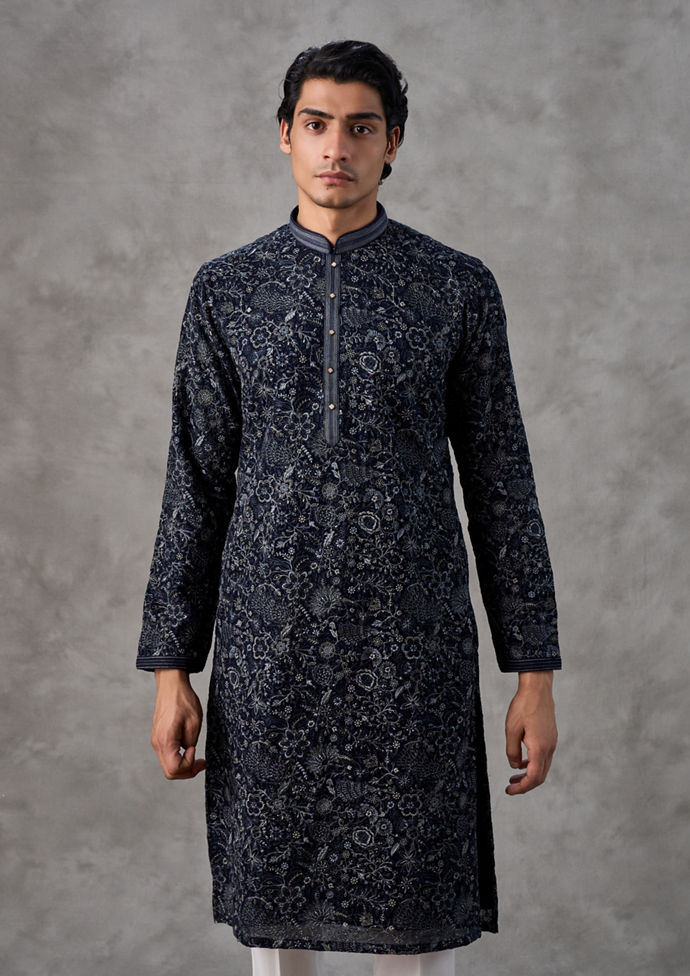
Two kurta sets sit in this edit: a navy georgette floral jacquard and a navy silk mosaic diamond print. Each one comes with matching bottoms, so you can compare fabric and print instead of hunting for a separate pyjama. The table below sets the two side by side.
Navy has lower reflectance than royal blue or sky blue, so amber uplighting and warm mandap lamps keep the fabric reading dark instead of washing out to grey. Under camera flash, that same depth separates it from cream, ivory, or gold bottoms, which is why the shade holds up at both indoor and outdoor evening functions.
Silk and silk blends hold a defined shoulder line and drape with weight; georgette is lighter and moves more, and it usually needs a lining so the colour stays opaque under bright light. Fit matters more than fabric here: the sleeve should end at the wrist bone, the shoulder seam should sit on the natural shoulder point, and the hem should end 1 in to 2 in below the knee. Check the armhole width before anything else, because a tight armhole pulls the chest fabric across when you raise your hands.
Sangeet, reception, and evening mehendi functions suit navy best, particularly where the venue uses warm or dim lighting. A haldi or a morning muhurat usually calls for lighter shades, since harsh midday sun flattens navy into a dark mass with little visible detail. If one kurta has to cover several functions, keep the dupatta and jewellery lighter than the kurta.
A set comes with a matching churidar or pyjama and, in some styles, a dupatta or a nehru jacket. Choose the set when the wedding schedule runs over several days and you want the bottom fabric to match without hunting for a separate piece. Choose the kurta on its own when you already own an ivory, cream, or gold churidar that pairs with navy. If you buy a set, check the bottom's waist measurement and inseam, not just the chest size of the kurta.
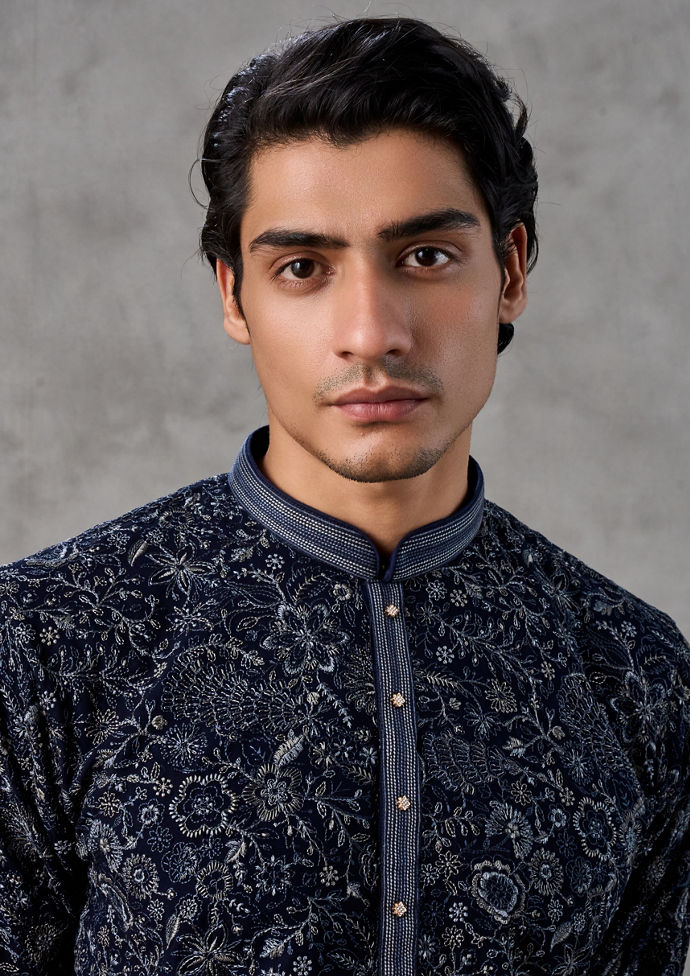
Georgette hangs in soft folds and does not hold a stiff line. The jacquard weave carries the floral pattern in the cloth itself, so there is no dense embroidery sitting on top and weighing the kurta down. It stays light through a long evening, which suits sangeet and other functions where you are standing, sitting, and moving.
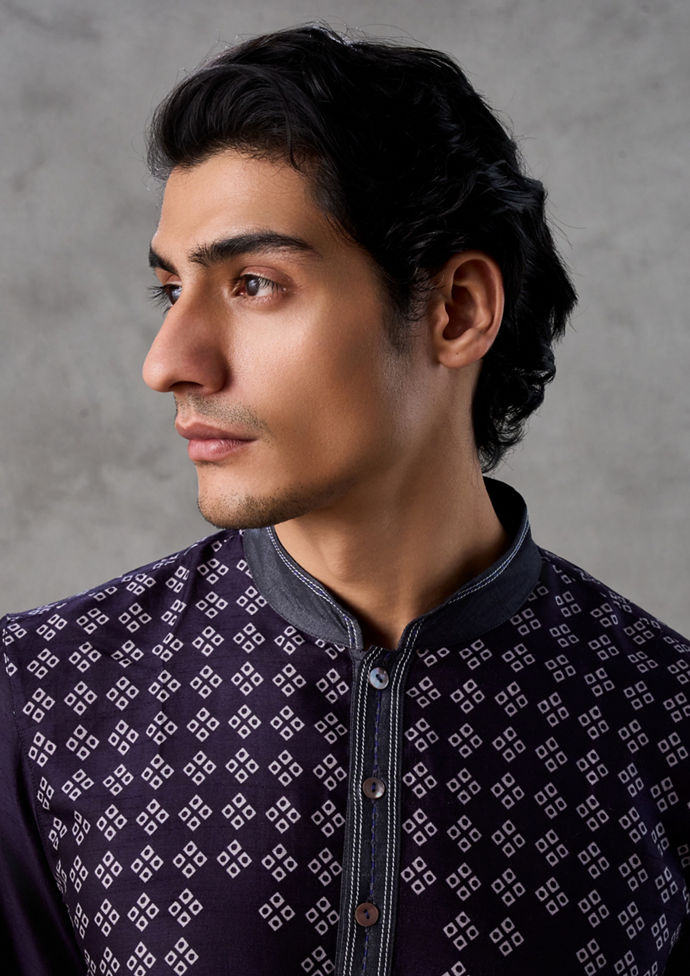
Silk has more body than georgette, so the shoulder seam and the hem keep their shape when you sit down or turn. The mosaic diamond print is geometric, and the repeated shapes stay crisp under warm indoor lighting.
Take the georgette when you want a softer drape and floral detail. Take the silk when you want a defined shoulder line and a print that reads clearly in photographs. Silk gives less across the shoulder, so measure that before you decide.
Georgette works for sangeet, mehendi, and informal festive dinners. Silk holds up for the main ceremony, the reception, and other formal traditional events, particularly when you are wearing layered jewellery.
A navy blue kurta already does most of the visual work, so the fabric only has to hold up its end. Cotton and cotton-silk kurtas for a daytime haldi or an outdoor mehendi usually sit between 80 and 140 gsm, light enough to wear through afternoon heat. For an air-conditioned evening reception, choose a weave in the 180 to 250 gsm range, such as a silk blend, jacquard, or lined cotton, because the extra weight holds its shape through a long function and drapes without clinging. If the event runs from afternoon into night, something around 150 gsm covers both halves of the day.
Run the tape around the fullest part of your bust, level and parallel to the floor, snug but not tight, and write the reading down in inches. Check that number against the size chart for the exact kurta you are buying, since the same label can differ by 1 to 2 inches between makers, and size up when you land between two rows. For length, measure from the shoulder seam to the hem you want: straight kurtas commonly finish at 42 to 46 inches, calf-length styles near 40 inches, and floor-length anarkalis at 50 inches or more.
Wedding-day kurtas often carry dense embroidery across the yoke, placket, and cuffs, with zari or sequin work over much of the front panel. That coverage adds structure, but it also traps heat. Sangeet, mehendi, and Diwali kurtas work better with lighter thread work on the yoke and a plain body, which keeps you comfortable while you stand and move for hours. Feel the inside of the garment before you commit: stiff backing canvas behind heavy embroidery is what turns a kurta scratchy by the third hour.
A standalone kurta pairs with churidar, palazzo, or dhoti pants you already own, and it works best when the bottoms sit within a shade or two of the kurta colour. Buying a matching kurta pajama set takes the pairing out of your hands, and the set often includes a dupatta as well. For a navy blue ladies kurta, check the listing the same way: confirm which pieces are included and whether the bottoms are stitched to your waist and length.
Georgette is a crepe weave, so the surface has a slight grain and the cloth falls close to the body without going stiff. It is also sheer, which is why a georgette kurta usually needs a lining or a full-sleeve cut with a covered back. Silk behaves the other way: it holds a shape, so the hem stands away from the body instead of clinging, and it wrinkles along sharp folds rather than all over. Blends, most often silk mixed with viscose or cotton, sit in between. They crease more than pure silk and less than georgette, and they are the sensible pick for a kurta you plan to wear through a long function.
Jacquard weaves the motif into the cloth, so the tone-on-tone pattern is part of the fabric rather than a layer on top of it, and it will not flake or crack when cleaned. A diamond print sits on the surface, which keeps the lines crisp and the repeat even across the front panel, though the ink can soften with repeated washing. Embroidery is the heaviest of the three. Zari and thread work sit on top of the navy, and a dense panel will pull the kurta down at the shoulders, so check that the shoulder seam sits where your own shoulder ends.
A mandarin collar keeps a clean line against dark navy. The collar usually stands about 4 cm at the back of the neck and closes with a placket of two or three buttons, so it sits high without crowding the throat. Full sleeves suit weddings and evening functions, especially in silk or jacquard, where the extra fabric lets the cuff fall at the wrist instead of bunching. For daytime wear, three-quarter sleeves or a full sleeve rolled to the elbow keep the fabric from gathering under a jacket or shawl. Whatever the sleeve, make sure the armhole is loose enough to raise your arm without the whole kurta lifting at the waist.
A pyjama is cut straight and loose through the leg, so it works for daytime wear and for sitting through a long event without the fabric pulling at the knee. Churidar is fitted from thigh to ankle with extra length that gathers in folds at the ankle, which makes the leg line look longer. A dhoti is draped rather than stitched, and it is the hardest of the three to move in, so it suits ceremonies where you are mostly standing or seated. Whichever you pick, stick to the same navy family for the bottom, and add a contrasting dupatta only if the kurta front is plain.
Yes. Pick a lighter fabric such as georgette, cotton silk, or chanderi, and keep the hem between 42 and 46 inches so it reads as a kurta instead of evening wear. Velvet and heavy brocade belong to the reception. Light zari along the neckline or placket is enough for a morning ceremony.
Mid-depth navy flatters most Indian skin tones because it holds a clear contrast against the skin without looking harsh. Very dark navy can look flat on deeper complexions. If that is your tone, look for navy with a slight sheen, or add a lighter blue dupatta or trim near the face to lift it.
Wash it by hand in cold water with a mild detergent, turn the kurta inside out, and skip the soak entirely. Navy dye releases colour for the first two or three washes, so rinse until the water runs clear and dry it in the shade. Store it folded, away from direct sunlight. A cotton or muslin sleeve keeps dust off while letting the fabric breathe.
Sangeet works well. Gota, mirror, or thread work catches the light once the lamps are on, and a lighter dupatta keeps the outfit from going dull under warm indoor lighting. Mehendi is usually photographed in daylight and suits brighter shades, so keep navy for the evening functions.
Shop Now: Yellow Kurta For Men , Wine Georgette Embroidered Kurta Set
Navy Blue Kurta Price List
Navy Blue Kurta
Price (₹)
Navy Silk Mosaic Diamond Print Kurta Set
C$ 435
Navy Georgette Floral Jacquard Kurta Set
C$ 475




Login to access Twamev Member Exclusive Features like Video Commerce
Enter the email address associated with your Manyavar account
We’ll ask for this password whenever you sign in