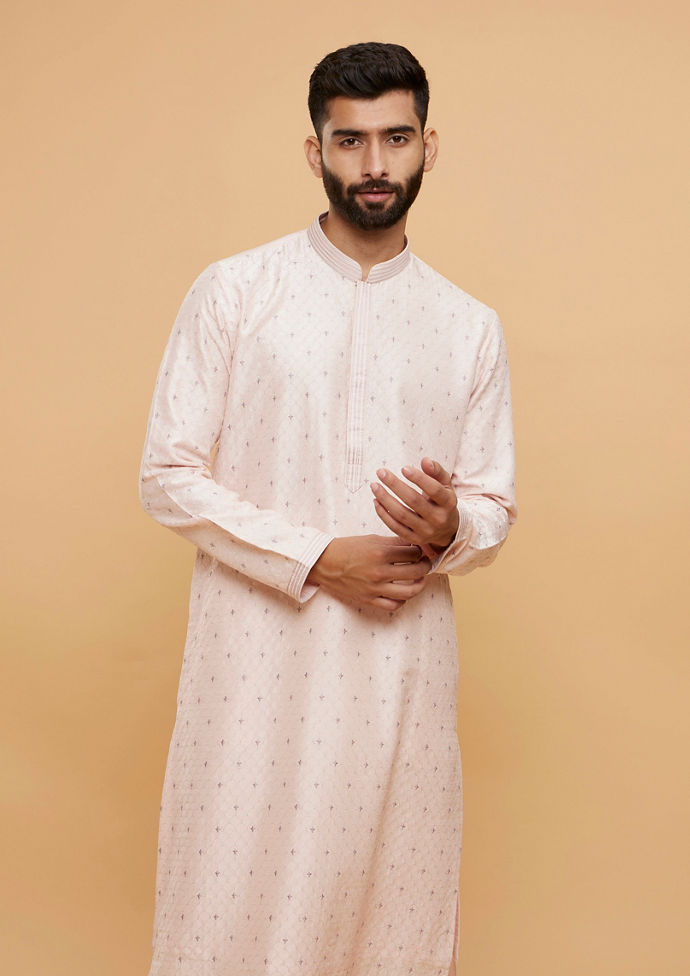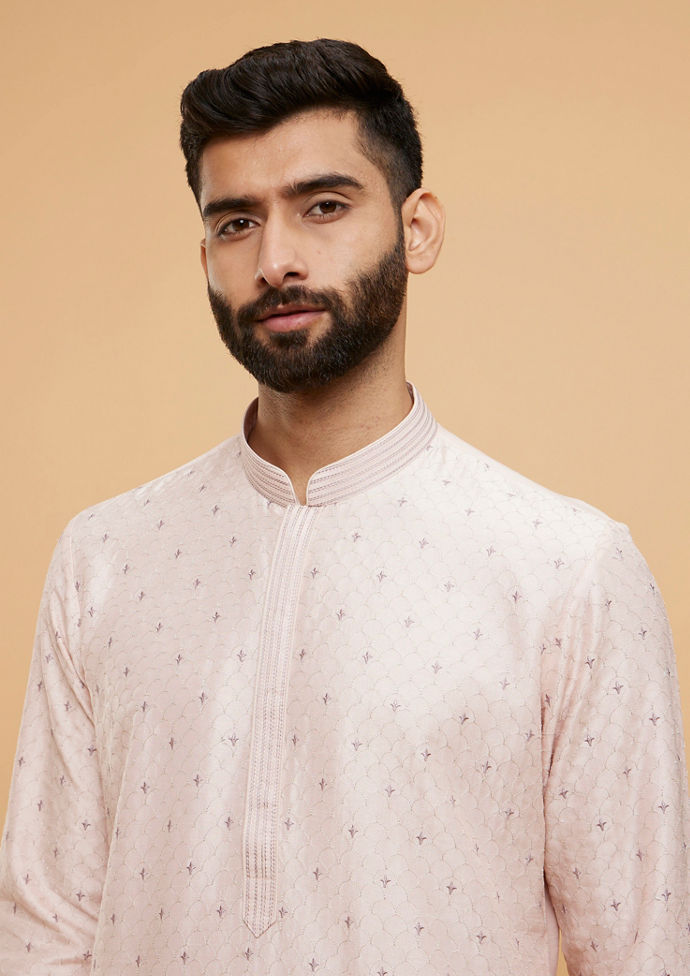
Peach Kurta For Men
10 PRODUCTS
Filter


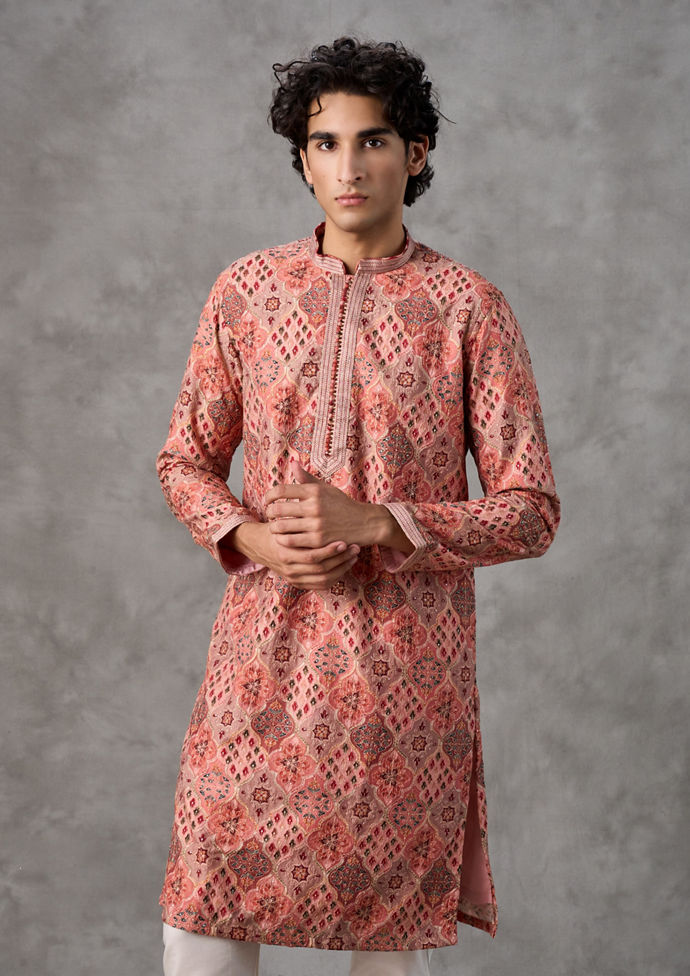
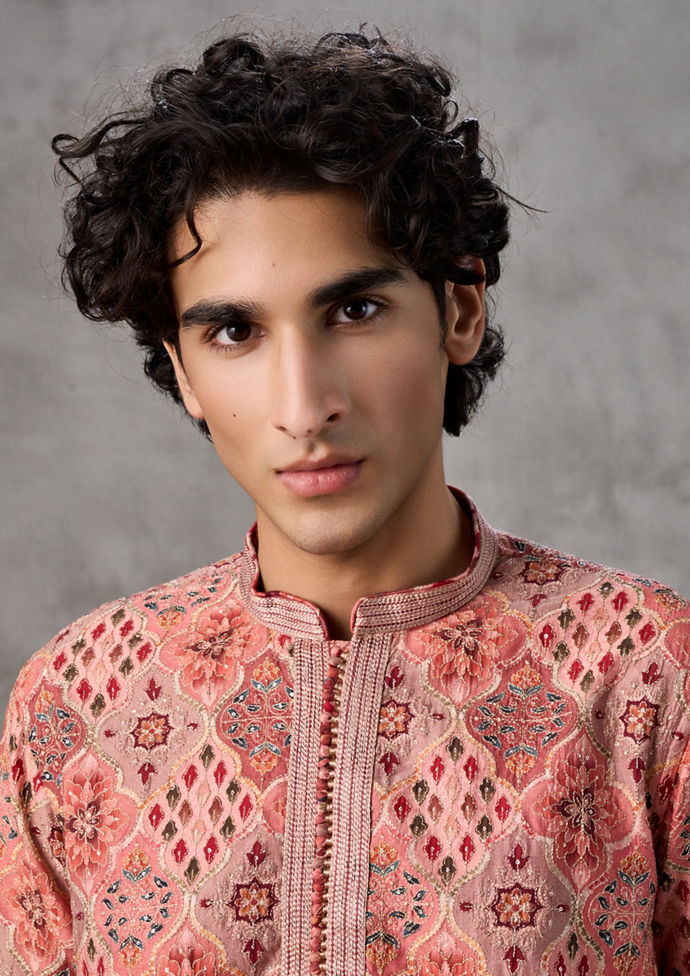


د.إ 1,115

د.إ 1,115
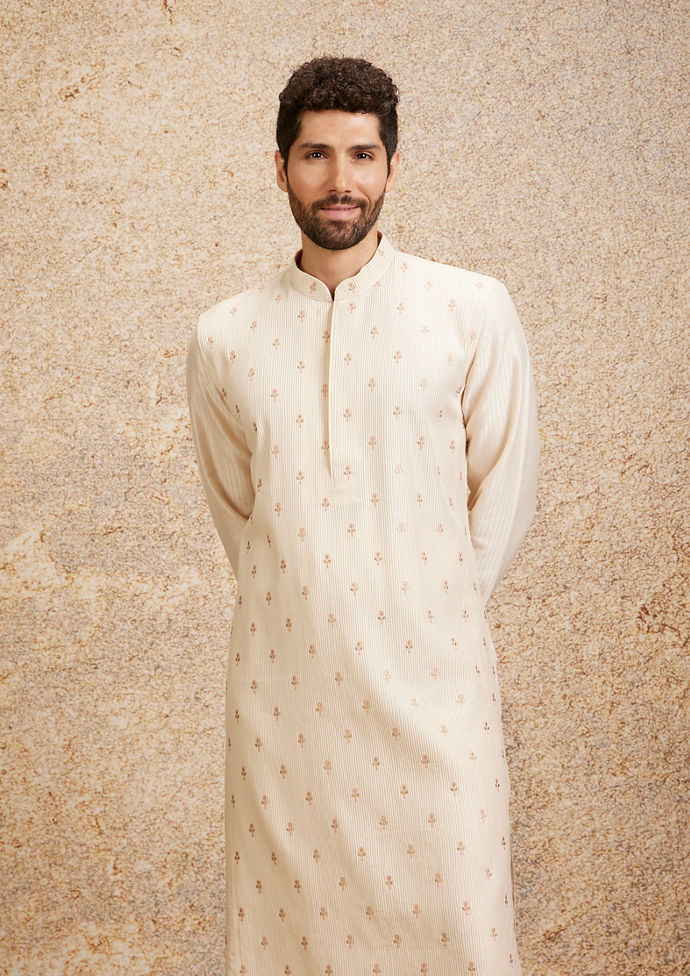
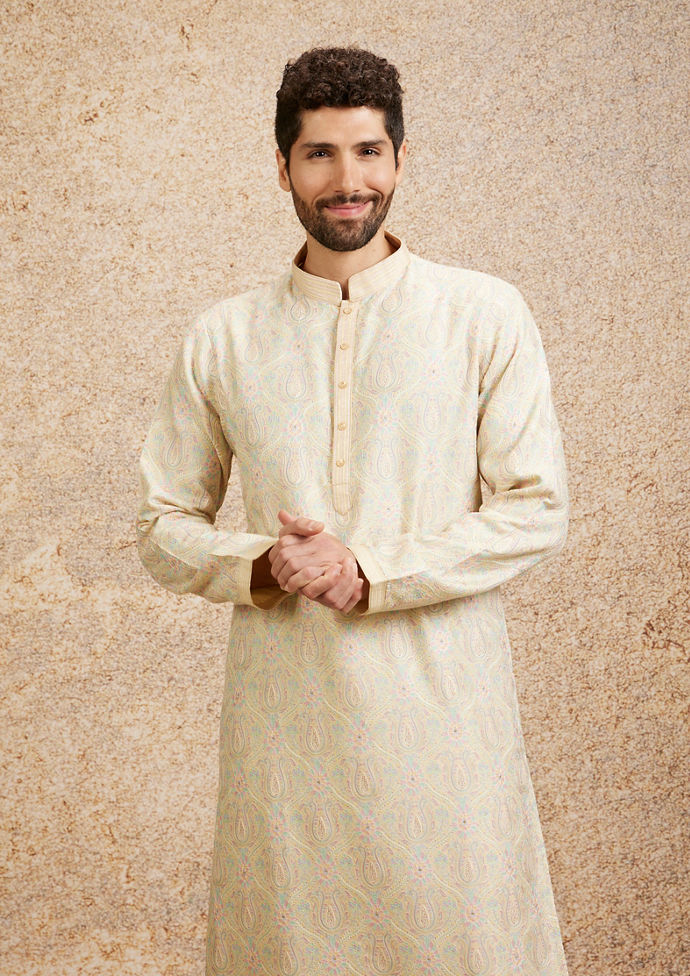
A peach kurta for men suits haldi, mehendi, sangeet, and wedding guest dressing. This collection holds 10 styles. Fabrics are silk, viscose, and georgette. Many sets come with a pajama, a pant, or a dupatta. The shades run from pale peach to deeper tones, so you can match one to the time of day and the event.
How do you choose between a solid peach colour kurta for men and an embroidered silk set? Start with the occasion. Plain, lighter pieces work for daytime haldi. Zari work and printed silk hold up better at sangeet and reception. Use the fabric, sleeve, and occasion filters to narrow the list.
Shop Now: Yellow Kurta For Men
A peach kurta for men falls between warm ivory and soft coral, low in saturation and with no orange cast. That middle position keeps the colour quiet under daylight and still soft under warm indoor light, so it does not flash pink in photographs.
Measure two things before you order. The hem should sit 40 to 42 in from the shoulder seam, around mid-thigh, and the chest should carry 3 to 4 in of ease over your own chest measurement. Below 3 in, the front pulls tight the moment you lift your arms.
For Indian wedding heat, our silk, viscose, and georgette run 180 to 250 gsm. Under 180 gsm the cloth turns sheer and creases fast in a car; over 250 gsm it holds heat through a long ceremony, so stay inside that range.
Peach keeps its contrast better than ivory once the light drops, so your kurta still separates from a white backdrop in evening photos. Against pastel pink it is warmer and less sweet, which usually suits deeper skin tones and sits well next to gold.
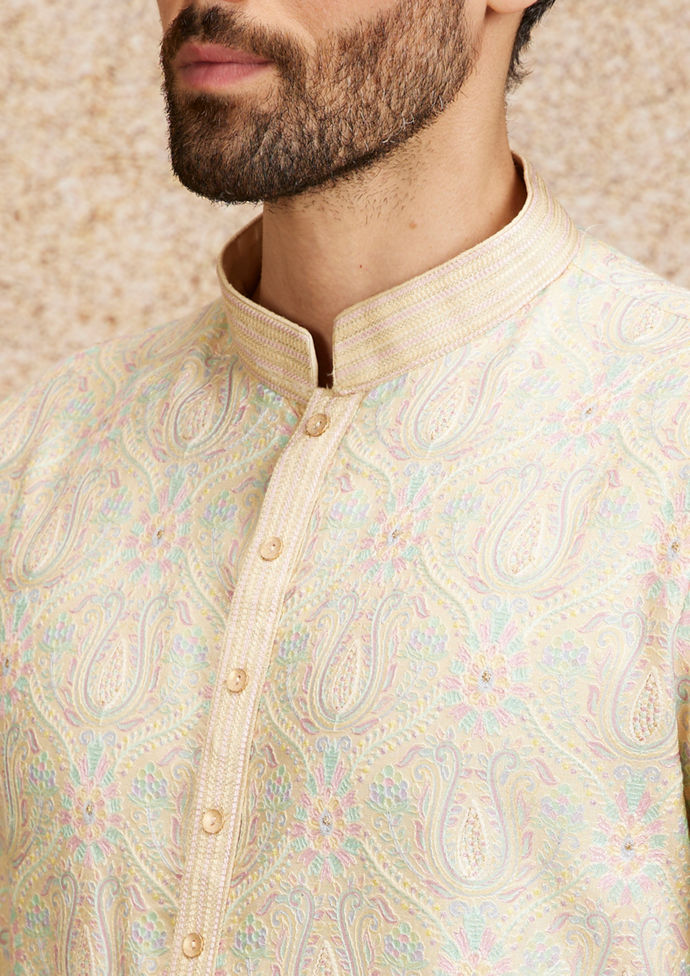
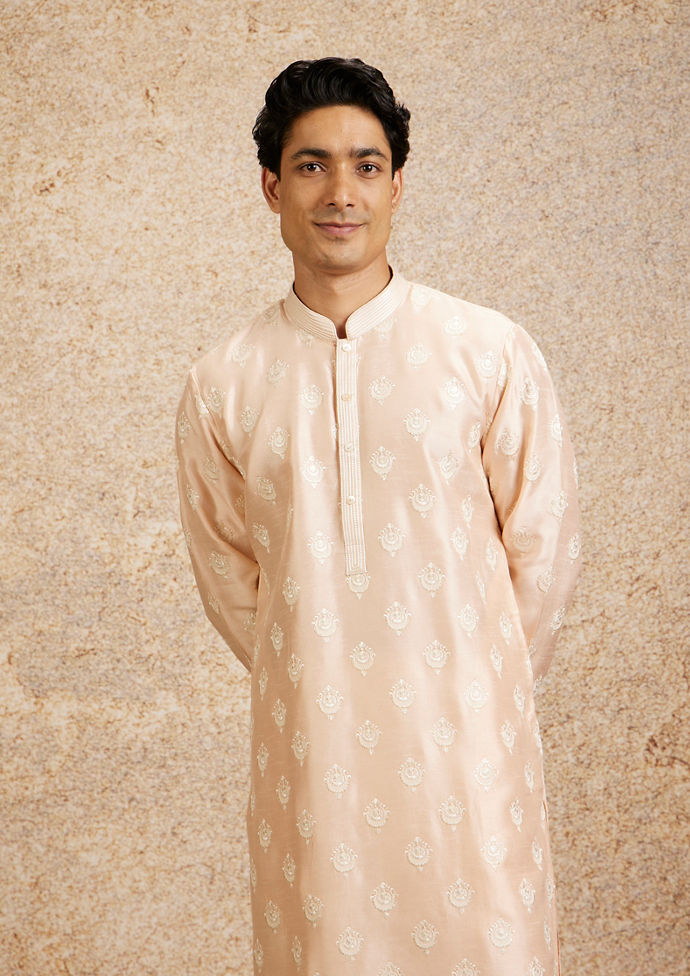
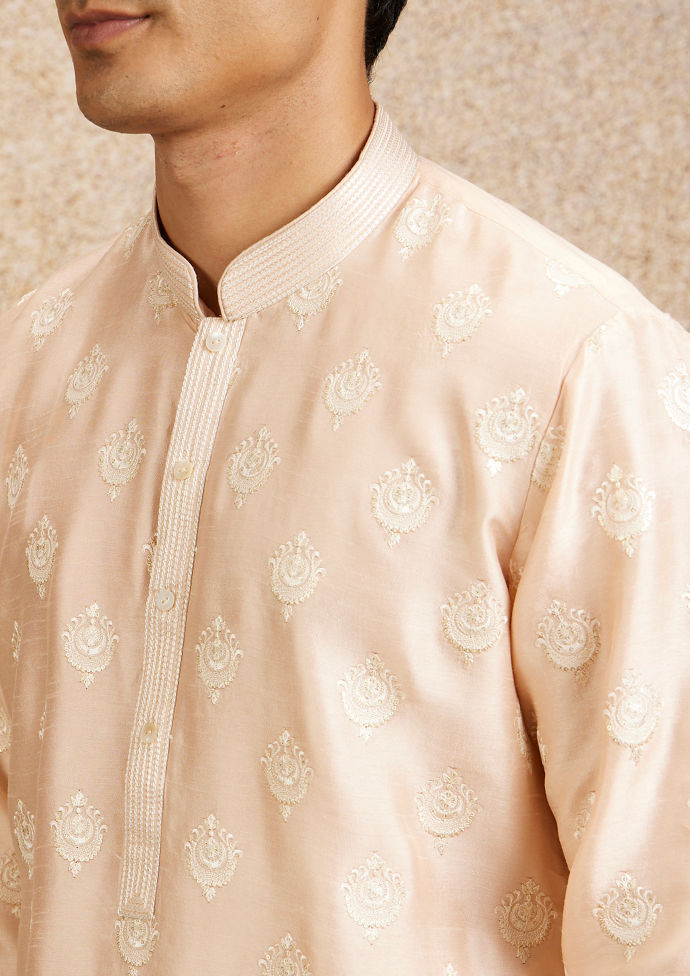
The yoke carries gold zari thread work. Because the embroidery sits flat against the silk, the surface stays smooth when indoor sangeet lighting catches it.
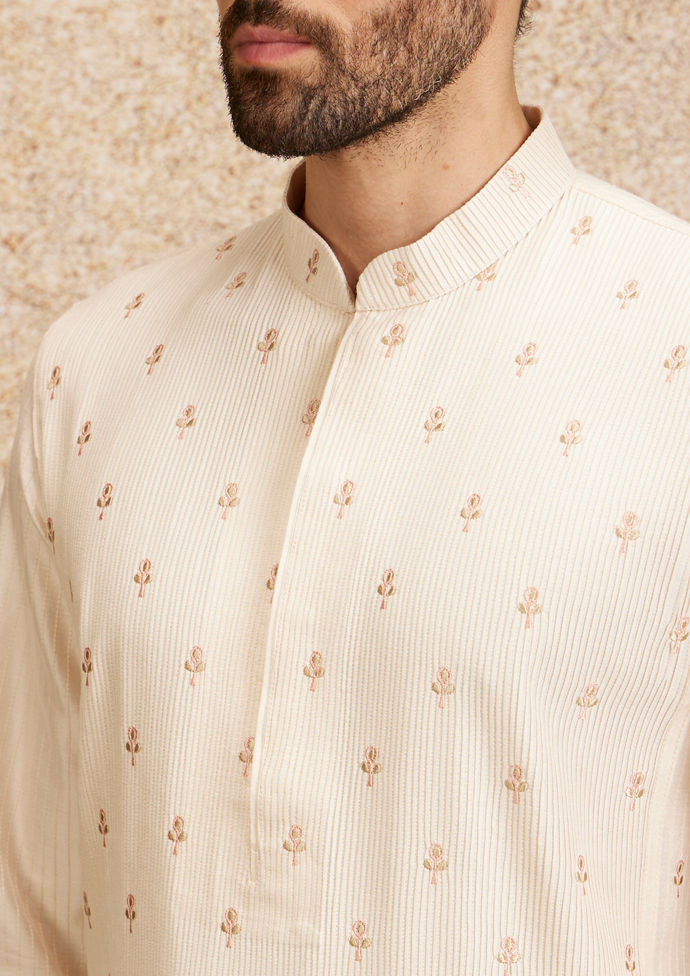
Vertical pintucks run down the placket and give the front panel its shape. The woven buta motif is subtle enough that you notice it only up close.
You can build a three-piece look with our kurta pajama with jacket sets. Once the ceremony moves indoors, take off the outer layer and wear the kurta pajama on its own.
Georgette with a dupatta works for haldi afternoons, where the lighter drape handles outdoor heat and the lighter colour hides dust kicked up on open ground. For sangeet and reception, structured silk holds its shape better under stage lighting, and jacket sets fit wedding-guest evenings.
The silk zari set suits sangeet and reception because the embroidery reads from a distance and the flat yoke does not catch on chairs, jewellery, or a dupatta pin. The pintuck buta set suits quieter mehendi and engagement functions, where you may stand in photos an hour or more and want a peach kurta for men that does not pull attention from the couple. Men's kurtas in this range typically fall between 40 and 44 inches in length, so check the size chart against your height before ordering.
If you are buying one peach colour kurta pajama to cover two events, take the jacket version. Wear all three pieces to the reception, then leave the jacket behind for the haldi or mehendi the next morning. A two-piece set with a dupatta covers daytime functions only, so build the second outfit around it. Order both sets together when the functions fall on the same weekend, since the dyes in the peach silk and peach georgette are matched across the range.
The palest peach suits night functions under warm bulbs around 2700K, where the fabric reads close to cream and picks up the room's amber cast. Under daylight or white light at 4000K and above, the same cloth looks lighter and cooler, so a shade that flatters you at an evening reception can look washed out at a daytime ceremony. Take the kurta to a window or step outside before you decide, and check it against your skin rather than against the screen. Deeper peach and coral-leaning peach hold their colour better in bright light.
Measure your chest around the fullest part with the tape level and not pulled tight, then measure shoulder seam to seam across the back, and finally the kurta length from the shoulder seam at the neck down to the hem. Compare those three numbers with the seller's chart instead of your shirt size, since regional sizing runs differently. Most straight-cut kurtas are drafted with about 2 to 3 inches of ease at the chest, but confirm the brand's own numbers before ordering.
A peach colour kurta worn on its own works for daytime functions and casual gatherings, where it pairs with churidar, jeans, or tapered trousers you already own. A kurta pajama set suits weddings and festivals that call for a coordinated look, and a jacket set fits receptions and evening events with a formal dress code. Pick the format first, then the shade, because a deeper peach carries a jacket better than a pale one does.
Read the care label before you buy, not after the first wear. Silk and silk-blend peach kurtas are usually dry clean only, while cotton ones often take a cold hand wash, and peach dyes can bleed on the first wash, so keep them separate from whites. Check the dispatch date and expected delivery window as well, since made-to-order and tailored sizes take longer than stocked ones, and leave a buffer if the kurta is for a fixed date.
Peach runs from a near-ivory pale tone with a faint peach cast to a deep, saturated coral. Pale shades lose contrast under bright midday sun and can look almost white in outdoor photos, so they work better for indoor evening events. Mid-tones hold their colour in daylight and photograph consistently. Deeper peach keeps its depth under warm indoor lighting and suits receptions and evening functions. For daytime outdoor photos, pick a shade at least one step darker than the one you like under shop lighting.
Silk suits evening receptions; cotton and cotton blends handle a daytime haldi better. Pure silk kurta fabric is light, usually 60 to 90 gsm, and drapes with a sheen that shows up in photographs, but it creases and needs dry cleaning. Cotton sits heavier at about 120 to 160 gsm, breathes well, and can be washed at home, which matters when the function runs through the afternoon. A silk-cotton blend lands near 100 gsm and keeps some sheen without the full silk care routine.
Full sleeves run about 24 to 25 inches and cover the wrist, which suits weddings and any event where you wear the kurta untucked over a churidar. Half sleeves stop around 11 to 12 inches, at the elbow, and stay cooler for daytime functions. A jacket set adds a layer over the kurta: a cropped or knee-length bundi with matching churidar, structured enough for a reception and easy to take off once the dancing starts.
Match the occasion to the work on the kurta. Haldi happens outdoors in daylight, so plain cotton or a light blend in mid peach works better than embroidery, which catches lint and dust. Sangeet is evening and photo-heavy, so thread or zari work on the yoke holds up under stage lights. A reception calls for pure silk or a silk blend in deeper peach, with a jacket if the invitation says formal.
Peach looks best against ivory or cream, and it helps to keep the bottom of the outfit lighter than the kurta. If you wear a peach kurta pajama with a jacket, let the jacket sit a shade deeper than the kurta so the layers stay readable at a distance. Stay away from strong reds and oranges near your face. They drain the warmth out of the colour and leave it looking faded. Keep your buttons and watch in one metal tone, since mixing gold and silver muddies the finish.
Silk and silk-blend kurtas are dry clean only. Washing them at home dulls the sheen, and the thread work on a peach piece is usually the first thing to fray. Between wears, air the kurta for a few hours before you put it away. Store it folded, wrapped in muslin, in a cool cupboard that stays out of direct sun. Hanging a heavy embellished kurta stretches the shoulders and leaves marks along the seams, so keep those flat. Skip naphthalene balls in the box, because the smell clings to silk.
Steam the kurta from the inside, on the lowest heat setting that still releases steam. Hold the nozzle a couple of centimetres off the fabric and work in short passes. Pressing the plate flat against peach silk leaves shine marks that do not come out. If you must use an iron, run it over the lining only, with a thin cotton cloth between the plate and the cloth. Hang the kurta for at least half an hour before you wear it so the trapped moisture dries and the drape settles.
Fair skin handles pale peach well. Wheatish and dusky tones usually look sharper in mid or coral peach, particularly when the bottoms are ivory.
Yes. Lighter peach reads better in daylight, so it fits a haldi. Wear the same kurta to an evening wedding with darker bottoms and it still holds up.
Take it to a tailor and have 1 to 2 cm removed at each side seam. Centre-front darts pull the embroidery off line, and on silk the needle marks stay visible.
Pick a matte or self-patterned jacket over a plain peach colour kurta pajama so the texture separates the two layers. Our kurta jacket sets follow the same rule.
Shop Now: Red Kurta , Yellow Kurta For Men
Peach Kurta For Men Price List
Peach Kurta For Men
Price (₹)
Peach Georgette Floral Embroidered Kurta Set with Dupatta
C$ 1,090
Peach Silk Patchwork Heritage Print Kurta Set
C$ 435
Peach Silk Geometric Jaal Print Kurta Set
C$ 580
Peach Georgette Thread Embroidered Kurta Pant Set
C$ 545
Peach Silk Self-Patterned Buta Motif Pintuck Kurta Set
C$ 435
Peach Silk Zari Embroidered Kurta Set
C$ 545
Peach Silk Embroidered Kurta Set
C$ 475
Pale Peach Viscose Buta Patterned Embroidered Kurta Set
C$ 475
C$ 145
Peach Silk Hexagonal Patterned Embroidered Kurta Set
C$ 435




Login to access Twamev Member Exclusive Features like Video Commerce
Enter the email address associated with your Manyavar account
We’ll ask for this password whenever you sign in