

Golden Saree
4 PRODUCTS
Filter

A golden saree pairs luxury fabrics with intricate metallic embroidery to create occasion wear that reflects your personal style. whether you are dressing for a wedding, festival, or formal celebration, the right shade and fabric can make a real difference in how you feel and look. Understanding the different styles, materials, and occasions that work with this garment is the first step to choosing one that's right for you.
We specialize in luxury occasion wear and wedding attire that combines refined materials, textures, and traditional embroidery techniques. Our golden saree collection includes pieces in pure organza, chanderi silk, and georgette, each with embroidery techniques like zardozi (gold and metallic thread work) or resham thread work. These are made for people who care about craftsmanship and want pieces that last, not fast-fashion items.
Golden sarees suit bridal wear, wedding receptions, festive celebrations, and formal family functions. In Indian tradition, the color carries meaning, it's associated with prosperity and elegance. Choosing the right golden saree comes down to your skin tone, the occasion, fabric preference, and the embroidery style that appeals to you.
This guide covers what makes a golden saree special, how to choose one for your needs, and how to care for it long-term.
A golden saree pairs luxury fabrics with metallic embroidery for occasion wear that celebrates individuality through refined craftsmanship. We work with premium materials like pure organza, chanderi silk, and georgette, each paired with embroidery techniques such as zardozi (gold and metallic thread work) or resham thread work. These pieces are made for people who value quality and expect garments that last.
Golden sarees hold deep cultural meaning in Indian tradition, where the color symbolizes prosperity, elegance, and celebration. For weddings and formal family functions, a golden saree expresses respect for tradition while allowing personal expression through fabric choice and embroidery style. Gold complements diverse skin tones and works across occasions, from intimate sangeet ceremonies to grand receptions.
Gold tones remain central to luxury celebration wear because they work across multiple occasions and seasons. whether you are attending a bridal event, festive gathering, or formal function, a golden saree in the right fabric and embroidery style adapts to the moment. The range of gold, from pale champagne to deep mustard, makes it a practical choice for buyers who want one investment piece that serves many celebrations.
Golden sarees come in several established styles. Traditional silk sarees with gold borders remain widely available, as do contemporary designs that blend gold accents with modern cuts. Major designers continue to offer collections each season, ranging from heritage brands to emerging names.
Gold thread work varies significantly across available sarees. Some feature traditional zari (gold-wrapped thread) in dense patterns, while others use it sparingly for accent. You'll find options with gold beadwork, sequins, and metallic embroidery mixed in as well. The weight and coverage of embellishment affect both the look and the care requirements of the garment.
Golden sarees span many value depending on materials, craftsmanship, and designer name. Entry-level options use synthetic gold thread and machine embroidery. Mid-range sarees typically feature silk blends with hand-finished details. High-end pieces use pure silk, real zari, and intricate handwork. Compare offers across retailers before you buy to find the best value for your budget.
Golden sarees are sold through major online retailers, specialty ethnic-wear platforms, and direct designer websites. Many retailers offer filters by style, embellishment type, and material so you can narrow down options. Check return policies and shipping details before ordering, since sarees often require careful handling.
Golden sarees work across multiple occasions, from intimate family gatherings to grand wedding ceremonies. For bridal events, choose sarees with elaborate zardozi embroidery and premium fabrics like pure organza or raw silk. Wedding receptions call for equally ornate designs, while festive celebrations and sangeet functions allow for lighter embellishment and more comfortable fabric choices. Consider the formality level and time of day when selecting your saree.
Golden shades range from warm honey tones to cooler champagne hues. Warm skin tones pair well with deeper golden and mustard variations, while cooler complexions suit lighter gold, ivory-gold blends, and champagne tones. Test sarees in natural light before finalizing your choice, as artificial lighting can shift how colors appear on your skin.
Organza and chanderi silk offer structured draping and work well for formal occasions, though they require careful handling. Lighter georgette blends provide comfort for longer wear without sacrificing elegance. Consider the season and venue climate when choosing fabric weight, especially for outdoor celebrations or extended events.
Bridal and reception sarees typically feature dense zardozi or resham thread work with metallic accents. Festive occasions allow for moderate embellishment, while sangeet and family functions can feature lighter embroidery or printed designs. Heavy embellishment affects both movement and care requirements, so balance visual impact with practicality.
Saree sets include the saree, choli (blouse), and dupatta. Ensure the choli fits comfortably at the bust and waist, as alterations are common for custom tailoring. The saree length should allow for proper draping without trailing excessively. Occasion wear with heavy embellishment requires dry cleaning only, so factor this into your care planning when selecting your piece.
Zardozi embroidery using gold and metallic threads is central to luxury sarees. This technique involves hand-stitching precious metal threads onto fabric, creating intricate patterns that catch light and movement. We use zardozi in our bridal and wedding collections because it delivers the richness and depth that formal occasions demand.
Modern golden sarees blend heritage techniques with contemporary silhouettes and color blocking. Designers now pair traditional zari work with modern draping styles and asymmetrical pallu designs, creating pieces that honor craftsmanship while appealing to younger wearers seeking fresh aesthetics.
Resham thread work in ivory and pale gold pairs well with organza and chanderi silk, offering a lighter alternative to dense zardozi. These embroidery styles work for festive and sangeet occasions where movement and comfort matter alongside visual impact.
Borders define a saree in gold by framing the drape, while the pallu (loose end) is the focal point. Intricate borders with metallic accents and heavily embellished pallus are essential for bridal wear, while reception sarees often feature simpler borders that allow the fabric itself to shine.
Saree sets include the choli (blouse) as a key component. Coordinating the blouse with your golden saree ensures visual harmony, heavily embroidered sarees pair well with simpler, solid-colored blouses, while lighter embellishment allows for more detailed blouse work and contrasting fabrics.
Store your saree with gold-threaded embroidery in breathable cotton or muslin cloth, away from direct sunlight and moisture. Keep it in a cool, dry space, never in plastic bags, which trap humidity and encourage mildew. Fold gently along the pallu to avoid creasing the embellished areas.
The classic Nivi drape highlights zardozi work by letting the pallu fall gracefully across the shoulder, displaying the metallic details. For a saree with gold embroidery, position the border and pallu so they face outward and catch light, drawing attention to your silhouette.
Dry clean only to preserve metallic threads and delicate embroidery. Home washing can tarnish gold zari and damage resham thread work. Professional dry cleaning protects the fabric and keeps embellishments vibrant.
Pair your golden saree with minimal jewelry so the embroidery stays the focal point. Simple gold earrings and a bracelet work well without competing for attention. Choose footwear in neutral tones like gold, cream, or bronze. A statement bindi or subtle makeup keeps the look balanced.
Golden sarees work for most body types because you can adjust the draping to suit your frame. Lighter fabrics like georgette feel comfortable for everyday wear, while structured options like organza hold their shape better for formal events.
Store your saree in breathable cotton cloth, away from moisture and direct sunlight. Dry cleaning is the safest option, home washing can tarnish metallic threads and harm embroidery details.
Real zari uses gold-wrapped thread that keeps its shine longer, while artificial gold thread dulls over time. Luxury sarees typically use real zari because it lasts better and looks more authentic.
The blouse can be tailored for fit, and the saree length can be adjusted to your height. Avoid altering heavily embroidered sections, since this can damage zardozi or resham thread work.
For bridal wear, choose statement jewelry and keep makeup minimal so the embroidery stands out. For festivals and celebrations, simple gold earrings and a bracelet let the saree be the focus without competing for attention.
Pure organza and chanderi silk drape stiffly, which works well for formal occasions, while georgette blends feel lighter and move more freely for longer events. Heavier embellishment affects how the fabric moves, so think about the occasion when you pick a weight.
Explore More Collection: Women Collection
Golden Saree Price List
Golden Saree
Price (₹)
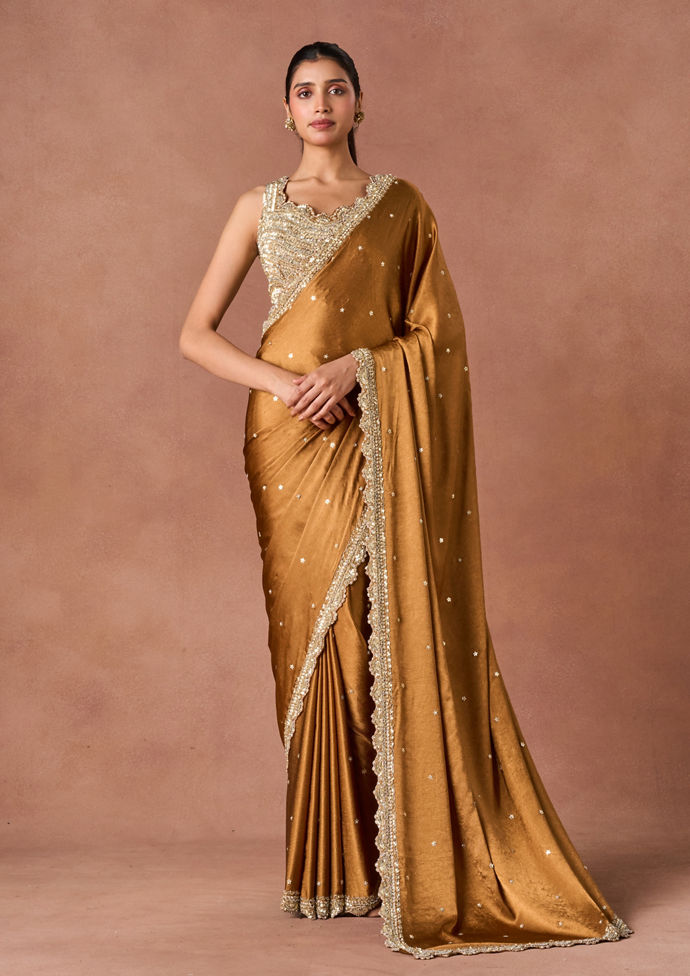
Yellow Chinon Saree with Pearl Embellishment
C$ 1,455
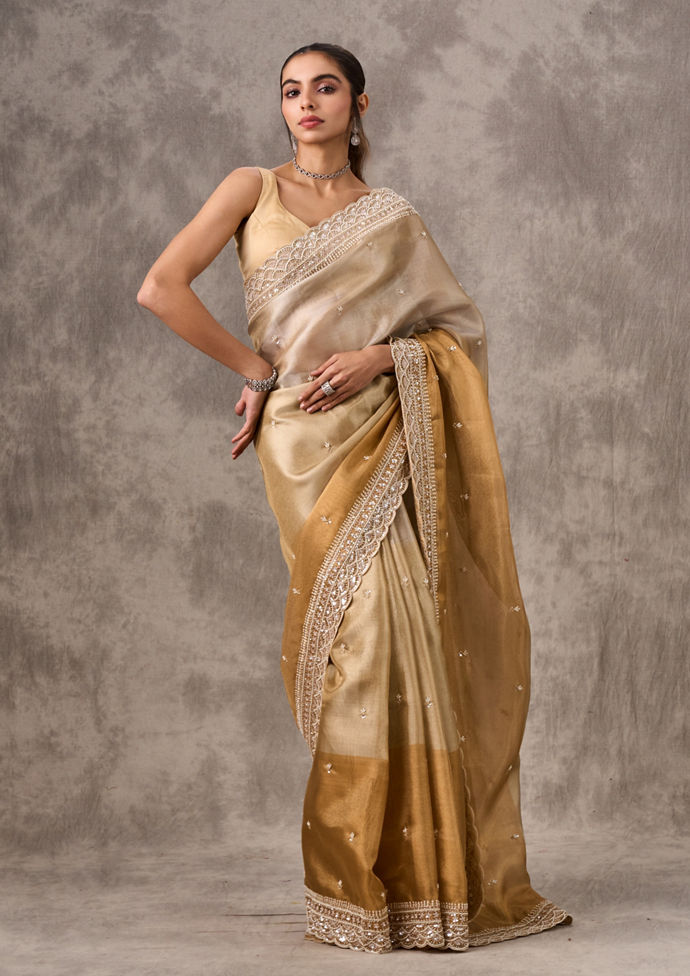
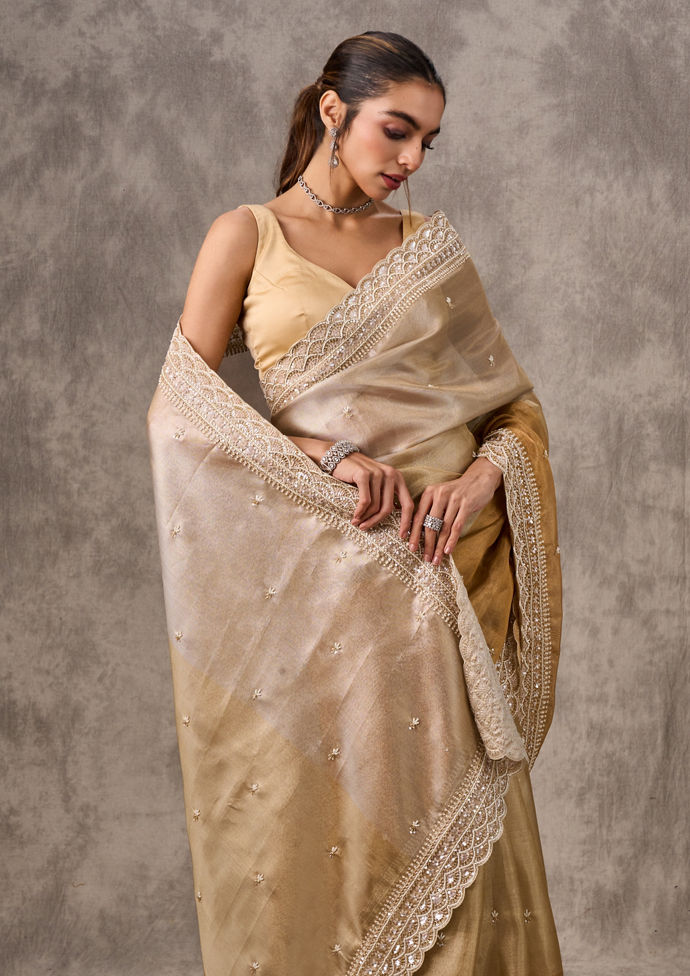
Gold Ombre Organza Pearl & Zari Embroidered Saree
C$ 1,275
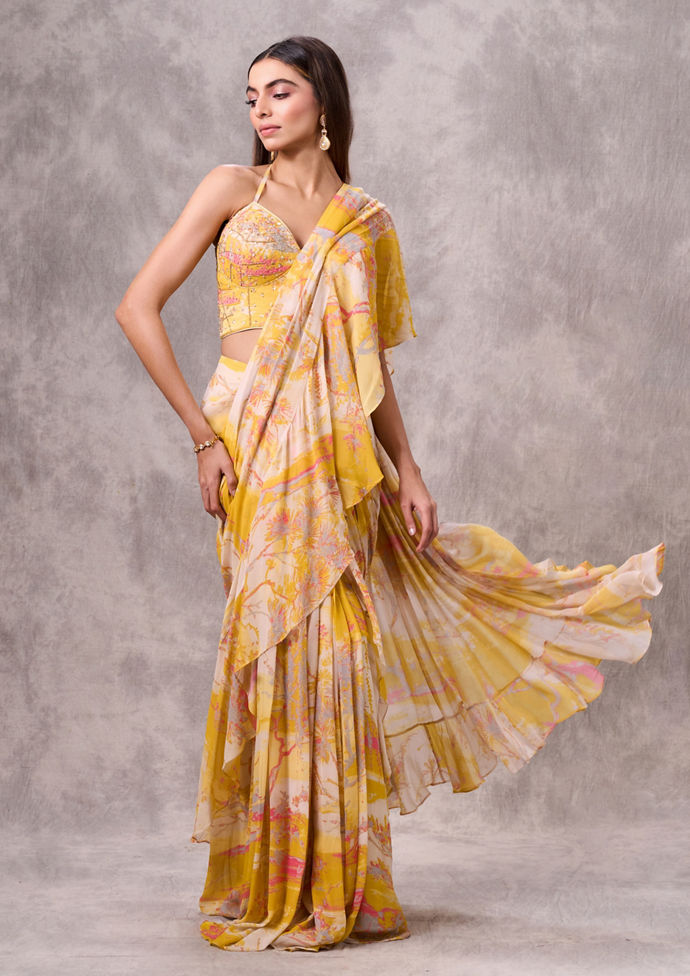
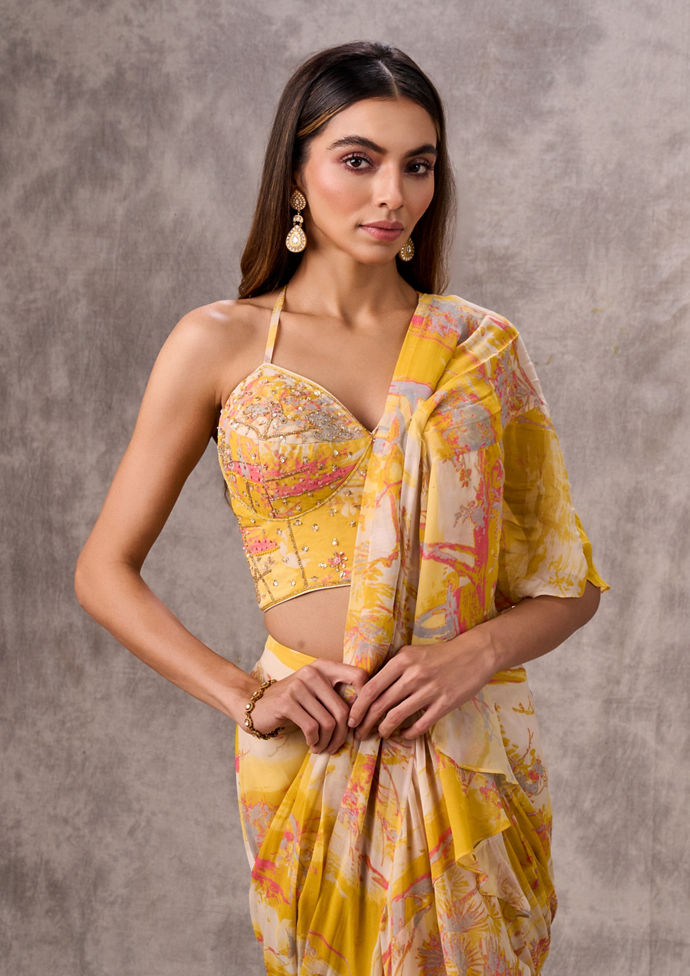
Yellow & Pink Georgette Floral Printed Ruffle Corset Draped Saree
C$ 980
Mustard & Cream Ombre Georgette Mirror Work Draped Saree
C$ 1,165





Login to access Twamev Member Exclusive Features like Video Commerce
Enter the email address associated with your Manyavar account
We’ll ask for this password whenever you sign in
_02-08-2024-10-35:345x488?&dpr=on,2)
_02-08-2024-10-35:345x488?&dpr=on,2)