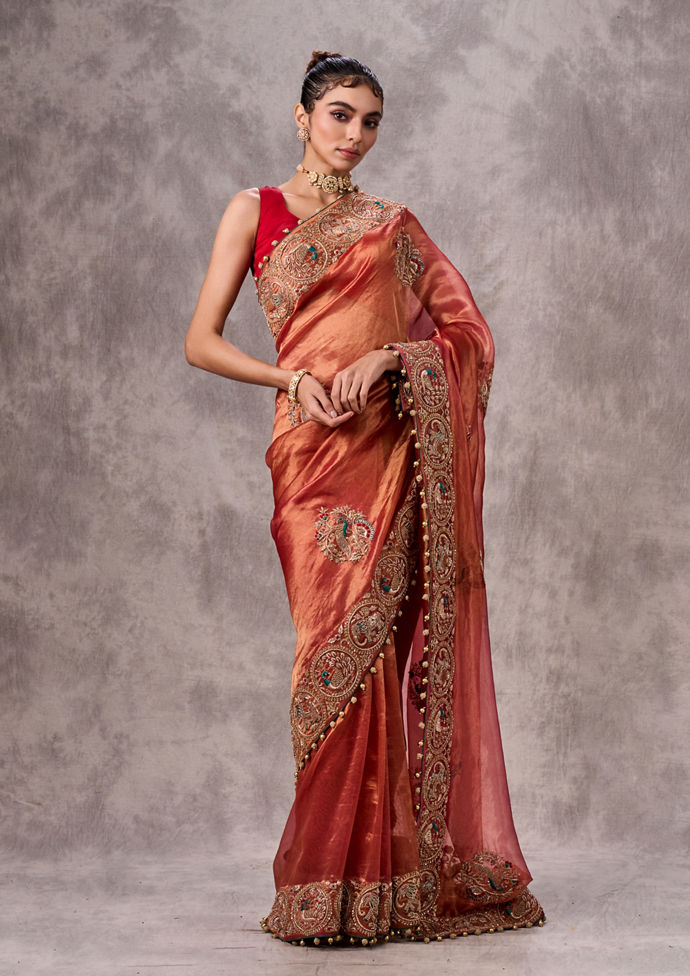
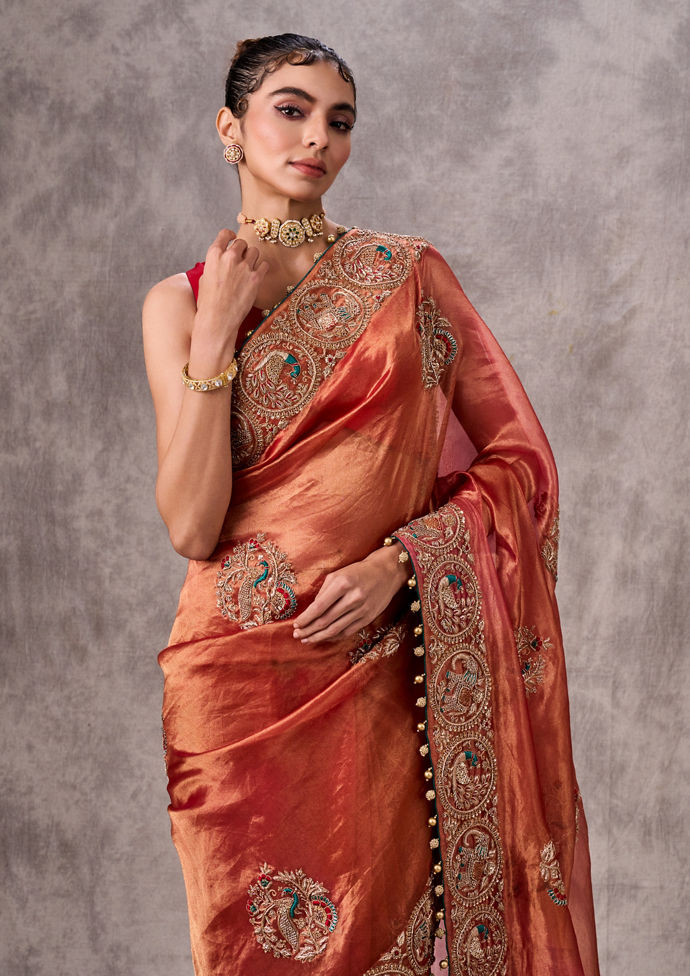
Organza silk sarees
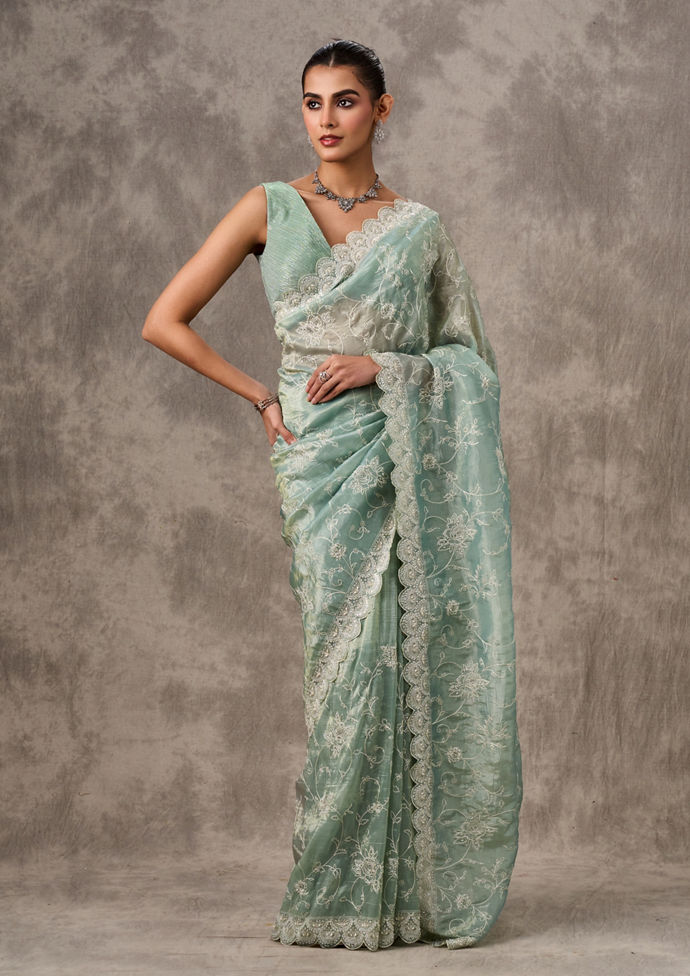
An organza silk saree combines two distinct qualities: the crisp structure of organza with the depth and weight of silk. The result is a garment that holds its drape perfectly while catching light across the fabric. This pairing works for weddings, festivals, and formal events where you want your saree to feel as substantial as it looks.
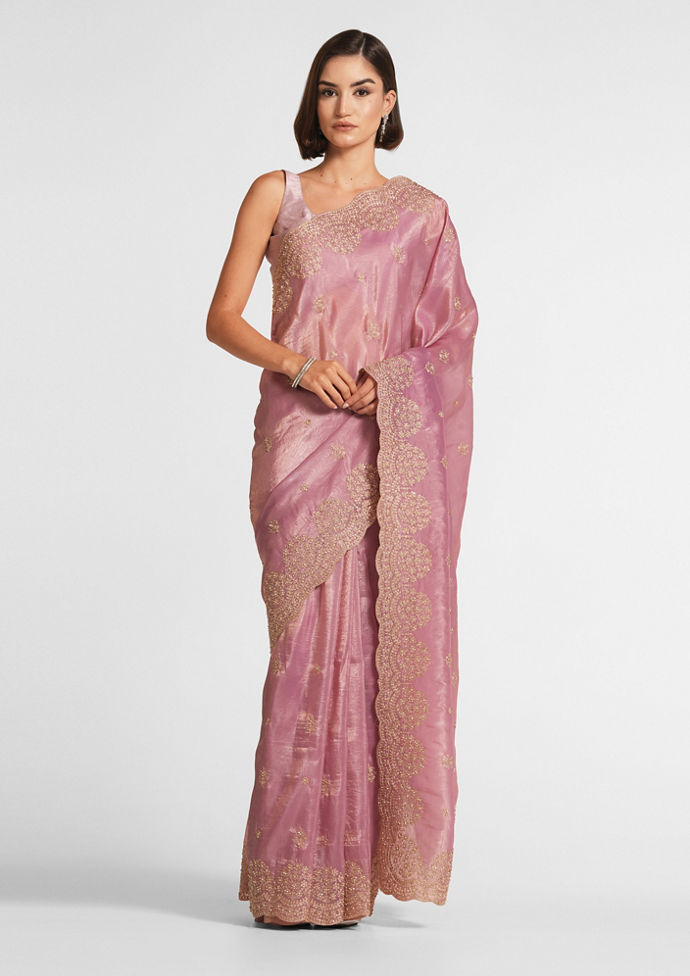
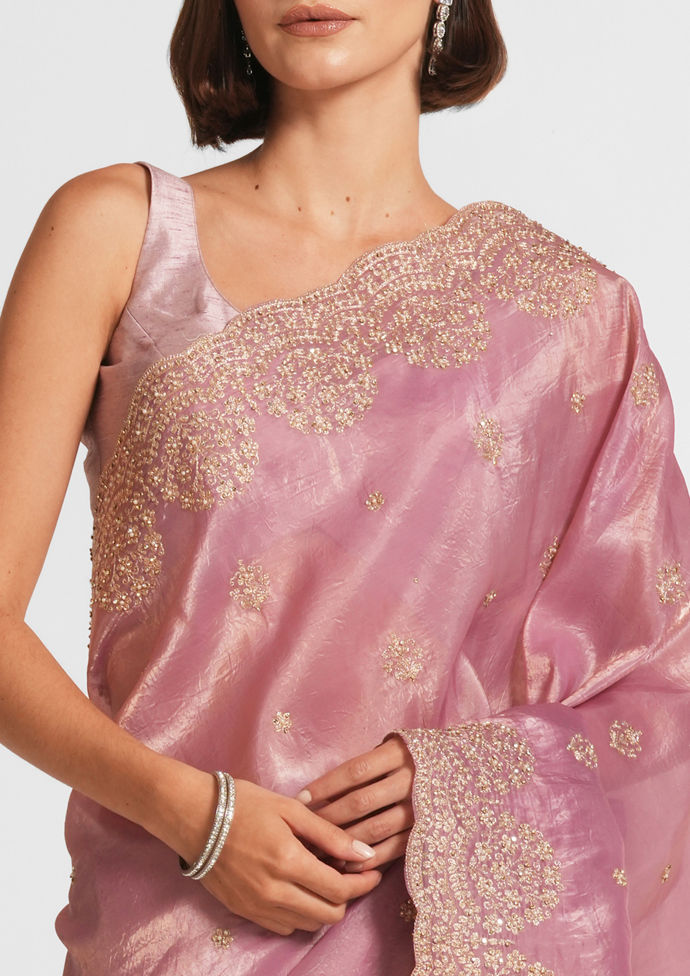
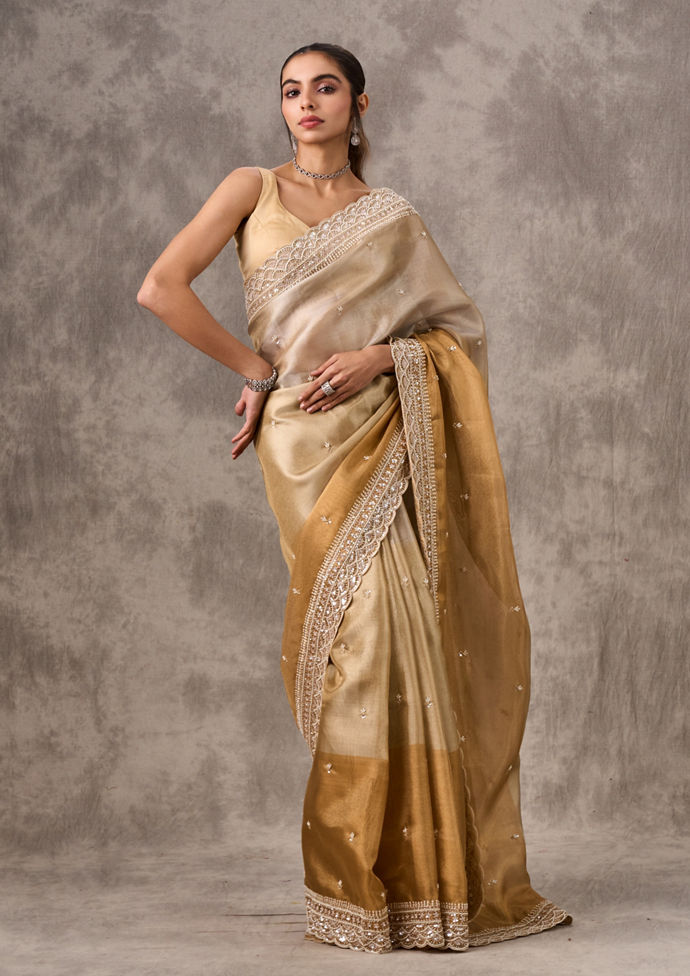
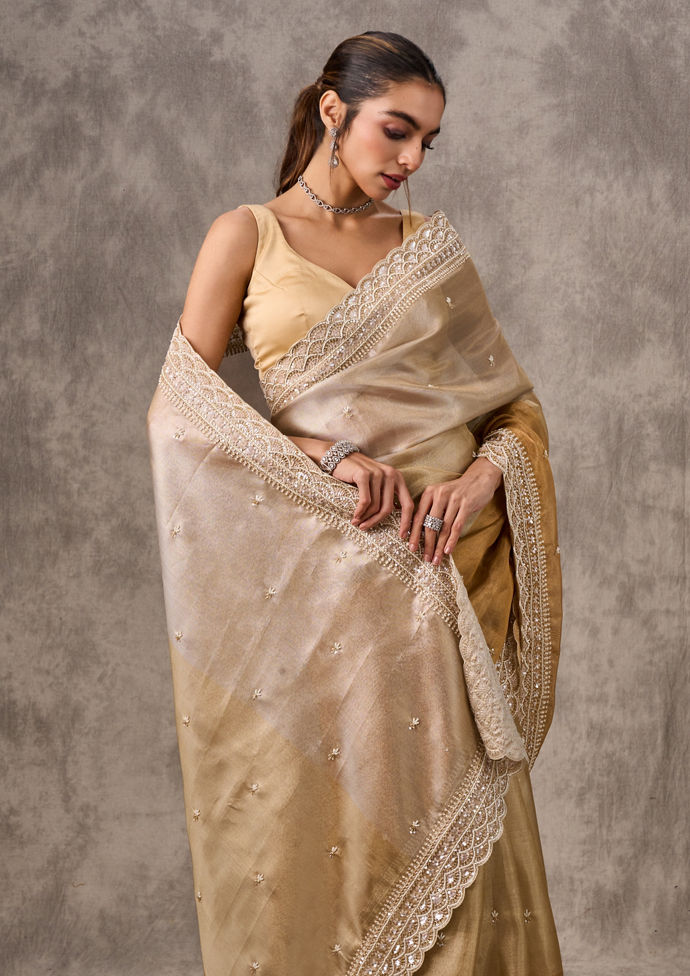
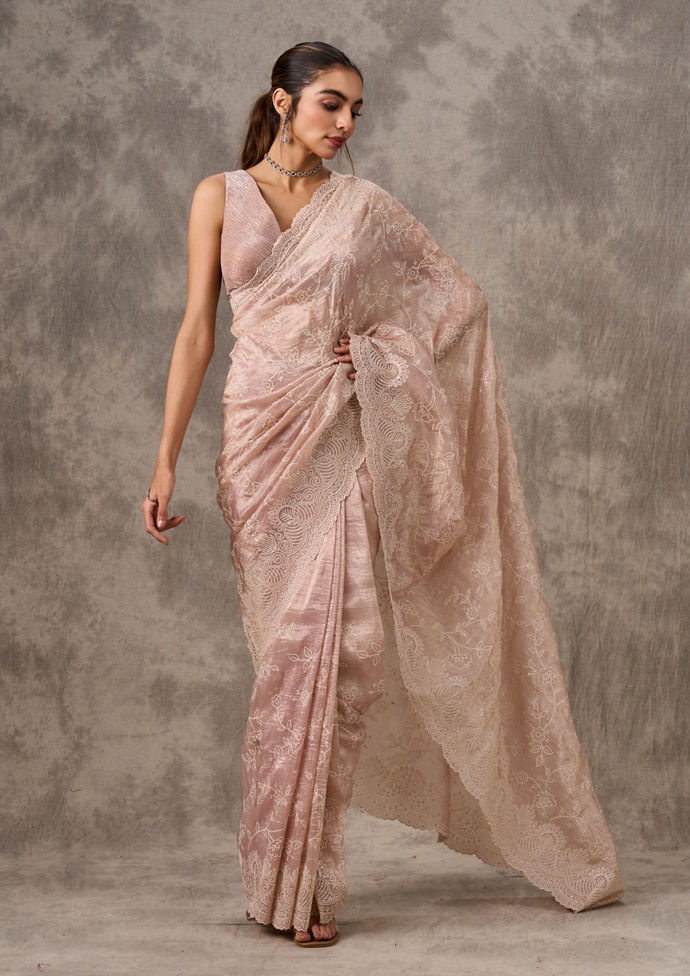
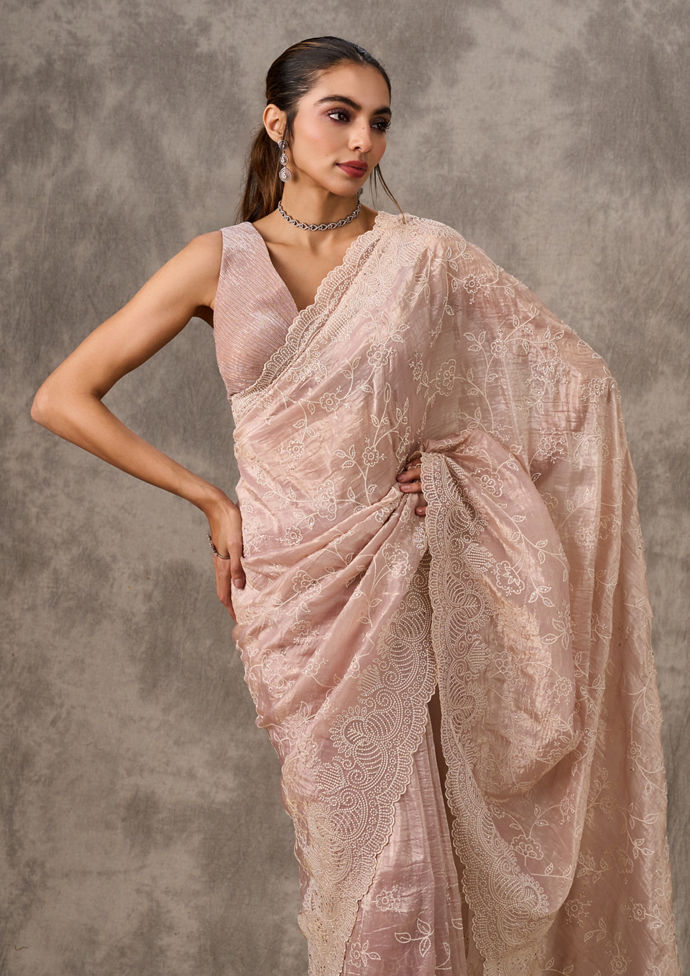
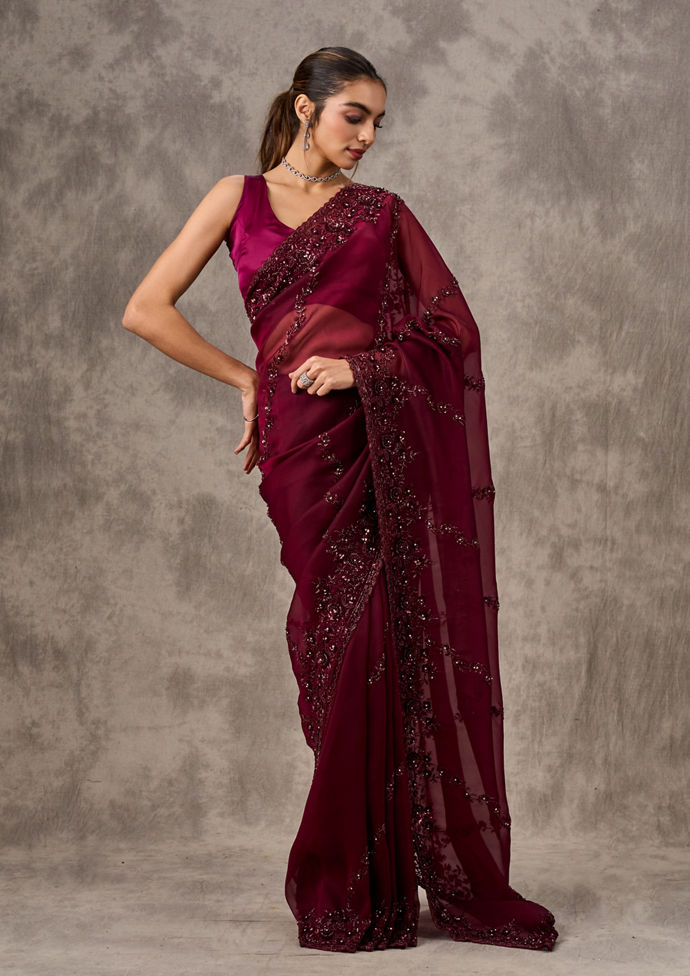
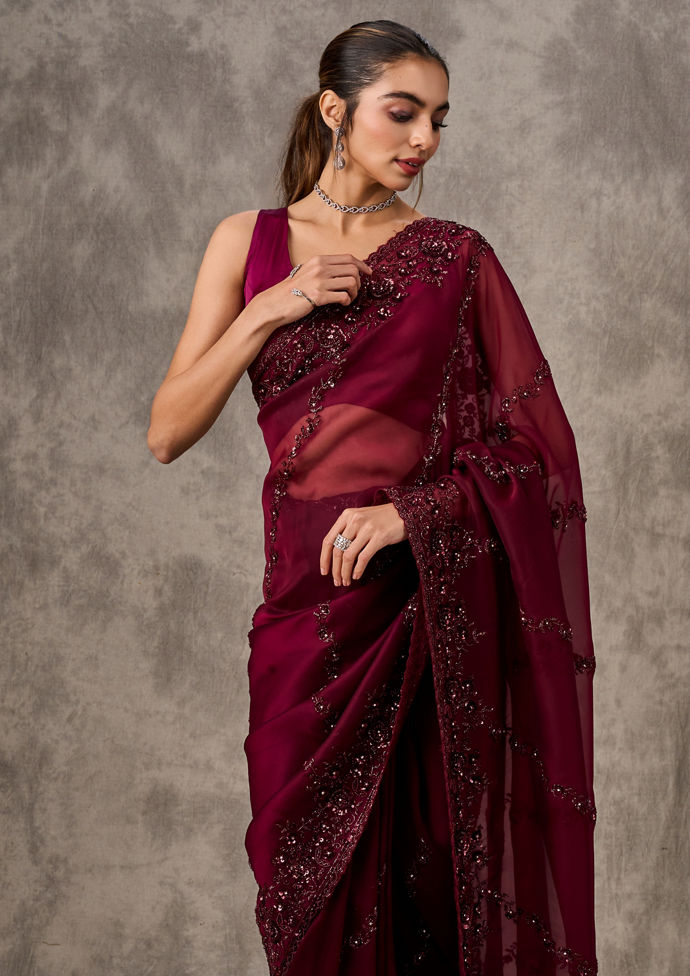
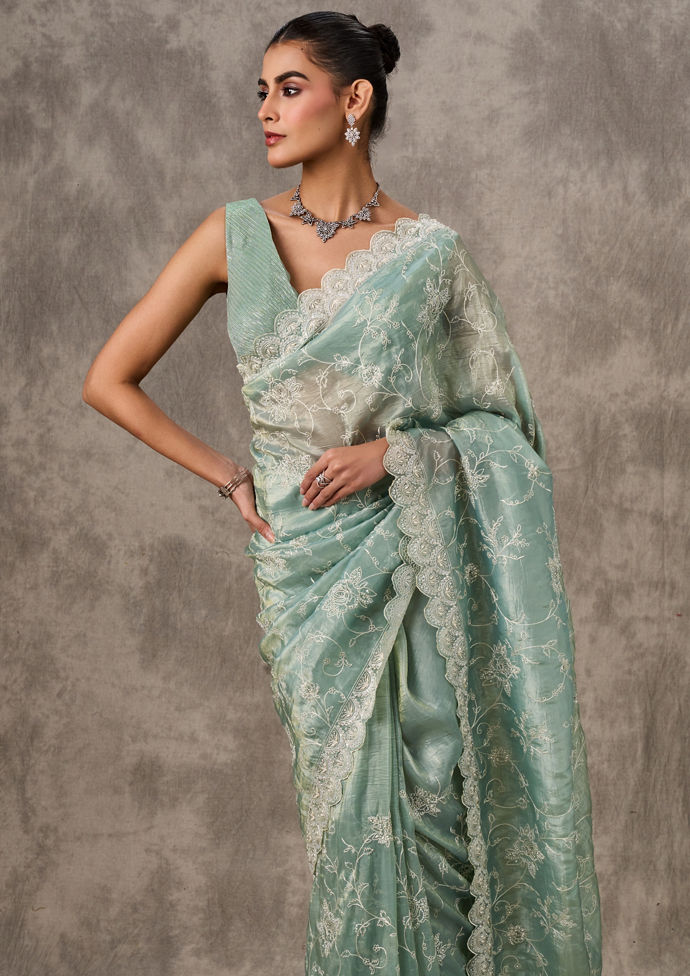
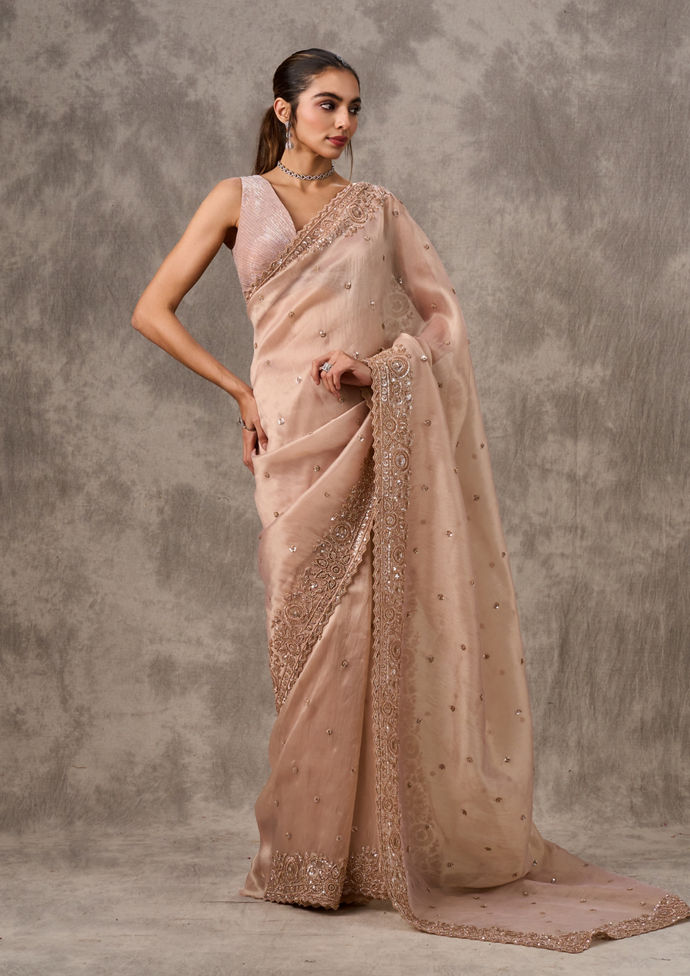
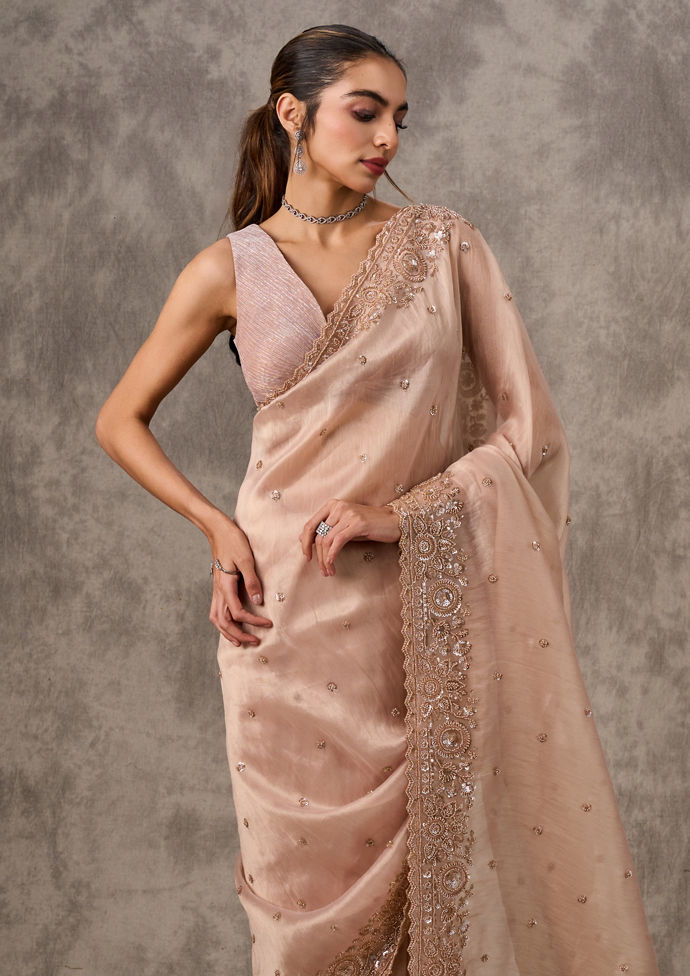
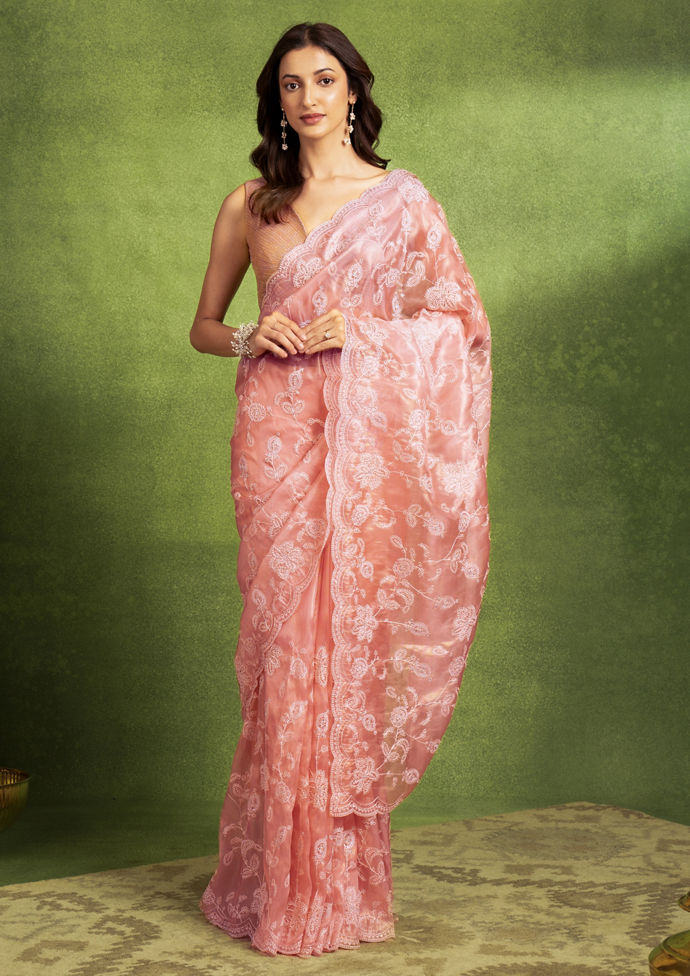
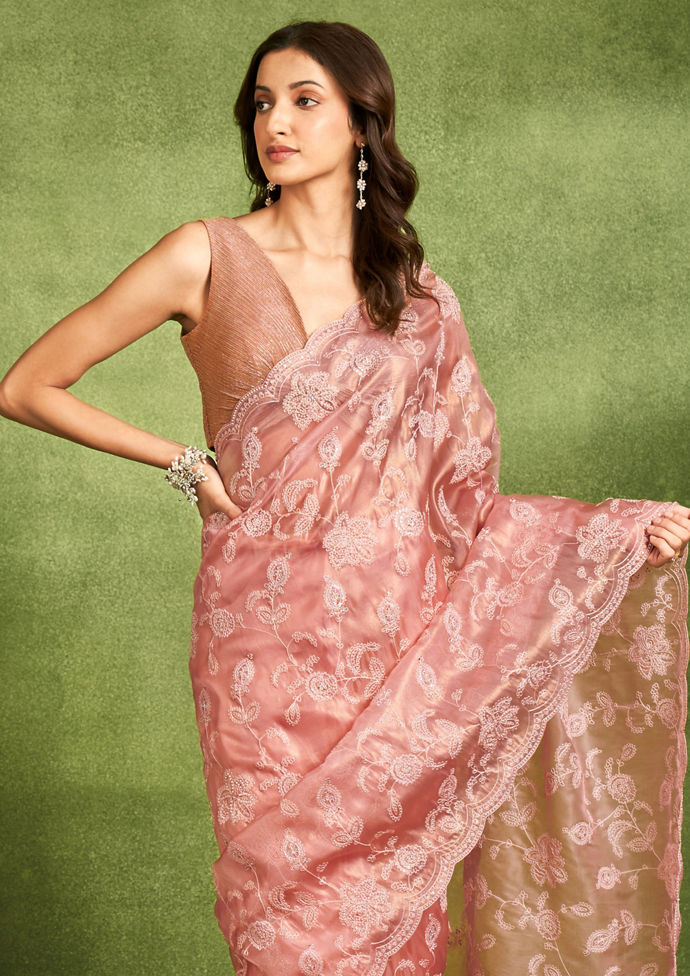
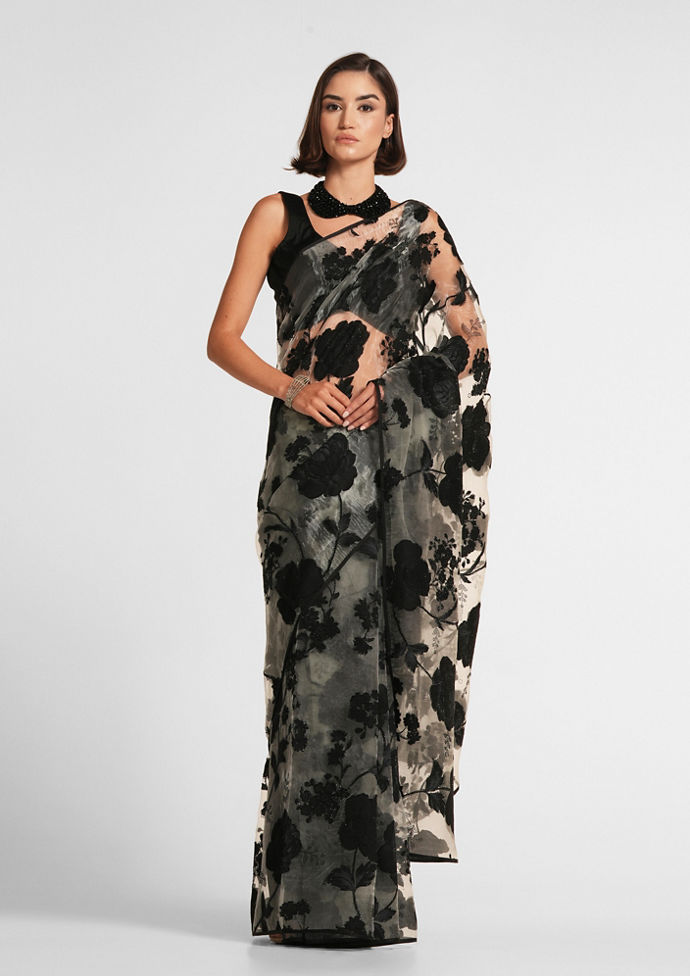
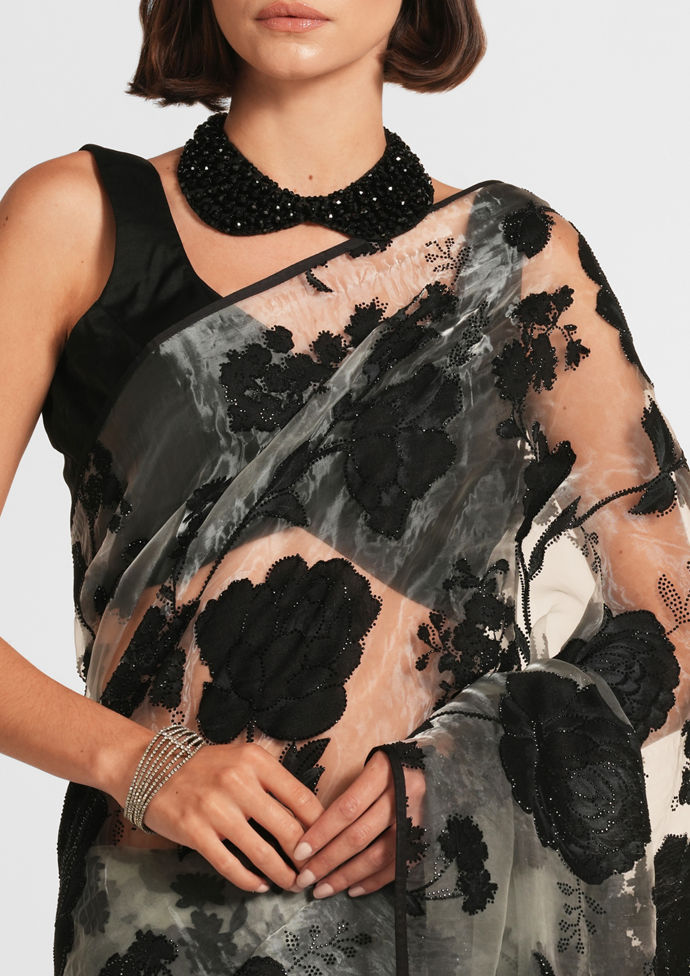
Our organza silk sarees use traditional embellishment techniques, zari work, thread embroidery, sequins, and velvet appliqué, alongside contemporary design. You'll find hand-embroidered florals, tonal jaal patterns, and bold ombre effects throughout the collection, each piece balancing heritage craftsmanship with modern sensibility.
This guide covers what makes organza silk distinct from other silk blends, how to spot quality embellishment, and which styles match your occasion and skin tone. You'll also find practical information on sizing and care, plus answers to the questions most buyers ask before purchasing.
What makes organza silk sarees a luxury choice for Indian celebrations?
Why organza silk stands out among occasion wear fabrics?
Organza silk sarees hold a distinct place in occasion dressing. The fabric combines organza's crisp structure with silk's warmth and depth, creating something that looks and feels luxurious. It drapes well enough to hold its shape, yet has enough luminosity to stand out at weddings, festivals, and formal events. Other fabric blends rarely achieve this balance of visual presence and tactile quality.
The drape, sheen, and elegance that define this category
An organza silk saree's main strength is how it moves. The fabric drapes gracefully while keeping a subtle, refined sheen that reflects light across its surface. It's lighter than heavy silks but more structured than delicate ones, present without feeling stiff. This makes it work well for occasions where you want your garment to feel as impressive as it looks, whether at a wedding ceremony or formal celebration.
Who chooses organza silk sarees and when
Women typically buy organza silk sarees for their most important occasions: weddings, receptions, festivals, and formal family functions. These buyers value high-quality fabrics and detailed embellishment, zari work, thread embroidery, sequins, velvet appliqué, combined with thoughtful design. They understand that occasion wear should match the significance of the moment.
Browse our complete organza silk saree collection
Featured organza silk saree styles with key specifications
Our organza silk saree selection spans traditional weaves, contemporary designs, and occasion-specific styles. Each piece combines lightweight organza fabric with silk blends, offering drape and structure. Specifications include standard saree length (5.5 meters), blouse piece inclusion, and finish details such as zari borders, embroidery patterns, and selvage work. Color palettes range from jewel tones and pastels to metallics and earth tones, with options for both everyday wear and formal events.
Understanding product features and occasion fit
Organza saree silk construction delivers a crisp yet fluid texture, making these pieces suitable for weddings, festivals, formal dinners, and professional settings. The fabric's natural sheen enhances formal appearance without excessive weight, ideal for warm climates and extended wear. Party wear organza sarees often feature enhanced embellishment, while everyday styles prioritize comfort and ease of care. Fit depends on blouse tailoring and personal preference for pleating style; our collection accommodates standard and custom sizing requests.
Luxury and versatility across our range
Our organza silk sarees balance luxury craftsmanship with practical versatility. Hand-finished borders, traditional weaving techniques, and quality silk blends position these pieces as investment garments suitable for multiple occasions and seasons. Versatility extends from classic solid-color organza fabric sarees paired with minimal jewelry to heavily embellished party wear versions. The range supports both heritage styling and modern interpretations, allowing customers to integrate sarees into varied wardrobes and cultural celebrations.
How to choose the right organza silk saree for your body type and occasion?
Assessing fabric weight and drape for your frame
Organza silk sarees vary in weight, which affects how they fall on your body. Lighter organza drapes softly and suits petite frames or warm climates, while heavier organza holds structure and works well for taller builds. Test the fabric by holding it against your body in natural light, it should move without clinging or standing away stiffly. Heavier organza saree silk also tends to resist wrinkles better during wear, making it practical for all-day events. Broader shoulders pair well with structured organza; slighter builds benefit from lighter-weight organza that won't overwhelm.
Matching embellishment style to your event type
The placement and density of embellishments should match your event's formality and duration. Organza saree party wear often features heavy zari, sequins, or stone work concentrated on the pallu and border, which suits evening celebrations and weddings. For daytime functions or professional settings, choose organza silk sarees with minimal embellishment or delicate threadwork that doesn't add bulk. Consider how long you'll wear the saree: heavily embellished pieces can feel heavy after several hours, while lightly adorned organza allows more comfort during extended wear. Dense beadwork on the pallu may restrict draping and movement; balance visual impact with practical wearability.
Finding the right fit sizing and regional tailoring considerations
Organza silk sarees follow standard lengths, but regional tailoring practices vary. South Indian sarees typically measure 5.5 meters with a wider pallu, while North Indian cuts are often 5.2 to 5.5 meters with narrower proportions. Your height and preferred draping style determine the ideal length; taller frames may require custom extension, while shorter wearers might need the saree shortened to avoid bunching. Get the blouse stitched to your exact measurements, as organza's crisp texture shows fitting imperfections more visibly than softer fabrics. If ordering online, confirm the saree's total length and regional origin, and budget for professional tailoring to fit your body type.
Quality markers to verify authenticity and durability
Authentic organza silk sarees feel smooth and slightly stiff when held, with a subtle sheen visible in natural light. Check the selvage edge for consistent weaving and look for any loose threads or uneven dye work, which signal lower quality. Run your fingers along the fabric, genuine organza has a uniform texture without bumps or rough patches. Inspect seams and the pallu attachment closely; machine-stitched seams should be straight and evenly spaced, while hand-embellished details should show no puckering or loose knots. Request fiber content confirmation if buying from a retailer, as organza fabric saree quality depends on the silk percentage and thread count. Durability improves with higher silk content and tighter weaving, so organza sarees from established weavers typically last longer and resist pilling better than mass-produced alternatives.
Shop by embellishment style, color palette, and event type
Embellishment options embroidered, printed, and plain organza silk
Our organza fabric saree collection offers three embellishment approaches. Hand-embroidered pieces feature zardozi, resham threadwork, and sequin detailing that catch light and add texture. Printed organza silk sarees display geometric or floral patterns with a lighter visual weight, suited for daytime celebrations. Plain organza provides a clean, luminous base that works for both formal occasions and layered styling.
Color palettes for weddings, festive, and formal occasions
Wedding collections favor ivory, cream, and jewel tones like wine and deep green, paired with metallic embellishments. Festive occasions call for warm peaches, dusty pinks, and gold accents that feel celebratory without overwhelming. Formal events benefit from blacks, teals, and silvers that project sophistication and command presence in professional settings.
Filter by event type bridal, reception, festival, and everyday celebrations
Bridal organza silk sarees prioritize elaborate embroidery and structured drape to hold ceremonial weight. Reception pieces balance elegance with comfort for extended wear. Festival sarees emphasize color vibrancy and playful embellishments. Everyday celebration styles remain versatile, working across family gatherings and casual formal functions without requiring specialized care between events.
Care and styling essentials for organza silk sarees
Daily wear and storage best practices for organza silk
Organza silk sarees benefit from careful handling between wears. Store your saree in a cool, dry place away from direct sunlight, which can fade the fabric over time. Fold it gently along the length rather than bunching it up, and consider using acid-free tissue paper to prevent creasing. If you wear your saree regularly, air it out for a few hours after each use before storing it away.
Washing, drying, and ironing without damage
Hand washing is the safest approach for organza silk. Use lukewarm water with a mild detergent designed for delicate fabrics, and avoid rubbing or wringing the material. Rinse thoroughly until the water runs clear, then gently squeeze out excess water without twisting. Lay the saree flat on a clean, dry surface to dry naturally, away from heat sources and direct sunlight. Once dry, iron on low heat with a pressing cloth between the iron and fabric to protect the delicate weave.
Styling tips for maximum impact and comfort
The sheer, crisp quality of organza silk works well with structured blouses that complement the fabric's drape. Pair it with simple jewelry to let the saree's texture take center stage, and consider the occasion when choosing your blouse color and embellishments. For comfort, ensure your petticoat fits well and provides enough support without bunching under the organza, which can create visible lines.
Frequently asked questions about organza silk saree quality, fit, and maintenance
Is organza silk delicate and prone to tearing or wrinkling?
Organza silk resists wrinkles better than softer fabrics because of its crisp structure, but you should handle it gently to avoid snagging. The stiffness actually helps the fabric keep its shape and drape without creasing during wear.
What is the return and exchange policy for organza silk sarees?
Return and exchange policies vary by retailer. Contact our customer care team at care@vedantfashions.com for help with sizing, fit concerns, or product questions before or after you buy.
How do I know if my saree is authentic organza silk?
Our organza silk sarees come in standard lengths with included blouse pieces. Check the saree's total length and regional origin before you buy, and plan for professional tailoring to fit the blouse to your exact measurements.
What sizes and blouse piece options are available?
Organza silk works well across seasons because it's lightweight and breathable. The crisp texture and subtle sheen make it ideal for warm climates and extended wear at celebrations without feeling heavy.
Explore Now: Women Lehenga For Women