Silk Sherwani
21 PRODUCTS
Filter
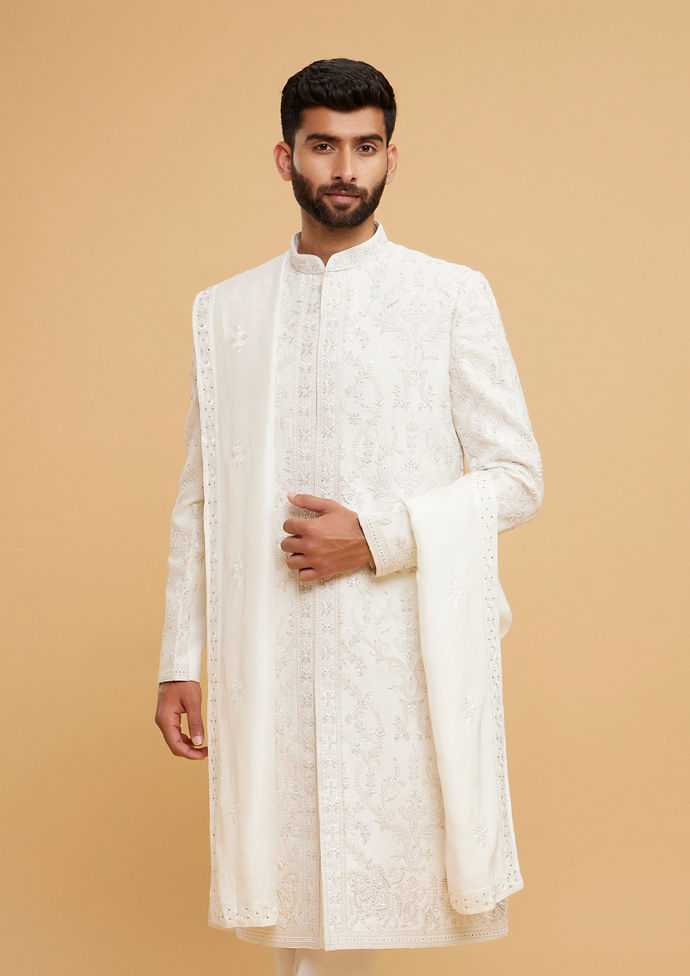
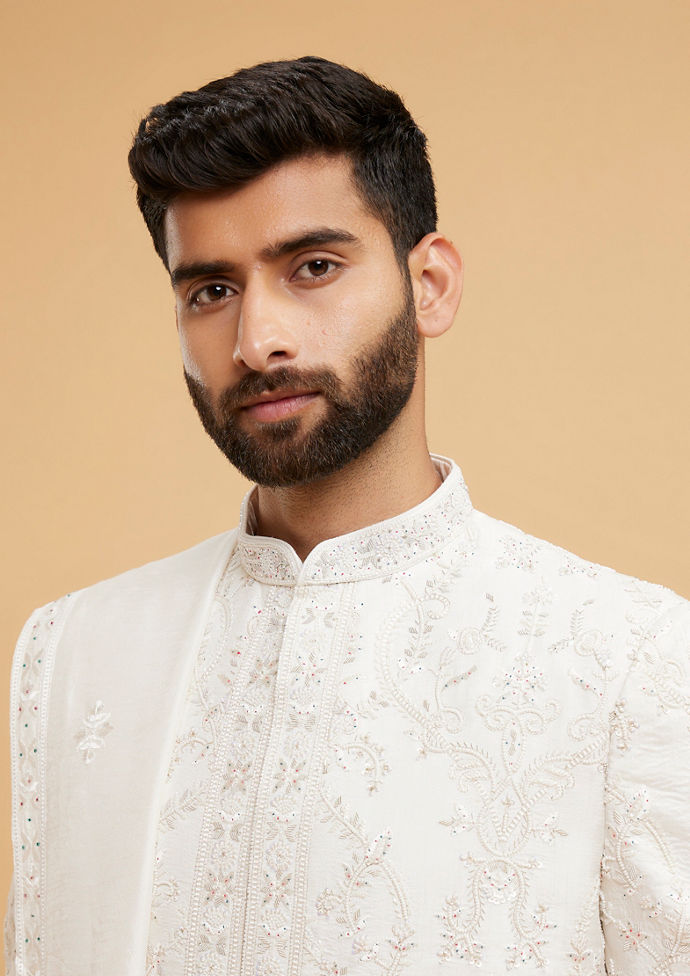
₹ 89,999
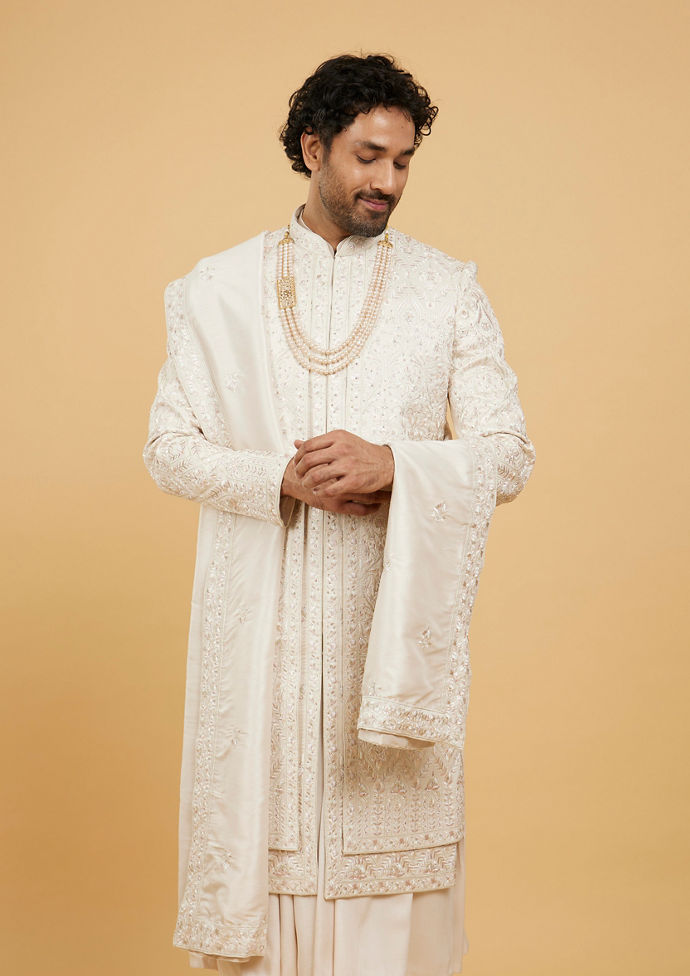
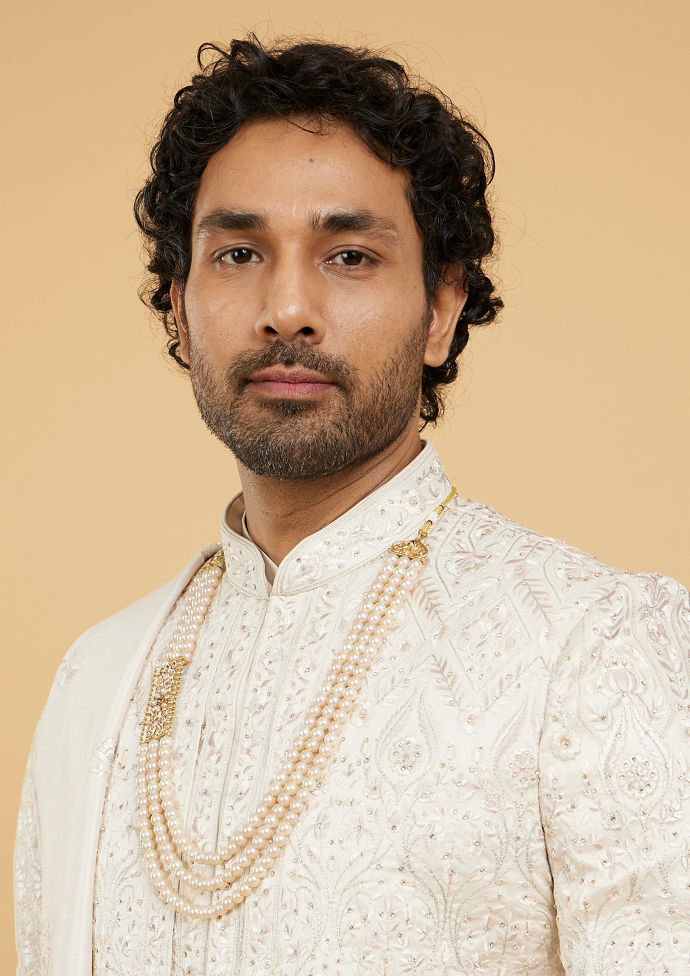
₹ 54,999

₹ 89,999
₹ 54,999
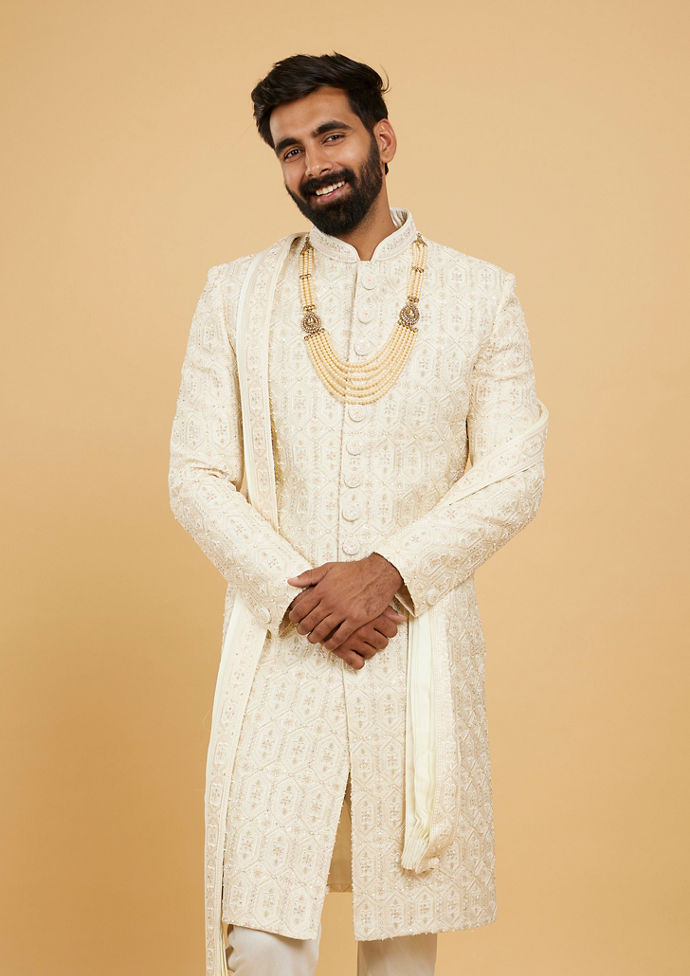
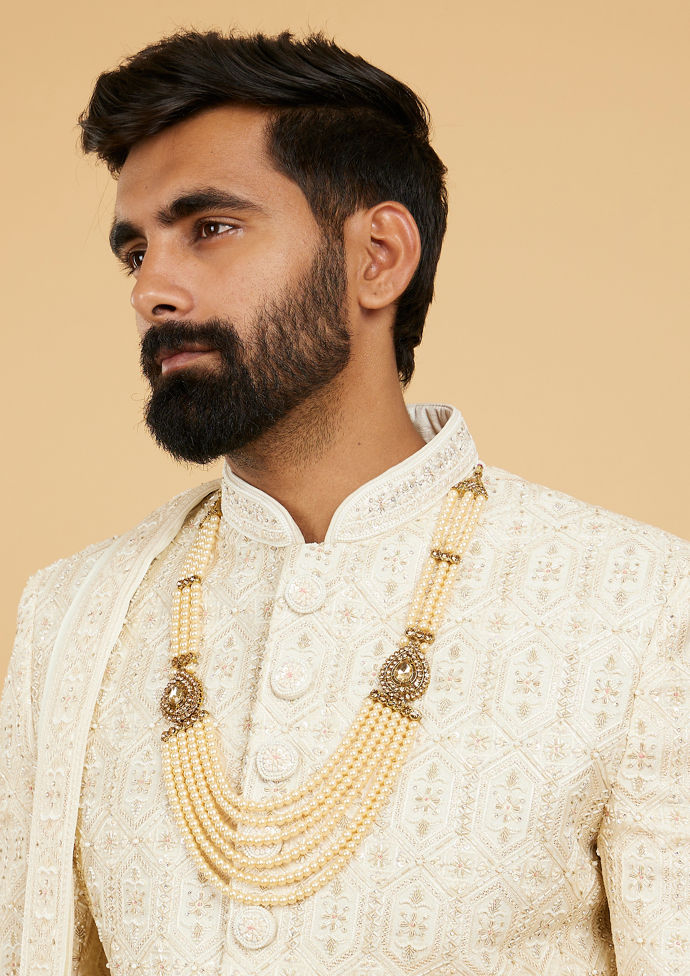
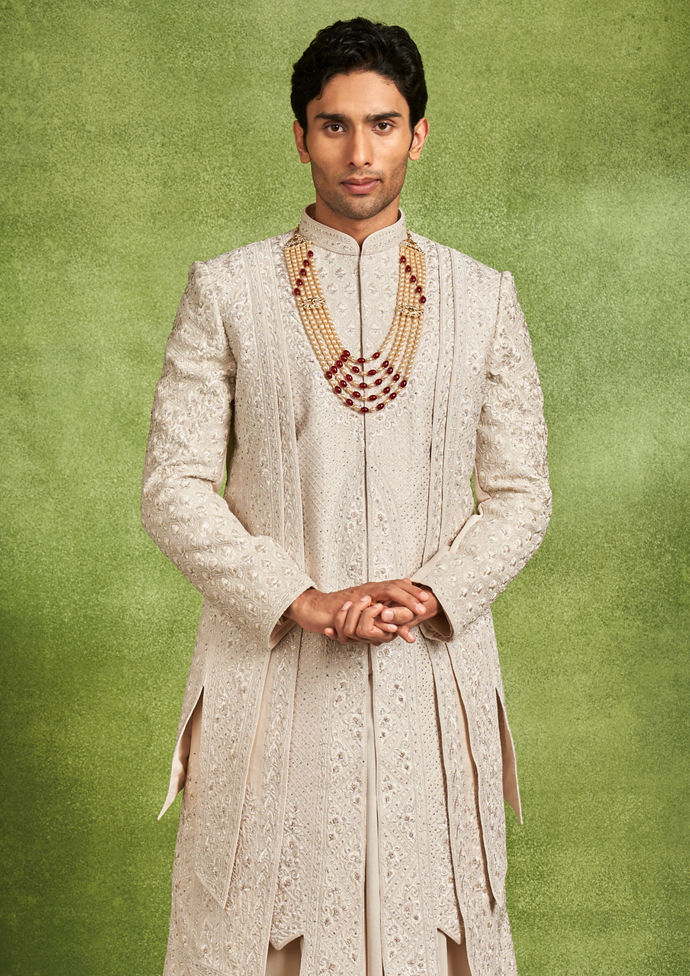
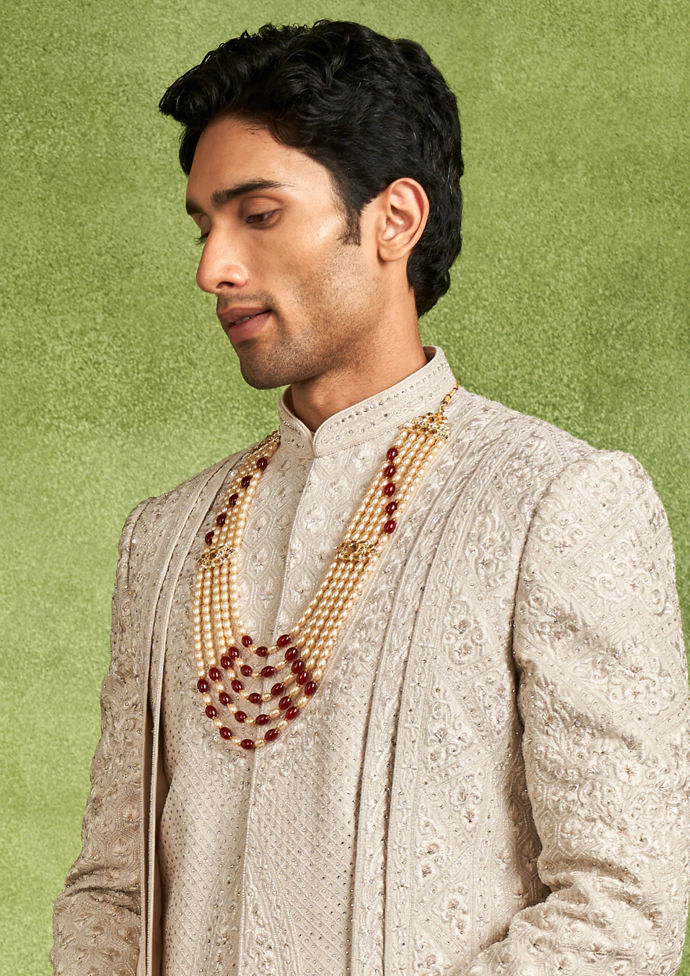
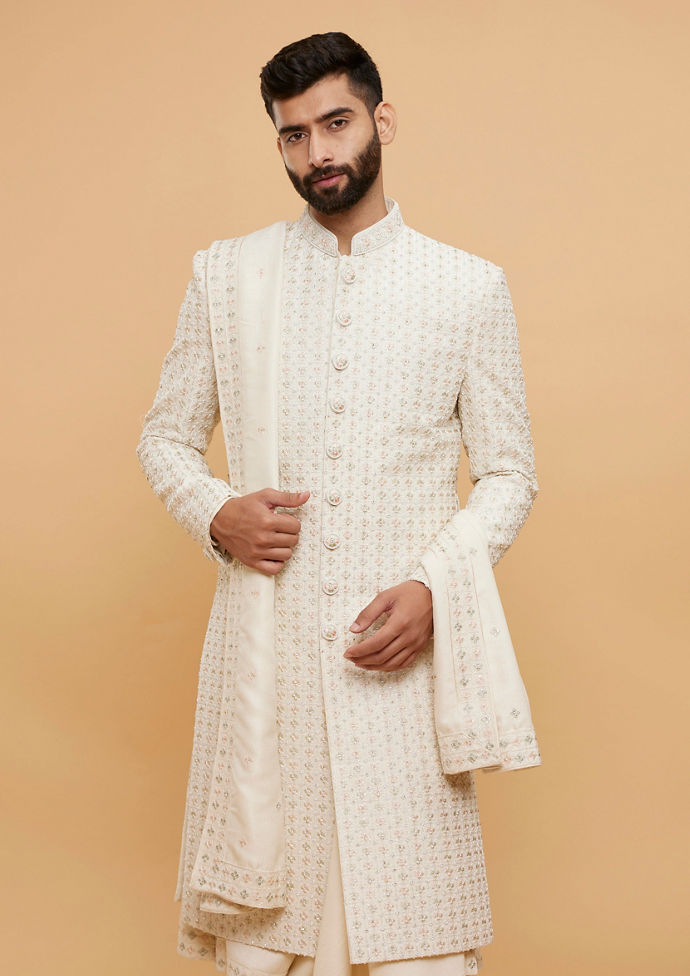
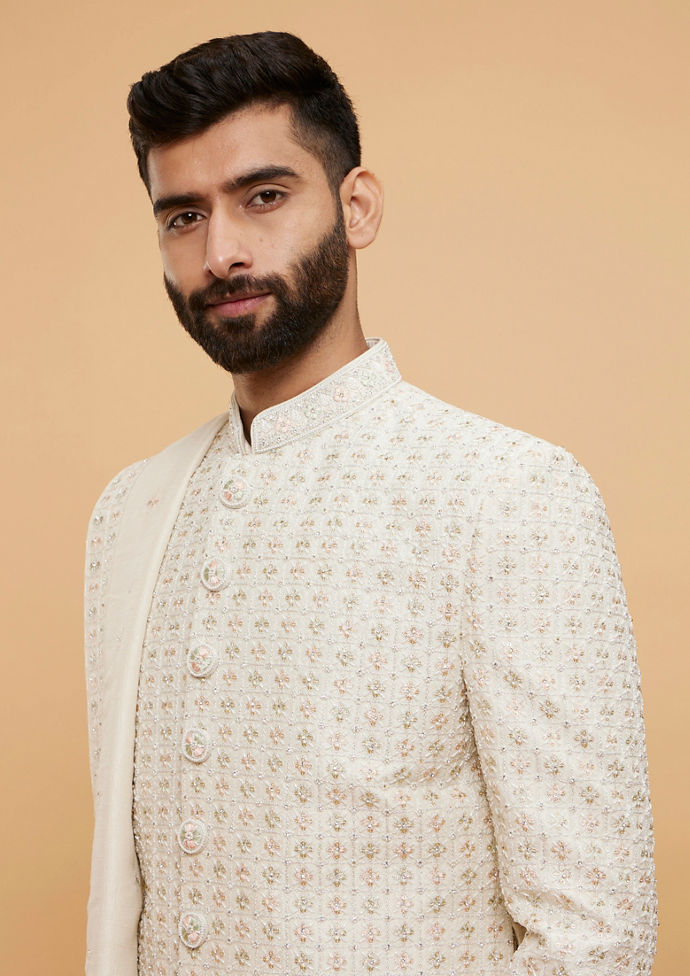
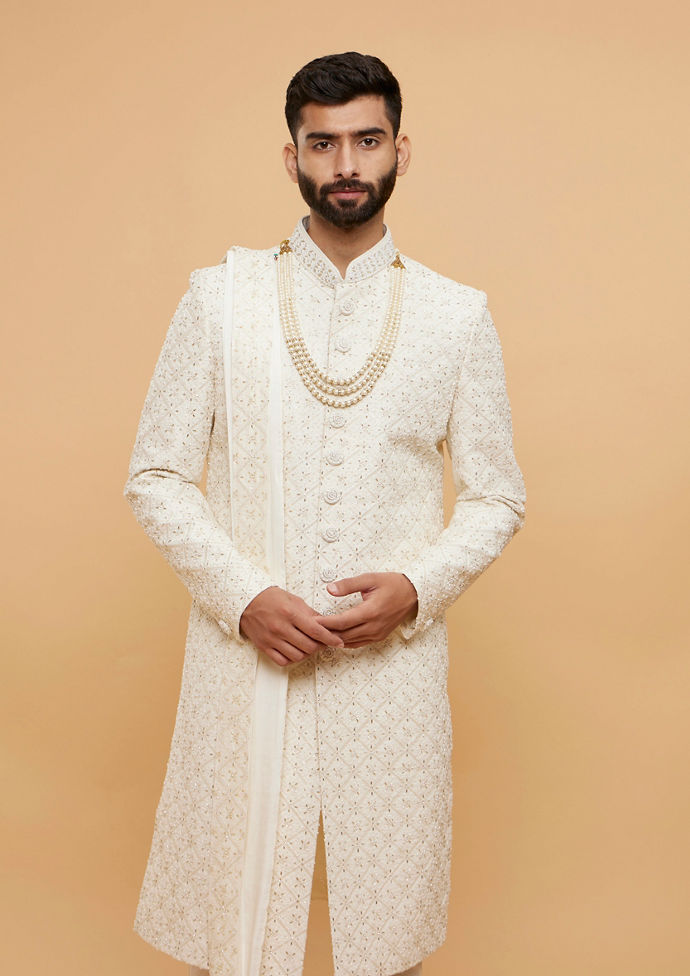
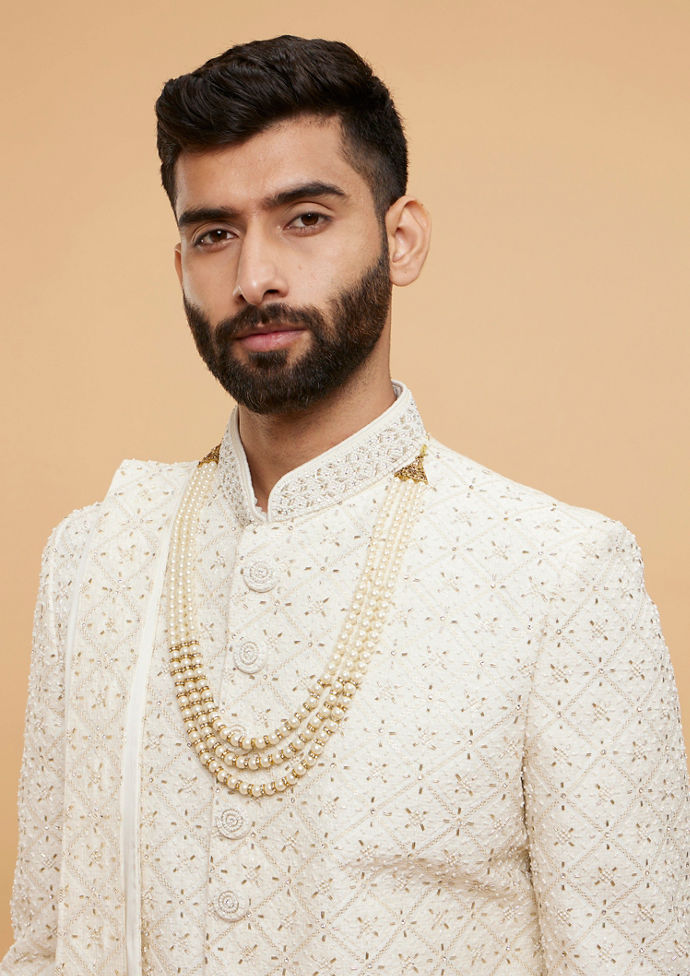
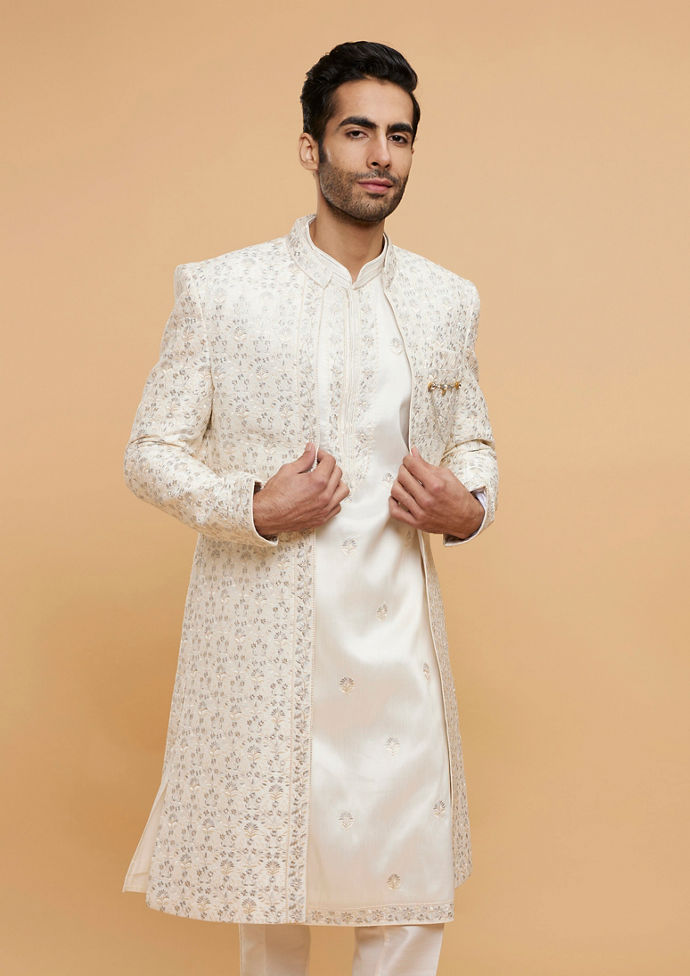
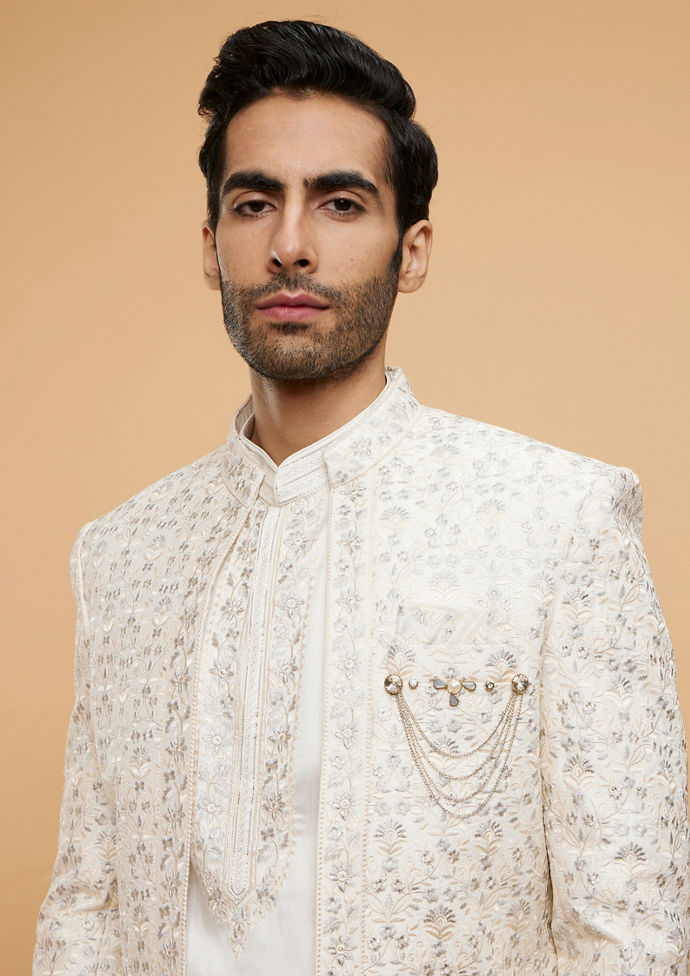
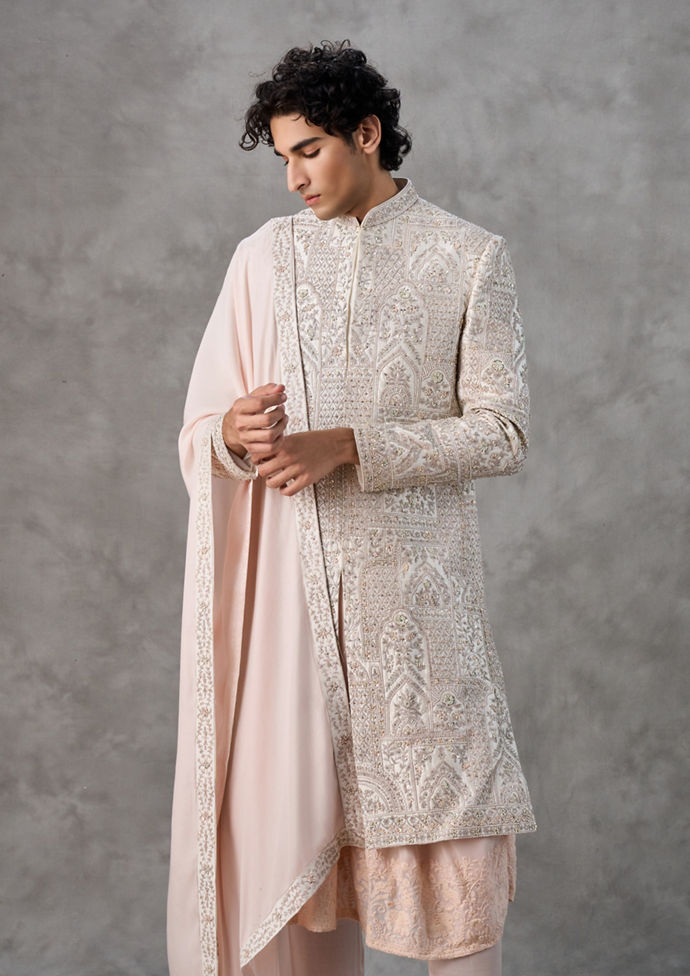
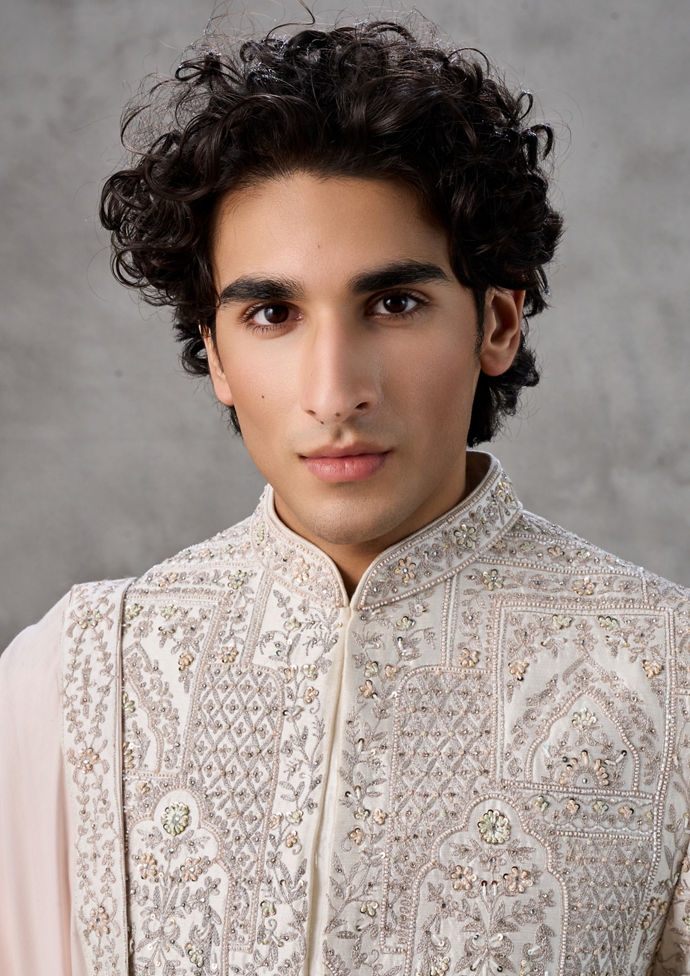
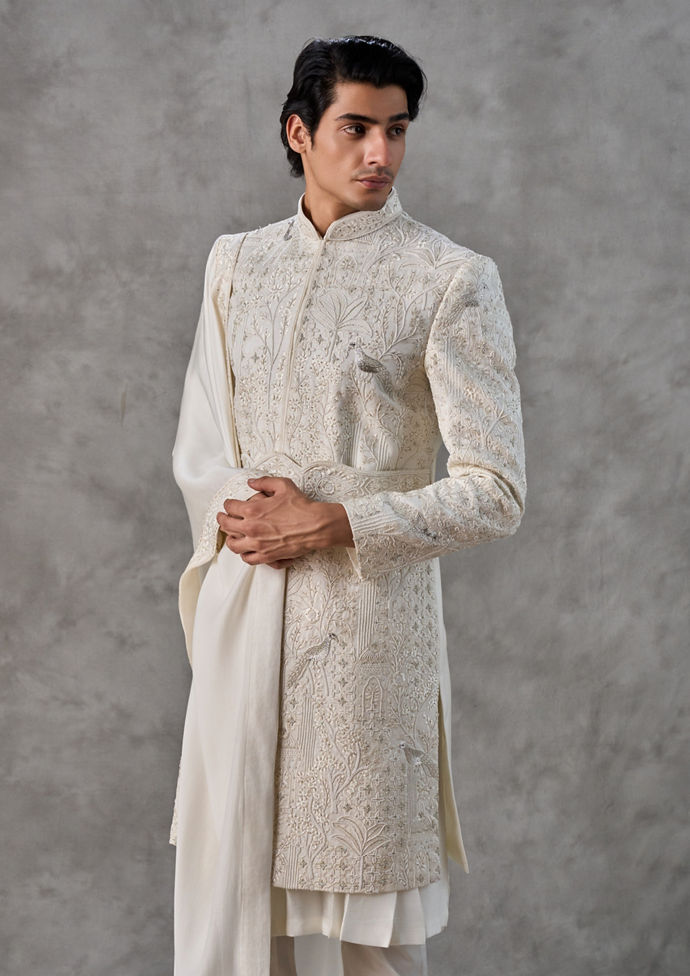
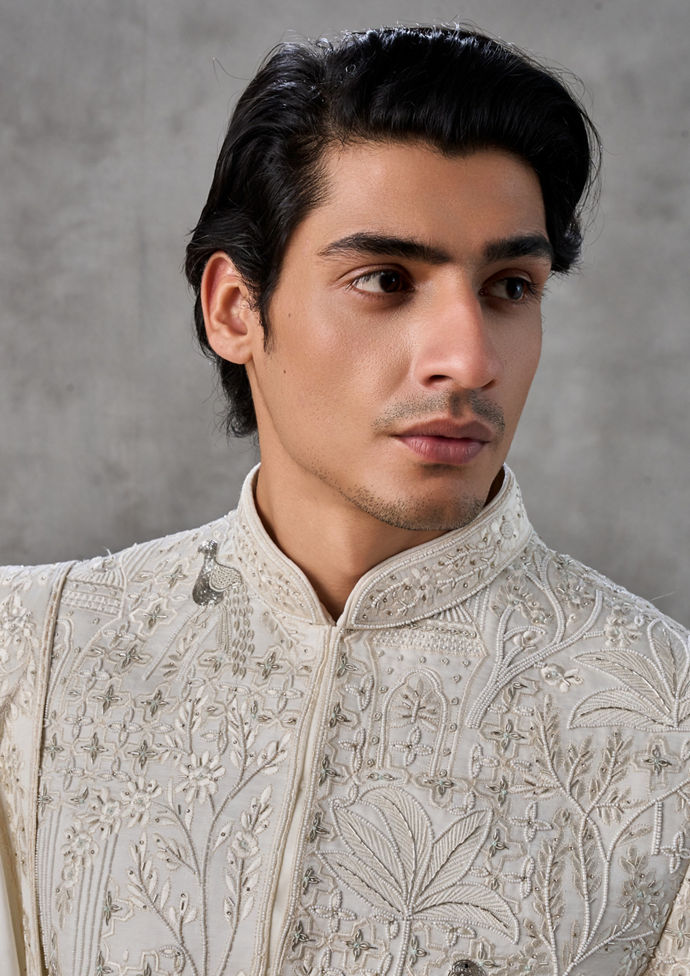
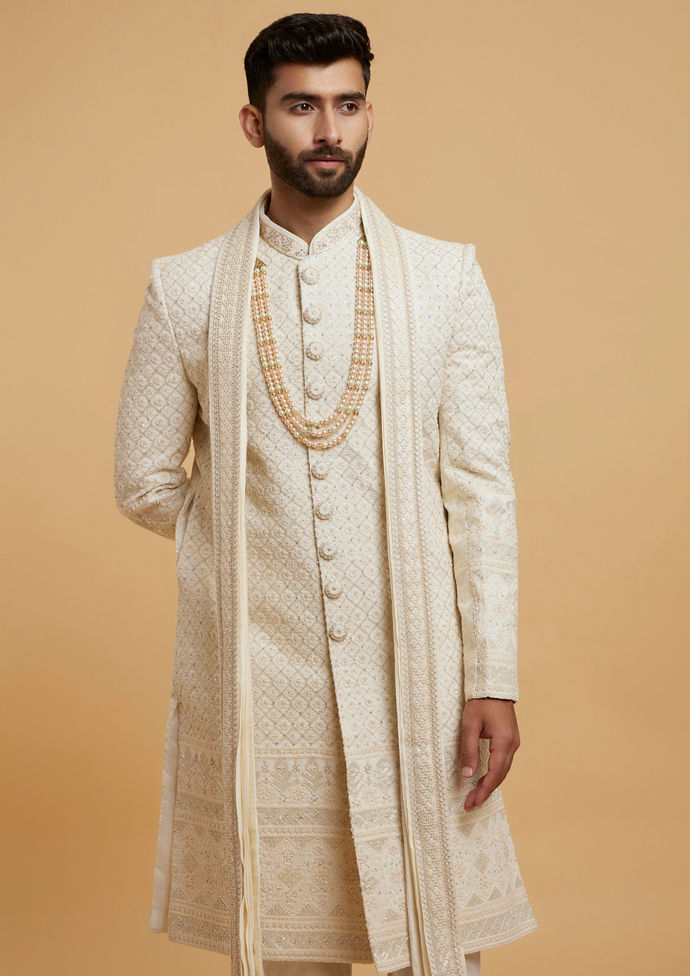
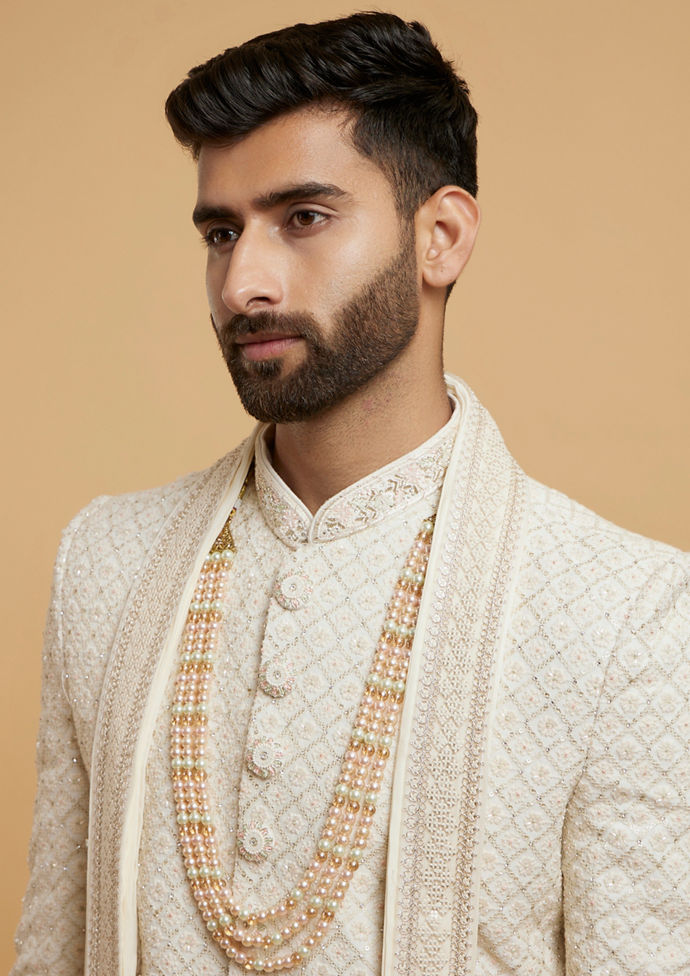
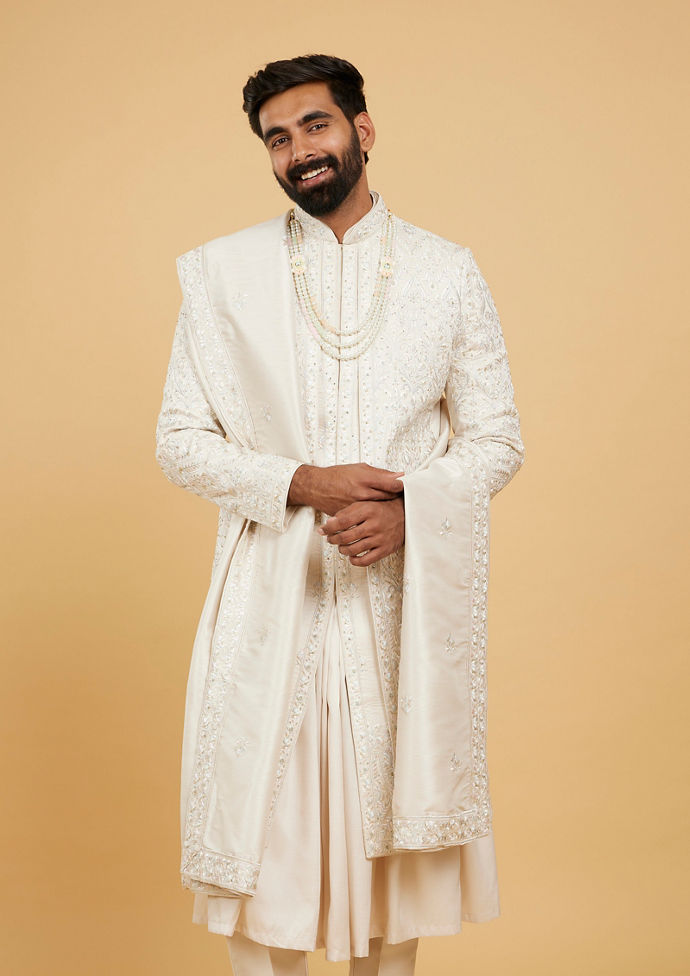
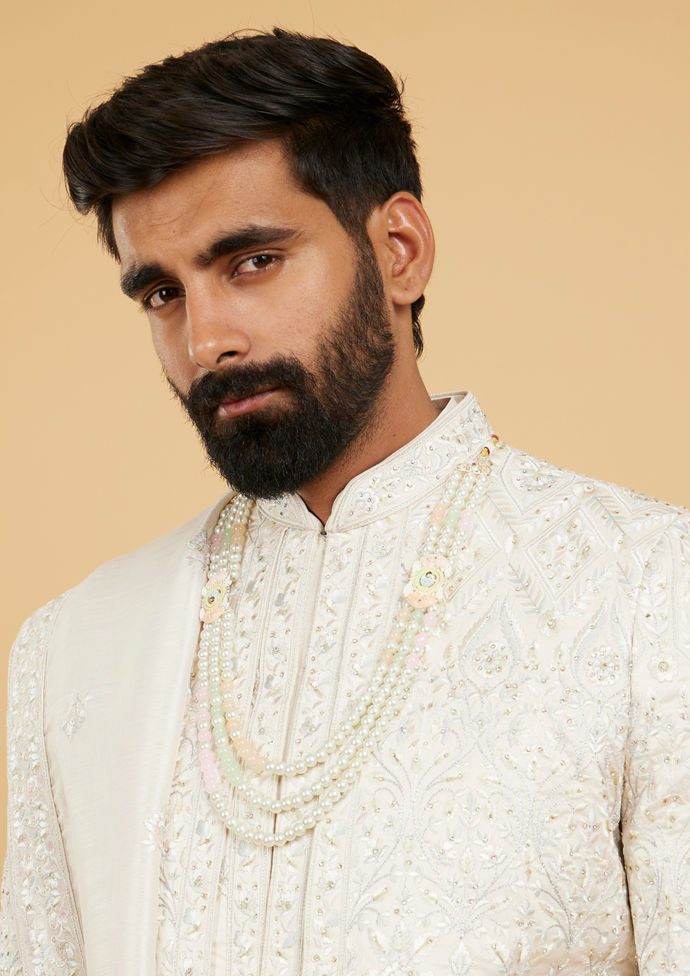
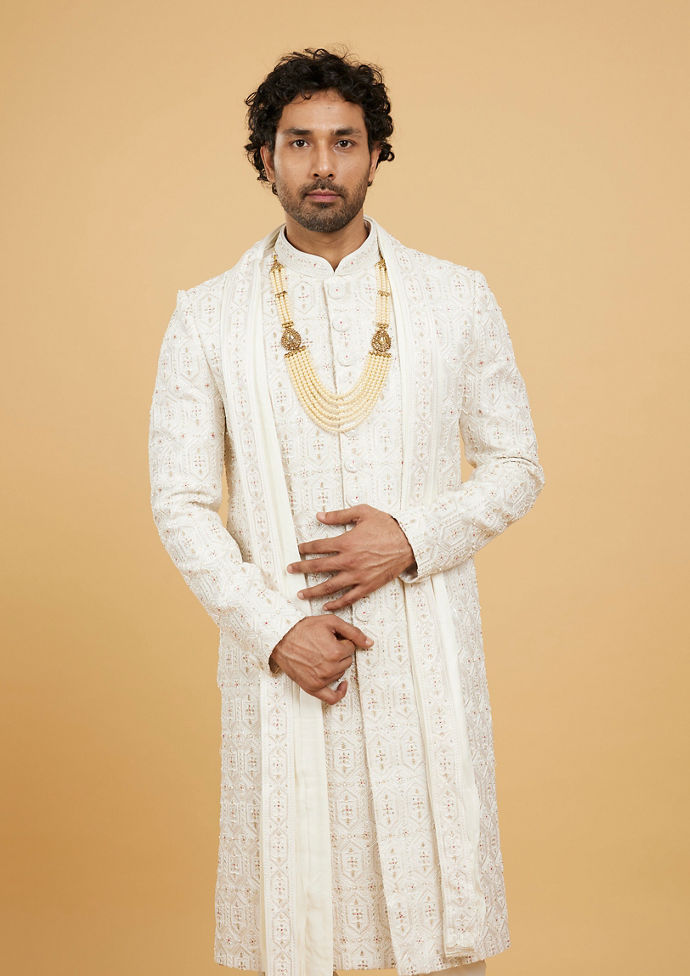
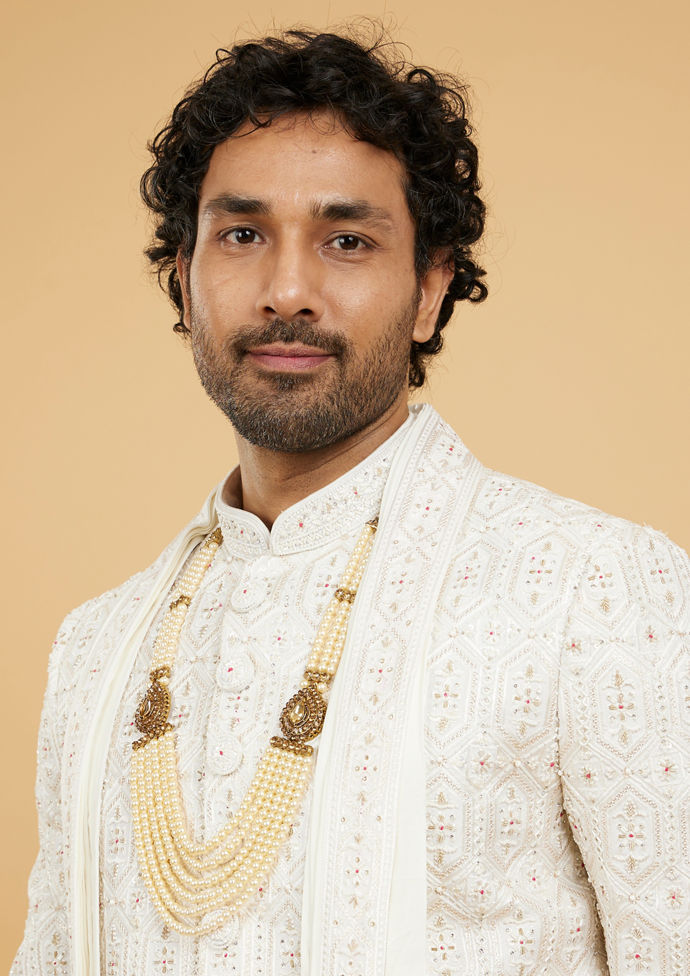
This collection brings together 21 men's silk sherwani styles, in cream, ivory, beige, beige pink, and ivory pink. Each one is hand embroidered in sequin, zari, Resham, Zardozi, or aari work. Fabric weight and embroidery density decide how formal a piece reads, so settle those two before you pick a colour.
Start with the outer fabric and the lining, whether you are looking for a groom's sherwani or a plain art silk sherwani in blue. When the lining weight matches the outer, a dense piece stops pulling at your shoulders. Then match the embroidery to the event: sequin and Resham sit lighter for a sangeet, while zari and Zardozi carry the weight for the wedding and reception.
Here is what the collection holds and how to narrow down your pick.
Resham and sequin embroidery are lighter, so they suit sangeet, mehndi, and festive evenings when you are standing, dancing, and moving between venues. Zari and Zardozi weigh more and hold their shape through a long mandap ceremony, which makes them the better pick for the wedding and reception. Cream, ivory, and beige read clearly under mandap lighting and camera flash.
Art silk is a manufactured fibre, usually viscose or polyester, woven to imitate the sheen of silk. Pure silk is spun from mulberry cocoon filament. Art silk creases less and keeps a pressed edge through a long function, so it travels better when you are moving between cities for a wedding. Pure silk has a deeper lustre and feels cooler against the skin in humid weather.
Measure your bare chest at the fullest point, then add 4 to 6 in (10 to 15 cm) to get the garment chest measurement you should filter by. A 40 in chest points to a 44 to 46 in sherwani, which leaves room for a kurta underneath without pulling at the buttons. Shoulder seams should sit at the edge of your shoulder, not past it.
Grooms usually take the heaviest embroidery in the room, while groomsmen and brothers want something lighter that still photographs well next to it. Our Noor groom sherwani, in wine velvet with Zardozi work and a silk lining, is made for wedding and reception wear. Fathers and uncles tend to choose cream or ivory silk, which stays quiet in family photographs.
The collection runs to 21 silk sherwanis in cream, ivory, beige, and pink, with embroidery across sequin, Resham, zari, Zardozi, and aari hand work. Five styles appear in the table below, along with the fabric and the occasions each one suits.
|
|
|
|
|
|
|
|
|
|
|
|
|
|
|
|
|
|
|
|
|
|
|
|
Cream and ivory are the palest shades in the range, and they hold their colour best in daylight, which is why grooms and fathers reach for them at the pheras and the daytime events around them. Zari and aari work sit well on both because the base stays quiet and the stitching carries the detail. If your function runs into the evening, a cream sherwani with sequin work gives you the same base with more shine under indoor light.
Resham is a silk thread, and it sits flatter against the fabric than zari, so these sherwanis feel lighter for dancing and long evenings. Beige, pink, and blue cover most sangeet and reception colour palettes. Use the colour filter if you want a plain art silk sherwani in blue.
Measure your chest at its fullest point, then add 4 to 6 in (10 to 15 cm) for the ease a sherwani needs over a kurta. Match that figure against the size chart, add the piece to your cart, and continue to checkout.
Wine works for the main ceremony or the reception. Cream and ivory suit daytime rituals, where a dark shade can look heavy in photographs.
Ask which events you are actually attending and how long each one runs. A morning haldi or a daytime phere calls for lighter shades such as ivory, champagne, or pale gold, because harsh daylight flattens deep colours and makes heavy embroidery read as a solid block. An evening reception allows wine, midnight blue, or bottle green, where indoor lighting brings out the sheen of the silk. For a wedding sherwani for men who will stand through a long phere, a shorter hem and a lighter weight matter more than the embroidery count. If you plan to wear the same piece to two functions, choose one shade that sits between day and night, then change the dupatta, stole, and jewellery instead of buying a second sherwani.
Measure shoulder seam to seam, then the chest at its fullest point with the tape level across the back. The hem should land 2 to 3 in below the knee.
Take the remaining numbers in one sitting while wearing the kurta you intend to pair with it. Measure the neck around the base, the sleeve from shoulder seam to wrist bone, the armhole around the fullest part of the upper arm, and the waist at the narrowest point. A well-fitted groom silk sherwani leaves roughly 1 to 1.5 in of ease at the chest over the kurta measurement, and about 0.5 to 1 in at the waist. Note the total length from the collar seam at the back of the neck to the hem, because that figure decides whether the piece reads as a knee-length sherwani or a long achkan. Compare every number against the size chart before ordering, and if your chest and shoulder fall into different sizes, take the larger and have the waist taken in.
Art silk is the entry tier and creases the least. Blended silk sits between the two on sheen and drape, while pure silk has the deepest sheen and the softest fall.
The tier you pick affects care as much as appearance. Art silk, usually a polyester-viscose weave, holds a press through a long function, wipes clean easily, and tolerates a hand wash, which suits a one-time wedding purchase. Blended silk mixes silk with cotton or viscose and gives a softer fall than art silk at a lower cost than pure silk. Pure silk, whether raw, tussar, or brocade, has the richest surface and the heaviest hand, but it needs dry cleaning and shows water marks and oil stains from food quickly. If the wedding involves a full day outdoors, a lighter blended weave keeps you cooler than a dense brocade, and an unlined or half-lined body helps more than any fibre choice.
Run a finger along the collar lining to feel for a smooth finish, confirm the buttons are sewn with thread that matches the fabric, and look for inner seams that lie flat against the body.
Turn the sherwani inside out and check four things. The body lining should be cotton, bemberg, or a silk-cotton blend rather than a polyester sheet that traps heat, and it should sit loose enough to slide over a kurta without bunching. Shoulder pads should be stitched down at both ends, not floating free. Buttons, whether fabric-covered or metal, should be anchored with a shank of thread so they sit slightly above the surface, and a spare button should be attached inside the hem. Check the hem allowance: there should be at least 1 in of extra fabric folded up, which gives a tailor room to lengthen the piece or adjust the fall after the first wear. Also look for a hidden hook at the collar, since that keeps the front placket straight when you move.
A sherwani worn by the groom or to a reception usually carries heavier Zardozi work than one bought for a sangeet, where a lighter embroidered panel moves with you through a long evening. Heavier metallic work suits the stillness of a ceremony and the photographs that follow it, while a lighter panel suits a night of movement. Think about where you will spend the most hours, then choose the weight of the embroidery to match.
Cream, ivory, and beige art silk read sharpest in daylight, since those tones catch and hold direct light. Pink and blue hold their depth better under evening lighting, where very pale shades tend to flatten out in photographs. If your function runs from afternoon into night, a mid tone or a deeper blue tends to hold up in both.
Sequin work lifts evening light and shows clearly indoors after dark. Resham suits daytime functions, where threadwork reads through colour and texture without stage lighting. Hand-embroidered panels take longer to complete, so book your fitting earlier than you would for machine work. Zardozi, with its raised gold and ivory metallic thread, sits at the heavier end and is best kept for the main ceremony.
Regular, slim, and made-to-measure cuts span 36 to 46 inches at the chest. Measure over the kurta you intend to wear underneath, because a sherwani sits on top of it and the chest line has to clear both layers. Made-to-measure lets you set sleeve length and hem break at the same time, which matters if you sit between two sizes on the rack.
A silk sherwani with a velvet lining should be dry cleaned only, because water can shrink the silk shell and flatten the velvet pile. The same rule applies to the Noor sherwani, our wine velvet Zardozi groom piece: dry clean only, no exceptions. Between wears, fold it along the shoulders and keep it in a muslin or cotton cover, which lets air move through the cloth. Plastic bags trap moisture and can leave dull patches on silk. Cedar or neem blocks in the wardrobe help keep insects off the fabric during the months it hangs unused.
Hang the sherwani and steam it on a low setting, holding the steamer about 8 to 10 cm away from the cloth so the silk relaxes without turning damp. Zardozi sits on a raised base of wire and beads, and a hot iron crushes that relief and scorches the threads. If a crease holds, press the plain panels from the inside with a cotton cloth between the iron and the fabric, and work around the embroidered areas entirely.
Pick a churidar in the sherwani's base colour so the embroidery stays the focal point, and keep the fit close from knee to ankle, where the fabric should gather in a few soft folds. Drape the stole over one shoulder or leave it hanging straight at the front; a single drape reads cleaner against heavy Zardozi. Mojari in the same tone as the stole pull the outfit together, and a pocket square or brooch works best when it repeats one colour already present in the embroidery.
Book the first fitting at least two weeks before the wedding date, which leaves time for a second round of alterations. Sleeve length, chest room, and hem break are the three areas that most often need adjustment, and each change takes a few days at the tailor. Wear the churidar, mojari, and any kamarbandh or belt you plan to pair with it, since the sherwani has to be measured over those layers. Ask for 2 to 3 cm of extra seam allowance at the back and side seams in case the fit needs to move later.
Run the tape snug under your arms and note the chest measurement, then add 4 to 6 inches of ease. Sizes span 36 to 46 inches. If you land between two, take the larger one and have a tailor bring in the side seams.
Yes, for most functions. The silk lining slides over a kurta instead of catching on it, and silk carries less weight than velvet. If the ceremony and reception run back to back, keep the shoulders loose rather than sizing down.
Grooms usually lean wine, maroon, or ivory. Guests should leave ivory and cream alone, since those read as the groom's, and go with navy, forest green, or charcoal instead.
Air it in the open for a few hours before it goes back in the wardrobe. Tell the dry cleaner exactly where the Zardozi sits so the embroidery is pressed from the reverse, and store it in cotton or muslin rather than a plastic cover, which traps moisture. Dry clean only.
Explore More Collection: Indo Western Dresses For Men , Beige Sherwani
Silk Sherwani Price List
Silk Sherwani
Price (₹)
Cream Silk Sequin Hand Embroidered Sherwani
₹ 44,999
Ivory Silk Hand Embroidered Sherwani
₹ 89,999
Beige Pink Silk Resham Hand Embroidered Sherwani
₹ 44,999
Beige Silk Resham Hand Embroidered Sherwani
₹ 44,999
Cream Silk Zari Embroidered Sherwani
₹ 54,999
Beige Silk Geometric Zardosi Embroidered Sherwani
₹ 54,999
Cream Silk Resham Hand Embroidered Layered Sherwani
₹ 99,999
Cream Silk Grid Patterned Embroidered Sherwani
₹ 44,999
Ivory Honeycomb Patterned Embroidered Sherwani
₹ 44,999
Ivory Silk Resham Hand Embroidered Layered Sherwani
₹ 29,999





Login to access Twamev Member Exclusive Features like Video Commerce

Enter the mobile number or email address associated with your Manyavar account
We’ll ask for this password whenever you sign in