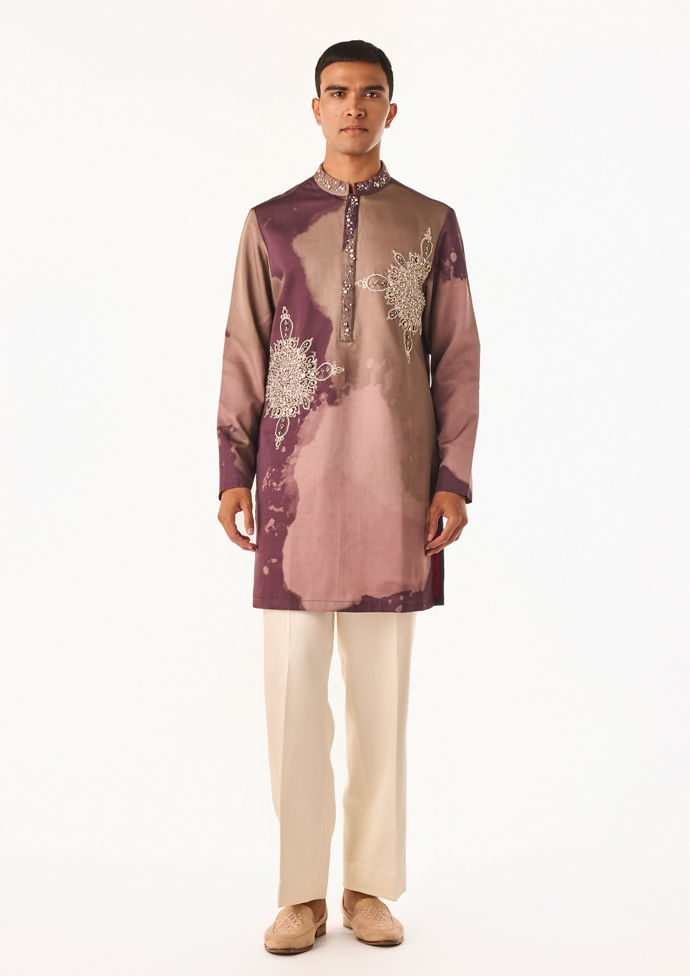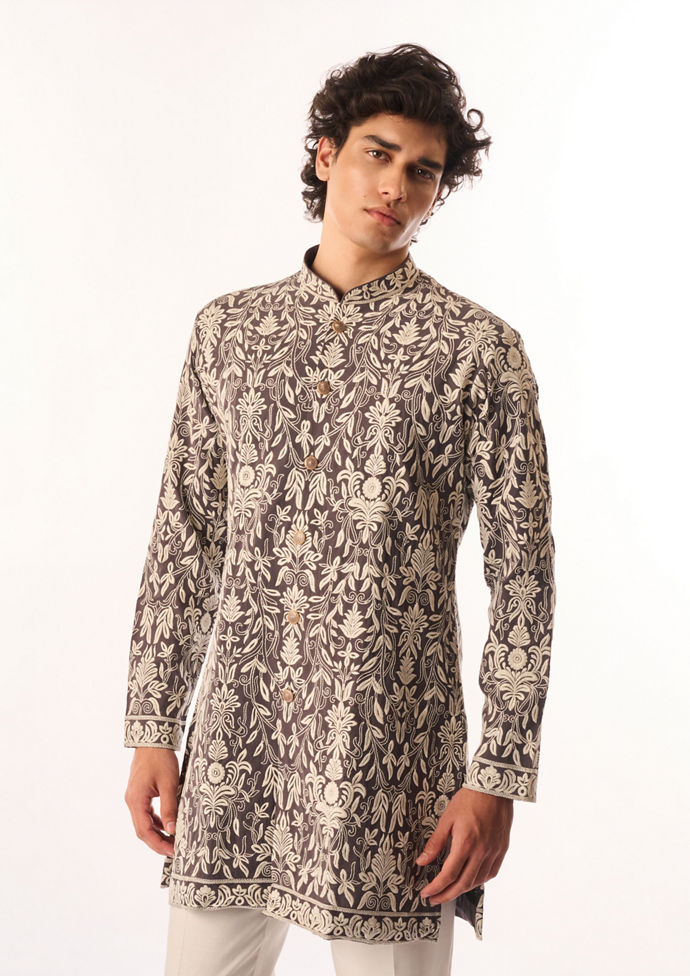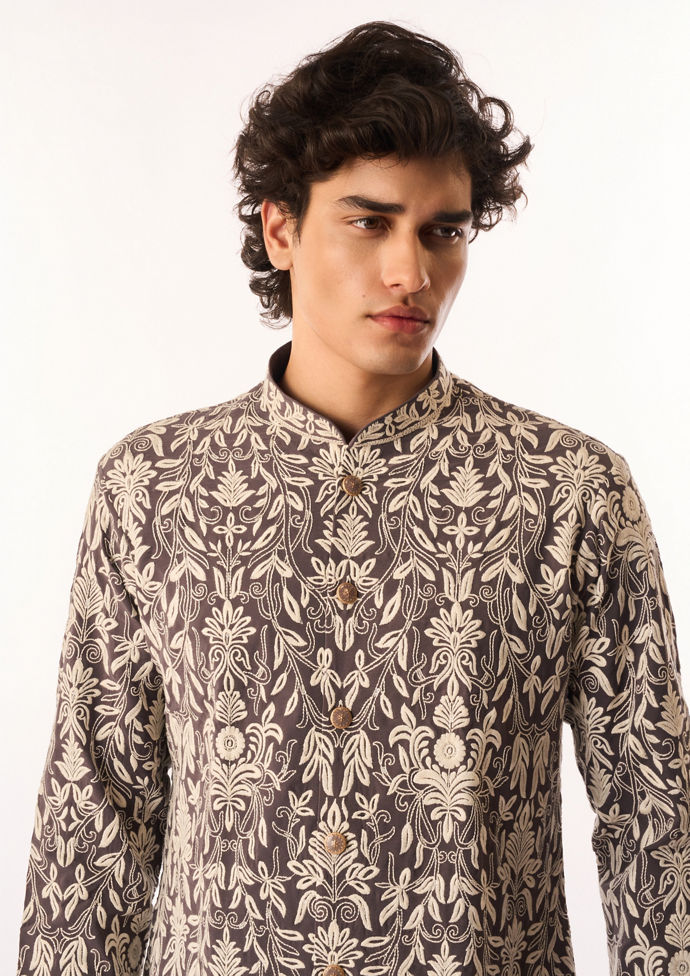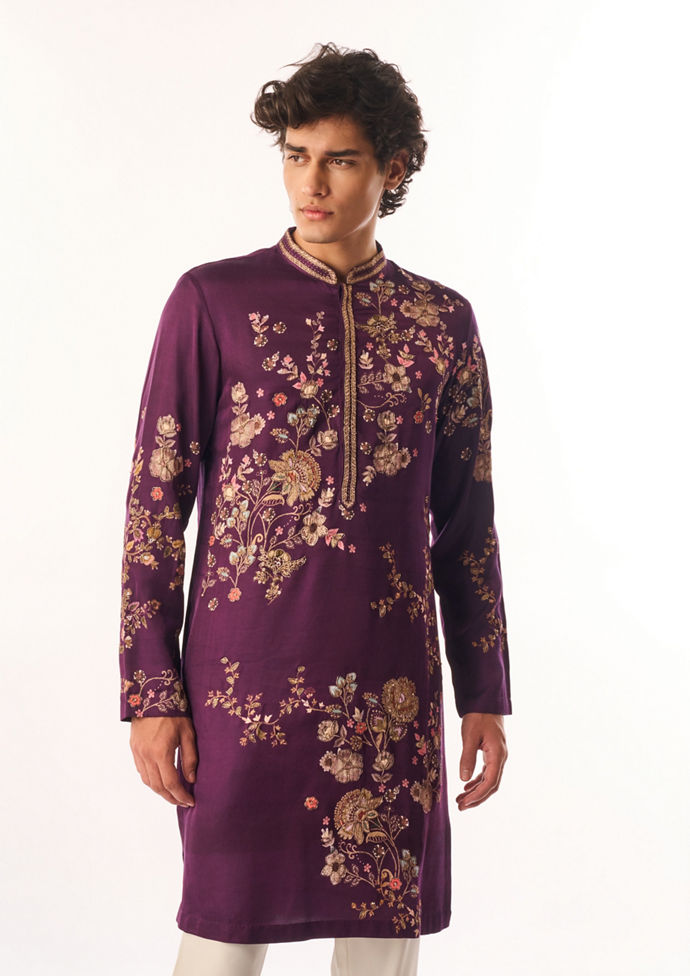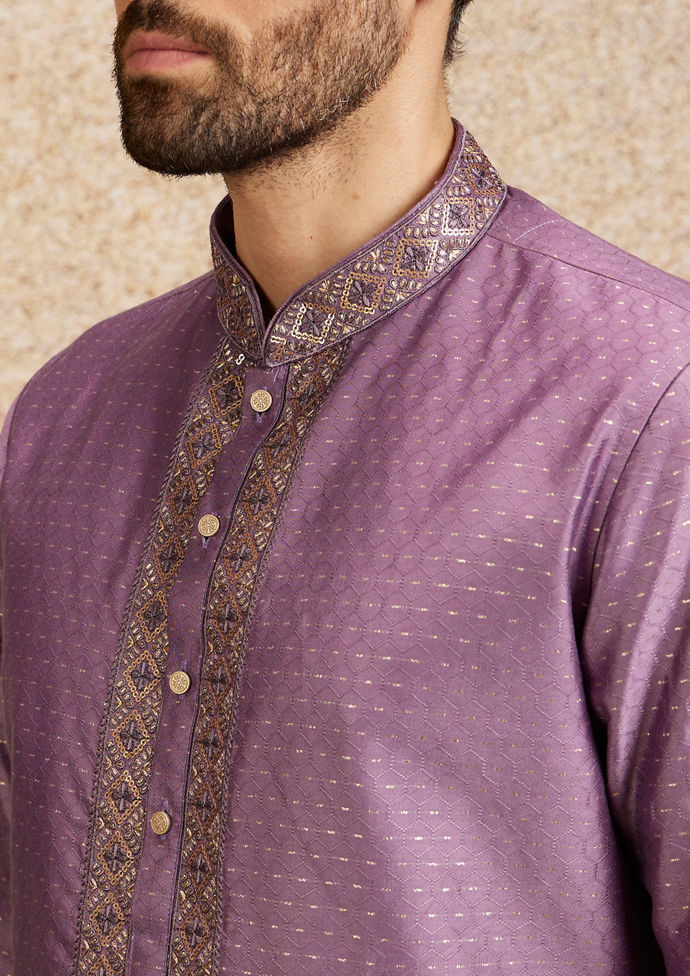
Purple Colour Kurta
11 PRODUCTS
Filter

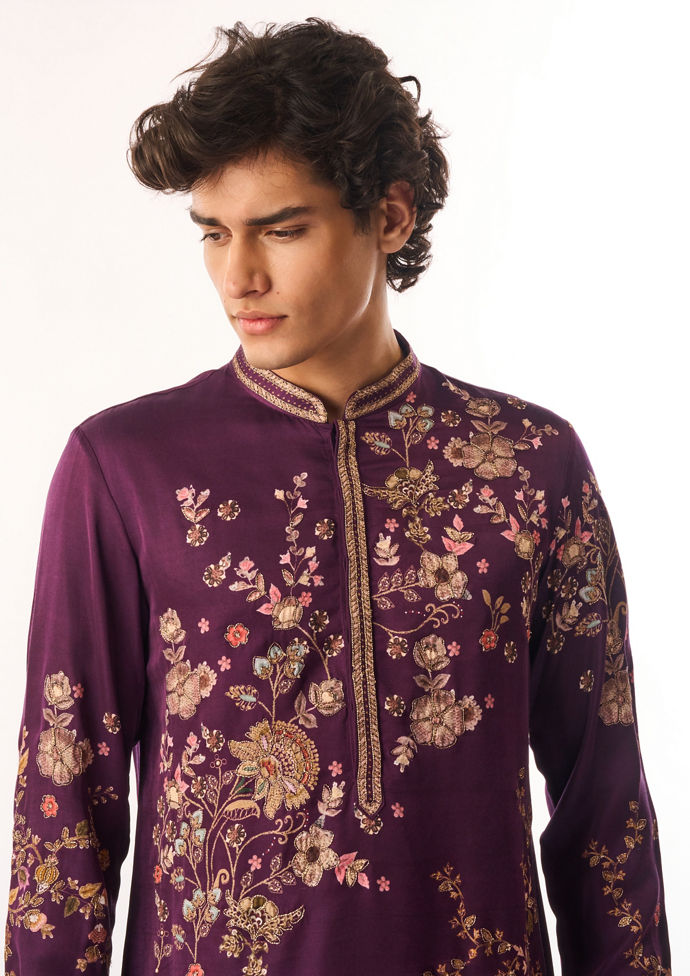
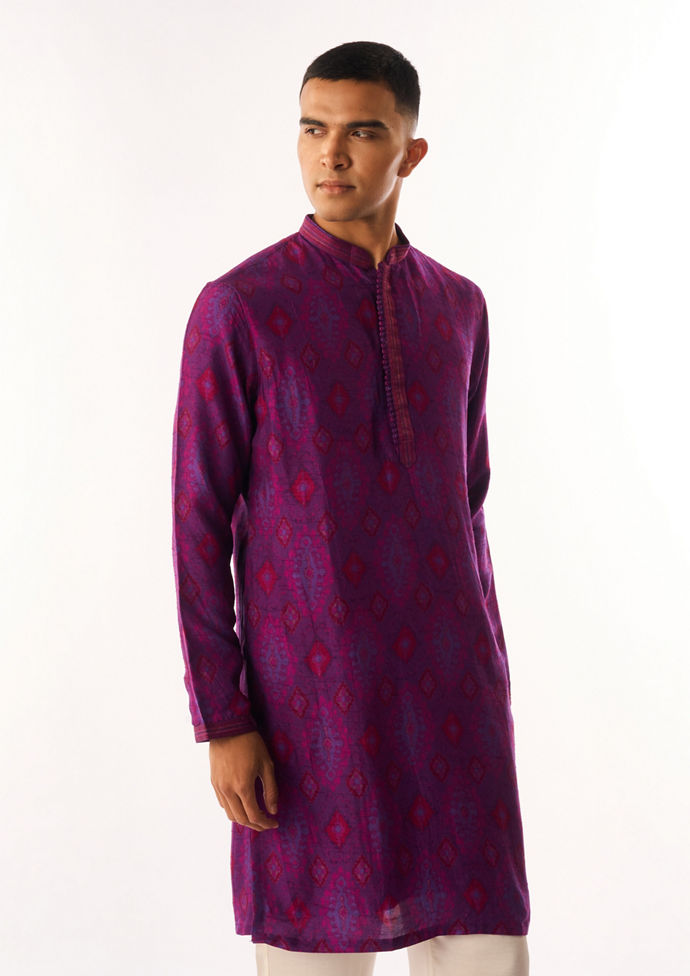
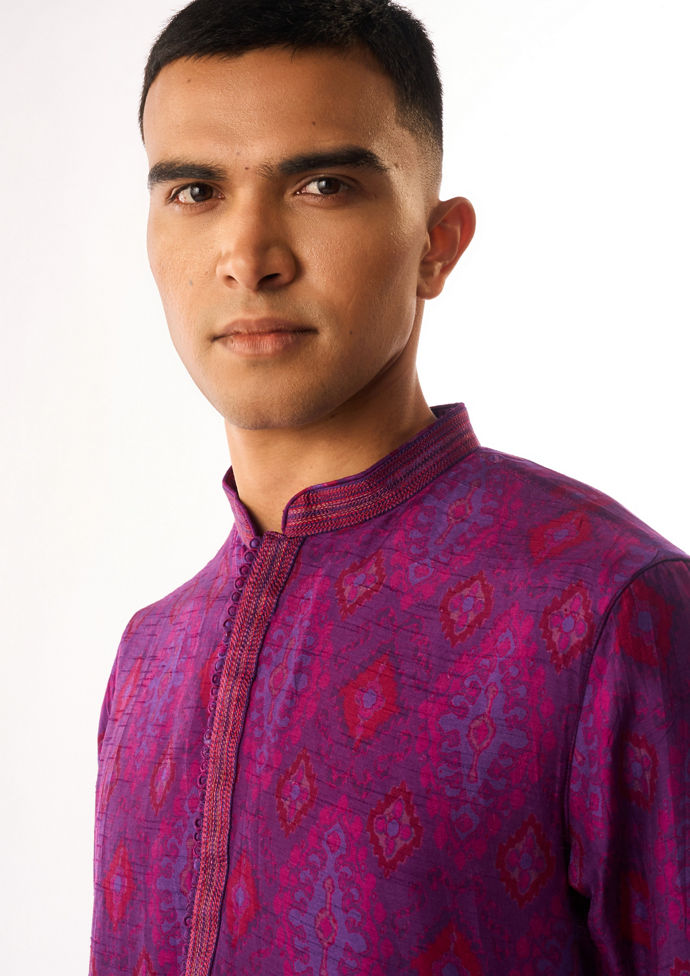
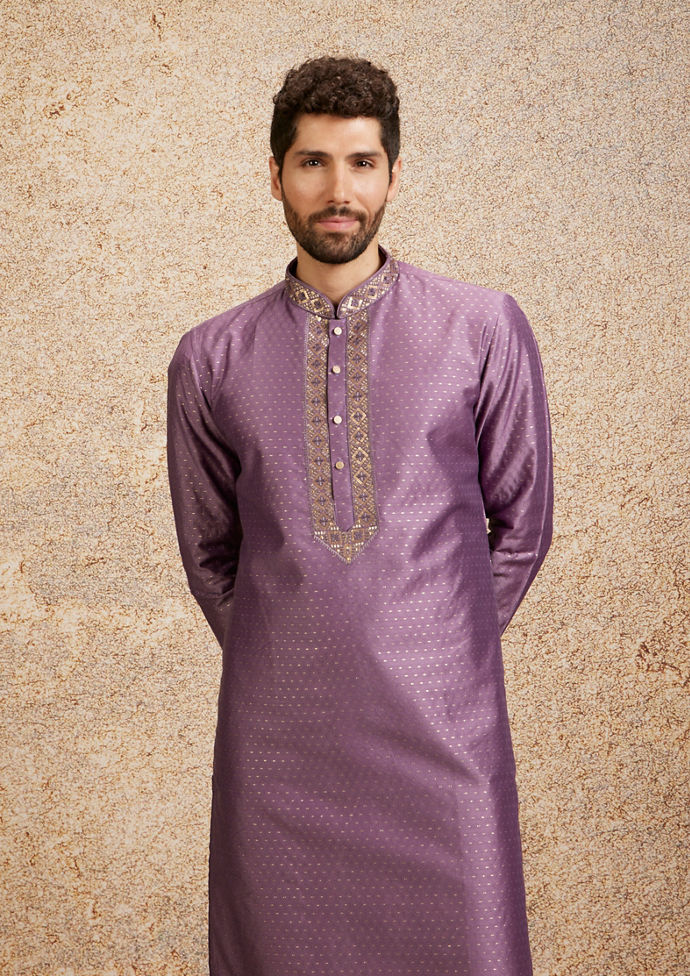
Seven styles make up this men's purple kurta collection, cut in viscose, georgette, silk, and brocade. Each one arrives as a full set with a matching bottom, so you can wear it straight to a sangeet, haldi, or reception without hunting for separates.
Shade decides how formal the outfit reads. A light purple kurta for men suits a daytime haldi or sangeet, while the deeper purples and cream sit better after dark. Fabric sets the fall: viscose is the lightest and sits closest to the body, georgette drops softly with a faint sheen, and silk and brocade hold their shape through a long function.
Browse the men's kurta pajama collection to compare fabric, embroidery, and what each of the seven sets includes.
Colours run from a soft lilac at the lightest end to a deeper purple, with cream sitting at the palest point of the range. Check the fabric in daylight if you can: lilac and cream read almost pastel under tube light, while the deeper purples come closer to the photograph once the room light warms up.
Measure your chest at its widest point, then match that number to the chest column in the size chart. Measure length from the shoulder seam to the intended hem, usually mid-thigh to just above the knee for a wedding kurta, and compare it with the length listed for that size. When your chest and length land in two different sizes, go with the chest measurement.
Lilac holds up at daytime functions such as a haldi or a morning ceremony, where the light is bright and the overall palette stays soft. Deeper purples and cream work better for evening events, particularly under warm indoor lighting, since the palest shades can look washed out after dark.
This is the lightest piece here, closer to a light purple than a deep purple. Viscose drapes soft and takes embroidery well, so it suits a groomsman group that needs to look coordinated without much ornament. Wear it with a churidar or a slim pyjama in the same tone.
Cream panels break up the purple across this set, so an ivory or off-white bottom is an easy match. The viscose base stays light, which matters when a sangeet runs late into the night.
Deep purple holds up under evening lights, so plum, aubergine, and violet suit a reception. For a daytime haldi or mehndi, go lighter: lavender, lilac, and mauve stay readable in natural light and photograph without going dark. If the event runs from afternoon into the night, a mid-tone violet covers both.
An air-conditioned hall can take brocade and mid-weight silk. An open-air mandap in summer is better in viscose or georgette. Ask for the weight in gsm: georgette and viscose usually sit between 60 and 120 gsm, while brocade and structured silk run above 150 gsm. Above 200 gsm in a mandap, the kurta traps heat within a couple of hours.
Take your actual chest measurement first, then add two inches of ease so the front does not pull when you sit or fold your arms. Shoulder seams should land on the acromion, the bony point at the top of each shoulder, not past it. The hem should finish two to three inches below the knee, which leaves the churidar or pyjama visible and keeps the drape straight when you walk.
Settle on one focal zone, either the yoke or the placket, and keep the rest of the kurta plain. If the yoke carries dense zari or thread work, cut the sleeves and hem to a single line or leave them bare. The result is a men's purple kurta where the colour leads and the embroidery supports it rather than competing for attention.
Viscose is usually the heaviest of the three, around 120 to 150 gsm, so it falls in soft folds and picks up creases at the elbow by the end of the day. Georgette runs lighter at 60 to 90 gsm and stays slightly sheer, which is why many kurtas line it across the chest. Silk blends, whether silk with cotton or silk with viscose, keep a low sheen that shows purple well under indoor light and crease less than pure viscose.
A mandarin collar stands 3.5 to 4 cm high and buttons to the top of the placket, so it sits close against the throat. Band gala uses the same stand with a closed front, and the unbroken vertical line makes a short neck look longer. A V neck opens 10 to 15 cm at the front and needs a button at the base to keep the opening from gaping when you sit down.
Thread work uses cotton or polyester floss in flat stitches, so the motif stays matte and handles regular washing better than metallic options. Zari is fine metal wire wrapped around a core thread, and light catches where each stitch turns, which is why a zari border looks brighter at the edges than across the panel. Sequins reflect from every angle and add weight to the front panel. Check for a soft backing on the inside of the placket before you buy, since rough sequin edges scratch.
Straight kurtas hold the same width from chest to hem, which leaves room through the torso and suits most body types. Slim cuts take in about 3 to 5 cm at the waist. A-line styles add 15 to 20 cm from waist to hem and sit well over wider hips. Sizes generally run XS to 3XL, with chest measurements from roughly 36 in to 46 in, so measure your chest and compare against the size chart rather than your usual shirt size.
Deep purple absorbs light, so it reads darker indoors than it does in daylight. Give it plain black, charcoal or off-white bottoms and keep the metal on your belt, watch and buttons to one tone. Cotton or a cotton-silk blend in the 150 to 200 gsm range holds a matte finish, while satin and high-sheen blends push the same colour toward evening wear.
A churidar tapers to a narrow ankle opening, usually 10 to 13 inches around, and carries extra length that gathers in folds. A straight pyjama opens to roughly 15 to 17 inches and hangs flat, which suits a wider kurta hem. A dhoti is unstitched, so the kurta hem should stop 2 to 4 inches above the drape to keep the pleats visible. For daytime haldi, light lavender or lilac cotton beats deep violet silk, because turmeric stains set fast on wet fabric and machine-washable cotton is easier to manage.
Gold zari and gold buttons sit best against deep violet, where the contrast is sharp. If the kurta is lilac or a washed-out lavender, ivory threadwork or plain cream trim looks cleaner than gold, and a cream churidar continues the light tone. Silver trim suits cooler blue-violet shades better than warm gold. Check the kurta's own buttons before adding a necklace or brooch, because two different metals in the same frame read as an accident rather than a choice.
Metallic thread and raised embroidery do not survive a home wash. Dry clean embroidered kurtas, and ask for no starch on the embroidered panel, since starch cracks zari over time. Store them flat or on a padded hanger inside a muslin or cotton cover rather than a plastic bag, which traps moisture and dulls metallic thread. Refold along a different line every few months so creases do not set into the embroidery.
A light purple works well for these functions, since lavender, lilac and mauve stay visible in daylight without competing with a yellow haldi spread. Choose cotton over silk: turmeric paste lifts out of a plain weave more easily than it does out of silk, and cotton breathes in an outdoor courtyard. If the haldi runs into an evening mehendi, a mid-tone purple still reads correctly under warm light.
It does, as long as the group settles on one shade first. Deep violet and aubergine photograph as formal without pulling attention away from the groom, and they hold their colour under flash better than pale purple does. Keep the embroidery thread colour consistent across the group so the line-up reads as one set.
Under warm or tungsten light, yes, though lavender picks up a slightly grey cast along the way. Marble courtyards and halls lit with cool white LEDs are harder: pale purple can look washed out in photographs there. A deep violet holds its depth after sunset and is the safer choice for a night function.
Dry clean any embroidered piece. Hand-washing zari or thread work can pull the motif out of shape, and it dulls the dye faster than dry cleaning does. Store the kurta flat in breathable cotton, not a sealed plastic bag. Keep it out of direct sun, and refold along a new line each season so the old crease does not set permanently.
Brown, gold and ivory mojaris are the easy pairings, and gold trim picks up the embroidery without repeating the kurta colour. Black leather sits heavy against light purple and works only when the kurta is deep violet or aubergine. Match the belt and stole trim to the shoe tone so the lower half and the upper half agree.
Shop Now: Maroon Dupion Silk Embroidered Kurta Set , Wine Georgette Embroidered Kurta Set
Purple Colour Kurta Price List
Purple Colour Kurta
Price (₹)
Plum Printed Statement Kurta Set
$ 885
Purple Georgette Kurta Set with Embroidery
$ 705
Purple Satin Kurta Set with Embroidery
$ 455
Purple Art Silk Kurta Set with Print
$ 250
Lilac Brocade Woven Kurta Pant Set
$ 250
Lilac Viscose Brocade Buta Motif Kurta Set
$ 200
Lilac Viscose Embroidered Kurta Set
$ 305
Lilac Georgette Embroidered Kurta Set
$ 355
Lilac Viscose Embroidered Kurta Set
$ 225
Purple & Cream Viscose Embroidered Kurta Set
$ 330




Login to access Twamev Member Exclusive Features like Video Commerce
Enter the email address associated with your Manyavar account
We’ll ask for this password whenever you sign in