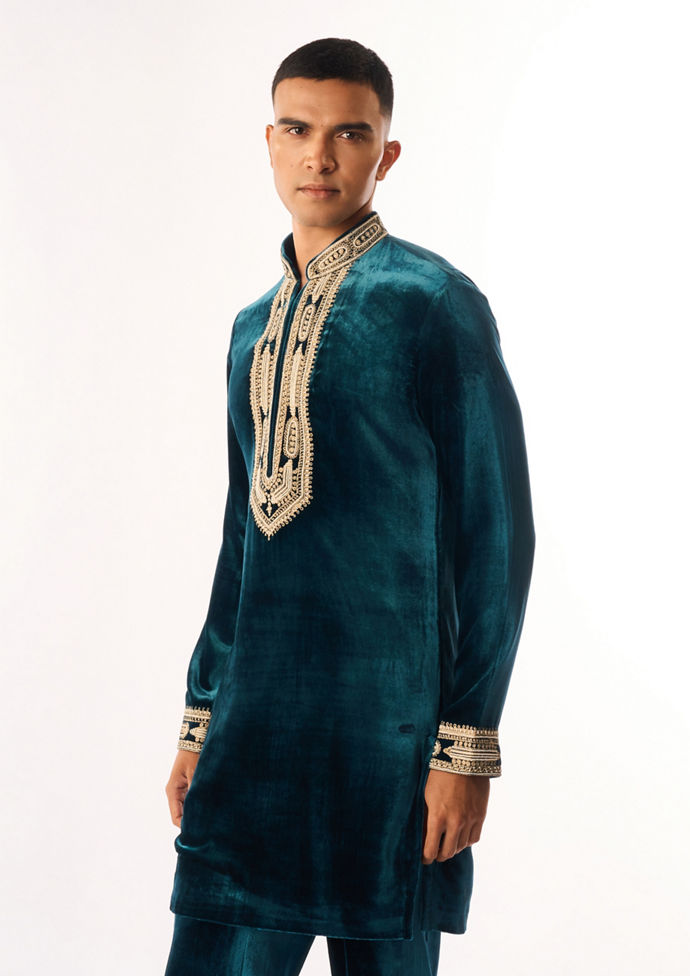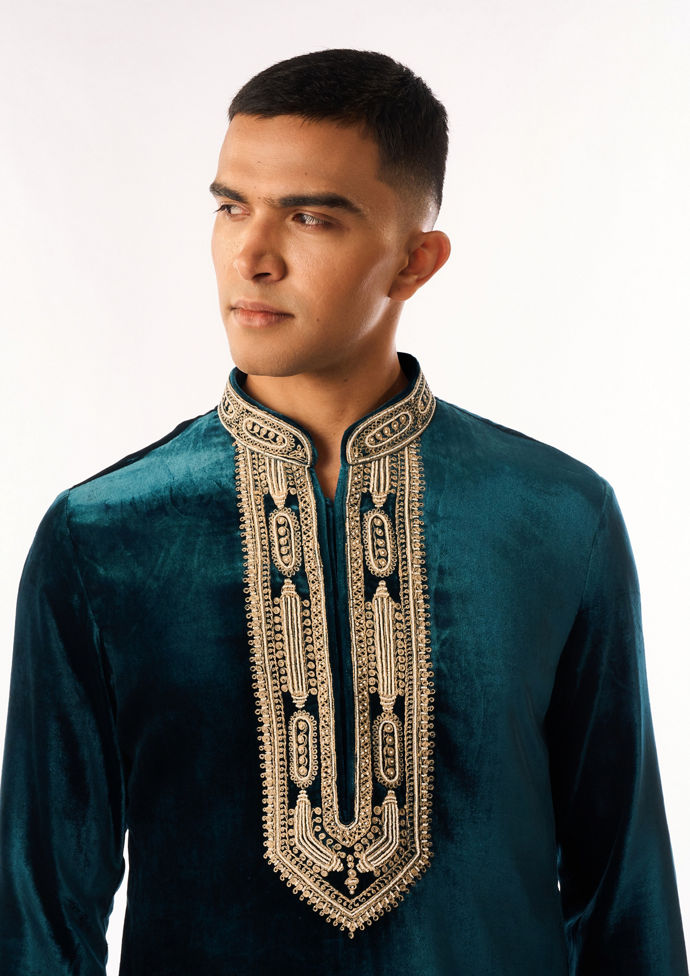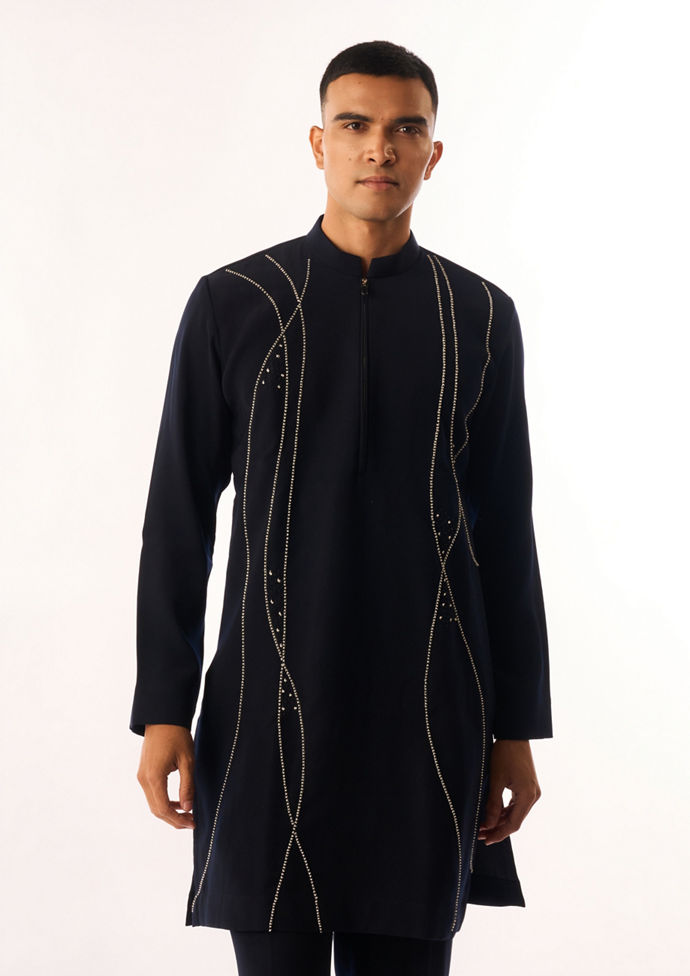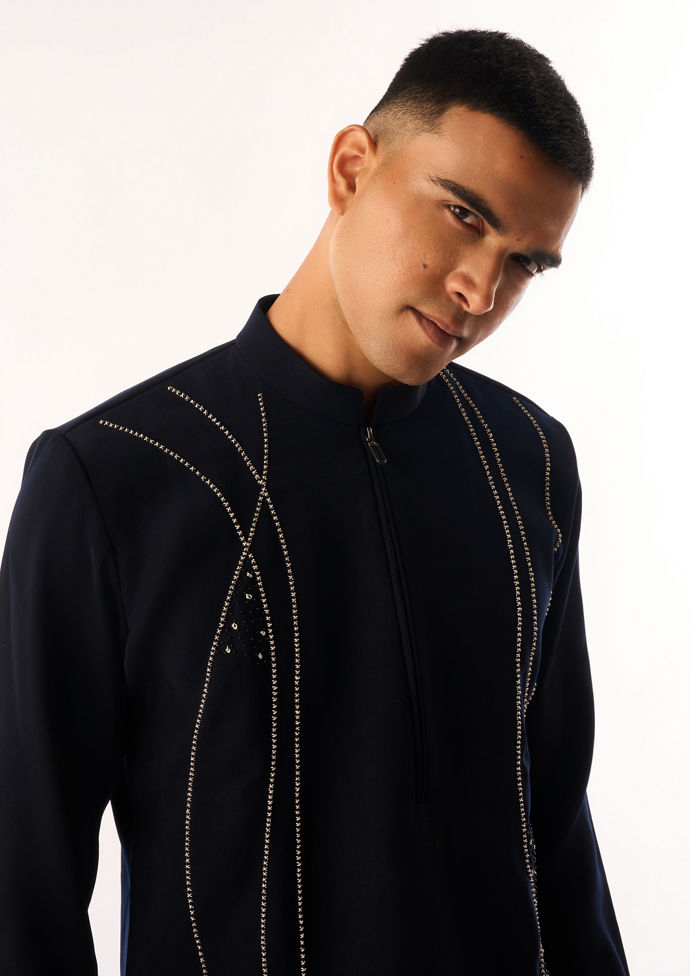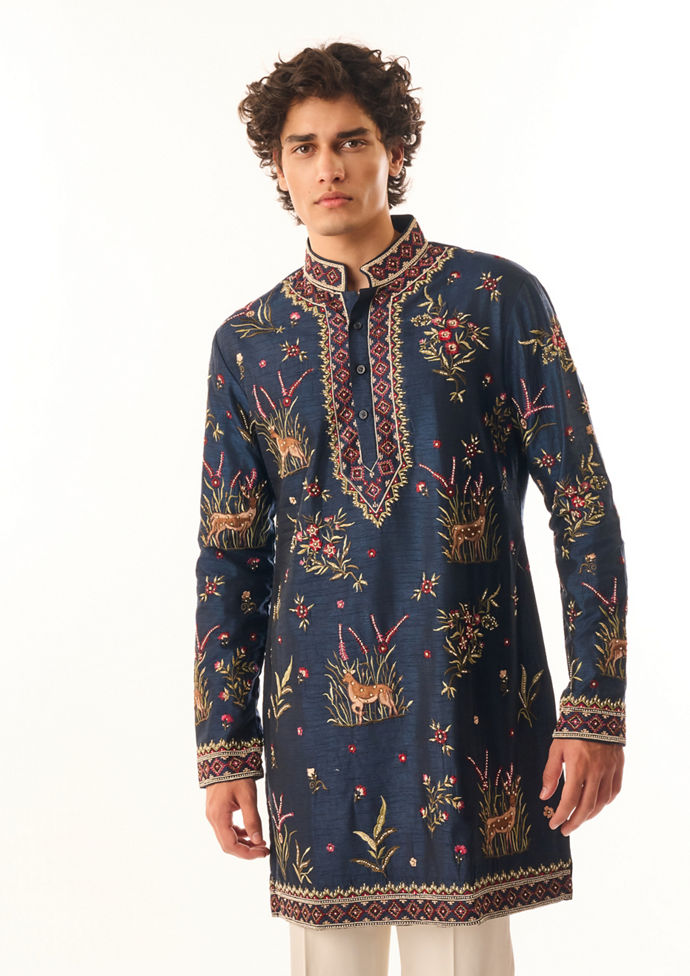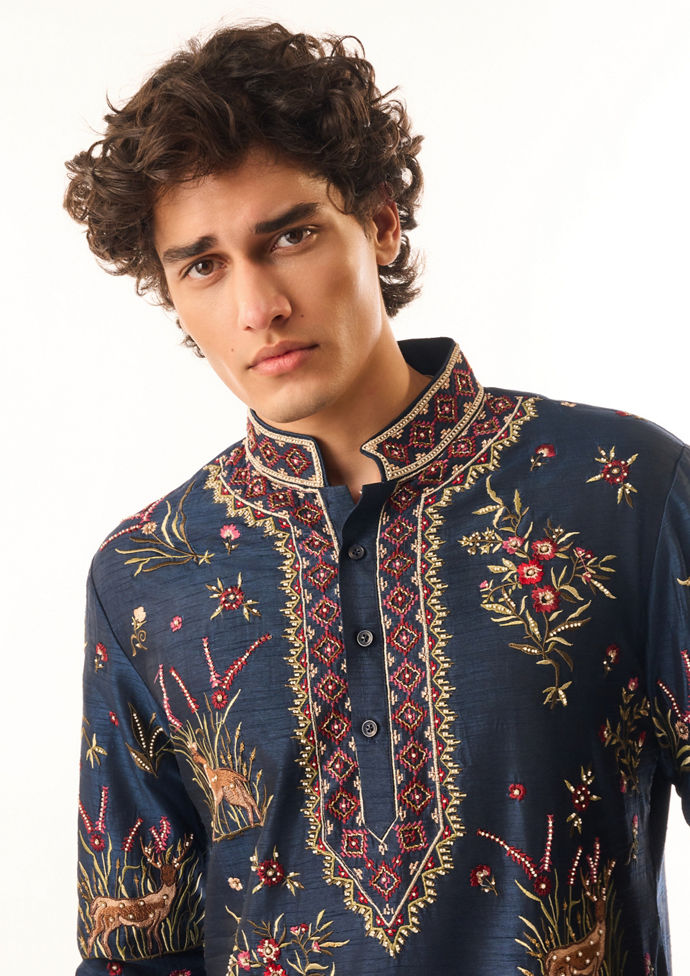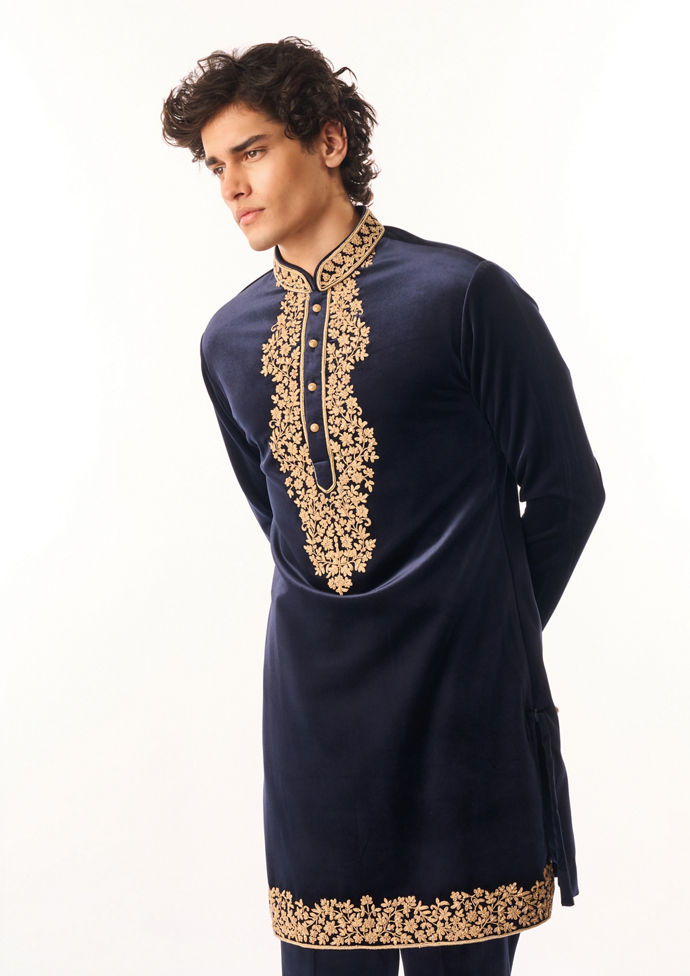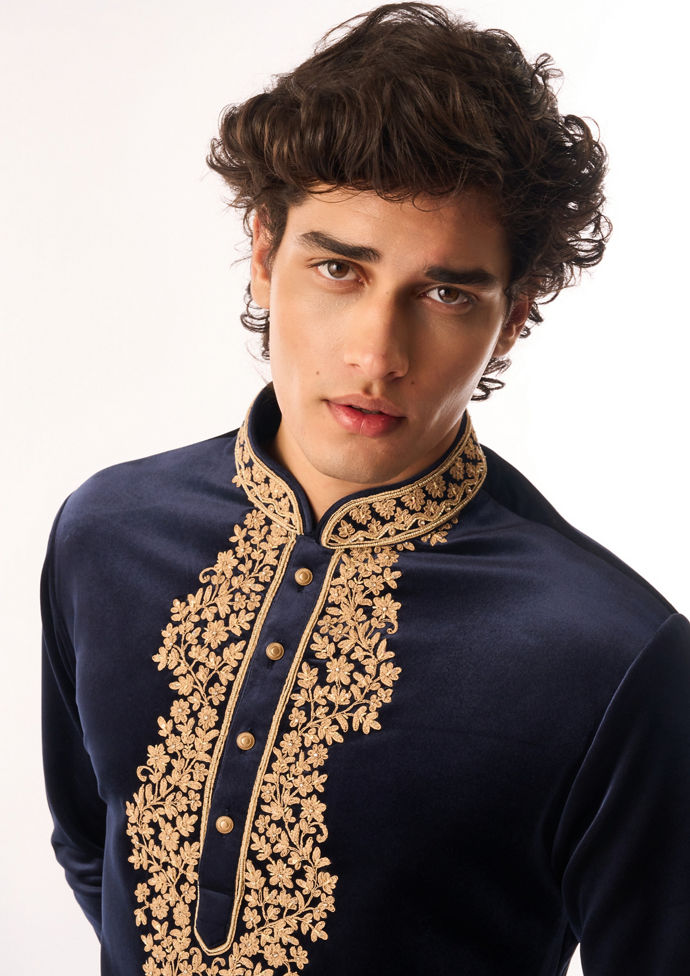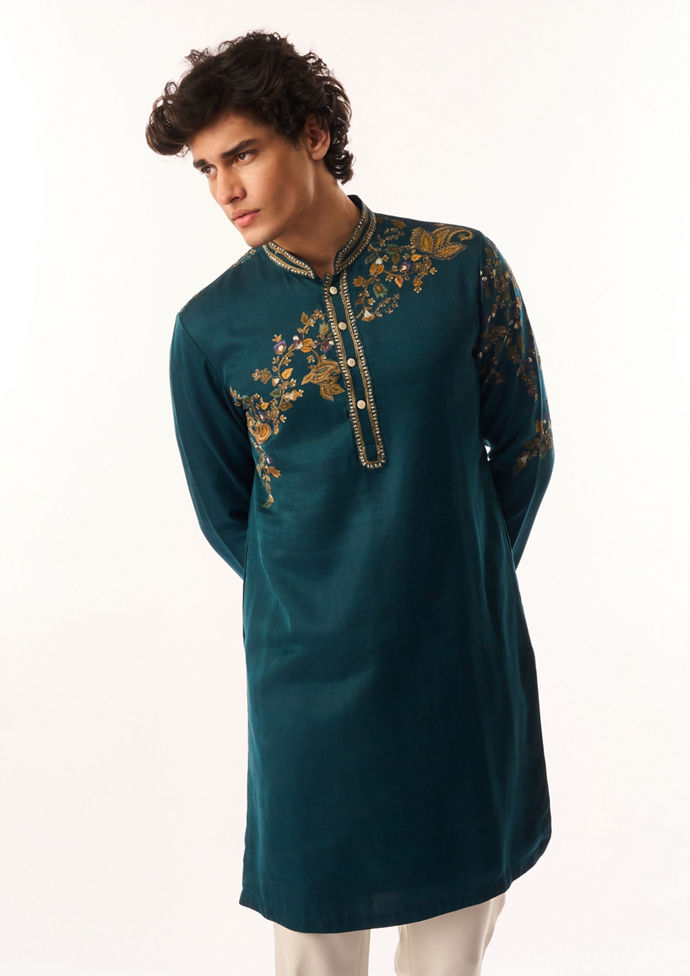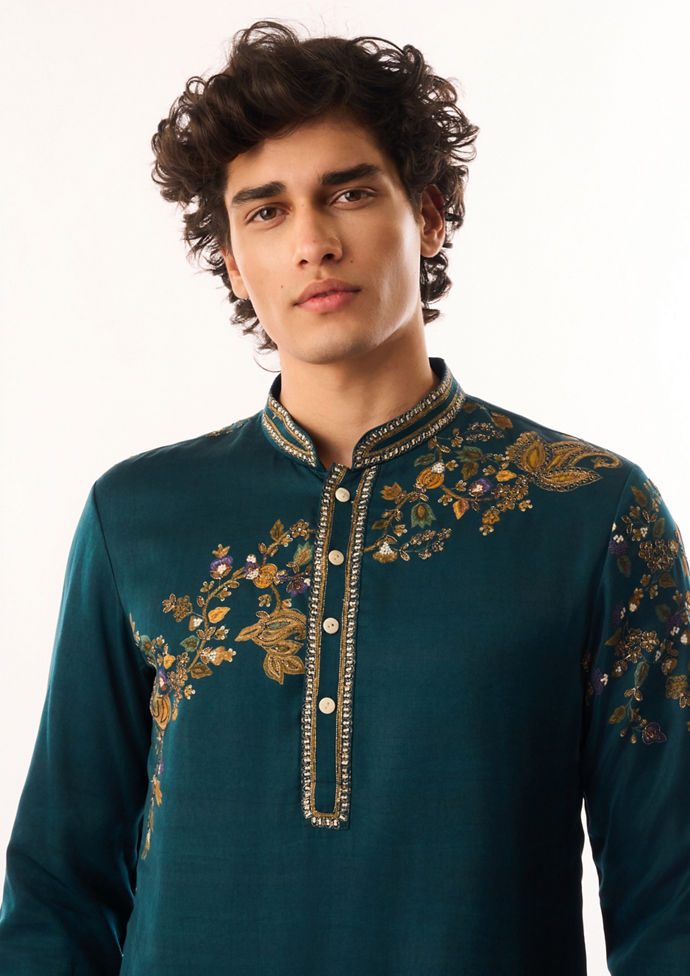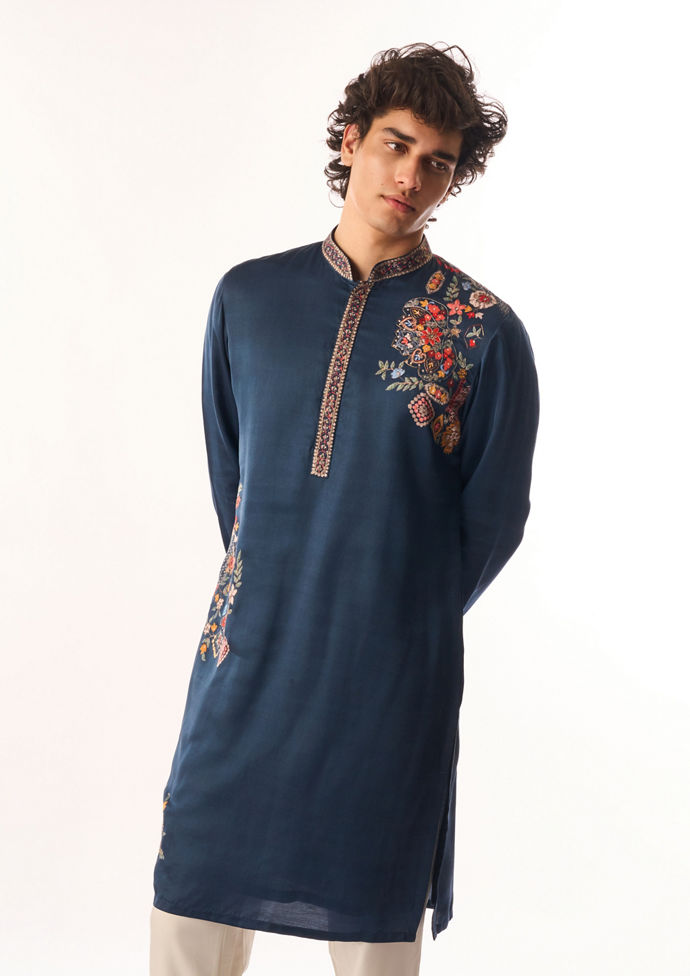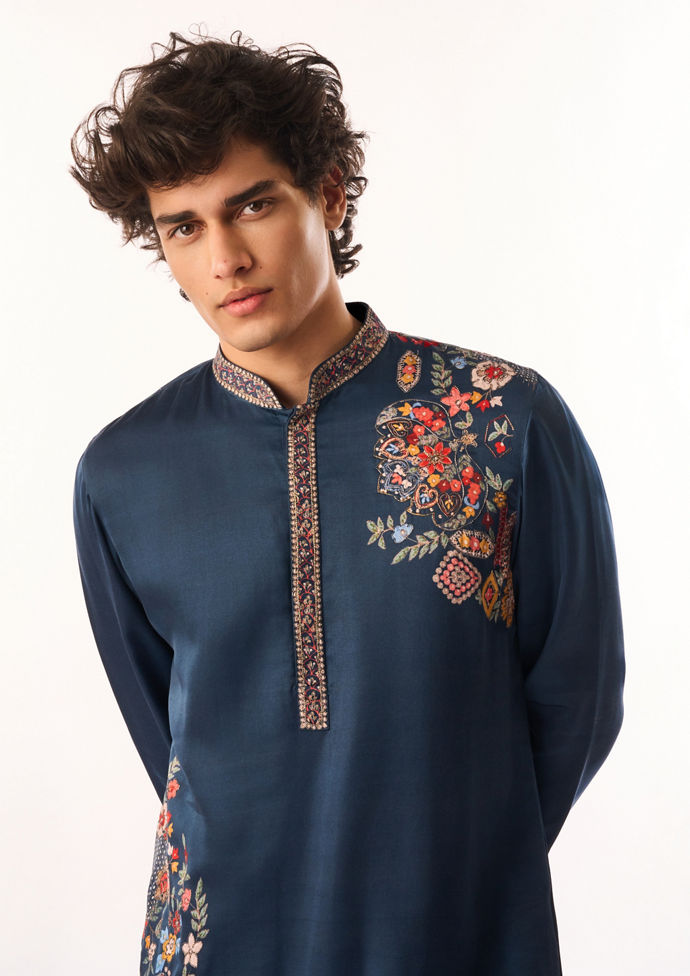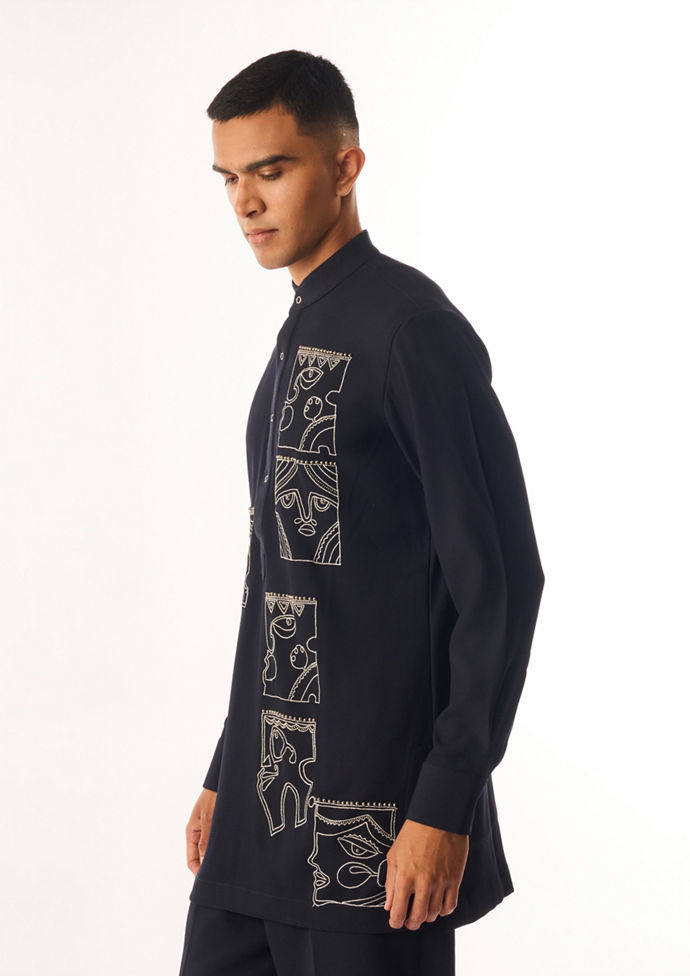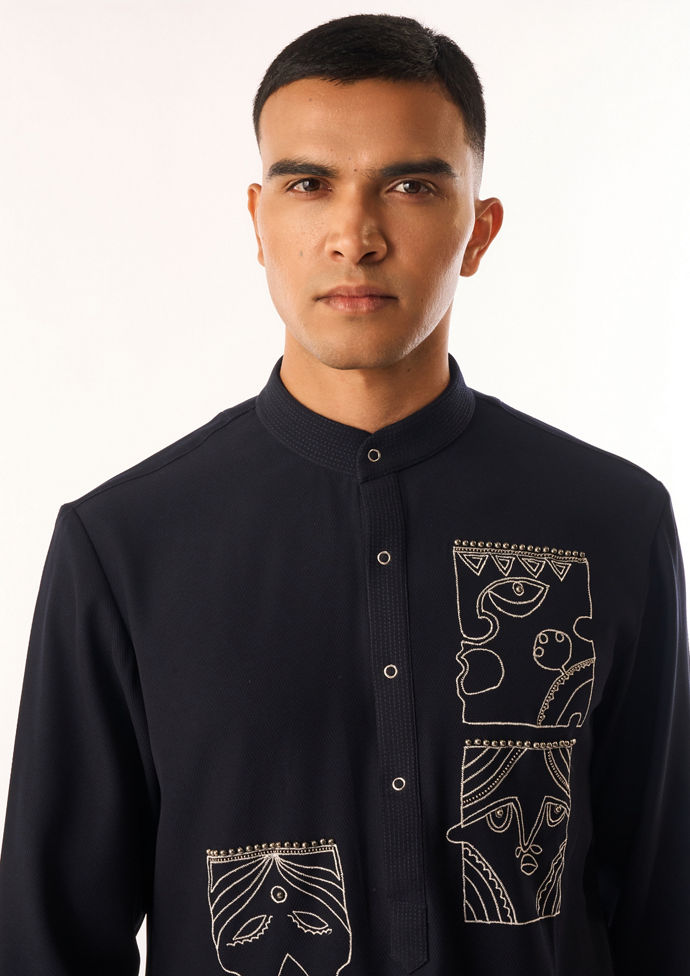
Blue Kurta For Men
45 PRODUCTS
Filter
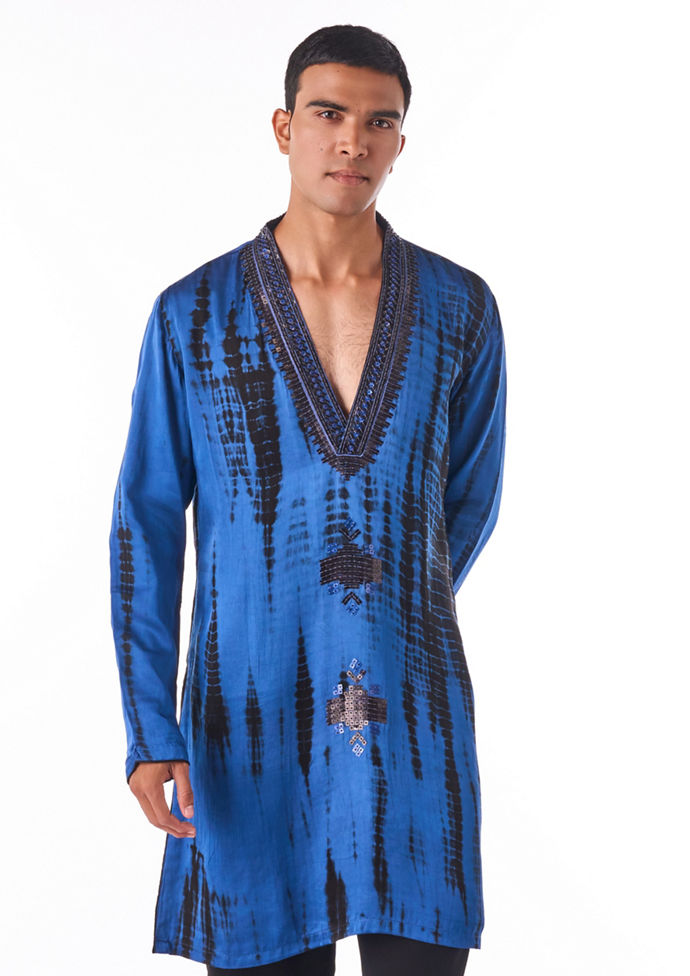
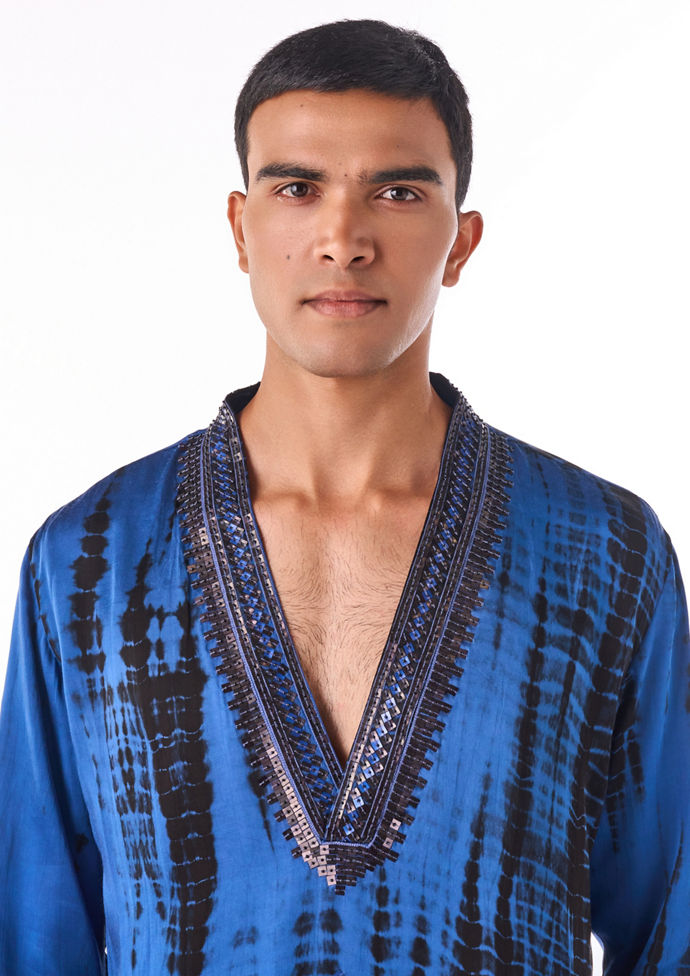
£ 365

£ 365
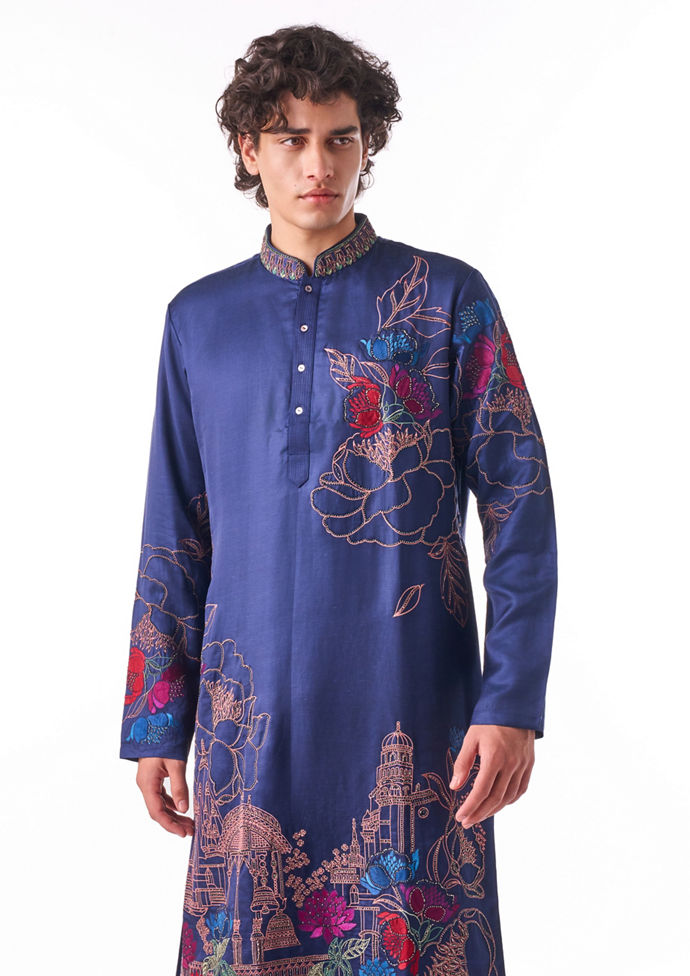
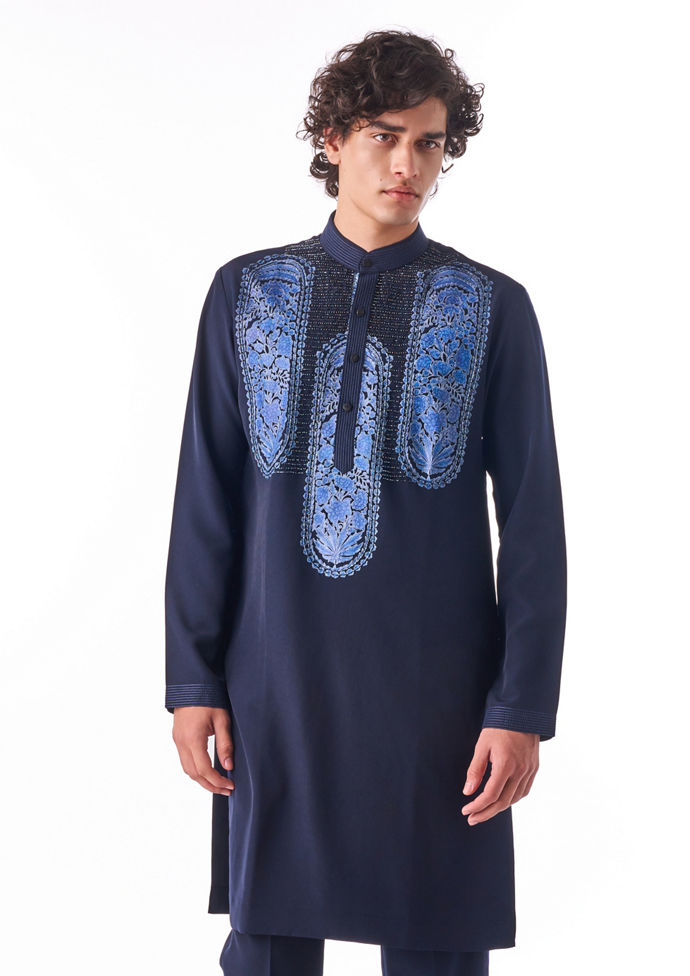
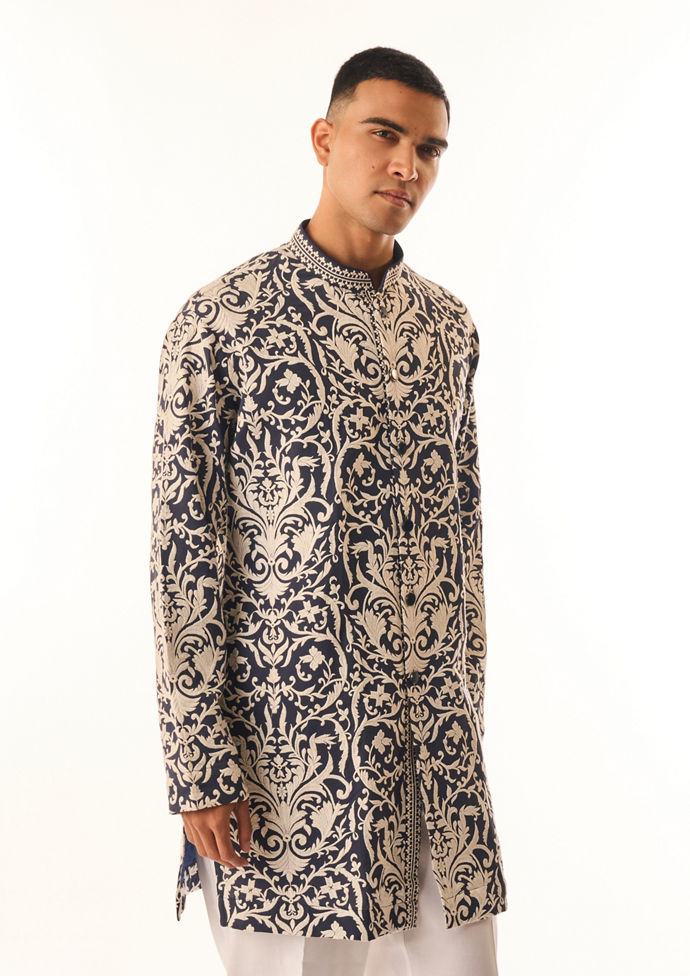
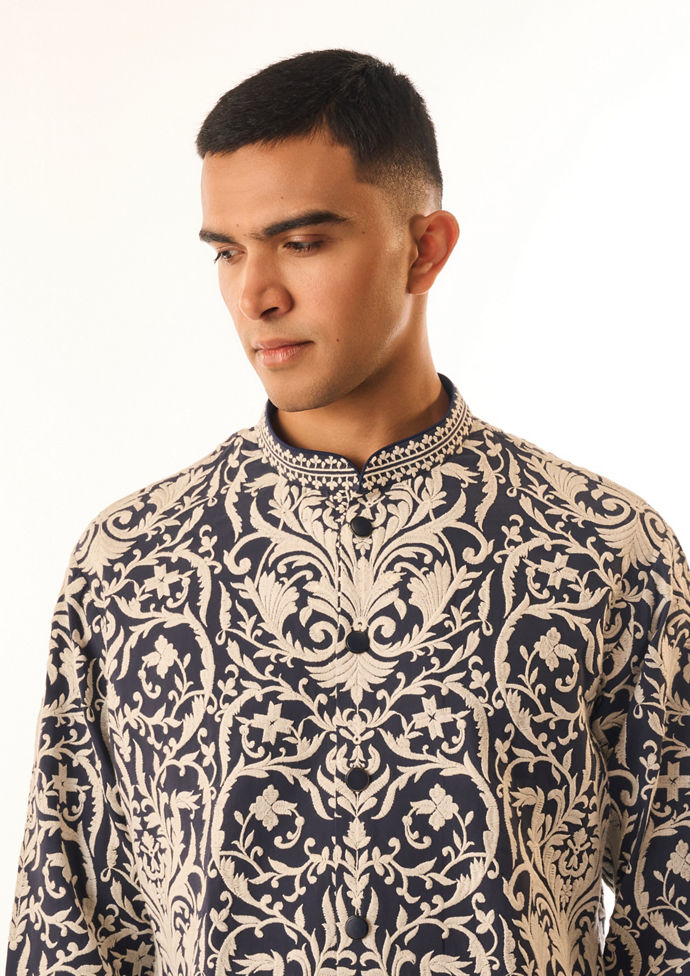
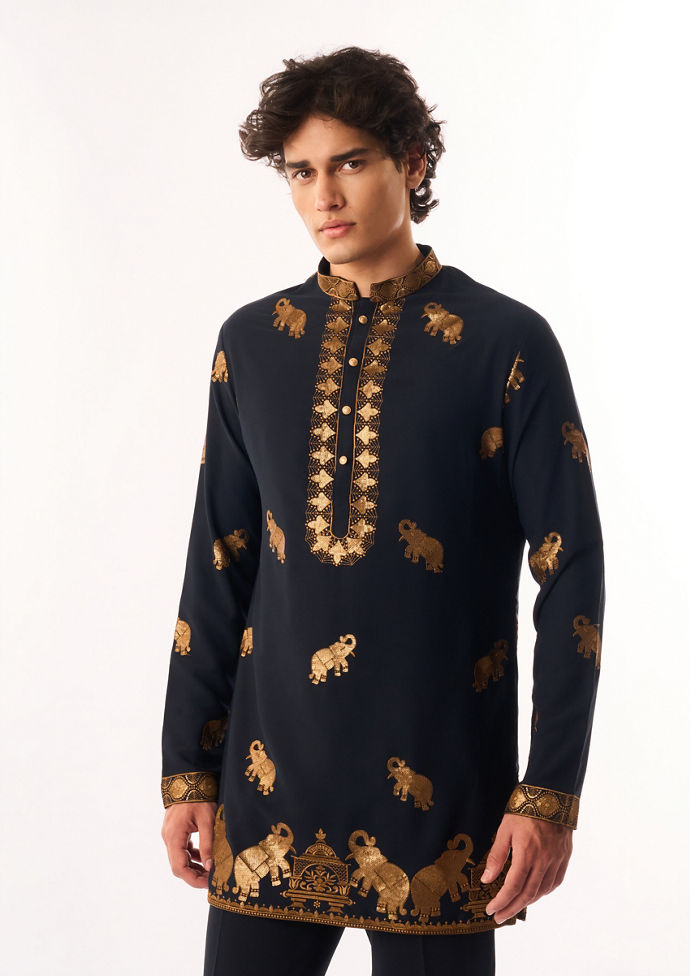
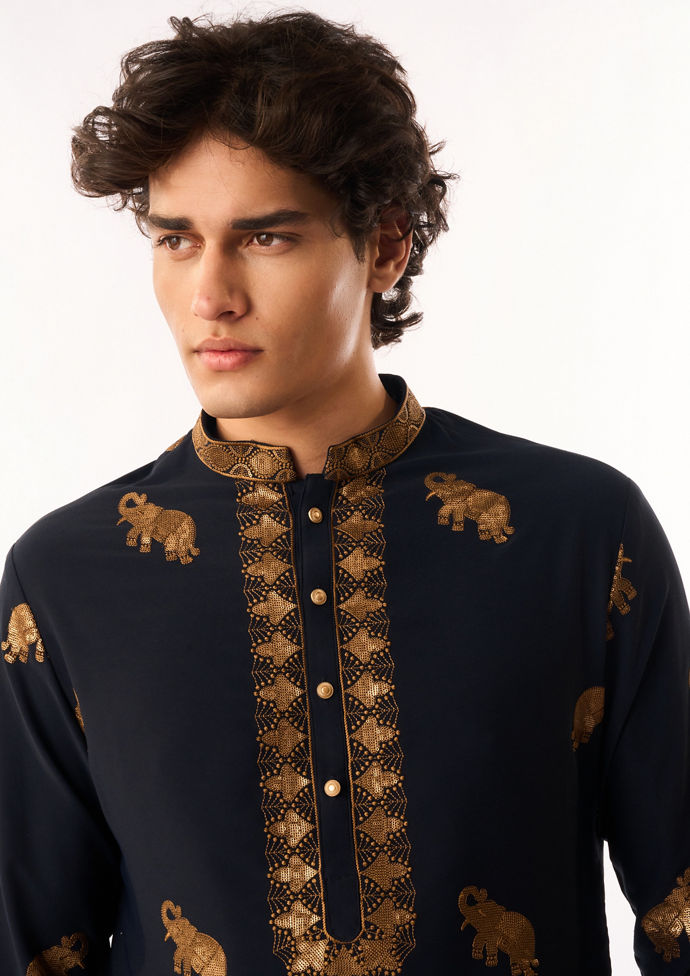
This collection carries blue kurta sets across two shade families. Dark blue works for evening functions, and light blue or turquoise fits daytime ceremonies. If you are after a navy blue kurta for men, shop the dark blue range first, then pick your fabric: viscose, silk, or crepe.
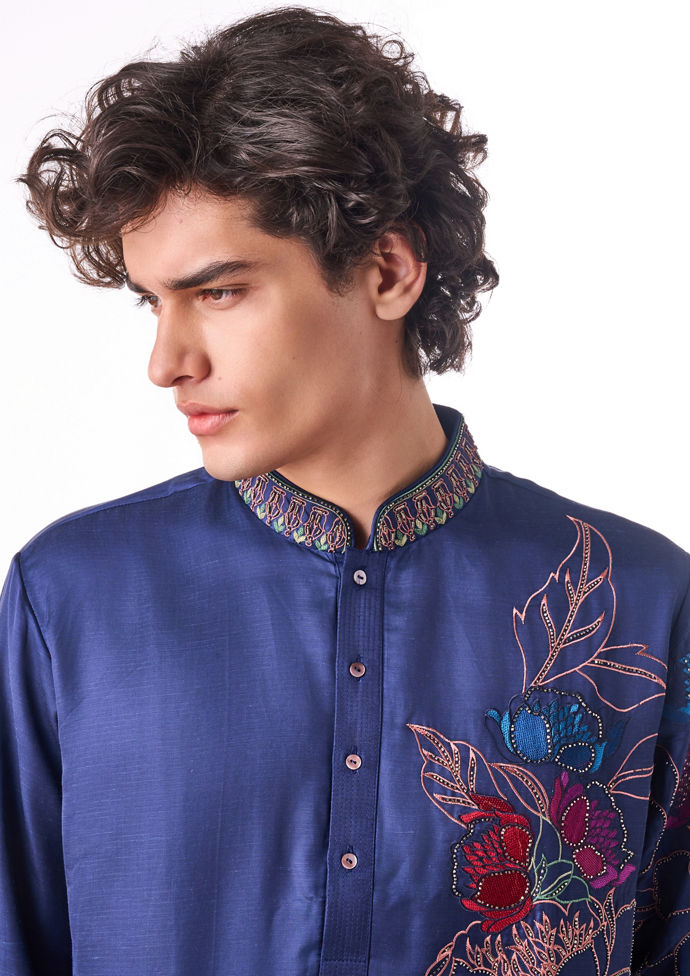
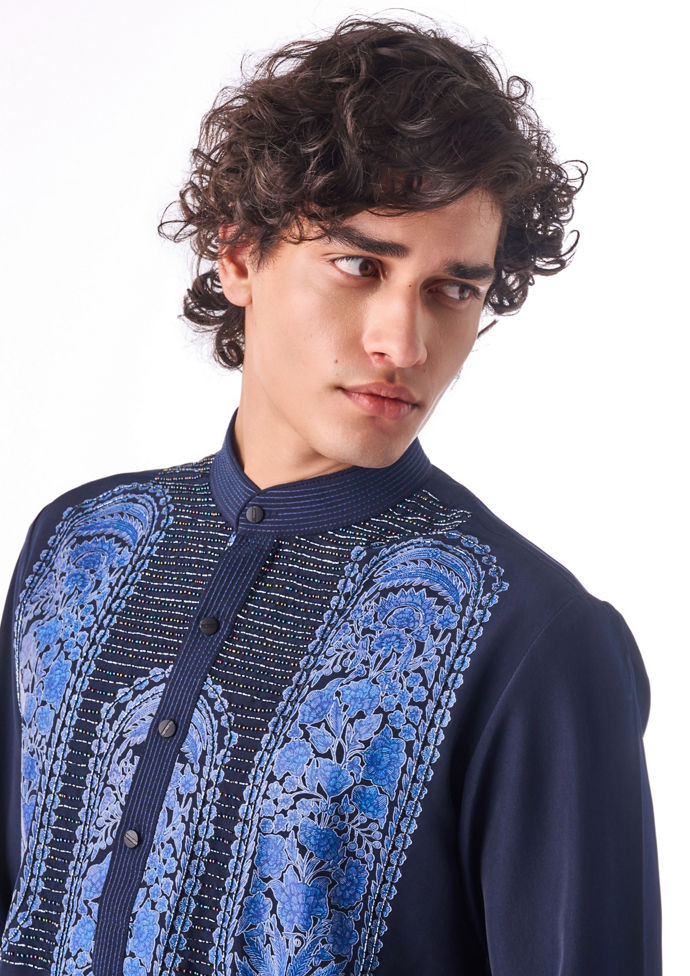
Embroidery is what separates one set from the next. Silk sets in dark blue carry chikankari, mirror work, or hand embroidery, while crepe sets use cutdana work. Light blue pieces are mostly printed, and the ombre shimmer set suits sangeet and mehendi better than a formal reception.
Shop Now: Brown Kurta
The table below shows every set with its key features and the occasion it fits best, from haldi to the wedding day.
This collection is for grooms, groomsmen, and family members dressing for weddings and festive functions. A navy blue kurta for men works for reception hours as well.
Silk and crepe hold embroidery through long ceremony hours, so the thread work stays intact from the first ritual to the last.
Cut matters as much as cloth. Men's wedding kurtas run 40 to 46 inches shoulder to hem, with the hem falling between the knee and mid-calf and 10 to 12 inch side slits so you can sit, kneel, and walk without straining the seams. Mandarin collars sit on a 1.5 to 2 inch stand, and a lined placket with reinforced buttons holds its shape from the mandap to the dining area to the dance floor.
Embroidery type tells you how formal the piece reads. Light thread work on the collar and placket suits haldi and mehndi, while denser zari or sequin work on the yoke fits sangeet and reception. Navy blue kurta options cover the widest range of these events because the darker tone hides creasing and photographs well under both daylight and evening lights.
Compare shade, fabric, embroidery, and occasion in the sections below, then shop the full collection online.
Start with the occasion rather than the colour, since the event decides the fabric weight and embroidery density you need. Once that is fixed, match the blue to the light: lighter shades for daytime functions, deeper navy blues for evening ones. Check the size chart against your chest measurement and kurta length before ordering, and pick the matching churidar or pyjama so the set reads as one outfit.
Viscose gives this set a soft hand and a light feel, and the dark blue base carries tonal embroidery down the placket. The straight cut runs 40 to 46 inches long.
Crepe holds its shape, so the cutdana work sits flat on the yoke instead of pulling at the fabric. Set against the dark blue ground, the bead and thread detailing stays visible under evening light.
Blue kurta sets differ most in shade depth, fabric drape, and embroidery density, plus what the set includes: pyjama, churidar, or dupatta. A deeper navy holds up better after dark, while mid blues keep their detail in daylight.
Every set here is finished for occasion wear, so dry clean only is the care rule to follow. Browse the full range online, and if you are pairing a groom's sherwani with the family's kurtas, keep the shade family consistent so the photographs read as one celebration.
Navy and midnight blue hold up best at evening ceremonies, where warm mandap lighting can wash out paler shades. For daytime haldi and sangeet, a mid blue or royal blue keeps the outfit from looking heavy in photographs. If the family has set a pastel theme, choose powder blue or slate blue and keep the embroidery tonal so the shade stays the focus. Guests can wear the same blues in a matte finish.
Silk and crepe keep their shape through a long, humid function. Silk kurtas usually sit in the mid to heavier weight range, which gives a structured drape without stiffness. Viscose and cotton blends breathe better for daytime summer events and crease less quickly. Check the lining before you buy: a full cotton lining makes a silk kurta warmer, so a half lining or no lining suits outdoor mandaps in April and May.
Dense cutdana and zari work belongs on the groom's kurta, where it holds up under stage lighting and stays visible in wide shots. Groomsmen and close family can wear medium thread work on the placket and collar with a plain body. For guests, a small tonal motif on the collar or a thread-work placket is enough, since heavy embroidery on a guest kurta competes with the couple in photographs.
Ready-made kurtas commonly come in chest sizes 38 to 46 inches, cut with 2 to 4 inches of ease over your actual chest measurement. The hem should sit 1 to 2 inches below the knee for a wedding kurta; above the knee reads casual, and past mid-calf gets in the way when you sit. Sleeves should end at the wrist bone, and the shoulder seam should land on your shoulder line instead of dropping past it.
Dark blue accounts for most of the sets here. Light blue shows up paired with cream on the ombre and leaf prints, and a single turquoise blue and yellow silk print sits outside that pattern.
Pick the darker end of the range when the kurta has to work under evening lights, since a navy blue color kurta reads formal next to gold or silver jewellery. The lighter blues photograph brighter in daylight, which suits daytime functions and outdoor haldi setups.
Silk carries the chikankari, thread, and mirror work sets. Viscose covers the kurta pajama prints, and the cutdana set is crepe.
Silk is a natural protein fibre with a smooth surface and a soft sheen, so embroidery threads sit evenly on it without the weave pulling. Viscose is a cellulose-based fibre with a matte finish and a fluid drape, which is why the printed sets sit on it rather than on silk. Crepe has a lightly crinkled texture that keeps the collar and placket standing through a long function.
Keep the cutdana and mirror work sets for sangeet evenings. Chikankari, ombre, and the printed sets work for daytime haldi and festive functions.
Match the fabric to the hour as well as the event. Crepe and silk hold their shape across a long evening, while viscose stays cooler for morning ceremonies and puja at home. A blue kurta with a chikankari front needs no extra layer for haldi, and the dupatta sets suit a reception where the embellishment carries the look.
Embellishment runs from plain prints up through chikankari and thread work to hand embroidery and mirror work. The dupatta sets sit at the top of that range.
Plain printed sets repeat most easily across a season because there is no raised surface to catch on bags or chair backs. Chikankari and thread work lie flat and crease less in storage than mirror work, which is built from small stitched discs and folds along its stitch lines.
Start with the occasion, then the shade, then the fabric. That order usually settles the choice faster than scrolling through every option on the page.
You get the sharpest look with a dark blue kurta over ivory pajamas. A light blue one works with a cream churidar that has 10 to 12 inches of ankle gathering. Keep the dupatta for daytime functions, where the lighter drape sits well against the daylight.
Navy sits better against warm metals than bright silver, so pick gold or antique brass. Two pieces is plenty: a watch and one ring, or a pocket square.
Send embroidered pieces to a dry cleaner, as the care label on the embroidered sets we list advises. Viscose and crepe take low-heat steaming, but keep the iron off them, since blue fabric picks up press shine that no amount of steaming will lift.
Go with the set when the wedding is close and you would rather not match the hem, lining, and bottom yourself. Our kurta pajama sets pair the kurta with a matching pajama, so the pieces already work together.
Yes. Choose a mid or light navy with embroidery limited to the placket or collar. Heavy zari and dark indigo read as evening wear once the ceremony moves into morning light.
No. The groom wears a sherwani. A navy kurta sits better at the mehndi or sangeet, where the dress code is lighter and the groom changes outfits during the function anyway.
Pick the safa in the trim colour of the kurta, roughly one shade away from the base fabric. Keeping them one step apart stops the two from reading as a single block of colour in photographs.
Turn it inside out before washing, use cold water and a mild detergent, and skip a long spin cycle. Dry it in shade, because direct sun breaks down indigo dye and dulls the colour faster than any wash cycle.
Yes. Our kurta sets reach larger chest sizes, cut with the hem falling below the knee and sleeves that reach the wrist.
Explore More Collections: Golden Kurta For Men , Green Printed Kurta
Blue Kurta For Men Price List
Blue Kurta For Men
Price (₹)
£ 365
£ 570
Midnight Blue Thread Work Kurta Set
£ 680
Teal Blue Velvet Kurta Set with Embroidery
£ 680
Dark Blue Crepe Kurta Set with Embroidery
£ 500
Dark Blue Georgette Kurta Set with Print
£ 635
Dark Blue Crepe Kurta Set with Embroidery
£ 410
Dark Blue Silk Kurta Set with Embroidery
£ 635
Dark Blue Velvet Kurta Set with Embroidery
£ 680
Teal Blue Satin Kurta Set with Embroidery
£ 410




Login to access Twamev Member Exclusive Features like Video Commerce
Enter the email address associated with your Manyavar account
We’ll ask for this password whenever you sign in