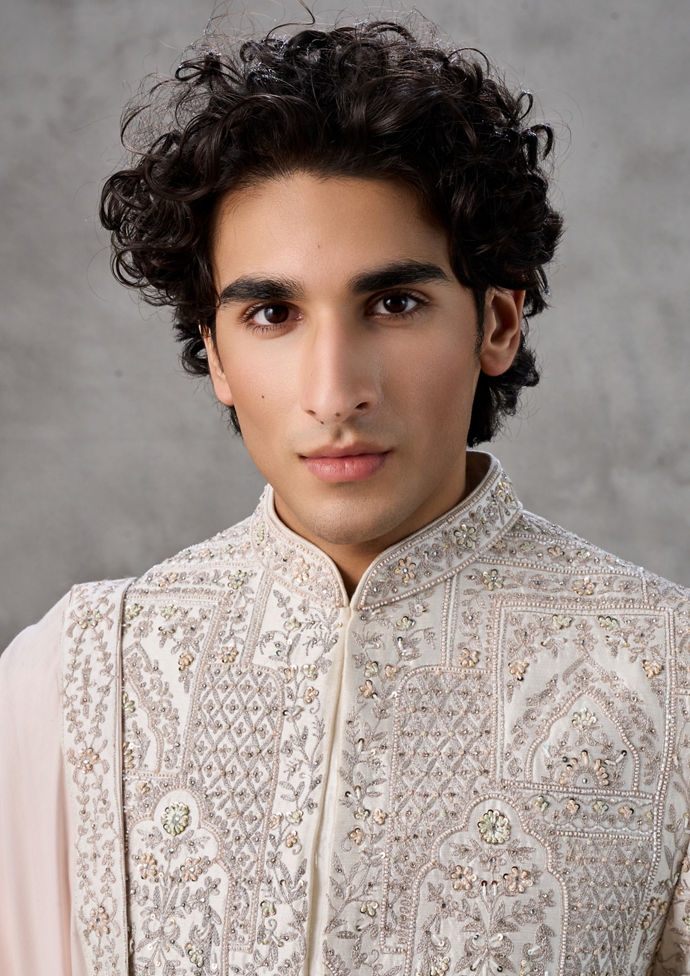
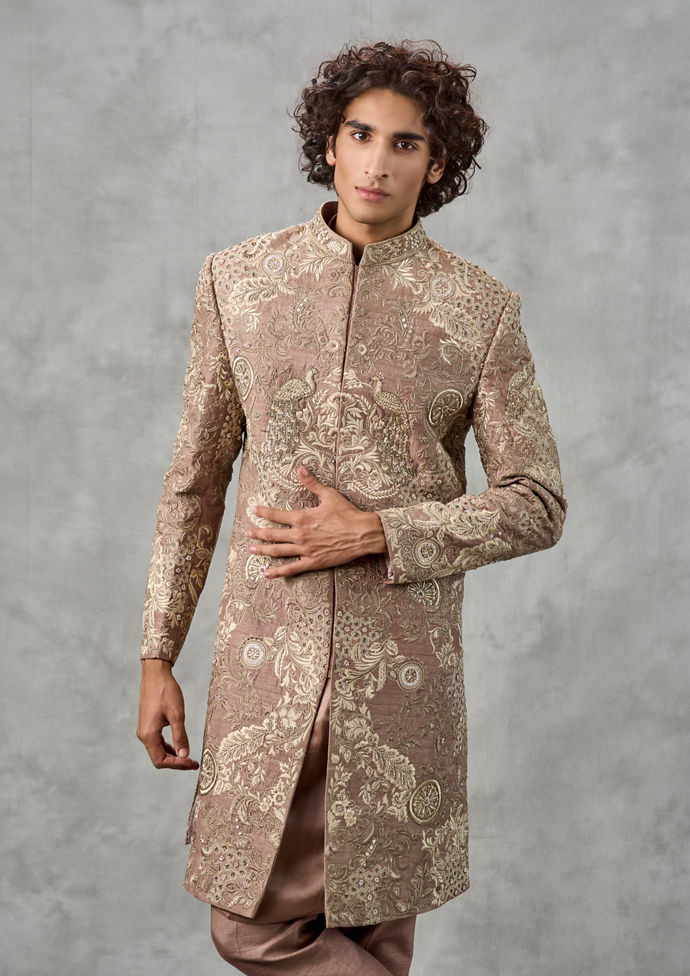
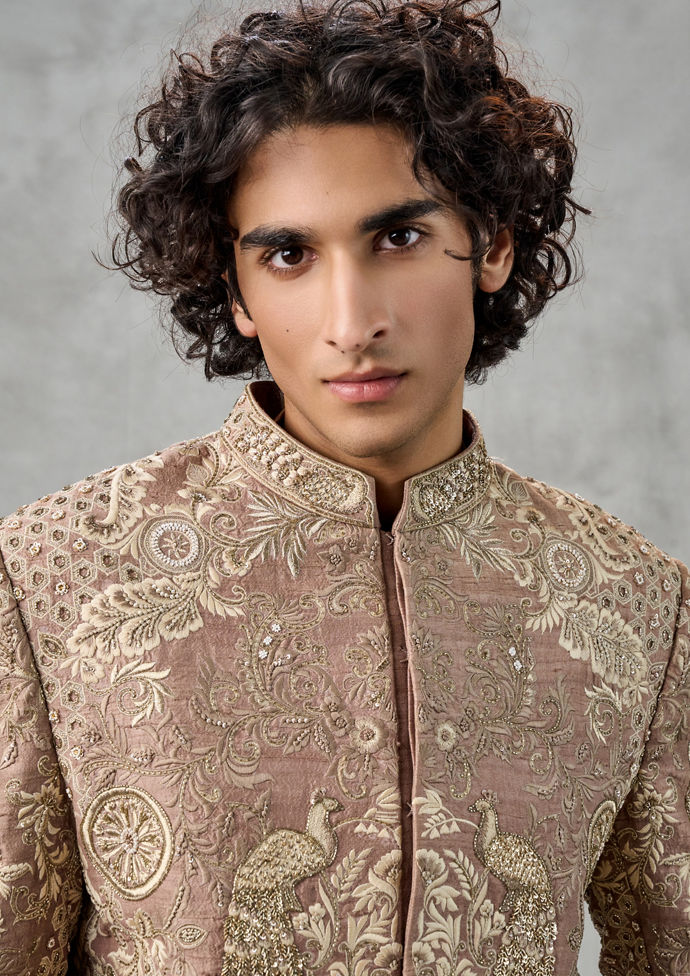
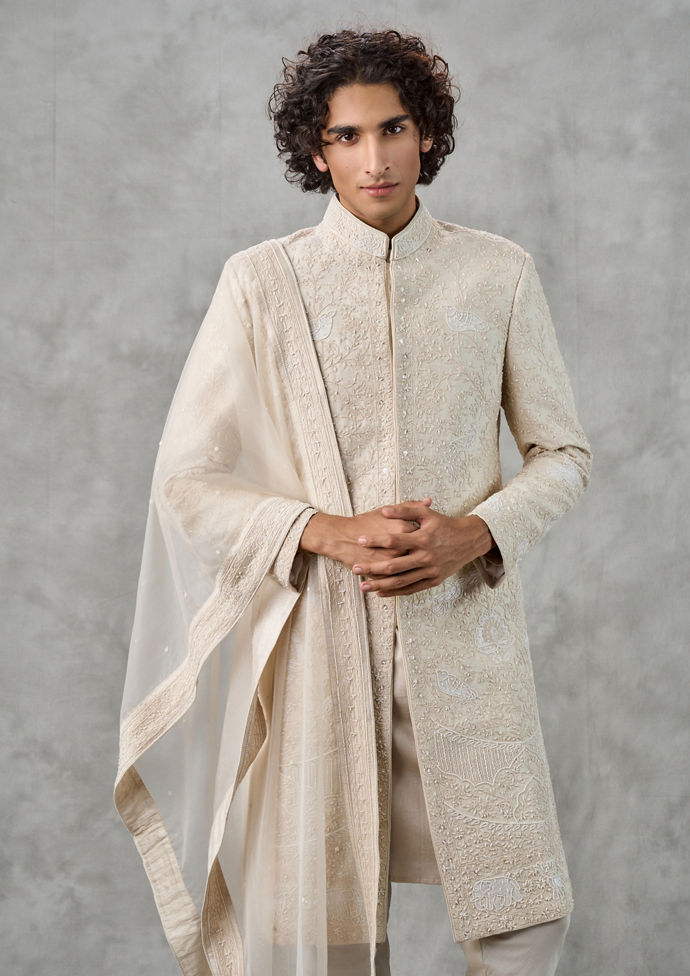
Men's Sherwani Collection for Grooms
Start with function, then fabric. Baraat and pheras hold up better in heavier velvet or raw silk with a closed collar, while sangeet and reception are easier in lighter silk. Take chest and shoulder measurements before ordering, since sizes run 36 in to 46 in chest.
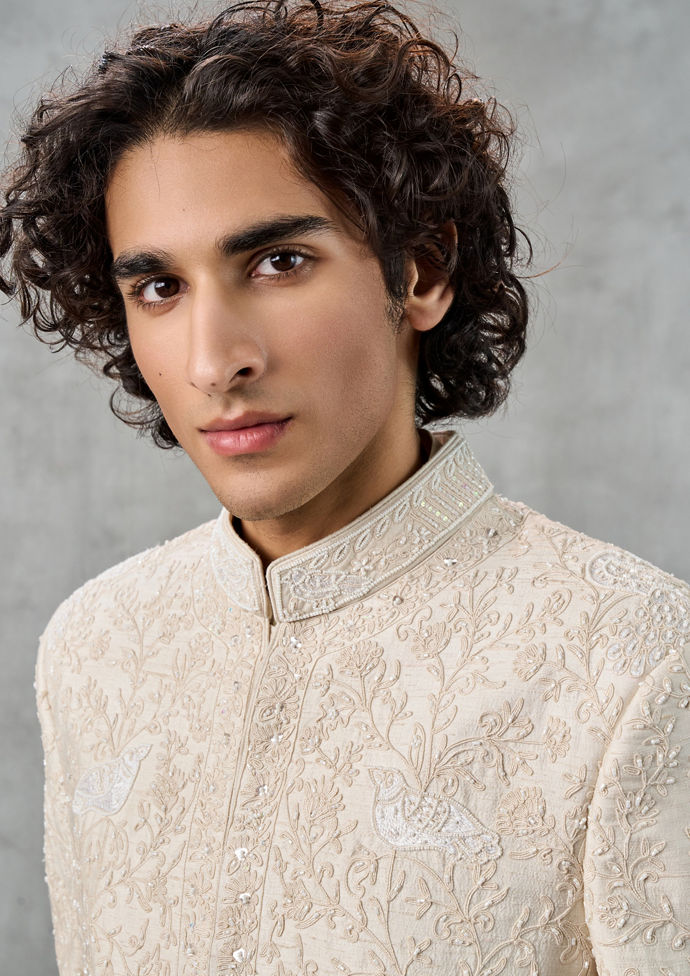
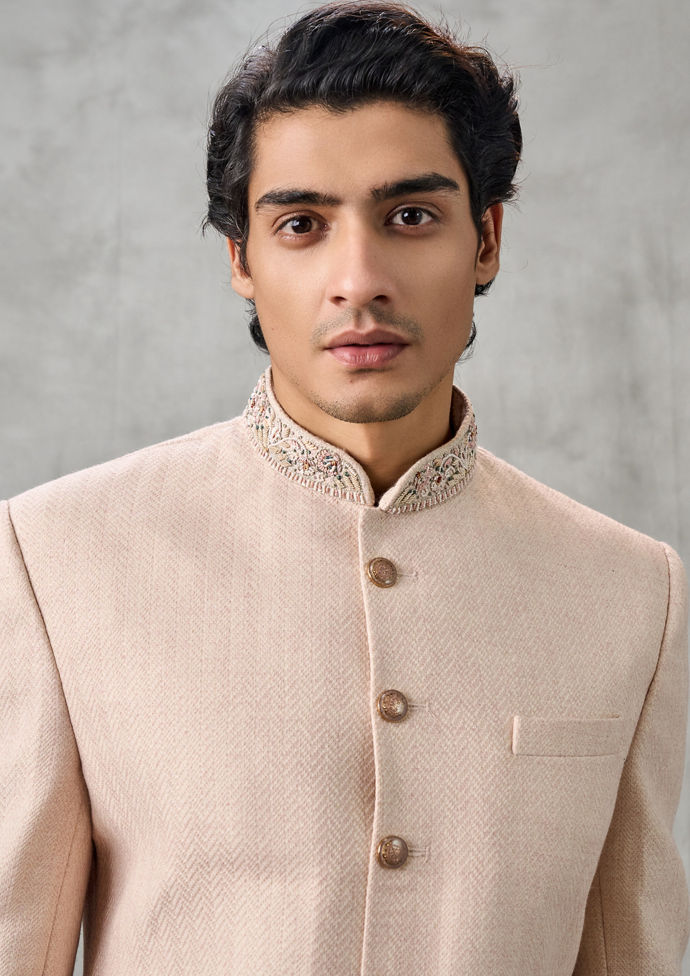
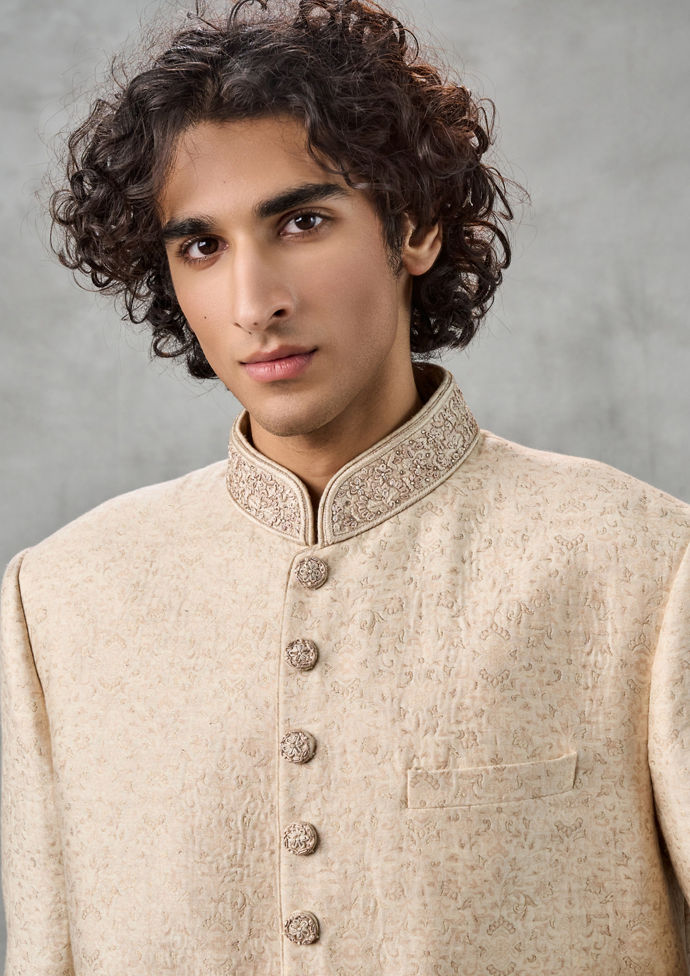
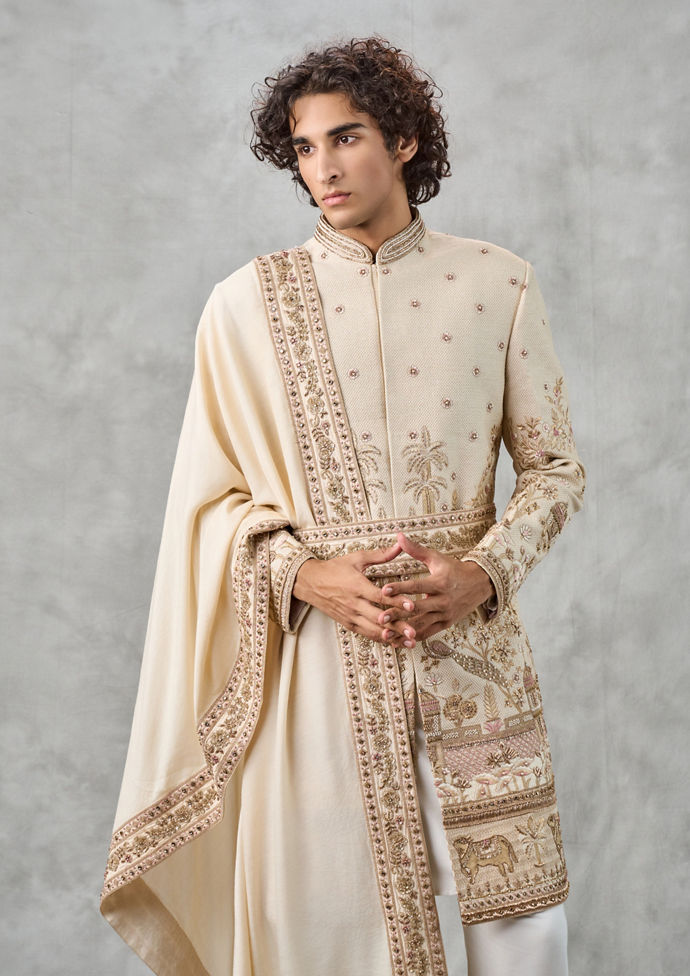
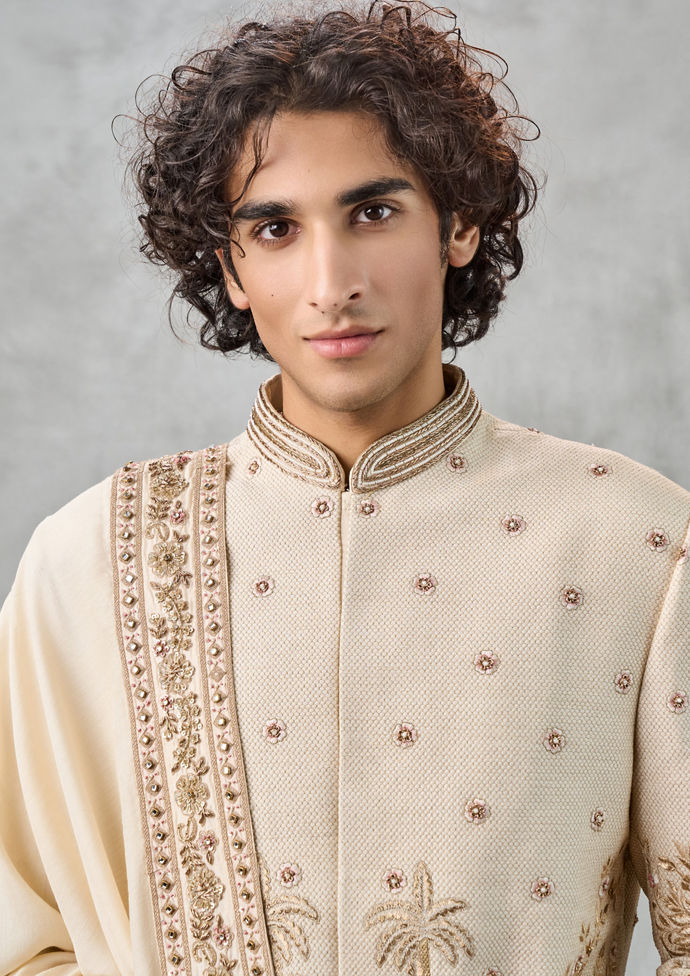
Fabrics include raw silk, jacquard silk, and velvet in ivory, fawn, beige, walnut brown, and wine. Embroidery work covers aari, zardosi, resham, and dori. Some sets come with a pashmina shawl and a brooch.
The Twamev sherwani line is part of its luxury occasion wear range for weddings, receptions, and festive functions. The details below compare fabric, embroidery, and occasion so you can shortlist before you order.
Men's sherwani collection for Indian wedding occasions
What a sherwani is and when to wear it?
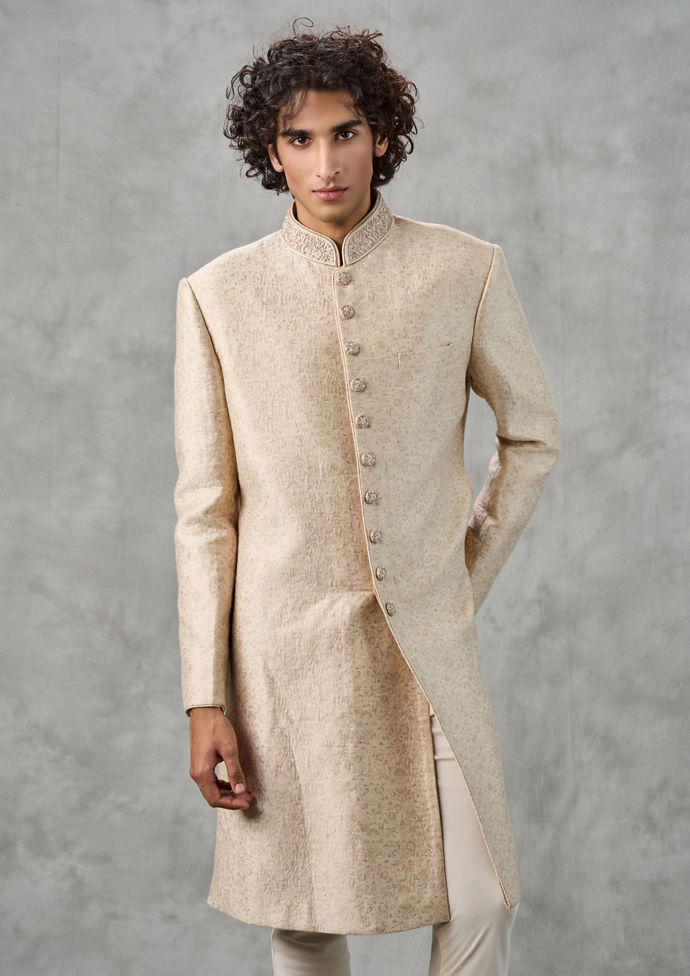
A sherwani is a knee-length coat with a closed stand collar, buttoned down the front, worn over a kurta and churidar. It fits baraat, pheras, and reception functions. For a daytime mehndi or haldi, a lighter kurta set is easier to wear, since a lined sherwani holds heat.
Sherwani for groom versus guest dressing
Grooms lean toward deeper tones such as maroon, navy, or ivory with gold work, and the embroidery sits on the collar, placket, and cuffs. Guests can wear lighter silks, jacquard, or cotton-silk with little or no embroidery, which keeps attention on the couple. If the invitation names a dress code or palette, follow that first.
Fit basics before you browse the collection
Measure your chest at its fullest point and add 2 to 3 in of ease for the sherwani layer. The shoulder seam should land on your shoulder point, not past it, and the sleeve should end at the wrist bone so 0.5 to 1 in of kurta cuff shows. A hem that falls 1 to 2 in below the knee reads as formal; for a 5 ft 8 in to 6 ft frame that is about 42 to 45 in from the nape. Churidar should bunch in 2 to 3 folds at the ankle.
Which men's sherwanis are in this collection?
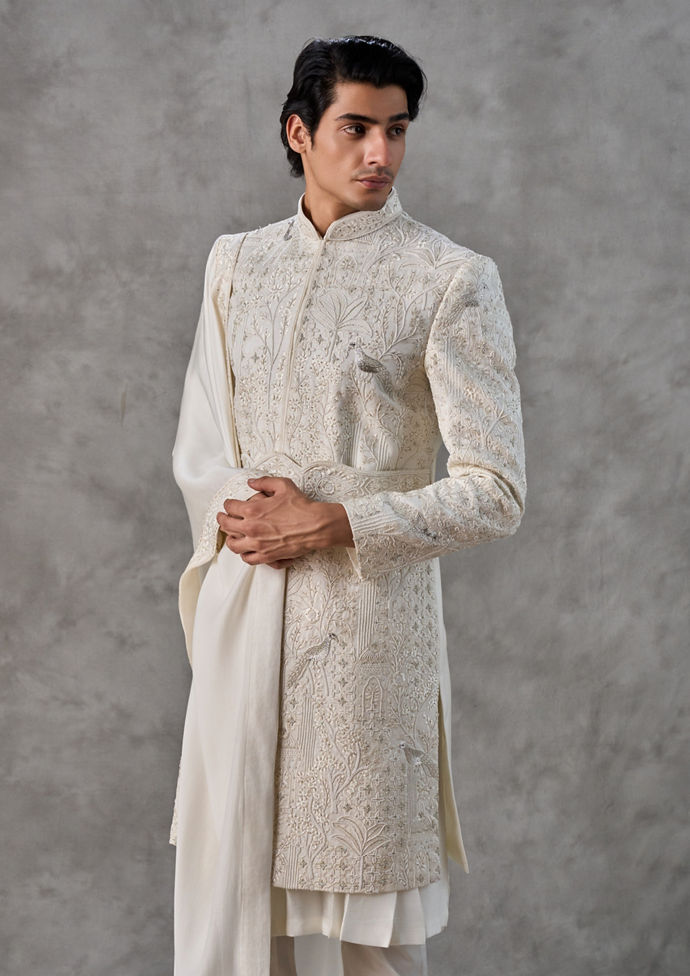
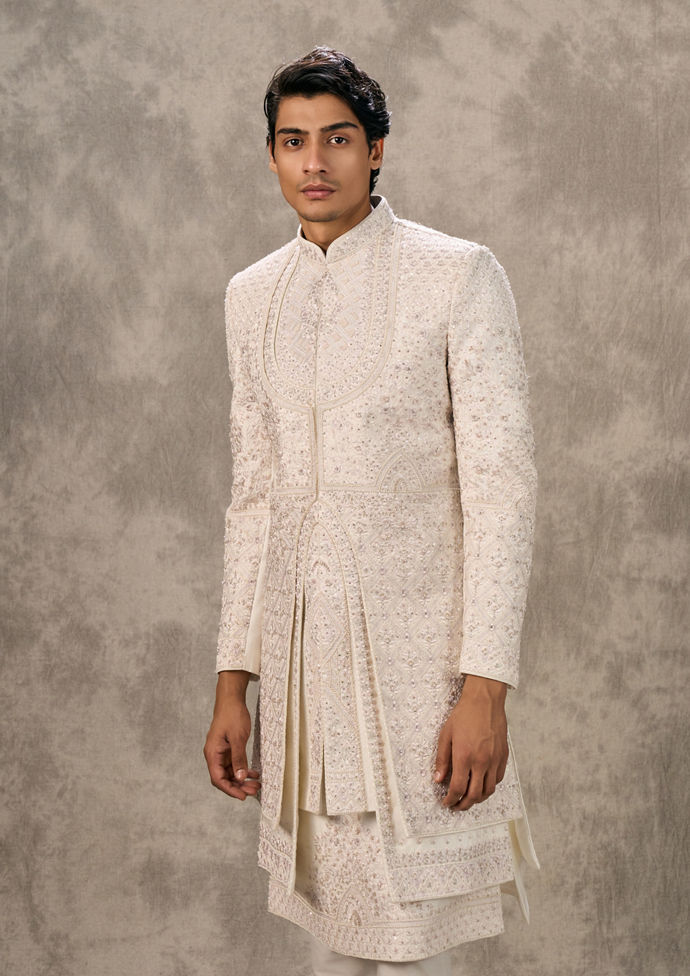
Ivory silk Aari embroidered layered sherwani
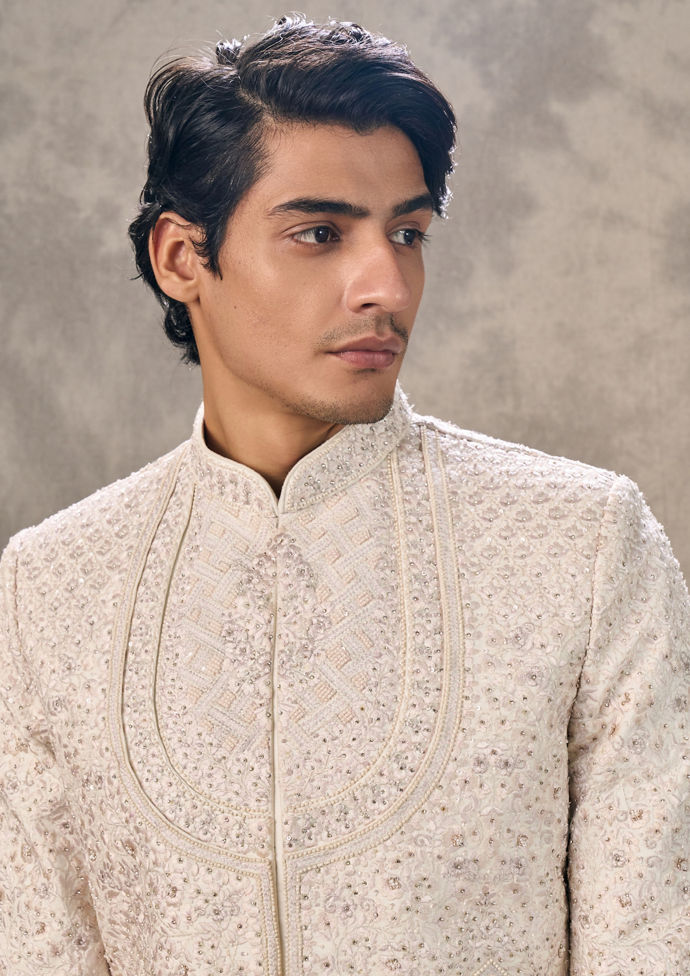
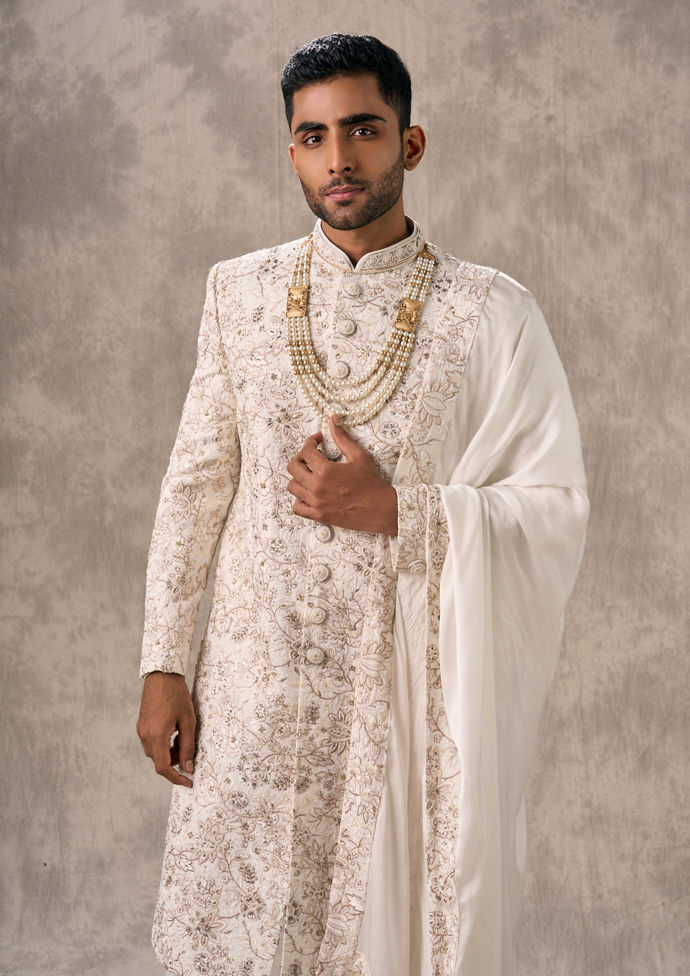
This is a layered ivory silk sherwani with Aari embroidery worked in zari thread across the front panel, collar, and cuffs. A second panel sits over a knee-length kurta, which holds the shape through a daytime phera. Wear it with the matching churidar and a light dupatta; heavy stoles read wrong in daylight.
Embroidered sherwanis for engagement and reception
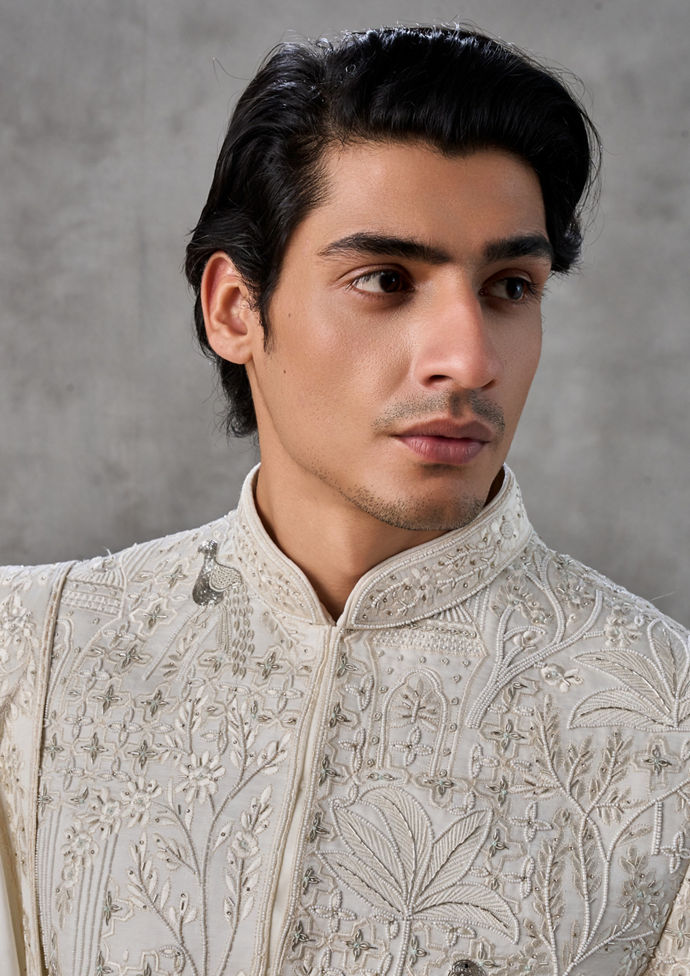
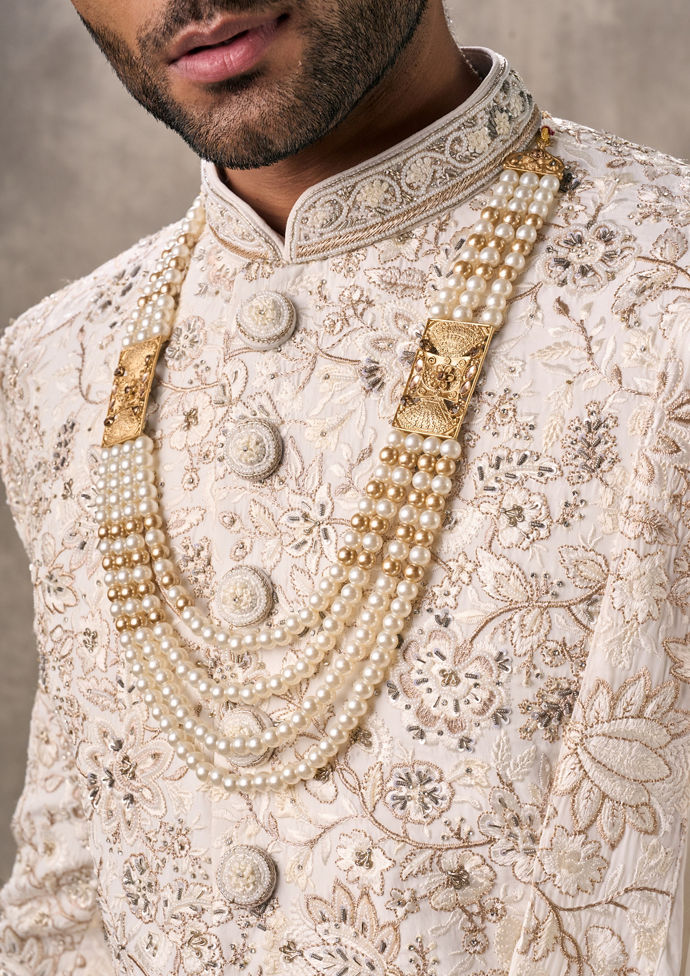
Engagement and reception pieces carry denser needlework: zardozi, dabka, or sequin embroidery on silk or raw silk, usually with a mandarin collar and covered buttons. Weight climbs with the embroidery, so fit matters more than stitch count. Check chest and shoulder measurements against the size chart before ordering.
Three piece sherwani sets with dupatta and churidar
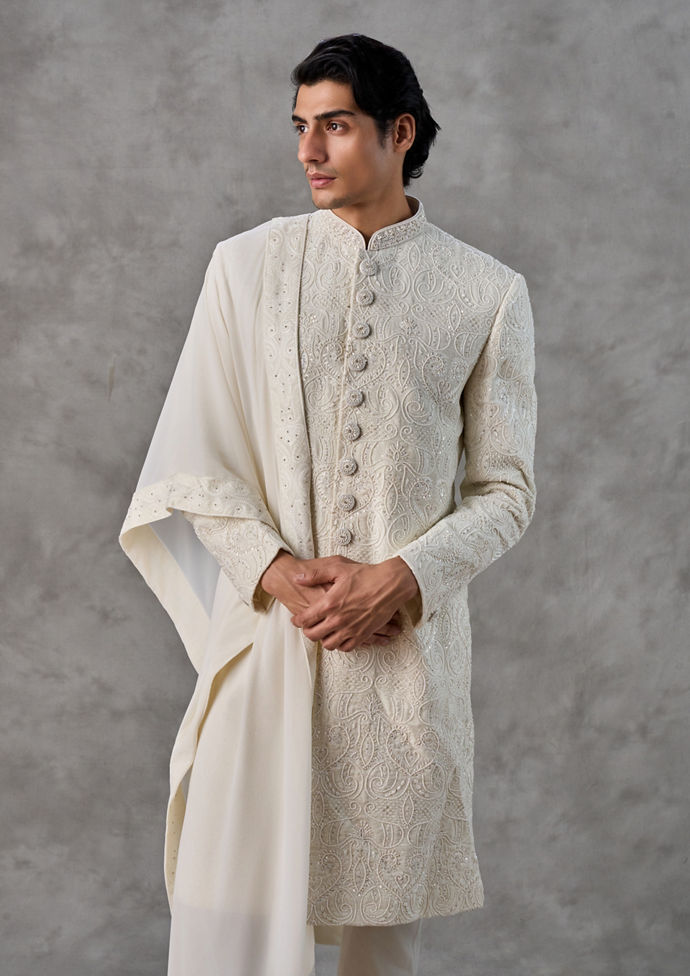
Each set includes the sherwani, a dupatta cut from the same fabric, and a churidar with a drawstring waist. The dupatta runs about 2.5 m, enough to drape over one shoulder or across both. Hem length on the churidar can be adjusted by a tailor after delivery.
Designer groom sherwanis in jewel and pastel tones
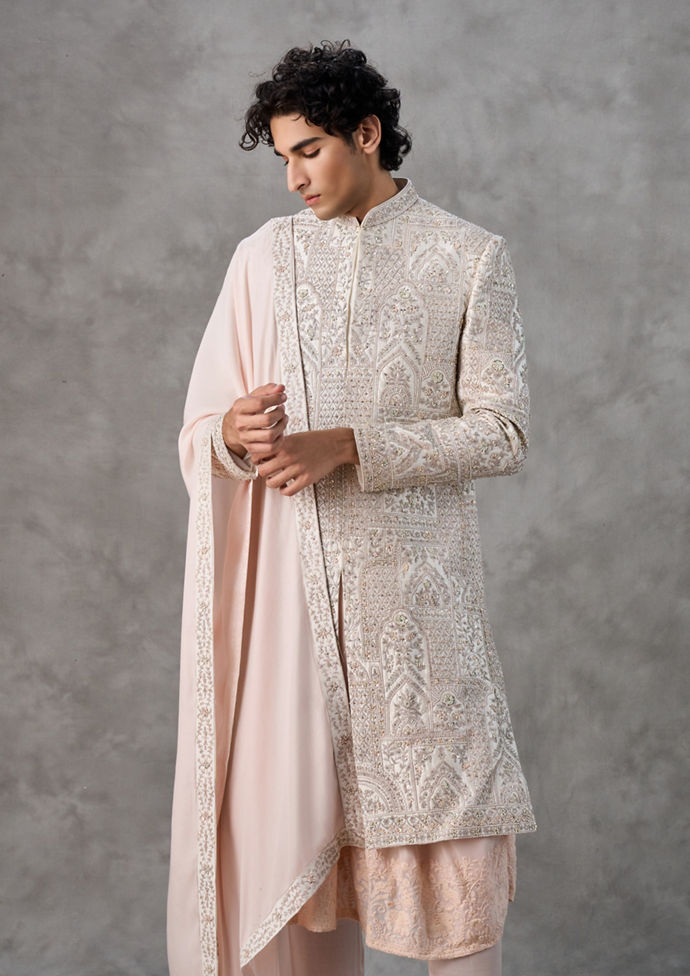
Time of day usually decides the colour. Emerald, ruby, midnight blue, and wine velvet hold up under evening light, while ivory, powder blue, and blush are easier to photograph in daylight. If the ceremony runs from morning into night, pick a pastel base with jewel-toned embroidery so one outfit covers both.
How do you choose the right sherwani for a wedding?
Step 1 match the sherwani to the wedding function
Start with the event printed on the invite. A sangeet sherwani can carry a lighter fabric and simpler thread work, since you will be moving and dancing in it. A reception groom sherwani suits full zardozi because you wear it for the formal entry and the photographs. If one sherwani has to cover both, pick the darker colour and keep the embroidery to the collar, placket and cuffs.
Step 2 check chest, shoulder and length measurements
Take the chest measurement over a shirt, then add 3 to 4 in of ease so the sherwani closes without pulling across the buttons. The shoulder seam should sit at the bone rather than past it. For length, the hem belongs about 2 in below the knee, which leaves room for a churidar or a dhoti drape underneath.
Step 3 pick fabric weight and embroidery for the season
The month decides what the cloth has to do. A winter wedding works in velvet near 280 gsm, which holds its shape and traps warmth. For summer, raw silk in a lighter weight with thread work instead of heavy zardozi keeps you cooler through the ceremony.
Step 4 confirm colour, dupatta and footwear together
Lay the sherwani, dupatta and juttis out on one surface before you commit. Pull the dupatta and footwear towards the sherwani tone so the set reads as one colour family. Two accessory colours are usually enough here; a third tends to fight the outfit.
Shop men's sherwani by style, fabric and function
Shop by wedding function
Reception and baraat call for dense, structured work: zardozi built over a stiff canvas holds a crisp shoulder line through a long night of standing and photographs. Sangeet is the opposite problem, so pick lighter resham or sequin work that lets the coat move when you dance. Daytime mehndi suits cotton silk with little or no embroidery, and the same piece works again for haldi if the colour stays light.
Shop by fabric and season
Velvet has a cut pile, usually 1 mm to 2 mm deep, and a mid-weight velvet runs about 250 to 350 gsm, which traps heat and suits December weddings and indoor evenings. Raw silk is woven flat with a faint sheen and sits closer to 100 to 150 gsm, so it breathes during an afternoon ceremony and creases less than plain silk. Silk blends cost less and hold shape well, but they shine under flash photography more than matte finishes do.
Shop by embroidery and work type
Zardozi uses a metal wire stitched over a frame, so the pattern sits raised on the cloth and adds real weight to the front panel. Aari work is done with a small hook needle, which lets a single artisan lay a curving line of thread faster than hand stitching allows. Resham is silk thread alone, flatter and lighter, and it is the better pick if you want embroidery that survives folding and travel. Any of the three should be dry cleaned, never machine washed, and pressed only from the reverse over a cloth.
Shop by colour palette
Wine and burgundy read as one solid mass under warm indoor light, so break the tone with ivory or gold on the buttons, collar and stole rather than adding another dark shade. Noor, our wine velvet zardozi groom sherwani, shows the principle well: off-white and gold thread sit on a matte velvet pile, which keeps the pattern legible in photographs where a glossier base would flatten it. If you want the sherwani to work for more than one function, keep the embroidery in one metal tone and change the dupatta instead.
Category tips for buying and wearing a men's sherwani
Sizing and tailoring tips for gents sherwani
A sherwani is cut long through the body and closed at the front, so a tailor normally adjusts only two places: sleeve length and hem. Chest, shoulder, collar, and armhole stay as sized, which is why you should order your usual size instead of sizing down for a closer look. If you sit between two sizes, take the larger one, because side seams can be taken in but there is little fabric to let out. Ask for the sleeve to finish at the wrist bone and the hem to fall just below the knee for a classic fit, or slightly shorter if you plan to wear it with wide-legged trousers.
Care and storage for embroidered sherwanis
Zari and metallic thread tarnish when they sit against moisture, so keep the garment dry and away from plastic bags and direct sunlight. Hang it on a padded hanger that supports the shoulders, then cover it with a breathable cotton or muslin sleeve rather than sealing it in a garment bag. Fold the dupatta separately and store it flat so the embroidered borders do not crease along the same line year after year. Spray fragrance before you dress, not after, and have the sherwani dry cleaned only when it actually needs it, since repeated cleaning dulls the thread.
Styling the dupatta, stole and footwear
Drape the dupatta from the left shoulder across to the right hip, letting the longer embroidered end fall behind the arm so it stays in place when you move. Pin it discreetly at the shoulder with a safety pin on the inside lining, which keeps the drape steady through a long function. Match footwear to the metal in the embroidery: gold zari reads best with gold-toned or ivory juttis, while silver or white thread suits silver, grey, or nude pairs. If the sherwani is heavily embroidered, keep the juttis plain; if it is lightly worked, a textured mojari adds detail without competing.
What do men ask most about buying a sherwani online?
How far in advance should you order a sherwani before the wedding?
Give yourself four to six weeks. That window covers production, one round of alterations after the first fitting, and shipping, with about ten days of slack before the first function. If your date falls in peak wedding season, add another week. Rush orders leave no room to fix a tight shoulder or a short sleeve.
Can you wear a sherwani to a daytime haldi or mehendi?
Yes, a sherwani works for a daytime haldi or mehendi if you pick cotton, a linen blend, or light raw silk in pastel tones such as mint, powder blue, or ivory. Velvet and dense zari work hold heat and look heavy in daylight. A piece like the Noor groom sherwani, cut in wine velvet with a silk lining and off-white and gold zardozi, is made for a wedding or reception rather than a midday function. For these events, keep embroidery to the collar and placket, and choose an unlined body where you can.
How do you clean and store an embroidered sherwani after the event?
Dry clean only, and tell the cleaner whether the decoration is zari, dabka, or thread work so it gets pressed from the reverse. Hang the sherwani on a padded hanger wide enough for the shoulders, then cover it with a breathable cotton sheet. Skip the plastic bag, because trapped moisture dulls metallic thread and can leave marks on the lining.
What should you wear under a sherwani to stay comfortable?
A cotton kurta and churidar in a tone close to the sherwani, and nothing heavier. Silk against bare skin traps heat through a long ceremony. The cotton layer also absorbs sweat, which keeps the sherwani lining cleaner between wearings.
Can a ready to wear sherwani be tailored to fit later?
Yes, a tailor can adjust a ready to wear sherwani after purchase. Side seams usually allow about 2.5 cm (1 in) of movement in either direction, and sleeve length can be shortened at the cuff. A heavily embroidered front panel with fixed motifs limits how much the chest and shoulders can be moved, so check the fit before you buy rather than planning to fix it later.