Designer sherwani for men
When you shop for a designer sherwani for men, start with three things: the outer fabric, the lining, and where the embroidery sits. Dense zardozi on a dark base is the look most grooms ask for, since off-white and gold metallic thread reads sharpest against velvet.
For the wedding, choose fuller zardozi and a closed collar. The same sherwani works better at a reception with lighter work across the chest, so the fabric does not pull when you sit down. If you want one outfit to cover both, pick a sherwani you can restyle with a stole.
Our Noor groom sherwani shows that balance: wine velvet with a silk lining and zardozi in off-white and gold metallic thread.
What are designer sherwanis for men and who should wear them?
Who this collection is for grooms, groomsmen, and wedding guests
Our collection is for grooms, groomsmen, and wedding guests who need occasion wear that still reads formal at close range.
A sherwani for groom duties carries the heaviest embroidery of the group, because it is the piece photographed closest and most often. Groomsmen usually wear the same base colour with lighter thread work on the placket and cuffs, which keeps the lineup uniform without pulling attention away from the groom. Guests have more room to move: a plain or lightly embroidered sherwani in a darker shade works for a daytime ceremony and again for an evening reception.
Sizes run from XS to 3XL, and made-to-measure orders adjust chest, waist, shoulder, sleeve, and length. If two sizes both close at the chest, take the larger one and have the waist taken in.
What counts as a designer sherwani fabric, embroidery, and fit
Fabric, embroidery, and construction decide it. Velvet with a silk lining, zardozi thread work, and a structured shoulder are the details that separate a designer piece from a plain one.
Mid-weight velvet around 280 to 350 gsm keeps its shape through a long function; lightweight silk blends drape closer to the body but crease faster under a dupatta. Read the embroidery by coverage per panel rather than by total pattern. Dense work across the chest and collar with lighter work on the sleeves and hem stays wearable through a full day. Zardozi uses metallic thread and sits raised from the surface, resham stays flatter, and gota patti reads lighter still. Machine work covers ground faster, while hand work shows more variation in the thread.
Fit shows up in the shoulder line. A structured shoulder with canvas at the chest and a fully lined body keeps its line after hours of wear, where a soft shoulder tends to collapse. Check the inside seams and the interlining before you commit to a piece.
The sherwani length from shoulder to hem
Measure from shoulder to hem before you order. The hem usually lands just below the knee, with 1 to 2 cm of ease over the trouser.
Take that measurement in the shoes you plan to wear. A 2 cm heel lifts the trouser and moves the hem, so a length that sat correctly in flat shoes can finish above the knee. Stand straight with your arms at your sides, then run the tape from the shoulder seam at the neck down the front to the hem point you want.
Send the tailor four numbers with it: shoulder to hem, sleeve length from the shoulder seam, chest, and waist. If you plan to wear a churidar or dhoti underneath, say so, since the drape changes how much room the trouser needs at the knee. Men who order a sherwani dress online usually record these measurements once and reuse them for the groomsmen's set, which keeps every length inside the same range.
How do you choose a designer sherwani for men in India?
Step 1 measure chest, shoulder, and sherwani length
Measure the chest at its fullest point and keep the tape level all the way round. Slip one finger under it so there is room for a kurta beneath the sherwani. Shoulder is seam to seam across the back. Length runs from the shoulder seam down to the hem you want. Standard sizing runs 38 to 46 inches, and anything outside that range needs a cut made to your own numbers.
Step 2 pick fabric weight for indoor or outdoor weddings
Velvet at 280 to 350 gsm holds its shape in air-conditioned halls. For an outdoor mandap, lighter silk moves better and stays cooler through a long ceremony. Weigh the two before you commit, because the same silhouette sits differently in a heavy cloth and a light one. If your day runs from ceremony into reception, the fabric you choose at this step decides how comfortable the last few hours feel.
Step 3 match embroidery density to wedding or reception
Dense zardozi across the chest suits a wedding, where the light is low and the crowd is far enough away that detail has to carry. A reception works better with embroidery kept to the placket and cuffs, so the sherwani reads clean up close. Look at the Noor wine velvet zardozi groom sherwani in the table below for the first kind of density, where the off-white and gold thread covers the fabric itself rather than sitting in isolated panels.
Step 4 decide between ready-to-wear and made-to-measure
Ready-to-wear ships in fixed sizes, so it arrives quickly and needs no fittings. Made-to-measure is the route for a groom whose measurements fall outside those brackets, or whose shoulder, sleeve, and hem have to be set individually.
What designer sherwanis are in this collection?
Product table: designer sherwanis by name, features, and best occasion
Start with the best-for column to narrow the shortlist, then check fabric and embroidery against your venue and the time of day.
|
Product name
|
Key features
|
Best for
|
|
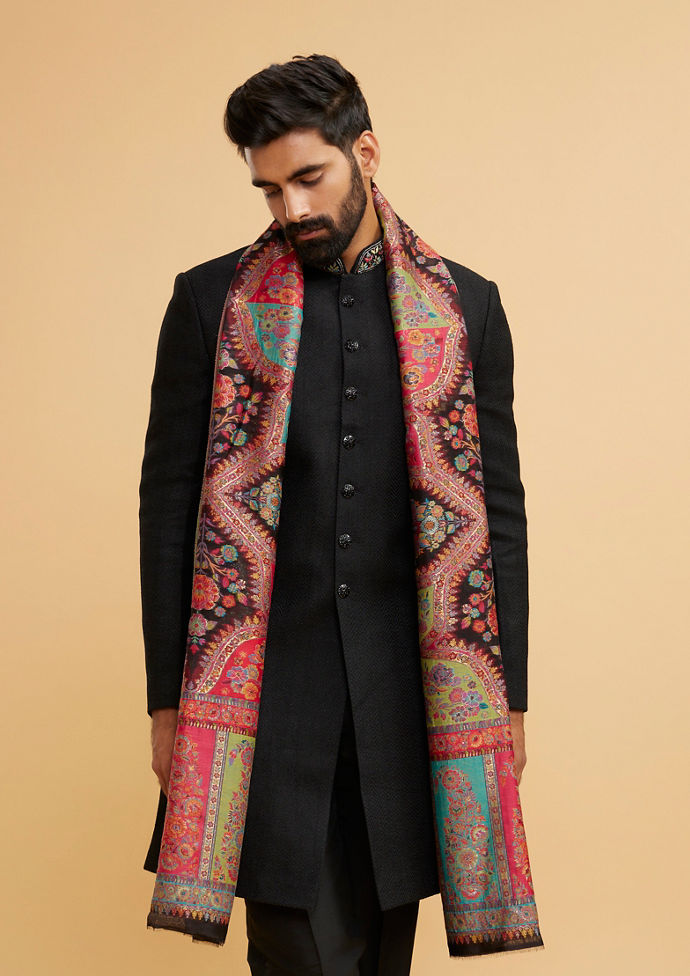
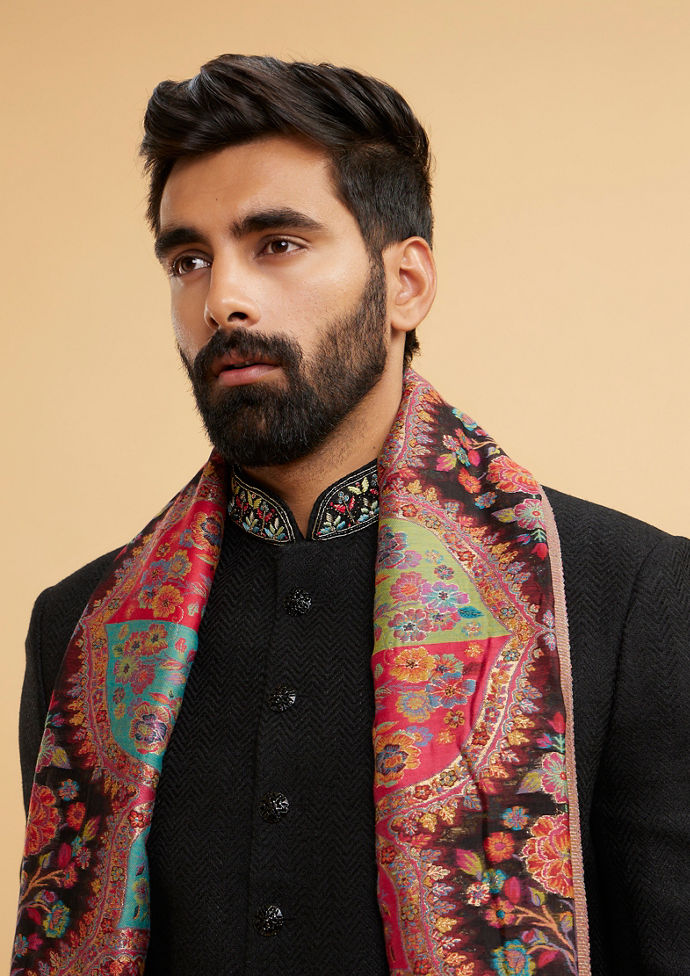
Black Textured Sherwani With Pashmina Shawl
|
Textured black surface, pashmina shawl included
|
Wedding and reception
|
|
Noor Wine Velvet Zardozi Embroidered Groom Sherwani
|
Wine velvet outer, silk lining, zardozi worked in off-white and gold metallic thread
|
Groom, wedding, reception
|
How to scan the table for your wedding date and venue?
Read the table by time of day first. A daytime ceremony works with lighter surface work, while an evening reception suits velvet and denser zardozi.
Work in two passes. Fix the time of day first, because a morning or afternoon function in a hall with daylight reads differently from an evening reception under warm lamps. Then match venue: an air-conditioned banquet hall suits a velvet outer layer, while an outdoor lawn or beach is easier in the textured black piece with pashmina shawl. The best-for column narrows the shortlist before you check fabric, so a sherwani for a groom's reception does not get weighed against a piece cut for a daytime ceremony. Where two rows both fit the date, compare the lining. The wine velvet piece has a silk lining, which slides over a kurta and churidar more easily than an unlined shell.
Featured piece black textured sherwani with pashmina shawl
The black textured sherwani comes with a pashmina shawl, so the shoulder layer is already sorted for a reception.
The surface is textured rather than embroidered. That keeps the body of the sherwani matte, so a camera flash does not bounce back off the chest the way it can with dense metallic thread. The pashmina shawl drapes over one shoulder or across both, and it adds a second layer of texture next to the black weave. For a groom who wants colour, the Noor wine velvet zardozi piece in the same table is the alternative, since its off-white and gold thread does the work on the fabric itself. Both rows list wedding and reception, so either fits the sherwani dress men wear to a full day event.
Shop designer sherwanis by style, fabric, and occasion
Shop by occasion wedding, reception, sangeet
Wedding functions carry the most layering: a dupatta, a longer coat, or both. Reception sherwanis usually drop the extra layer and run darker in tone. For a sangeet, pick a lighter drape and a hem that clears your feet, since you will be moving and sitting on the floor.
Shop by fabric silk, brocade, velvet, pashmina
Silk and brocade hold a crisp shape and keep their line through a long evening. Velvet and pashmina sit warmer against the body, so they suit winter functions and air-conditioned halls. Check the lining before you commit, because a heavy outer fabric over a thin lining pulls at the shoulders after a few hours of wear.
Shop by embroidery zari, thread, stone, mirror
Zari and stone work add weight, which keeps a structured achkan looking sharp but can drag a softer cut out of shape. Thread and mirror work stay light, so they are easier to sit through a full ceremony in. If the event runs late, keep the weight off the shoulders and put it on the collar and placket instead.
Shop by silhouette achkan, Jodhpuri, classic sherwani
An achkan stops at the knee with a straight front line, so it reads formal with very little styling. The Jodhpuri pairs a bandhgala jacket with trousers and fits a reception or a daytime function. A classic sherwani falls below the knee, closes with a mandarin collar and front buttons, and carries embroidery better than either of the other two. If you want one piece to cover several functions, start there.
How should you style and care for a designer sherwani?
Pair with footwear mojaris, loafers, or jutis
Velvet sherwanis sit best over embroidered mojaris, because the flat sole and pointed toe keep the front hem clear of the ground. A slimmer Indo-Western cut takes a plain loafer without looking heavy at the ankle. For a sangeet, a juti with a stitched back stays on better than a slip-on that loosens after an hour of dancing.
Add accessories stoles, brooches, and pocket squares
A groom's sherwani usually carries dense work on the placket already, so a matte wine or burgundy stole frames it better than a second embroidered layer. Match the brooch metal to the buttons and pin it on the left chest, clear of the collar. Keep the pocket square plain or with a single contrast border; a printed square fights the zardozi.
Clean and store embroidered sherwanis
Noor sherwanis are dry clean only, and the stole and lining need the same treatment. Zardozi keeps its shape when the garment rests flat, wrapped in muslin with acid-free tissue between the folds. Store it away from direct sunlight, and leave the muslin open to air rather than sealing the sherwani inside plastic, which traps moisture against the metal thread.
Pack for destination weddings
Roll the sherwani around a tube of tissue so the embroidered front does not crease along a hard fold. Wrap the rolled bundle in more tissue, then set it in a rigid case with the sherwani on top, where nothing presses on the work. Unpack on arrival and hang it on a broad wooden hanger for a few hours before the event.
Designer sherwani FAQs for Indian shoppers
Can a designer sherwani be altered after purchase?
Usually yes, but how far a tailor can move the seams depends on the allowance left in the garment and on how the embroidery is built. Plain side seams commonly take in 1 to 2 inches. Dense zardozi panels resist reshaping because the needlework sits across the join, so letting a heavily worked sherwani out is far harder than taking it in. Ask about the seam allowance before you buy, and have your measurements taken by the tailor who will handle the alteration.
What is the difference between a sherwani and an achkan?
An achkan stops at the knee and keeps a straight line through the body. A sherwani runs longer, usually to or below the knee, and is shaped through the chest and waist. If you want the shorter, straighter silhouette for a daytime function, ask for an achkan by name. If you want the longer, more shaped fit, you want a sherwani.
How long does delivery take for made-to-order sherwanis?
It depends on how much hand embroidery the piece carries and where it sits in the production queue. A ready sherwani ships quickly, while a made-to-order one with dense work takes longer. Tell us your wedding date before you confirm the order so we can tell you honestly whether that date is workable.
Do designer sherwanis come with a shawl or dupatta?
Not always. Some sets include a shawl or dupatta, others are sold as the sherwani alone, so read the set details before you order. Our Noor sherwani for grooms is supplied without a shawl, which means you would pick a shawl separately if you want one.
How do I choose between black and pastel sherwanis for a daytime wedding?
Daylight flattens dark tones, so pastels and lighter neutrals read better for a daytime ceremony. Black holds its shape visually under evening light and suits a reception. For a morning or afternoon wedding, choose a lighter base colour and let the embroidery carry the contrast.
Explore More Collection: Kurta Pajama For Men , Indo Western Dresses For Men , Footwear