The Timeless Cultural Significance of Safa
The white Safa, or turban, is far more than headwear in Indian wedding tradition—it is a symbol of honour, prestige, cultural heritage, and masculine elegance. Historically worn by royalty and nobility as a mark of elevated status, the safa transforms the wearer into a maharaja, commanding respect and presence.
Beyond tradition, white is the colour of purity, clarity and new beginnings—associations that align perfectly with the commitment and optimism inherent in marriage. A white safa reads as refined without being theatrical, bold without being ostentatious, making it ideal for grooms who want to be visually distinctive while honouring tradition.
The Twamev Options
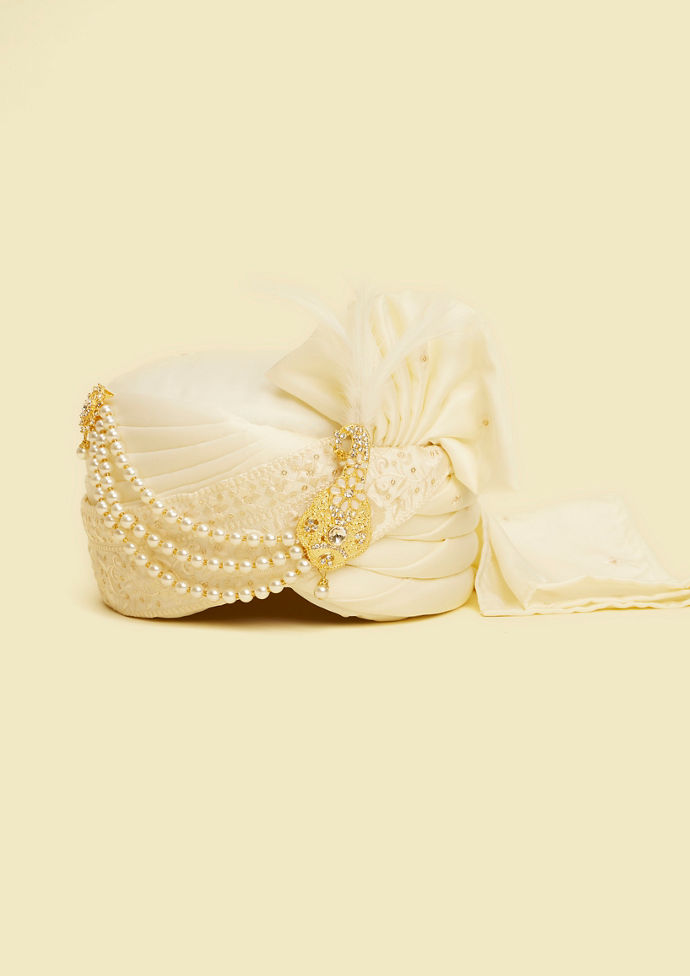
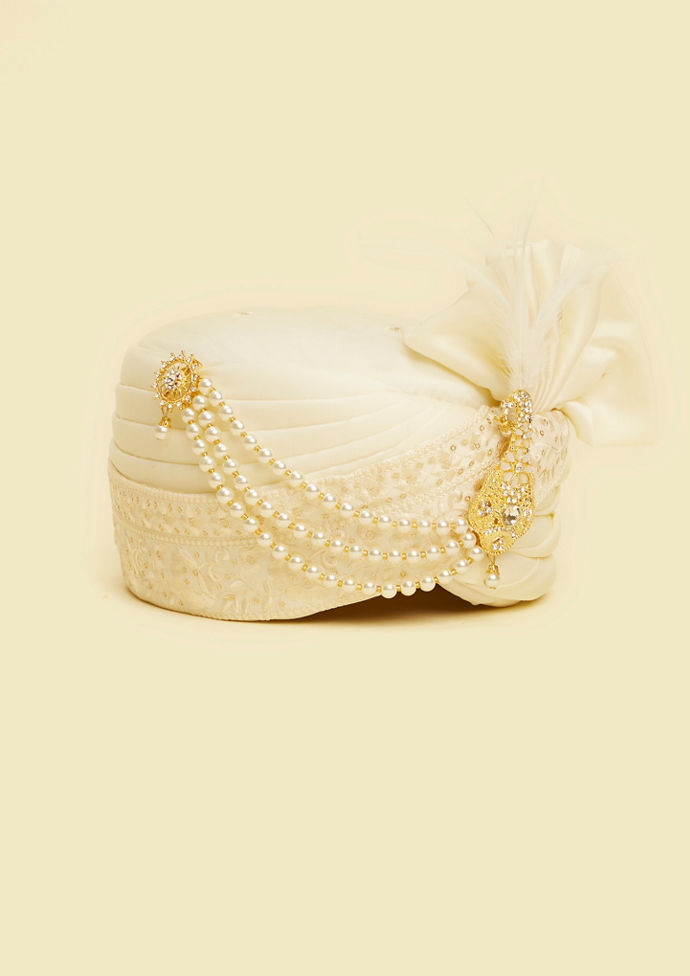
Regal Warm White Satin Safa – ₹6,999
This premium option emphasises regal aesthetics, likely featuring superior satin quality, refined draping, and possible embellishment through metallic threads or subtle embroidery. The "Regal" descriptor signals that this is a groom-tier piece designed for maximum impact.
Warm White Satin Safa – ₹5,999
A streamlined version that delivers premium satin quality without the embellishment or premium positioning of the Regal option. This version is equally sophisticated and works beautifully for grooms, bridegrooms' families, and men attending daytime or destination weddings.
Safa for Groom: When and How to Wear
For the Wedding Ceremony
White is particularly stunning for daytime ceremonies, outdoor weddings, and South Indian traditions, where it is ceremonially significant. Pair it with a cream or white sherwani for a monochromatic look that reads as elegant and intentional, or contrast it with gold, maroon, or deep blue for visual impact.
For Reception and Evening Events
White colour safas shine at receptions, particularly indoor evening events where artificial lighting reflects beautifully off satin surfaces. The safa becomes a focal point under warm venue lighting, creating a halo effect that photographs exceptionally well.
For Mehendi and Sangeet
An off-white colour works for mehendi, though many grooms opt for brighter colours at these events. However, if you're wearing a white Kurta Pajama or a white Indo Western outfit for mehendi, it maintains visual coherence and reads as intentionally styled rather than neutral.
For Baraat (Wedding Procession)
A white safa paired with a richly embroidered sherwani is a classic baraat look. The white creates contrast with ornate embroidery, allowing the sherwani's detailed work to shine while the safa grounds the overall appearance with elegance and gravity.
Face Shape and Safa Styling
Safa styling is not one-size-fits-all—your face shape matters in choosing how the safa sits and drapes.
Opt for a taller, more structured safa that elongates your features. White satin's lustrous finish draws light upward, further elongating the face. Ensure the safa sits slightly higher on your head to maximize the lengthening effect.
A softer, rounded draping style suits square faces beautifully. White satin can be draped more loosely to create curves that soften angular features. Avoid overly structured, geometric safa styles.
Lucky you—oval faces can carry off most safa styles with ease. Both the Regal and standard Warm White options work beautifully, giving you flexibility to choose based on occasion and outfit rather than facial structure.
A wider safa with fuller pleats works better than a tall, narrow turban. White satin's reflective quality helps fill visual space, so choose a fuller draping style.
Fabric and Construction: Why Satin Matters
- Lustrous Appearance: Satin's natural sheen catches light beautifully, creating a luxurious appearance that photographs exceptionally well under both daylight and artificial lighting. The fabric's reflective quality transforms white from a simple colour into a luminous surface.
- Structural Integrity: Quality satin has body and weight, allowing your safa to hold intricate folds and pleats throughout the entire ceremony without becoming limp or requiring adjustment. Budget satin alternatives often collapse after a few hours.
- Embellishment Canvas: If the safa includes subtle embroidery, metallic threads, or beadwork, satin provides the perfect foundation. The smooth surface allows embellishment details to pop with clarity.
- Comfort and Breathability: Premium satin is breathable enough for extended wear during lengthy ceremonies, especially when combined with cotton lining. You'll remain comfortable without the safa feeling restrictive.
- Draping Qualities: Satin drapes elegantly, creating smooth folds and clean lines that read as intentional and regal. Cotton or lower-quality fabrics can bunch or wrinkle unpredictably.
Colour Coordination with Your Sherwani
A white safa offers multiple styling directions depending on your sherwani colour and occasion.
White Sherwani:
This monochromatic approach works beautifully for ceremonies where purity and clarity are symbolically important. Add visual interest through embellishment contrast
Cream or Off-White Sherwani:
This tonal pairing is more forgiving than exact white-on-white, allowing for subtle variation that reads as intentional rather than accidental. Works beautifully for weddings where you want purity and elegance without strictness.
Gold or Champagne Sherwani:
This combination is regal and warm, ideal for evening receptions and formal ceremonies. The safa provides contrast, allowing the sherwani's metallic embroidery to shine.
Navy, Maroon or Deep Red Sherwani:
This high-contrast pairing is visually striking and reads as intentionally fashionable. The white safa serves as a visual anchor, grounding the darker sherwani and drawing the eye upward toward your face.
Ivory, Beige, or Neutral Sherwani:
A soft, earthy pairing that works beautifully for destination weddings and daytime celebrations. The tonal harmony reads as sophisticated and understated.
Accessorising Your Safa
A white colour safa becomes truly memorable when accessorised thoughtfully.
Add a sarpech in gold, kundan, emerald, or ruby to define your safa and add regal flair. The sarpech sits at the centre front of the safa and immediately elevates the entire look.
- Kalgi (Feather Ornament):
A white ostrich feather or iridescent kalgi paired with the safa creates an unforgettable silhouette. The feather catches light and movement, adding dimension and prestige.
Pair the white safa with a coordinating or contrasting shawl in silk or brocade. A cream silk stole creates tonal harmony, while a gold or navy stole provides visual contrast.
Ensure cufflinks and visible buttons coordinate with your safa's accessory metals. If your sarpech is gold, wear gold cufflinks; if it's silver-toned, match accordingly.
FAQs:
Q: Is a white safa only for South Indian weddings?
While white is traditionally significant in South Indian ceremonies, they're worn across all Indian wedding traditions and works beautifully for any groom seeking elegance and cultural authenticity.
Q: Can I wear a white safa to a Jodhpuri-style wedding?
Absolutely. While Jodhpuri safas are traditionally more ornate and coloured, a white colour safa paired with a Jodhpuri sherwani creates a modern, contrasting aesthetic that reads as intentionally styled.
Q: Will a white safa look dingy in photographs?
Not if you choose quality satin. Premium satin reflects light beautifully and photographs as luminous white rather than dull or grey. Budget alternatives tend to photograph poorly.
Q: Can a white safa be embellished?
Yes. Many grooms personalise their safas with subtle zari work, pearls, or beadwork for added regal appeal. This adds luxury without overwhelming the simplicity of white.
Q: Is off-white better than pure white?
Both work equally well. Off-white can appear softer and warmer, while pure white reads as more formal and regal. Choose based on your sherwani tone and personal preference.
Footwear | Pink Safa | White Safa | Red Pocket Square | Yellow Pocket Square