Luxury Sherwani for Men
A luxury sherwani for men is a knee-length coat, usually 40 to 44 in (102 to 112 cm) from shoulder to hem. The best pieces are cut in silk, brocade, or velvet, with hand embroidery at the collar, placket, and cuffs. When you are weighing a designer sherwani against a festive kurta set, those details matter more than the label does.
The collection runs from groom-ready pieces, such as the Noor wine velvet Zardozi sherwani with silk lining, through to Indo Western and kurta pajama sets for guests and groomsmen. Narrow the list by fabric, embroidery weight, silhouette, and occasion: wedding, groom, or reception.
Twamev makes these as occasion wear, and embroidered pieces are dry clean only. The sections below cover what defines the category, how the fits differ, and which occasions each style suits.
What defines a luxury sherwani for men in 2026, and who is this collection for?
Luxury sherwani defined hand embroidery, silk base, tailored fit
Three things separate a luxury sherwani from an ordinary one: hand embroidery, a silk base, and construction cut to the wearer's measurements. Machine work repeats the same motif in identical stitches, while handwork on the collar, placket, and cuffs shifts slightly from piece to piece, and that variation is what you notice at arm's length. The silk base holds the shape of the embroidery instead of puckering under its weight.
Who should shop this collection grooms, groomsmen, wedding guests
Grooms usually need the heaviest embroidery and the closest fit, while groomsmen and guests are better served by lighter work that keeps attention on the couple. Tell us which of the three you are when you order, because it changes how much embroidery we recommend.
Fit benchmark chest plus 4 to 6 inches of ease for a structured drape
We cut to a chest measurement plus 4 to 6 inches of ease, which keeps the drape structured across the shoulders and chest rather than pulling tight when you sit or raise an arm. If you plan to wear a layered kurta underneath, take the upper end of that range. Order at the lower end for a closer line with a single layer.
What sets designer sherwani online India apart from ready-to-wear?
Ready-to-wear sherwanis use lighter fabric and flatter embroidery because they are cut to standard sizes and sold off the rack. Made-to-measure pieces use heavier silk and denser handwork, and the fit starts from your own measurements instead of being adjusted on the hanger. That difference shows up in how the shoulder line sits and how the embroidery holds its shape after a full evening of wear.
What is in this luxury sherwani collection?
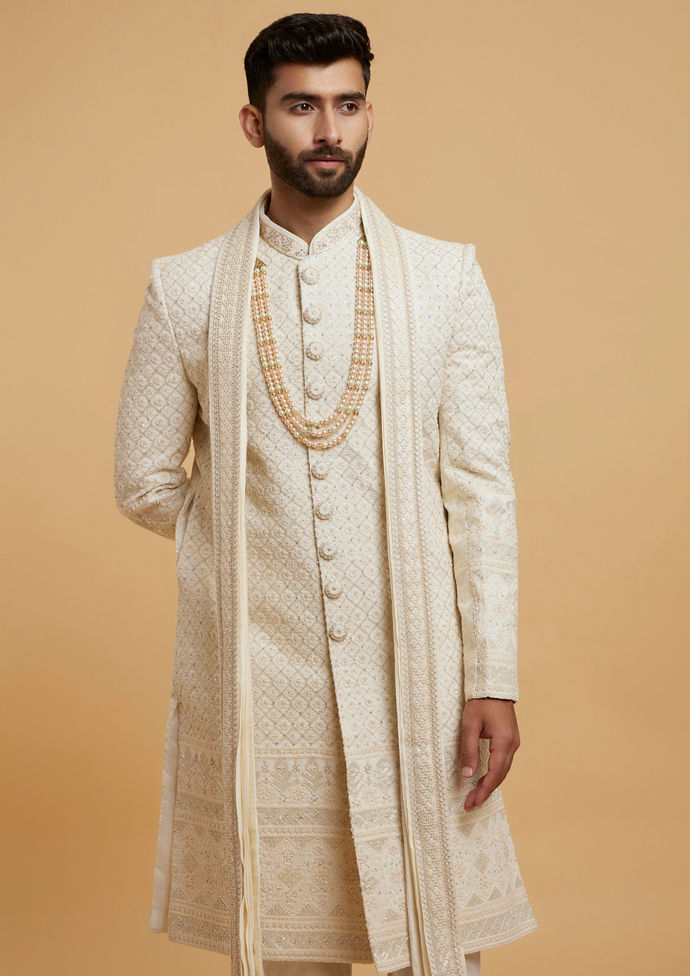
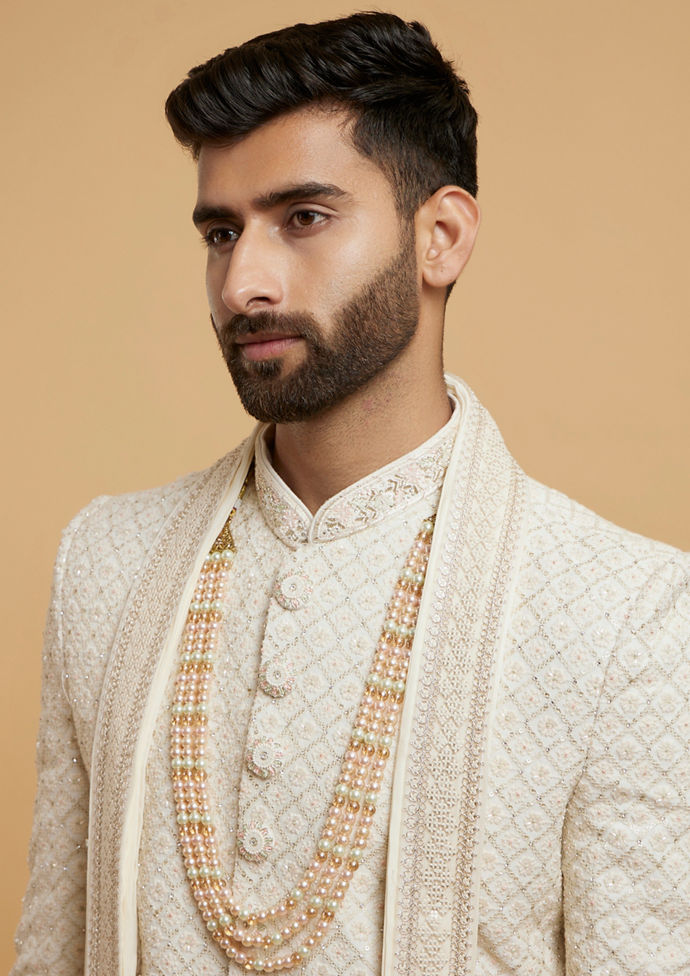
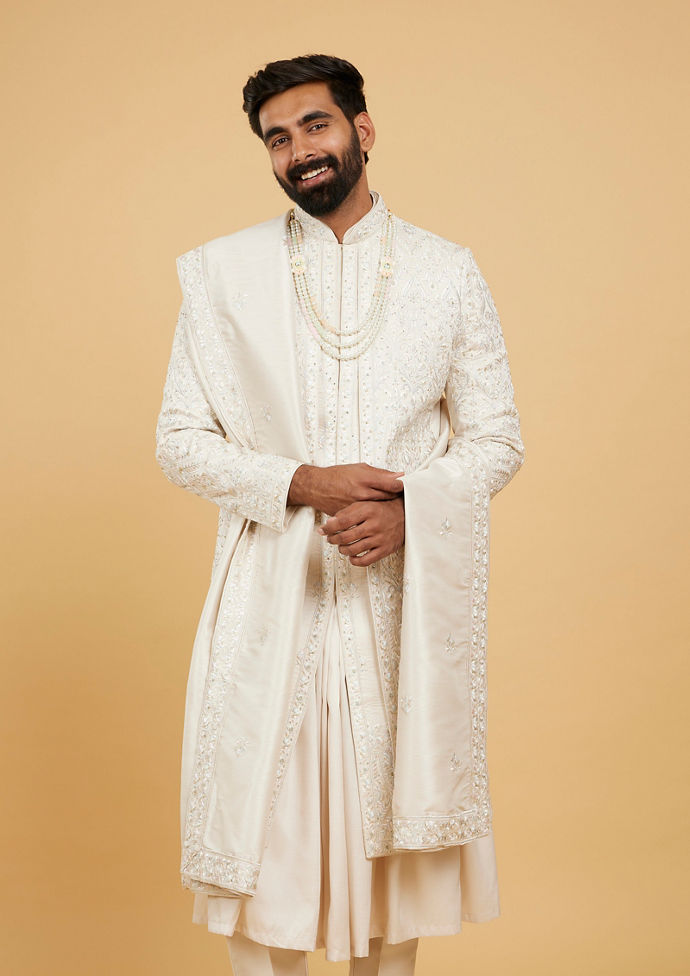
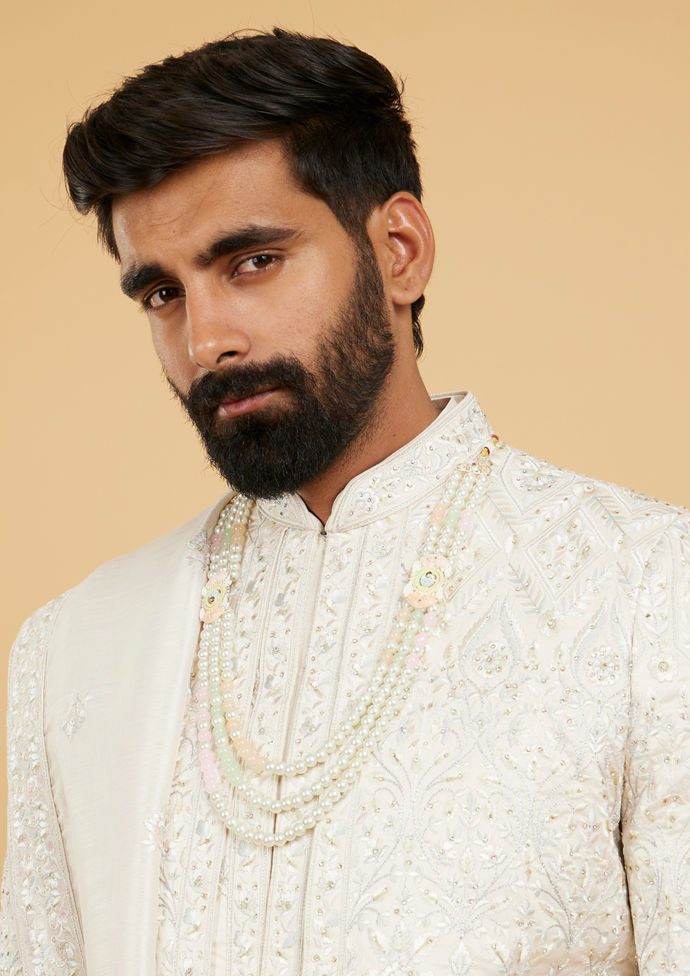
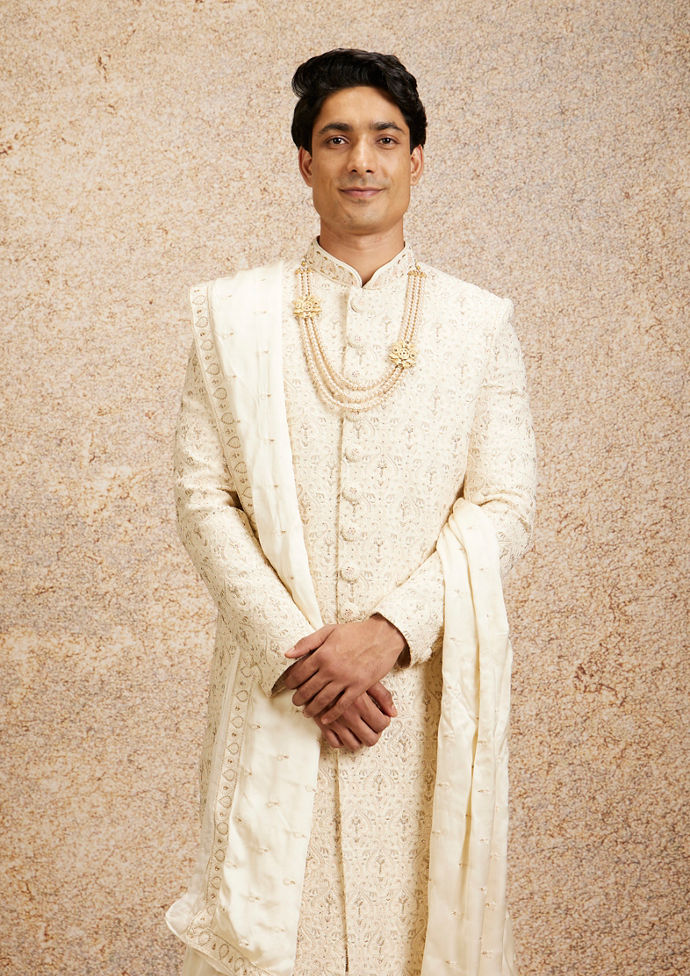
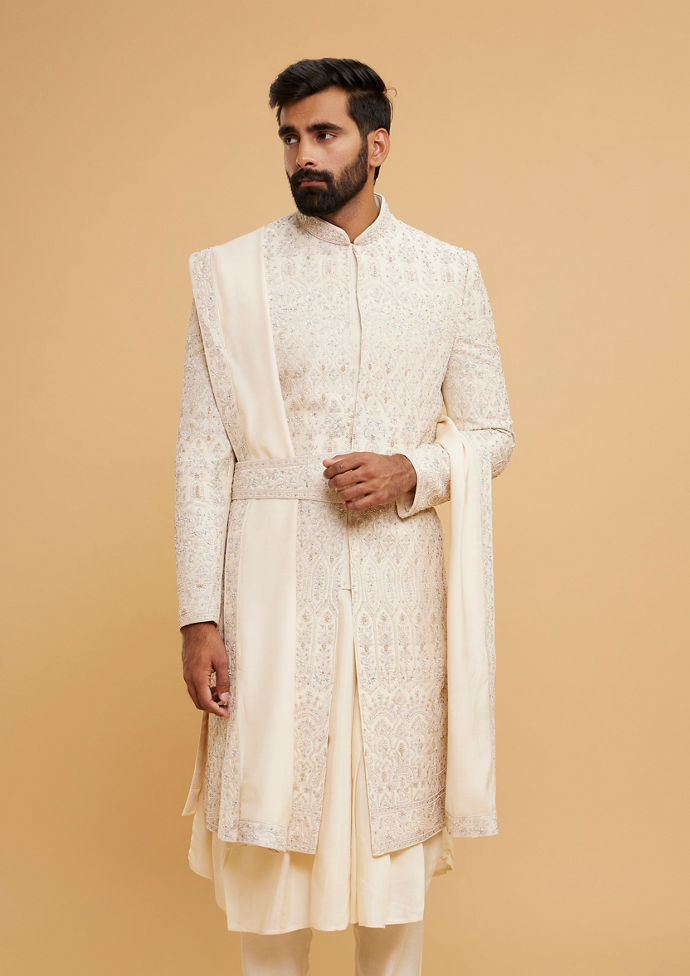
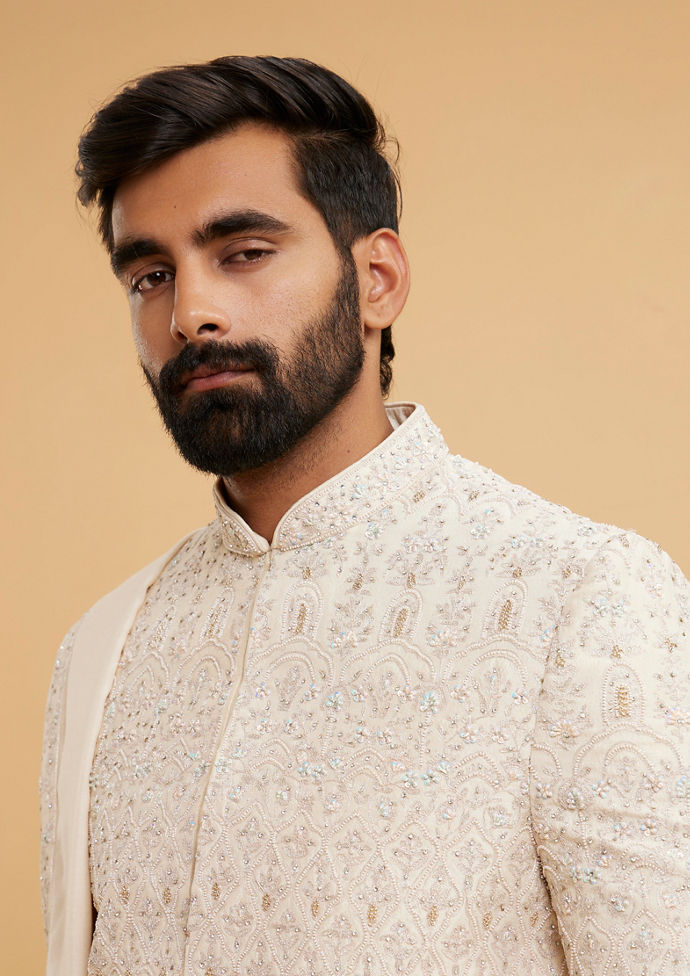
Cream silk sequin hand embroidered sherwani for daytime weddings
Daylight is the hard test for this one. Sequin work on cream silk throws light back without the glare that denser metal embroidery gives, so it holds up through a long haldi or mehndi. The silk base is firm enough to carry hand embroidery without the panels pulling out of line.
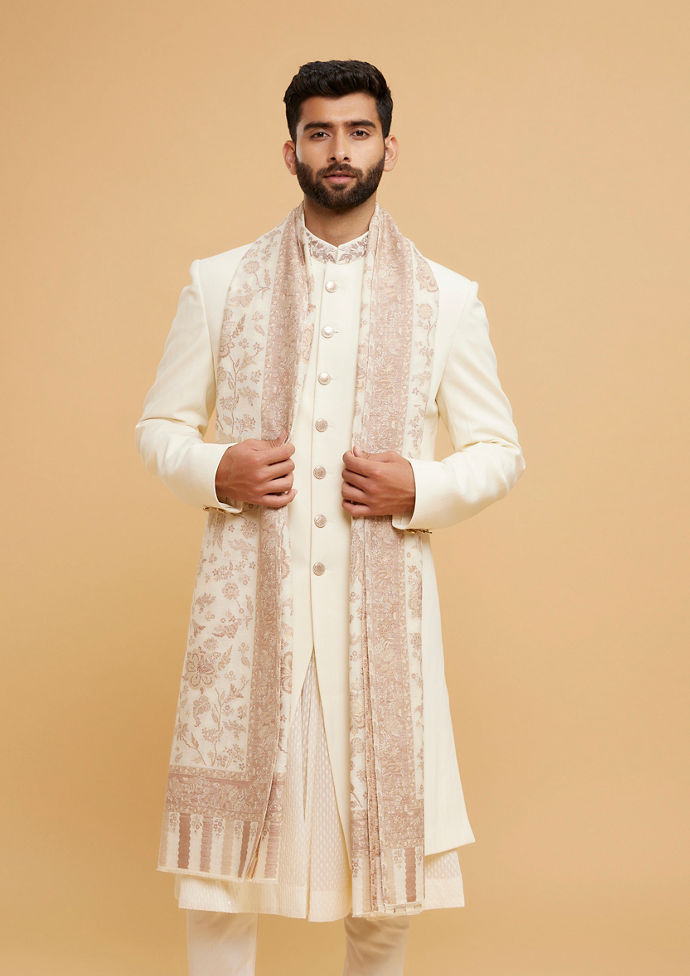
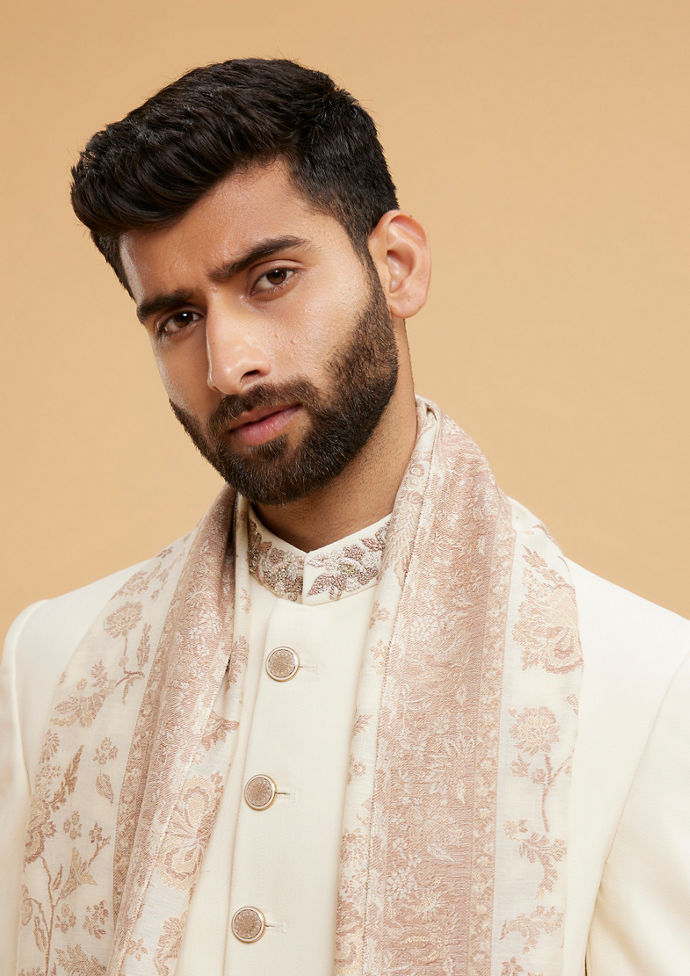
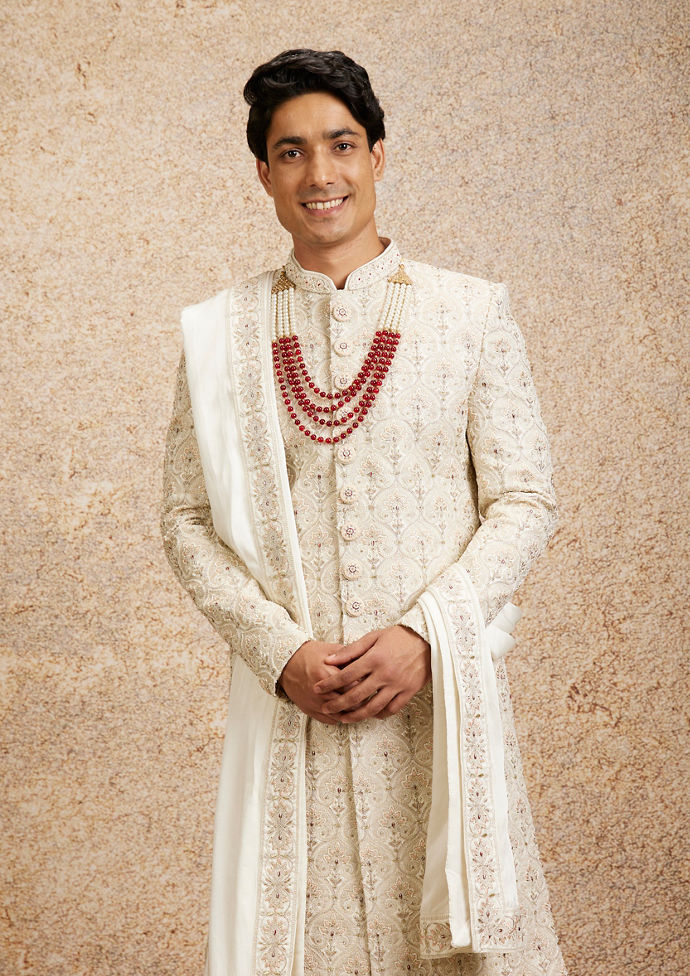
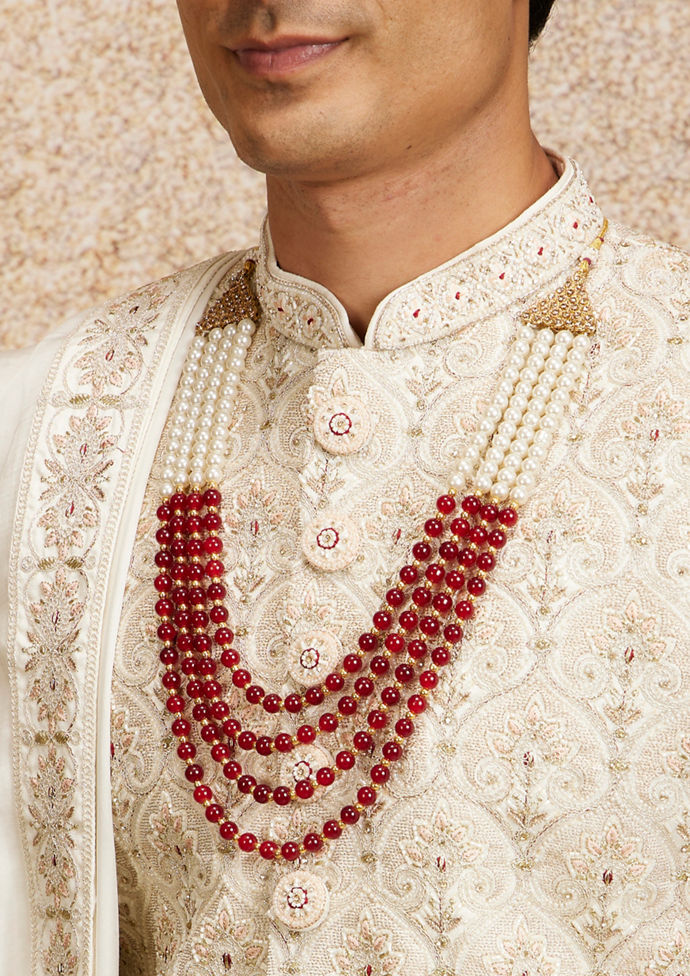
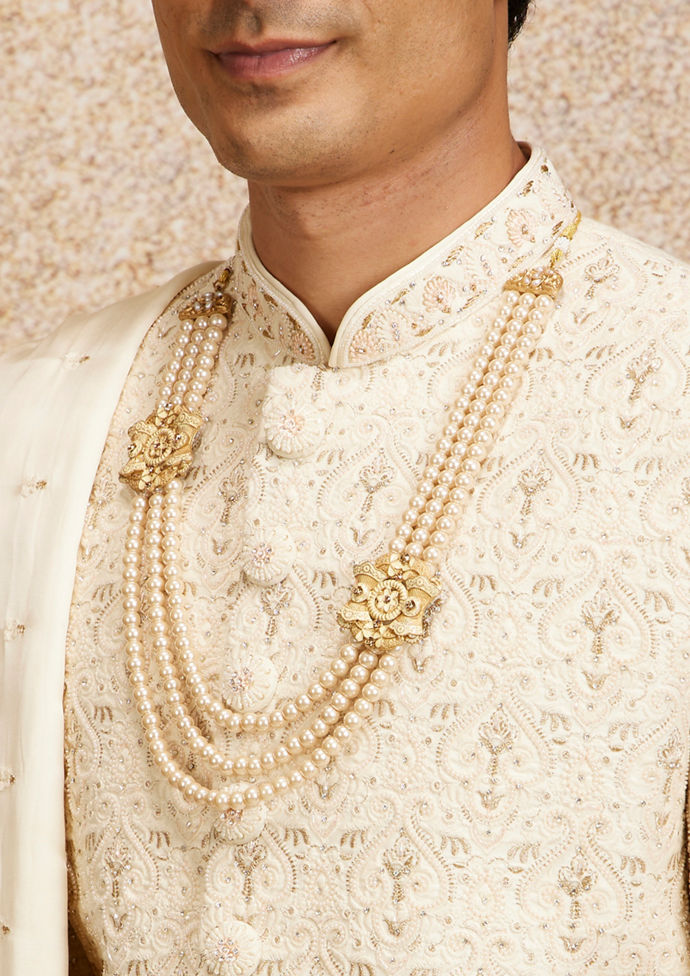
Cream silk zardosi brooch embroidered sherwani for reception wear
Under evening light, zardosi brooch work on cream silk reads deeper than it does in the day, which is why we place it in the reception tier. The pashmina shawl included with it matters in air-conditioned halls, where a single silk layer is not enough against the cold.
How to read the comparison table features against best-for occasion?
Occasion narrows the list faster than fabric does, so start in the best-for column and work back to features. Sequin and resham work covers daytime functions, zardosi and velvet covers evening, and layered cuts go to sangeet, where you are moving between two venues in one night.
Colour and embroidery tiers across the collection
Two scales run through the range: colour depth and embroidery density. Colour starts at cream and ivory and ends at wine velvet, while the work moves from lighter sequin and resham up to denser zardosi and zari, with the heaviest hand work sitting on the evening pieces.
How do you choose a luxury sherwani for an Indian wedding?
Step 1 match silhouette to ceremony, from aangan to reception
An aangan ceremony keeps you on your feet, often on grass, gravel or a low platform, so a straight-cut sherwani with a closed front and a hem that clears your shoes works better there. Reception stages are usually indoors and shot from a distance, where a layered sherwani with an open front and a contrasting inner kurta reads with more depth. Check the hem in both cases: 2 to 4 cm below the knee keeps the drape clean without pooling. If you will sit cross-legged through the pheras, ask the tailor for a side slit or a slightly shorter front panel so the fabric does not bunch.
Step 2 pick fabric weight by season and venue, indoor against outdoor
Fabric weight changes how the sherwani behaves far more than colour does. For a summer mandap, look at light to mid-weight silk, roughly 100 to 150 gsm, or a silk-cotton blend, since both hold a press without trapping heat. Velvet sits at the heavier end, usually 250 to 350 gsm, and suits an air-conditioned indoor evening where you spend most of the time standing or seated on a sofa. An outdoor winter function is the one setting where a mid-weight brocade or heavy raw silk does not feel like too much. If velvet is on your shortlist, a wine tone with off-white and gold metallic thread reads richer under warm indoor light than a pale one, which is why we build pieces like the Noor wine velvet zardozi groom sherwani for evening functions and receptions.
Step 3 choose embroidery density for photos and stage lighting
Stage lighting and camera flash flatten texture, so embroidery that looks rich in the shop can vanish in the photographs. Denser work with raised elements, such as zardosi, dabka, kora and stone settings, holds its edges under flash because it throws small shadows. Light chikankari or single-thread work reads best in daylight, in close portrait shots. Take one phone photo with the flash on in the fitting room before you commit; if the pattern disappears on screen, it will disappear in the wedding album too.
Step 4 coordinate tone with bridal wear and groomsmen palette
Tone coordination is easier from a physical swatch than from a photo. Carry a piece of her lehenga fabric, or the exact swatch from her designer, to your fitting and match the sherwani buttons, thread and dupatta border to it. For groomsmen, move two or three shades lighter within the same family: a pastel base with the same gold thread sits behind you on stage instead of competing with you. Then look at the whole group under the venue's actual lighting, because marigold and warm yellow string lights pull ivory towards cream.
What should you filter by when shopping luxury sherwanis online?
Fabric raw silk, brocade, velvet, and tissue blends
Raw silk and brocade hold structure at roughly 250 to 350 gsm, while tissue sits lighter at 100 to 150 gsm. Velvet gets its own entry because it wears differently: heavier hand, richer surface, warmer indoors. Read the care line as well, since heavily worked velvet and organza pieces are dry clean only and behave best when they are not pressed too hard.
Colour ivory, cream, pastel, wine, and jewel tones
Filter by colour before you fall for a photograph, because lighting changes what you see. Ivory and cream stay crisp in daylight ceremonies. Wine and deeper jewel tones keep their depth in a banquet hall lit with warm tungsten, where pale creams can flatten out.
Silhouette classic straight cut, achkan style, layered, or bandhgala
Straight cuts need the fewest alterations and suit most frames. Achkan and layered builds add volume through the chest and front, so compare the listed chest and shoulder measurements against a jacket you already own before you commit to a silhouette.
Occasion mehndi, sangeet, wedding, and reception
For mehndi and sangeet, filter toward mid-weight pieces that let you move. For the wedding day itself, narrow to full-embroidery wedding sherwani for groom options, then rerun the same fabric, colour, and silhouette filters for the reception look. If you are shopping the bridal side at the same time, the same approach works for a piece such as the Zariya ivory organza zardozi bridal lehenga with dupatta, so the couple's palette stays in step across every function.
What care and styling tips keep a luxury sherwani wedding-ready?
Dry clean only and store flat in a muslin cover
Silk, brocade, velvet, and zari blends lose their shape on wire hangers, and shoulder seams stretch under the garment's own weight over a season. Have the sherwani dry cleaned after each wearing, because sweat and perfume residue can dull metallic thread over time. Tell the cleaner to skip starch and press the seams lightly. Store it flat in a muslin or cotton cover with acid-free tissue at the folds. Plastic bags trap moisture and cause mildew. Fold along the seams rather than across embroidery, so the zardozi panels stay raised and uncrushed.
Steam, never iron, over zardosi and sequin work
Direct heat flattens zari and melts or curls plastic sequins, and a crushed metallic thread does not spring back. Hold the steamer head 2 to 3 cm from the surface and work from the reverse side with the sherwani on a padded hanger or laid flat. For a stubborn crease on plain fabric, use a dry iron on the lowest silk setting, about 110°C, with a cotton press cloth between the iron and the cloth. Let the piece dry fully before hanging it, since moisture trapped under embroidery can leave water spots. Skip pressing altogether over zardosi, beadwork, and sequin panels.
Style with a brooch, stole, or safa to raise the look
Accessory weight matters more than accessory size on a heavy sherwani. Pin a brooch at the left chest, above the placket and away from the button line, so it adds definition without dragging the fabric out of line. A stole in a contrasting tone draped over one shoulder balances a plain groom sherwani, and on a darker piece like Noor, our wine velvet Zardozi groom sherwani, the lighter tone reads as a clean line against the depth of the velvet. A safa tied in the same color family as the stole keeps the silhouette unified. Pin the stole at the shoulder with a hidden stitch or a small safety pin so it stays put during the ceremony. Keep the metal on the outfit to one or two pieces; heavy jewelry pulls at the collar and reads badly in close photographs.
Book alterations at least two weeks before the wedding date
A sherwani needs at least two fittings, and tailors who work with zari and brocade take longer because the fabric cannot be re-stitched in the same place without leaving needle marks. Book the first fitting three to four weeks before the wedding and the final one seven to ten days out, which leaves room for a small weight change from stress or travel. Bring the shoes and the innermost layer you plan to wear, since heel height changes where the hem falls. Ask the tailor to leave at least 2 cm of seam allowance inside the side seams so the jacket can be let out later. Collect the finished piece at least two days before the event.
Frequently asked questions about buying luxury sherwanis for men
How do I choose the right sherwani size when ordering online?
Measure your chest, waist, and shoulders with a tape measure, then compare those numbers with our size chart. A chest of 38 to 40 inches reads as a medium. If you land between two sizes, take the larger one and keep time aside for a fitting.
Can a luxury sherwani be worn after the wedding?
Yes. Swap the churidar for tailored trousers and the same sherwani works at a festive dinner or a smaller family function.
How long does delivery take for a designer sherwani online in India?
Allow seven to ten days for delivery inside India. If your event date is fixed, order with that window in mind.
What if the sherwani does not fit when it arrives?
Message our care team as soon as the parcel reaches you. They arrange an exchange or an alteration, and starting early leaves room before your event.
Which sherwani works best for a summer daytime wedding?
Lightweight silk or tissue in ivory or a pastel shade handles daytime heat well. Velvet traps heat, so it suits evening functions better.
Explore: Shawl , Footwear , Dupatta , Party Wear Sherwani , Silk Sherwani