Satin and light — what makes this fabric different
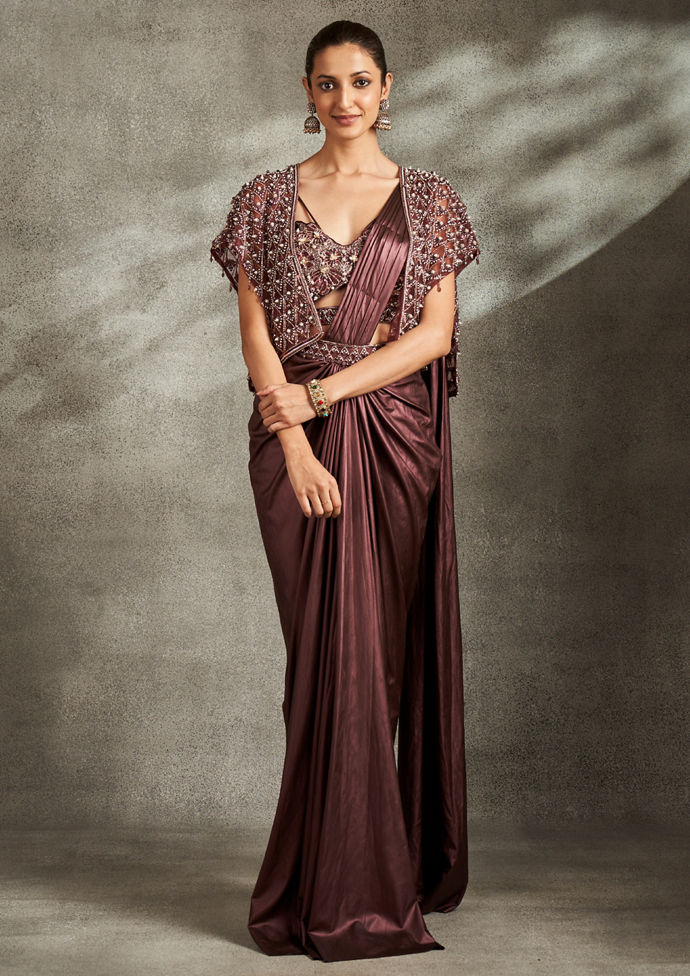
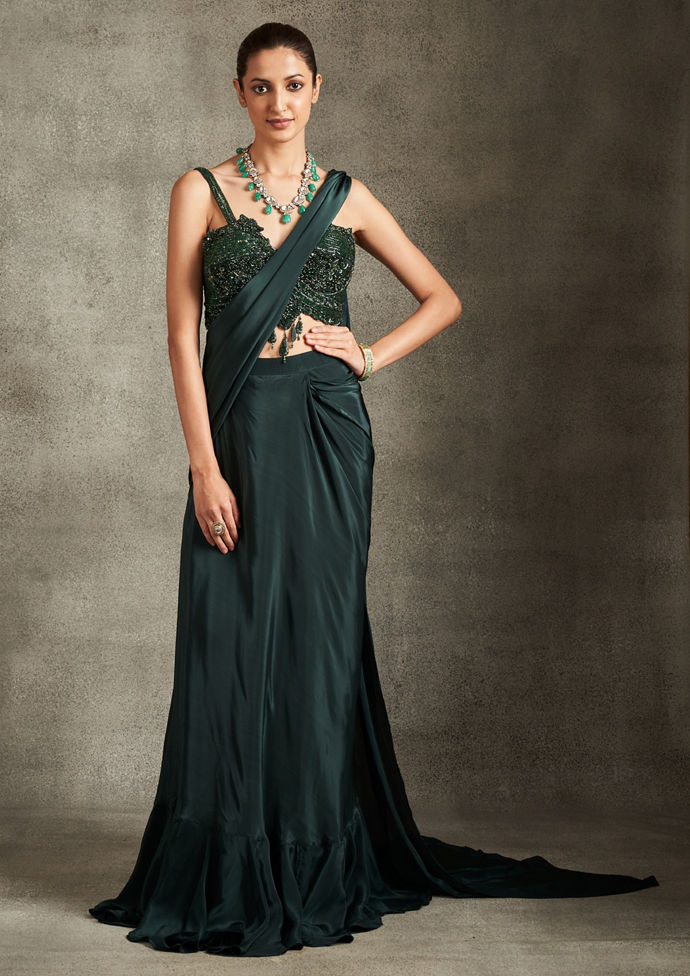
Most saree fabrics interact with light in one of two ways: they absorb it (like georgette or chinon) or they catch it (like tissue or net). Satin does something more specific — it reflects it. The smooth, continuous surface of satin creates a mirror-like quality where light moves across the fabric in a single, clean plane, giving the saree a lustrous, almost liquid appearance that is immediately recognisable from across a room.
This quality is what makes satin sarees so strong for evening events, reception settings, and any occasion where you're likely to be under directional lighting. The fabric responds to the light around it — under warm chandeliers it glows amber; under cool evening light it appears cooler and more defined. A well-chosen saree in satin is, in that sense, a living part of the room's atmosphere.
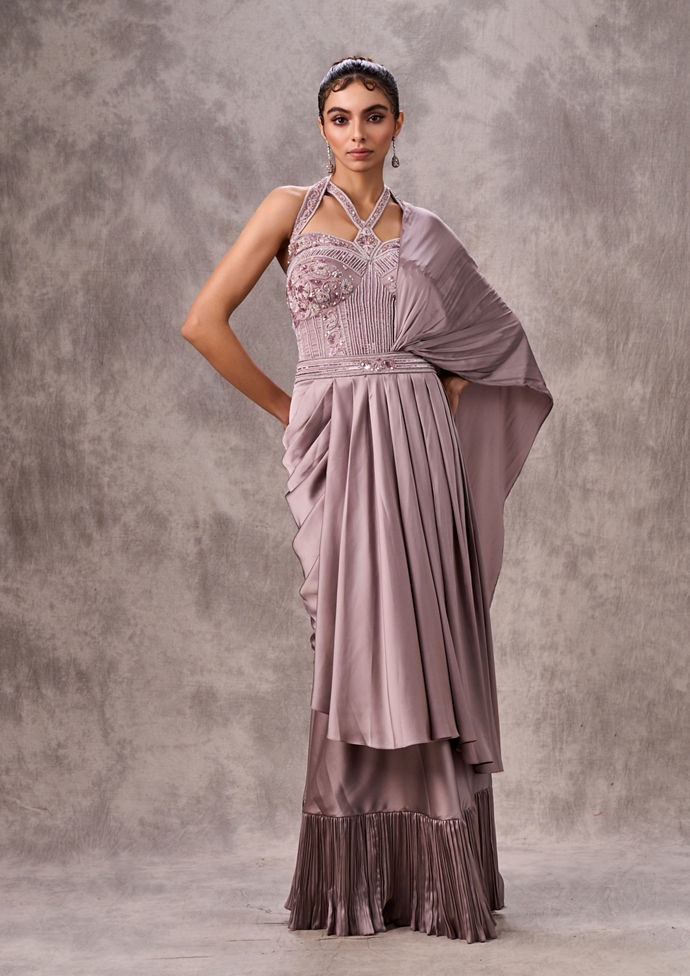
At Twamev, designer satin sarees are selected for how they carry this quality — not just fabric alone, but fabric in combination with color, cut, and embellishment that make the reflective surface work purposefully rather than generically.
The color range — and what it says
The most compelling entry point into Twamev's collection is its color breadth. Each shade behaves differently on a satin surface, and the collection is built around that variation.
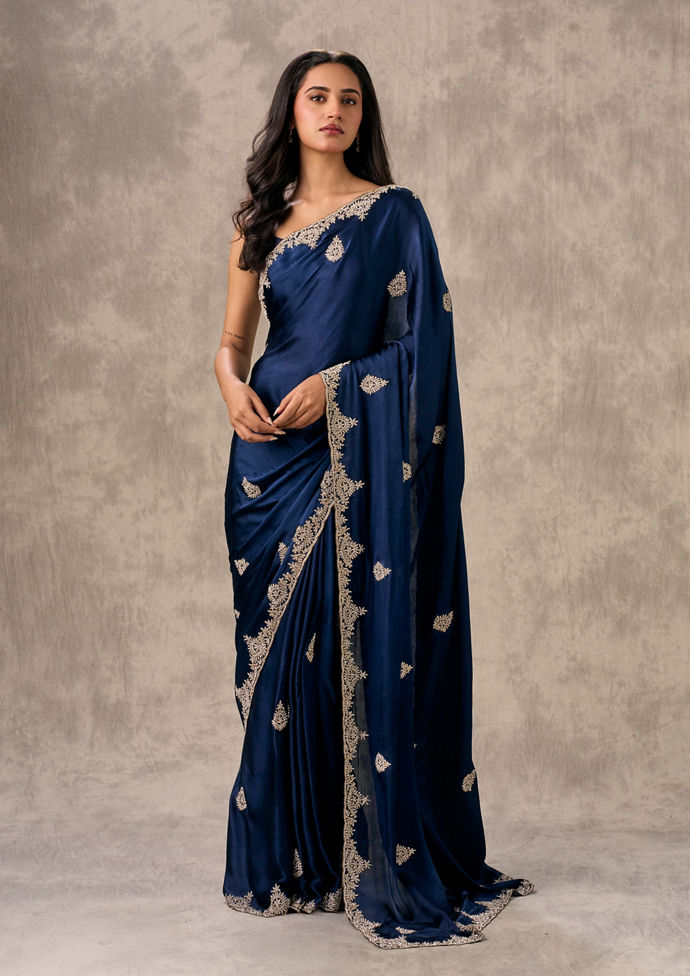
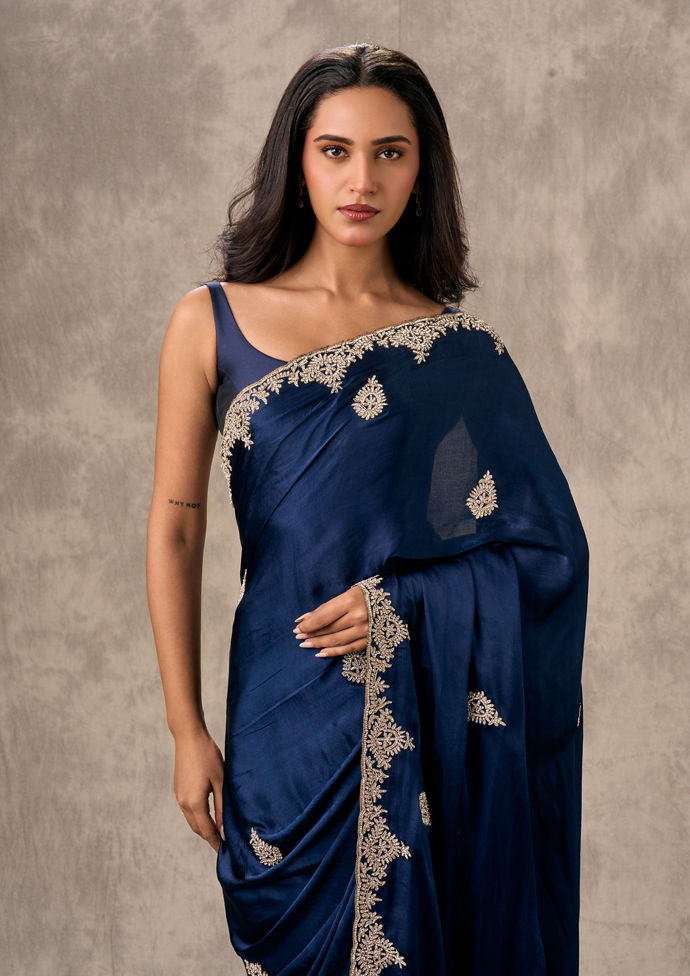
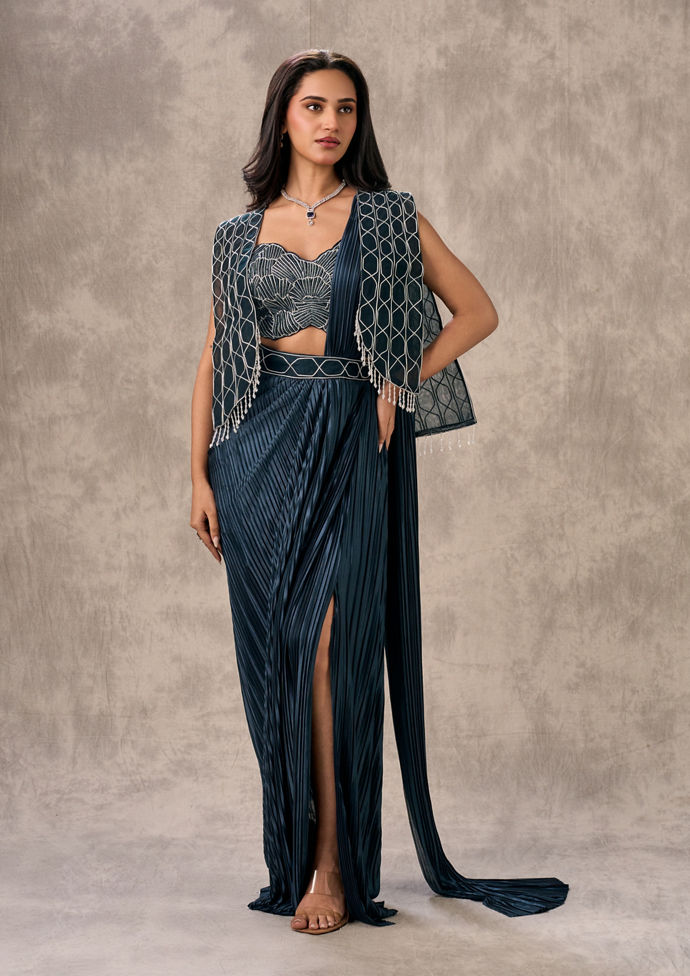
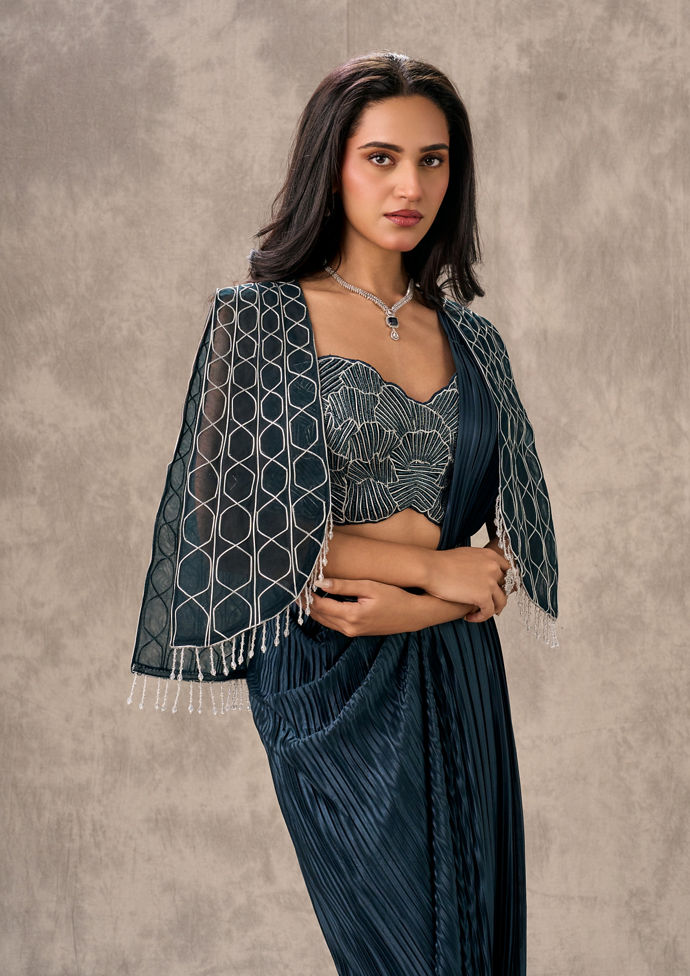
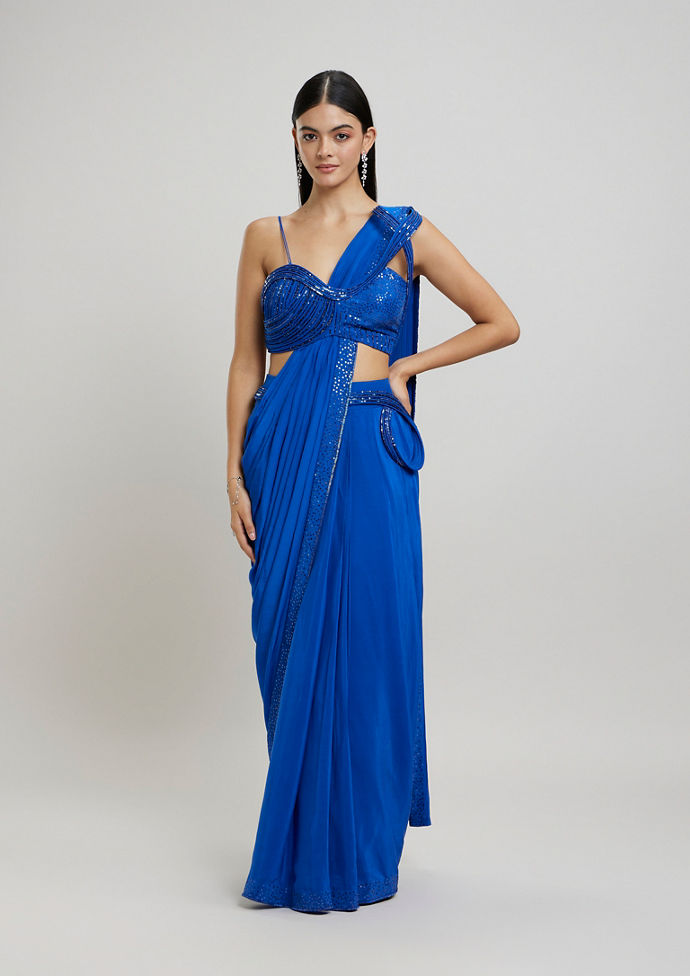
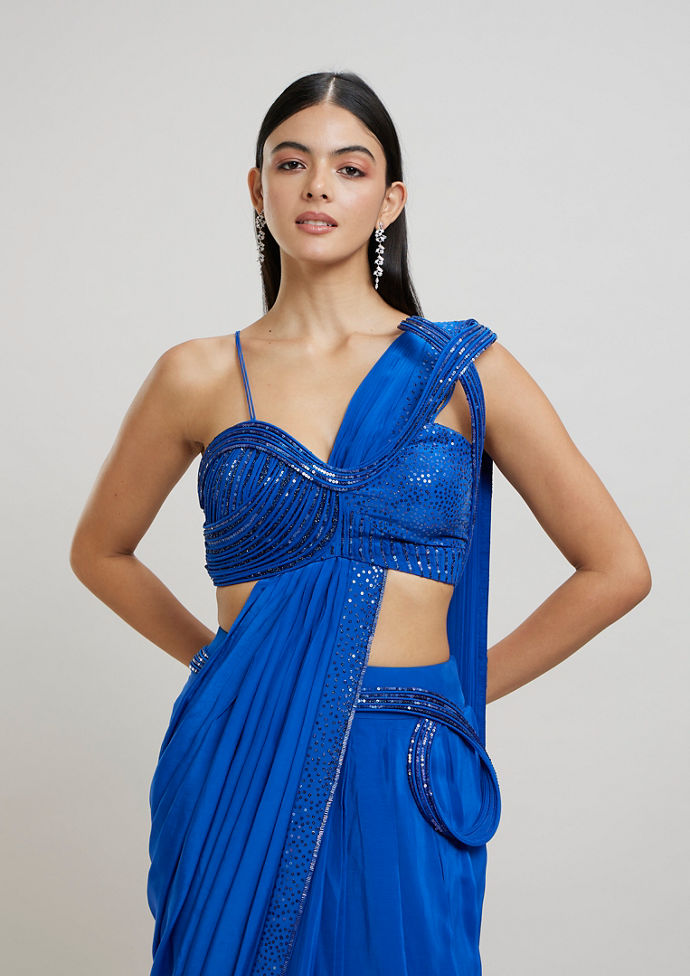
Royal and indigo blue: The Royal Blue Satin Crystal Embellished Structured Draped Saree (₹36,999) is the most formally imposing piece in the collection — deep, saturated, and finished with crystal embellishment and a structured drape that makes it as much a fashion statement as a saree. Royal blue on satin reads as composed authority under evening lighting.
Rani and deep pink: The Twirling Rani Pink Satin Saree (₹34,999) represents the movement-led direction of these sarees — the name is earned; the fabric twirls dramatically when you walk or dance. Rani pink on satin is vivid and celebratory without being fragile, making it a strong sangeet and reception choice.
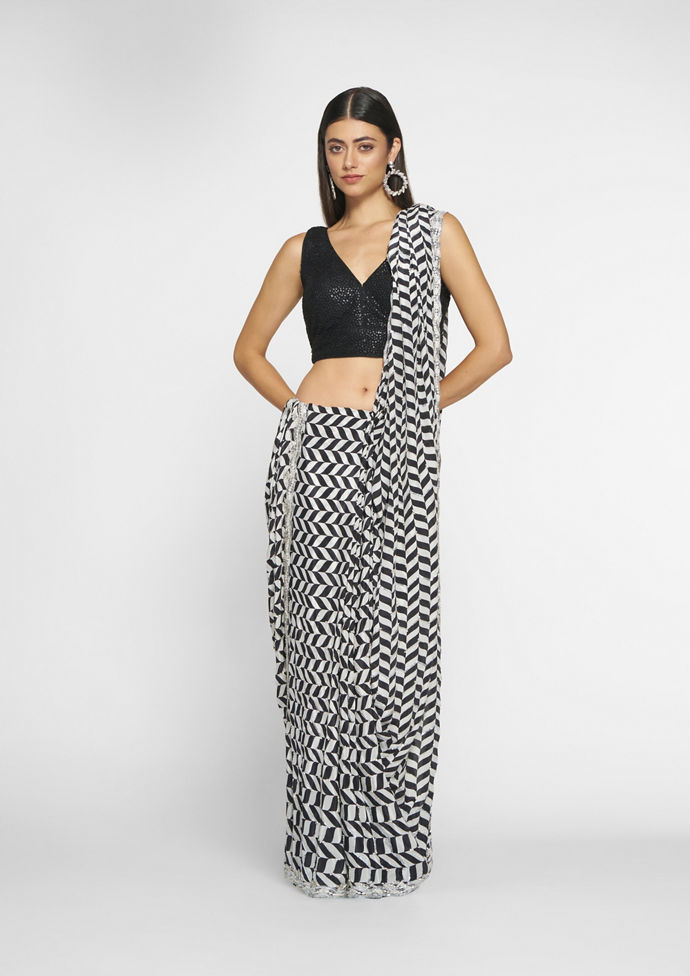
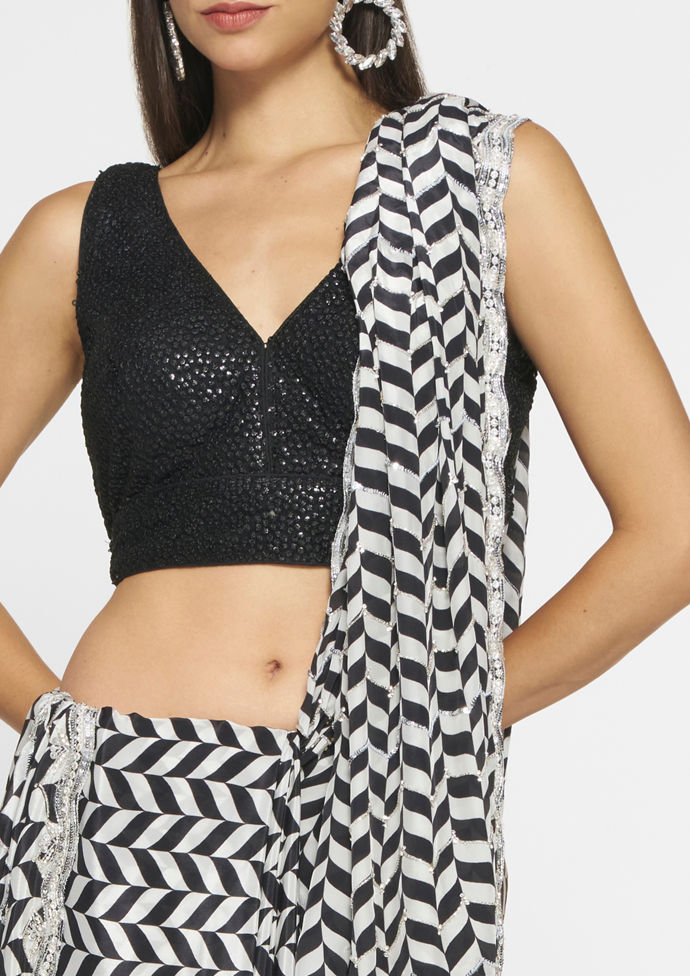
Black and cream: The Black and Cream Fusion Satin Saree (₹29,999) and the Black & Cream Satin Chevron Geometric Printed Sequin Embellished Saree play with contrast within a single saree — the geometric print creates pattern interest while the satin surface keeps the overall look sleek and contemporary. This is a particularly strong choice for women who want something that reads as modern and fashion-forward rather than traditionally festive.
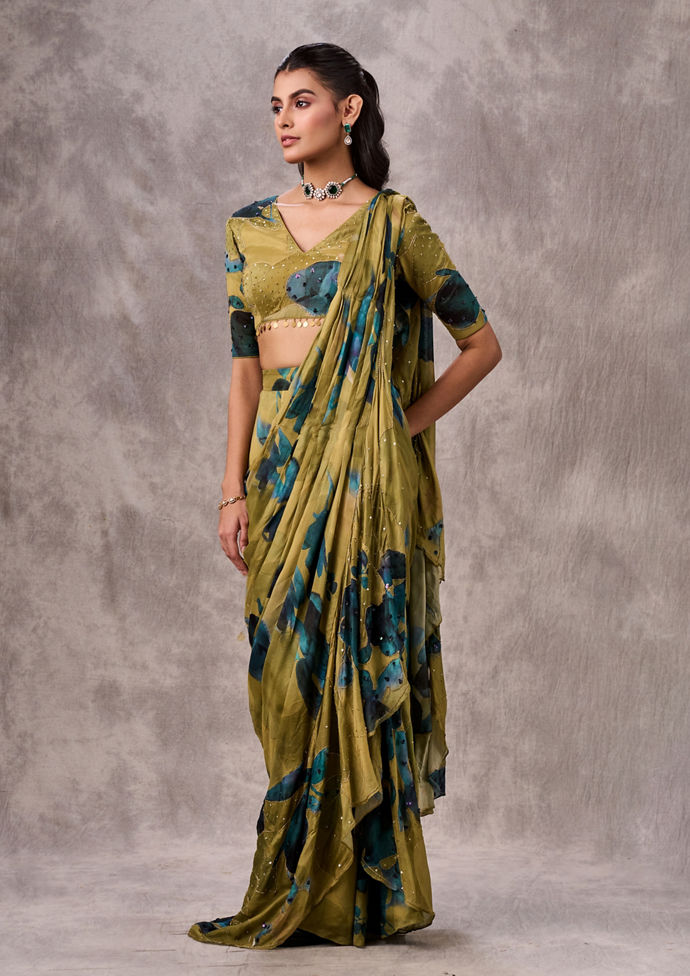
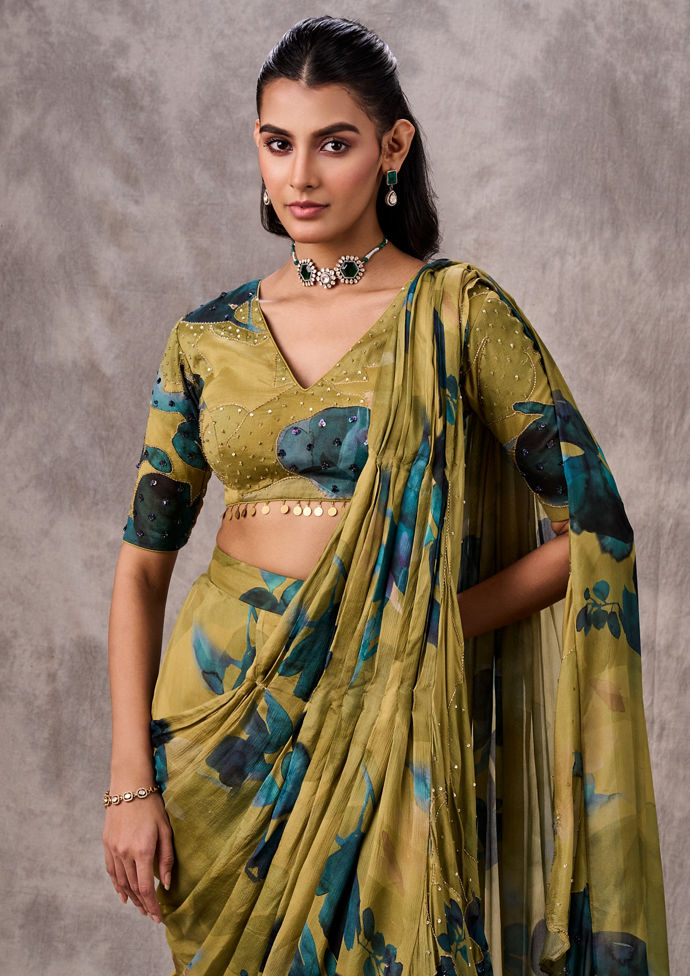
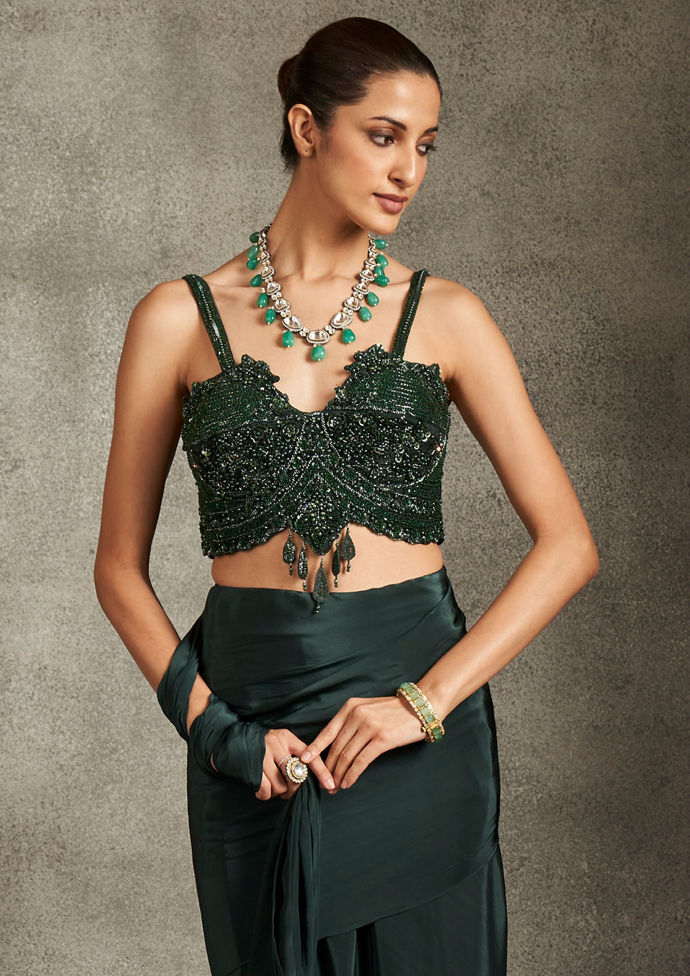
Green: The Chic Sophistication in Green Satin Indo Western Saree (₹29,999) and Sea Green Satin Sequin Embroidered Saree represent the more contemporary, crossover direction of the collection — pieces where satin's fluidity is used in service of a modern silhouette rather than a strictly classical drape.
Purple: The Dazzling Dark Purple Satin Saree (₹12,999) offers the most accessible price point in the collection without compromising the essential quality of a Twamev satin piece — a strong, jewel-toned option for women who want the color impact of designer sarees at a more considered investment.
Orange: The Orange Satin Sequin Floral Applique Mirror Work Cape Draped Saree (₹41,999) is the collection's highest-investment, highest-drama piece — an exuberant, heavily worked satin saree for occasions where you genuinely want your outfit to be the room's focal point.
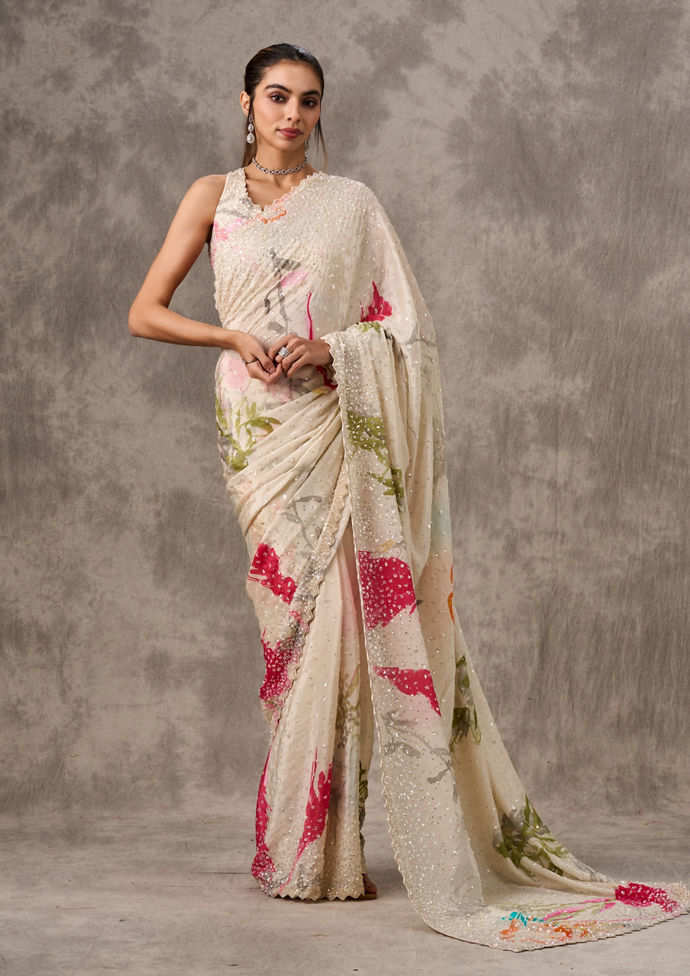
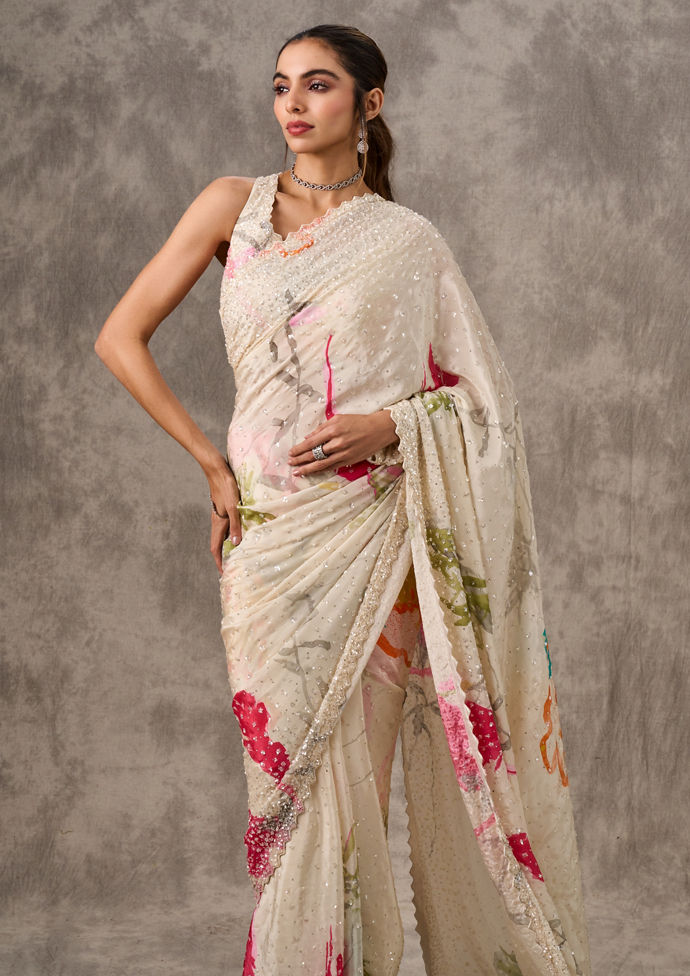
Light pink and printed: The Light Pink Satin Floral Printed Saree with Sequin Embroidered Blouse (₹24,999) — where print is layered onto satin's smooth surface for a different kind of surface interest than embroidery alone. The sequin-embroidered blouse included with this piece shows how the surface work shifts from saree to blouse in a considered, complete look.
Plain vs embellished — how to choose
Within satin sarees, one of the most important decisions is how much surface work you want. Twamev's collection gives you a clear spectrum.
Plain sarees — or near-plain, with minimal embellishment concentrated at the border or pallu — let the fabric's own reflective quality lead. These work best when the blouse is doing more design work, when the jewellery is the hero accessory, or when the occasion is formal but not festive in character. A plain saree in a strong color — royal blue, rani pink, dark purple — needs nothing more than the color to carry the room.
Printed sarees — like the floral printed light pink piece with sequin blouse — add pattern to the reflective surface. The interesting quality of a satin printed saree is that the print appears differently from different angles, because the satin beneath it shifts as you move. Geometric and floral prints on satin have a visual depth that the same print on matte fabric wouldn't produce.
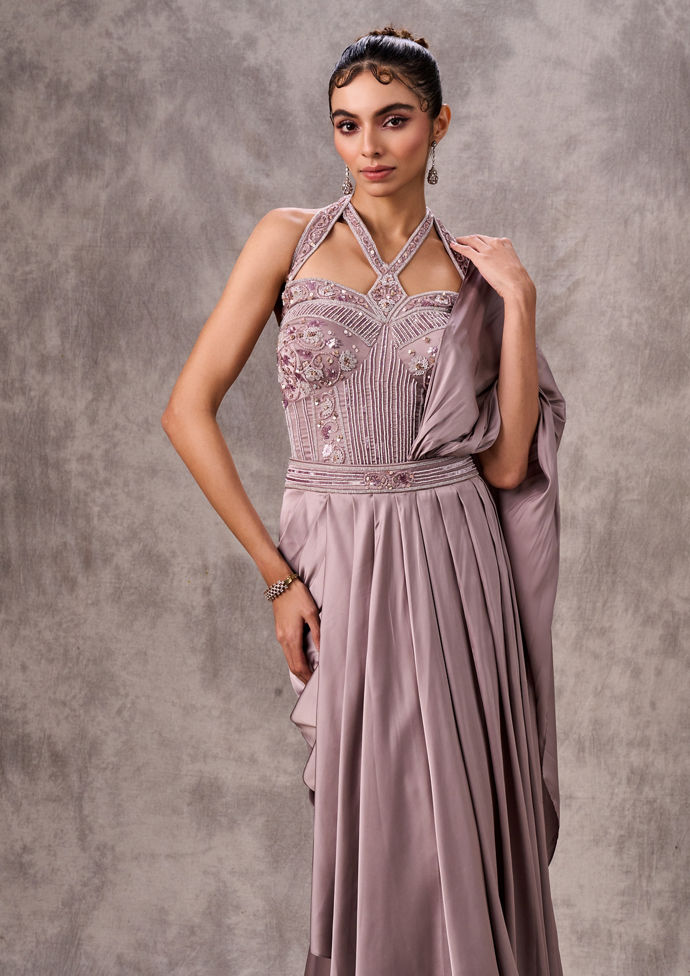
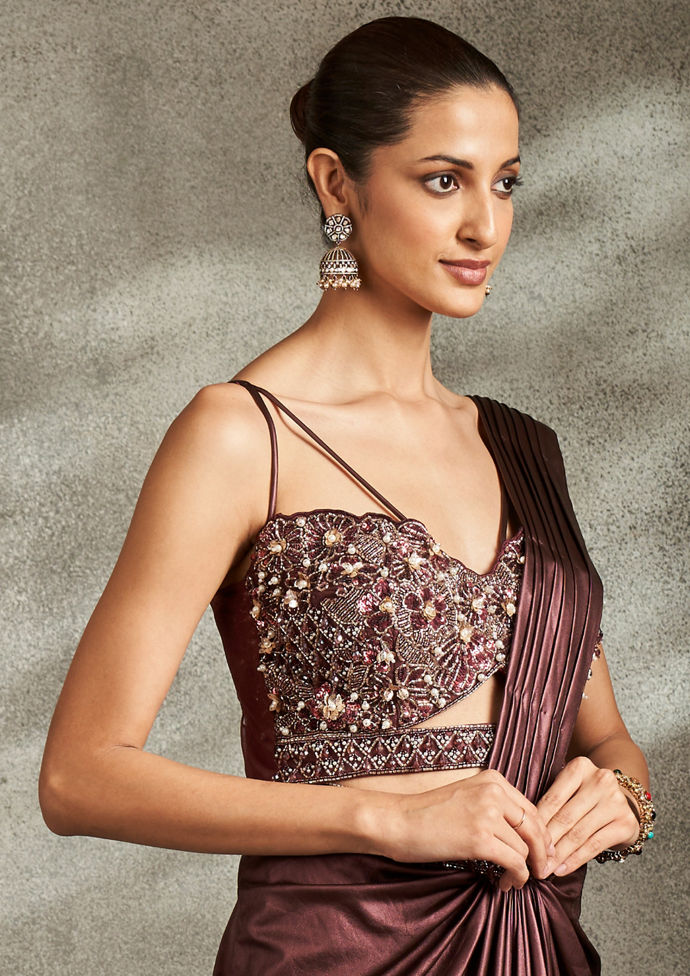
Embellished sarees — from subtle sequin scattered work to the full crystal embellishment of the royal blue structured draped piece — use the satin surface as a stage for craft. Because satin is smooth and close-draping, embellishments sit very precisely, creating a cleaner, more controlled finish than on gathered or textured fabrics.
Occasions this collection is built for
A Twamev satin saree is always an evening choice — the fabric's reflective quality doesn't perform as effectively in strong natural daylight as it does under the warm, directional lighting of a banquet hall or reception venue.
Within evening occasions, different pieces serve different functions:
-
Receptions and cocktail evenings: The crystal-embellished royal blue and the rani pink twirling pieces are the strongest choices — high visual impact, formal enough for stage moments, and dynamic enough for extended social evenings.
-
Sangeet and celebratory parties: The more movement-led pieces — rani pink, sea green sequin, and the fusion indo-western satin styles — are suited to environments with music and dancing, where the fabric's fluid quality is most visible and appreciated.
-
Formal dinners and milestone celebrations: The black and cream geometric or the dark purple sarees feel right for occasions where you want to look clearly dressed without the louder energy of the more embellished pieces.
-
Contemporary occasion wear: For women who want their purchase to feel fashion-forward rather than classically ceremonial, the cape-draped orange sequin applique piece and the indo-western green satin style offer Twamev's most experimental direction in this fabric.
Getting the styling right
Satin's close-draping, fluid nature means the silhouette it creates is always slightly revealing of the body beneath it — which means fit at the blouse and waist is especially important. A well-fitted blouse in matching or contrast satin, silk, or structured fabric anchors the look; a poorly fitted one disrupts the seamless fall of the saree.
Blouse fabric and design:
For plain sarees in strong colors, a matching or tonal satin blouse creates a seamless, elongating line. For printed or embellished pieces, a solid blouse in one of the saree's dominant tones is typically cleaner. The blouse back design matters with satin — a well-constructed back, whether deep V, crossback, or embellished, is visible through the drape and adds to the overall impression.
Jewellery calibration:
Because satin itself is highly reflective, there's a natural limit to how much additional shine reads well. For heavily embellished designer sarees — crystal, sequin, mirror work — keep jewellery focused and classical. For plain sarees, more layering is appropriate, and the jewellery can afford to be more statement-led.
The drape:
Satin drapes with less stiffness than organza or tissue, which means the pallu falls in softer, more fluid folds. This is a feature, not a limitation — the movement is part of the saree's appeal — but it does mean you'll want to pin more deliberately than with structured fabrics to keep the pallu in the right position through a long evening.
FAQs:
1. What makes satin a good choice for occasion wear sarees?
Satin's smooth, reflective surface carries color at its most saturated and responds beautifully to evening lighting — chandeliers, spotlights, and warm venue lights all make these sarees appear more luminous and impactful than they would in daylight. This makes satin a particularly strong choice for receptions, cocktails, and evening celebrations.
2. Is there a difference between plain satin sarees and embellished ones at Twamev?
Yes — plain sarees let the fabric's reflective quality and color lead, with minimal surface work. Embellished styles add sequins, crystals, print, or applique work for more visual complexity. Both are occasion-appropriate; the choice depends on how much the saree itself versus your jewellery and blouse should drive the look.
3. What is a satin printed saree?
A satin printed saree has a pattern — floral, geometric, or abstract — applied to the satin surface. Because satin's reflective quality shifts with movement and light angle, prints on satin appear differently from different positions, giving them a visual depth that the same print on a matte fabric wouldn't produce.
4. How does satin differ from georgette or organza as a saree fabric?
Satin drapes close to the body with a smooth, reflective surface and fluid fall. Georgette is lighter and more gathered, absorbing light rather than reflecting it. Organza is stiffer and more architectural. Among the three, satin creates the most sleek, form-following silhouette and is best suited to formal evening occasions.
5. What occasions are Twamev's designer satin sarees best suited for?
Twamev's designer sarees are primarily evening occasion wear — receptions, cocktail parties, sangeet functions, formal milestone celebrations, and high-formality evening events. The fabric's reflective quality performs most strongly under artificial lighting rather than in natural daylight settings.
6. What is the price range for satin sarees at Twamev?
Twamev's collection ranges from ₹12,999 for the more accessible pieces to ₹41,999 for the most heavily embellished and elaborate designs, reflecting the quality of the satin base, the complexity of surface work, and the overall construction of each piece.



_10-10-2023-23-41:345x488?&dpr=on,2)
_10-10-2023-23-41:345x488?&dpr=on,2)